How to Compliment a Korean Friend's Cooking

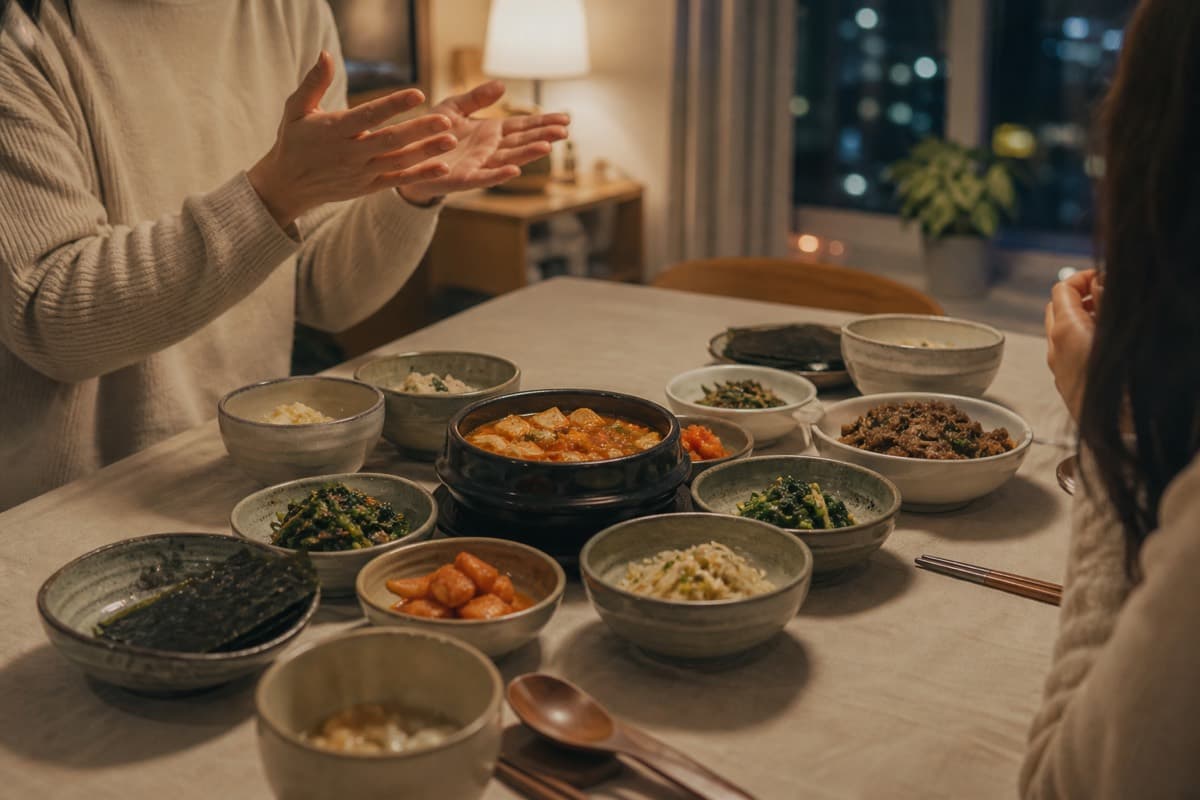
To compliment a Korean friend's cooking, say 정말 맛있어요 (jeongmal masisseoyo), "It's really delicious." Add one detail you actually noticed, like 간이 딱 좋아요 (gani ttak joayo), "The seasoning is just right." The polite -요 ending works whether this is a new friend or someone you know well.
- 정말 맛있어요. (jeongmal masisseoyo.) is the safest opener: "It's really delicious."
- 간이 딱 좋아요. (gani ttak joayo.) praises the seasoning specifically.
- Before eating, say 잘 먹겠습니다. (jal meokgetseumnida.); after, say 잘 먹었습니다. (jal meogeosseumnida.) to thank the cook.
- Skip 최고예요 (choegoyeyo) after every bite — one specific compliment beats five repeated ones.
Start with a genuine first reaction
맛있어요 (masisseoyo) simply means "delicious." Korean often drops "this" or "it" when the subject is obvious, so the two-word English sentence becomes one Korean word. 정말 fits almost any polite setting, while 진짜 feels more conversational and enthusiastic for a relaxed meal with friends.
Neither word rescues an insincere compliment on its own — your tone and the detail that follows matter more than the intensifier you pick.
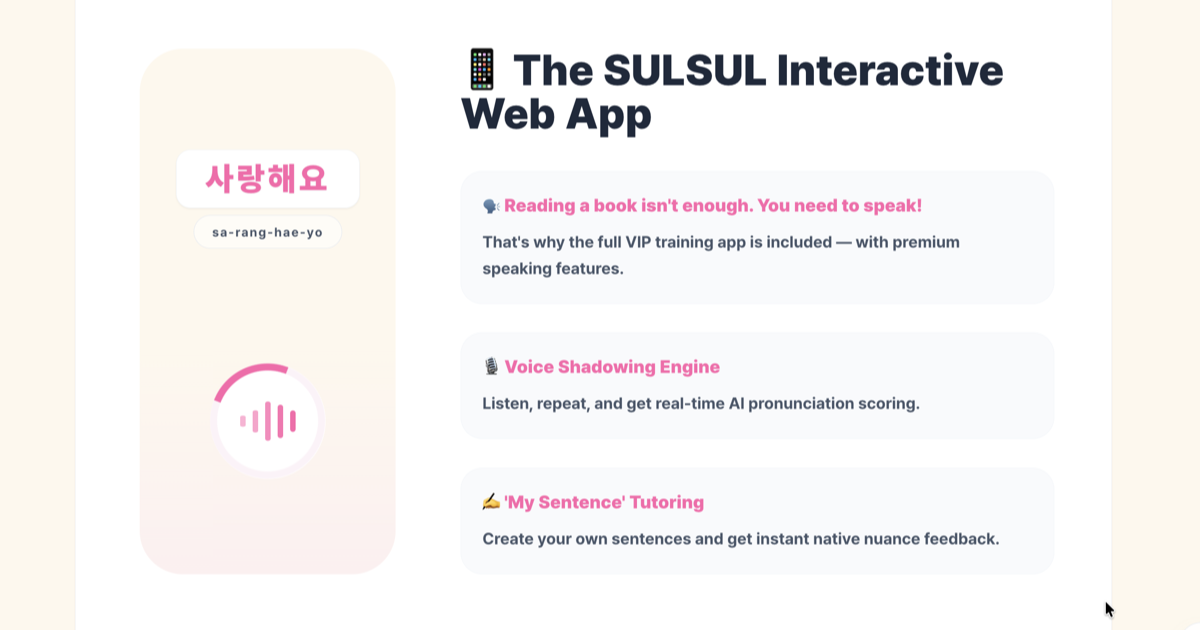
Practice this out loud with SULSUL — the app says it, you repeat it →
Name the specific thing you noticed
Repeating 맛있어요 on its own gets thin fast. Naming one feature gives the cook something real to respond to, and it makes you sound like you actually tasted the food.
| What you noticed | Say this |
|---|---|
| First bite | 정말 맛있어요. (jeongmal masisseoyo.) |
| Seasoning | 간이 딱 좋아요. (gani ttak joayo.) |
| Texture | 식감이 좋아요. (sikgami joayo.) |
| Before the meal | 잘 먹겠습니다. (jal meokgetseumnida.) |
| After the meal | 잘 먹었습니다. (jal meogeosseumnida.) |
Handle the reply, not just the compliment
The part that actually stalls learners is the question that comes back, not the opening compliment.
You: 와, 정말 맛있어요! — wa, jeongmal masisseoyo! — "Wow, it's really delicious!"
Them: 다행이에요. 입에 맞아요? — dahaengieyo. ibe majayo? — "I'm glad. Is it to your taste?"
You: 네, 간이 딱 좋아요. — ne, gani ttak joayo. — "Yes, the seasoning is just right."
입에 맞아요? (ibe majayo?) literally asks whether the food "fits your mouth," and naturally means "Is it to your taste?" A simple 네 plus one specific detail answers it fully.
Thank the cook before and after the meal
Before eating, 잘 먹겠습니다 (jal meokgetseumnida) carries the sense of "I will eat well," acknowledging the meal you're about to receive. After eating, 잘 먹었습니다 (jal meogeosseumnida) means "I ate well" and works as thanks for the whole meal, not just the last bite.
What usually goes wrong: learners say 최고예요 ("it's the best") after every single bite until it stops meaning anything. A cook notices one honest, specific line — the seasoning, the texture, a dish you'd ask about again — far more than five repeated superlatives.

Say it out loud, not just in your head
A good compliment has timing and tone, not just correct vocabulary, and reading this page won't help while a friend is watching you take the first bite.
SULSUL is a speaking gym for exactly that moment: pick a survival pattern, say it out loud, get an instant fix from the AI pronunciation coach, then run the real situation as a mission. The 100-pattern PDF workbook comes along as a bonus.