Korean Phrases at a Shoe Repair Shop in Korea

Korean phrases at a shoe repair shop in Korea lean on Pattern 23 from the SULSUL workbook — verb stem plus 아/어 주세요 (a/eo juseyo), "please do this for me." Hand over your shoes and say 수선해 주세요 (suseonhae juseyo), "Please repair this," or 굽을 고쳐 주세요 (gubeul gocheo juseyo), "Please fix the heel." Pattern 03 — 있어요? (isseoyo?) — covers pickup timing: 언제 되어요? (eonje doeeoyo?), "When will it be ready?"
- Repair these: 수선해 주세요 (suseonhae juseyo), "Please repair this."
- Fix the heel: 굽을 고쳐 주세요 (gubeul gocheo juseyo), "Please fix the heel."
- When ready: 언제 되어요? (eonje doeeoyo?), "When will it be ready?"
- Ask the price: 얼마예요? (eolmayeyo?), "How much is it?"
- Speak slowly: 천천히 말해 주세요 (cheoncheonhi malhae juseyo), "Please speak slowly."

How do you drop off shoes at a Korean repair shop?
수선집 (suseonjip, repair shop) counters sit near subway exits, university streets, and traditional markets. Many handle 신발 (sinbal, shoes), 가방 (gabang, bags), and 옷 (ot, clothes) in one small storefront. Start with Pattern 23 and point to the broken part.
You: 안녕하세요. 이 신발 굽이 떨어졌어요. 수선해 주세요. — annyeonghaseyo. i sinbal gubi tteoreojyeosseoyo. suseonhae juseyo. — "Hello. The heel came off these shoes. Please repair them."
Them: 내일 오후에 되요. — naeil ohu-e dwaeyo. — "They will be ready tomorrow afternoon."
You: 얼마예요? — eolmayeyo? — "How much is it?"
| Situation | Say this |
|---|---|
| Repair shoes | 수선해 주세요 (suseonhae juseyo) |
| Fix the heel | 굽을 고쳐 주세요 (gubeul gocheo juseyo) |
| When ready | 언제 되어요? (eonje doeeoyo?) |
| Ask the price | 얼마예요? (eolmayeyo?) |
| Speak slowly | 천천히 말해 주세요 (cheoncheonhi malhae juseyo) |
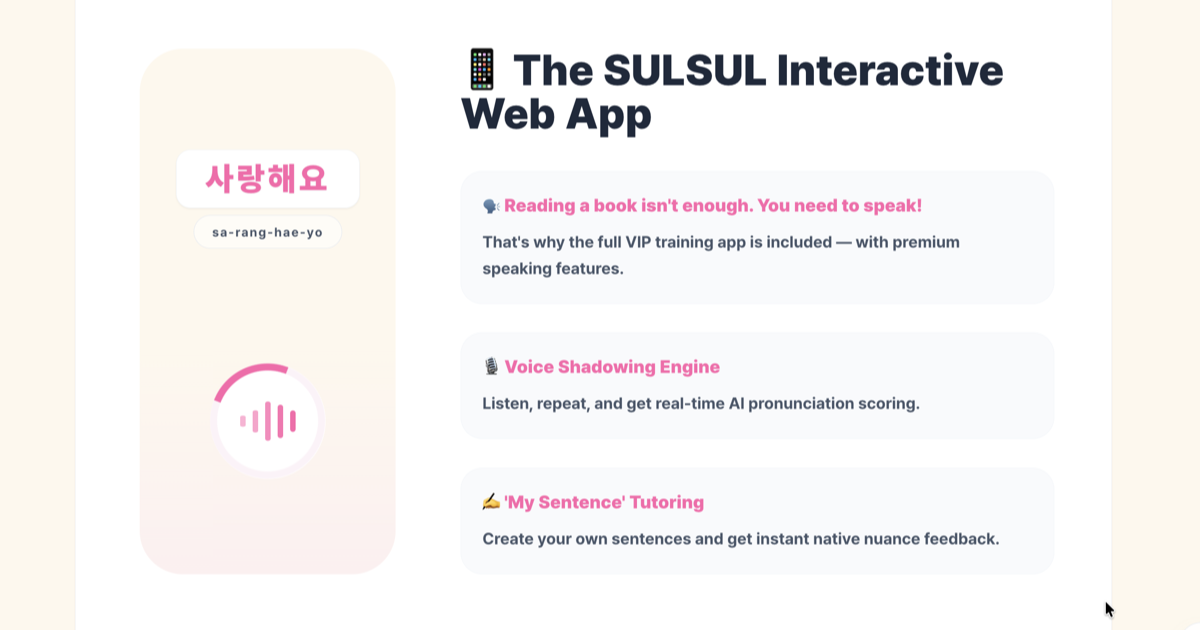
Practice this out loud with SULSUL — the app says it, you repeat it →
What do you say when you pick up your shoes?
Clerks often ask for your phone number or a receipt slip when you drop off. Keep the 영수증 (yeongsujeung, receipt) they hand back — you will need it at pickup.
You: 수선 맡긴 거 찾으러 왔어요. — suseon matgin geo chajeureo wasseoyo. — "I came to pick up what I left for repair."
Them: 영수증 있어요? — yeongsujeung isseoyo? — "Do you have the receipt?"
You: 네, 여기 있어요. 잘 됐어요? — ne, yeogi isseoyo. jal dwaesseoyo? — "Yes, here it is. Did it turn out well?"
The 얼마예요? line from buying clothes in Korea works the same way at the counter when you want the total before you pay.
What usually goes wrong at a Korean shoe repair shop?
Travelers often point at the damage but forget to say 언제 되어요? (eonje doeeoyo?, when will it be ready?) — the shop defaults to two or three days and you miss your flight. Ask the pickup date every time you drop off.
A second mistake is assuming every 수선집 (suseonjip, repair shop) takes card payment. Many are cash-only. If the clerk shakes their head at your card, ask 현금만 돼요? (hyeongeumman dwaeyo?), "Cash only?" before you walk to an ATM.
Say it out loud, not just in your head
Reading 수선해 주세요 on a translation app is not the same as saying it across a counter while the clerk inspects a cracked sole.
SULSUL is a speaking gym for exactly that moment: pick a survival pattern, say it out loud, get an instant fix from the AI pronunciation coach, then run the real situation as a mission. The 100-pattern PDF workbook comes along as a bonus.