How to Ask for Directions in Korean Subway

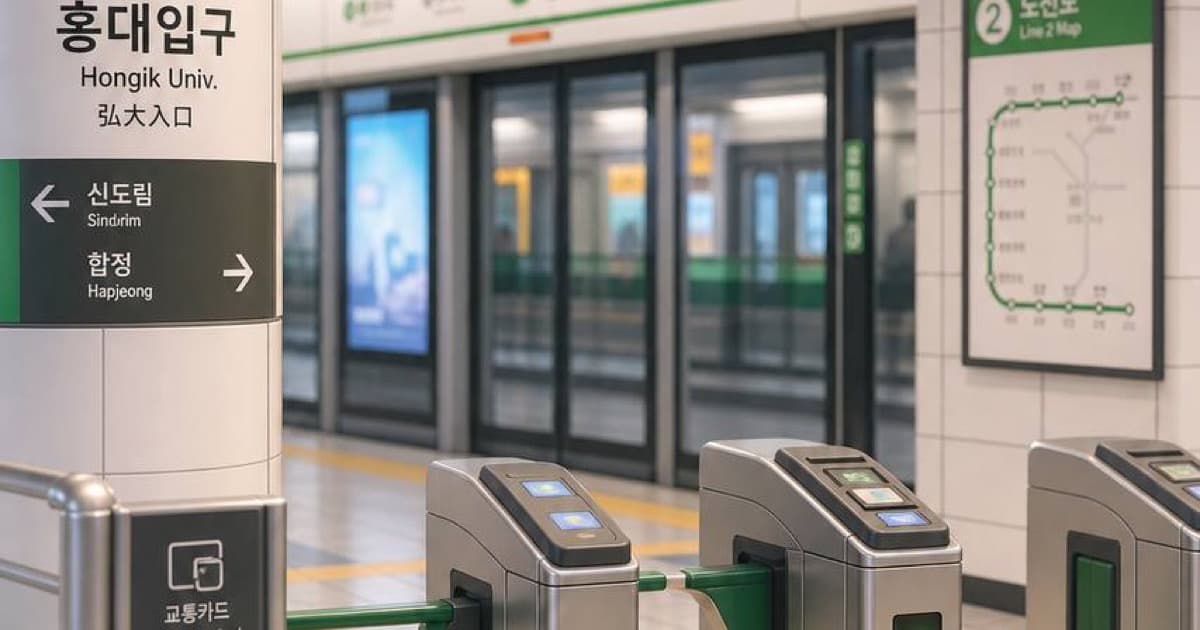
To ask for directions in a Korean subway, name the exact thing you need and add 어디예요? (eodiyeyo?), "Where is it?" 2호선이 어디예요? (ihoseoni eodiyeyo?) asks "Where is Line 2?" The polite -요 ending works with any stranger, so one clear question is enough to get moving.
- Name your destination, then add 어디예요? — 지하철역이 어디예요? (jihacheolyeogi eodiyeyo?) asks "Where is the subway station?"
- Open with 죄송한데요 (joesonghandeyo), "Excuse me," before asking a stranger anything.
- Repeat the key word as a question — 오른쪽이요? (oreunjjogiyo?), "To the right?" — to confirm without a full sentence.
- If the reply is too fast, say 다시 말씀해 주세요 (dasi malsseumhae juseyo), "Please say that again."
Ask for exactly what you need
Korean puts the destination first, then 어디예요? Swap in whatever you're actually looking for:
| Situation | Ask this |
|---|---|
| Find the station | 지하철역이 어디예요? |
| Find a line | 2호선이 어디예요? |
| Find the platform | 타는 곳이 어디예요? (taneun gosi eodiyeyo?) |
| Find a transfer | 갈아타는 곳이 어디예요? (garataneun gosi eodiyeyo?) |
| Find an exit | 2번 출구가 어디예요? (ibeon chulguga eodiyeyo?) |
Use 지하철역이 어디예요? outside a station. Once you're inside, ask about the line, platform, or exit instead — a station can have several exits leading to completely different sides of the road.
Practice this out loud with SULSUL — the app says it, you repeat it →
Confirm the direction you hear
Open with 죄송한데요 (joesonghandeyo), then show the station name on your phone.
You: 죄송한데요. 지하철역이 어디예요? — joesonghandeyo. jihacheolyeogi eodiyeyo? — "Excuse me. Where is the subway station?"
Them: 오른쪽으로 가세요. — oreunjjogeuro gaseyo. — "Go to the right."
You: 오른쪽이요? 감사합니다. — oreunjjogiyo? gamsahamnida. — "To the right? Thank you."
Repeating the direction as a question is the fastest fix I teach: it costs one word and lets the person correct you before you walk off wrong. Never nod and walk away on a word you only half-caught.
Ask about a line or a transfer
For route questions, name your destination and the decision you need help with:
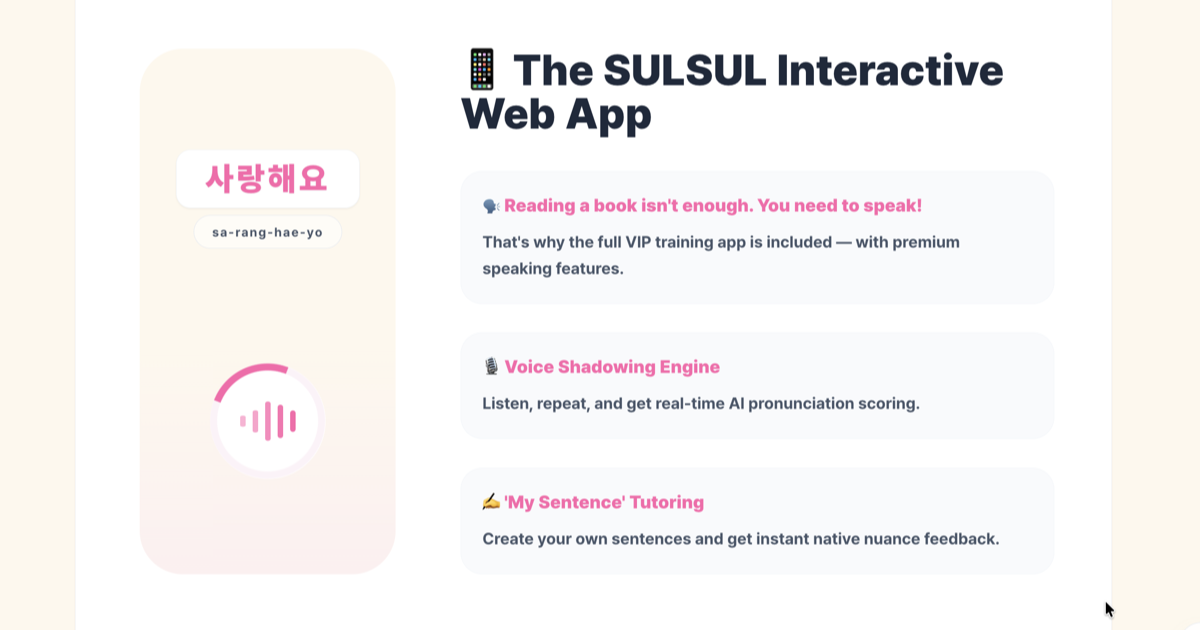
You: 홍대입구역에 가려면 몇 호선을 타야 해요? — Hongdaeipguyeoge garyeomyeon myeot hoseoneul taya haeyo? — "Which line do I take to get to Hongik University Station?"
Them: 2호선을 타세요. — ihoseoneul taseyo. — "Take Line 2."
To check a transfer or your stop, ask 여기에서 갈아타요? (yeogieseo garatayo?), "Do I transfer here?" or 이 역에서 내려요? (i yeogeseo naeryeoyo?), "Do I get off at this station?" Both confirm the one fact that changes your route — a plain "next station?" question doesn't.

Ask for a specific exit
Inside the station, 출구가 어디예요? (chulguga eodiyeyo?) means "Where is the exit?" A numbered version is far more useful: 6번 출구가 어디예요? (yukbeon chulguga eodiyeyo?), "Where is Exit 6?" If you're not sure which one you need, point at the place name on your phone and ask 몇 번 출구로 나가야 해요? (myeot beon chulguro nagaya haeyo?), "Which exit should I use?" Notice 입구 (ipgu, entrance) and 출구 (chulgu, exit) look similar but are opposites — mixing them up is the most common exit mistake.
Say it out loud, not just in your head
Reading 어디예요? on this page isn't the same as asking it while a stranger is already waiting for your answer at a busy station.
SULSUL is a speaking gym for exactly that moment: pick a survival pattern, say it out loud, get an instant fix from the AI pronunciation coach, then run the real situation as a mission. The 100-pattern PDF workbook comes along as a bonus.