What to Say If You Lose Your Wallet in Korea

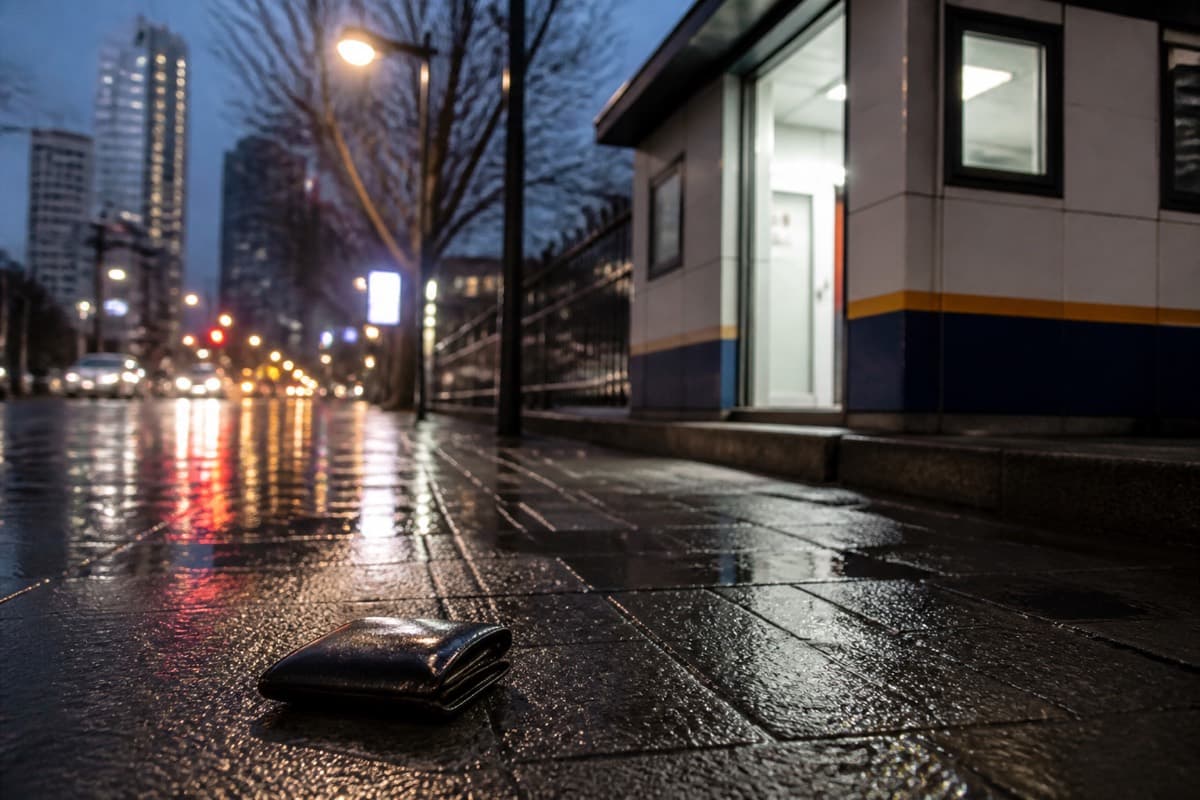
If you lose your wallet in Korea, say 지갑을 잃어버렸어요 (jigabeul ireobeoryeosseoyo), "I lost my wallet," to the nearest staff member, then name where you last used it. Adding 여기에서 잃어버렸어요 (yeogieseo ireobeoryeosseoyo), "I lost it here," gives staff something to act on.
- Open with 지갑을 잃어버렸어요 (jigabeul ireobeoryeosseoyo), "I lost my wallet," before explaining anything else.
- Say 여기에서 잃어버렸어요 (yeogieseo ireobeoryeosseoyo), "I lost it here," to point staff to the right spot.
- Ask 혹시 지갑 들어온 거 있어요? (hoksi jigap deureoon geo isseoyo?), "Has a wallet possibly been turned in?"
- Add 도와주세요 (dowajuseyo), "Please help me," only after you've stated the problem.
Say What Happened, Not a Long Story
The verb 잃어버리다 (ireobeorida) means "to lose something," and its past polite form is 잃어버렸어요 (ireobeoryeosseoyo) — put the missing item before it. If you're not sure it's truly gone, 지갑이 안 보여요 (jigabi an boyeoyo), "I can't find my wallet," sounds less final while you keep searching.
You: 저기요, 지갑을 잃어버렸어요. — jeogiyo, jigabeul ireobeoryeosseoyo. — "Excuse me, I lost my wallet."
Them: 어디에서 잃어버렸어요? — eodieseo ireobeoryeosseoyo? — "Where did you lose it?"
You: 계산할 때 여기에서 봤어요. — gyesanhal ttae yeogieseo bwasseoyo. — "I saw it here when I paid."
What usually goes wrong: travelers open with a full backstory before saying what's actually missing. Lead with the loss itself; details come after.
Practice this out loud with SULSUL — the app says it, you repeat it →
Ask the Last Place You Used It
Go back to the cafe, store, taxi, or ticket gate where you last opened the wallet, and ask staff directly rather than guessing it was stolen.
- 혹시 지갑 들어온 거 있어요? (hoksi jigap deureoon geo isseoyo?) — "Has a wallet possibly been turned in?"
- 한 시간 전쯤 여기 있었어요. (han sigan jeonjjeum yeogi isseosseoyo.) — "I was here about an hour ago."
혹시 softens the question with "by any chance," so it doesn't assume staff are holding your property.
Describe the Wallet So Staff Can Find It
Color alone rarely narrows it down, so pair it with shape or material.
| Say this | It means |
|---|---|
| 검은색 반지갑이에요 (geomeunsaek banjigabieyo) | It's a black folding wallet |
| 가죽 지갑이에요 (gajuk jigabieyo) | It's a leather wallet |
| 장지갑이에요 (jangjigabieyo) | It's a long wallet |
| 안에 카드가 들어 있어요 (ane kadeuga deureo isseoyo) | There are cards inside |
| 이 번호로 연락해 주세요 (i beonhoro yeollakhae juseyo) | Please contact me at this number |
You: 검은색 반지갑이에요. 안에 카드가 들어 있어요. — geomeunsaek banjigabieyo. ane kadeuga deureo isseoyo. — "It's a black folding wallet. There are cards inside."
Them: 이런 지갑이에요? — ireon jigabieyo? — "Is it a wallet like this one?"
You: 네, 맞아요! 감사합니다. — ne, majayo! gamsahamnida. — "Yes, that's it! Thank you."
What to Do Once You Notice It's Missing
- Check every pocket and bag compartment first.
- Return to the last place you used it, if safe.
- Ask staff 혹시 지갑 들어온 거 있어요? while showing a photo.
- Contact each card issuer to lock your cards.
- Call 112 only for an urgent situation, such as suspected theft.
A note from Yona: what gets a wallet found is a short sentence, said fast to the right person.
Say it out loud, not just in your head
Rehearsing 지갑을 잃어버렸어요 now is what makes it come out clearly when staff are waiting for your answer.
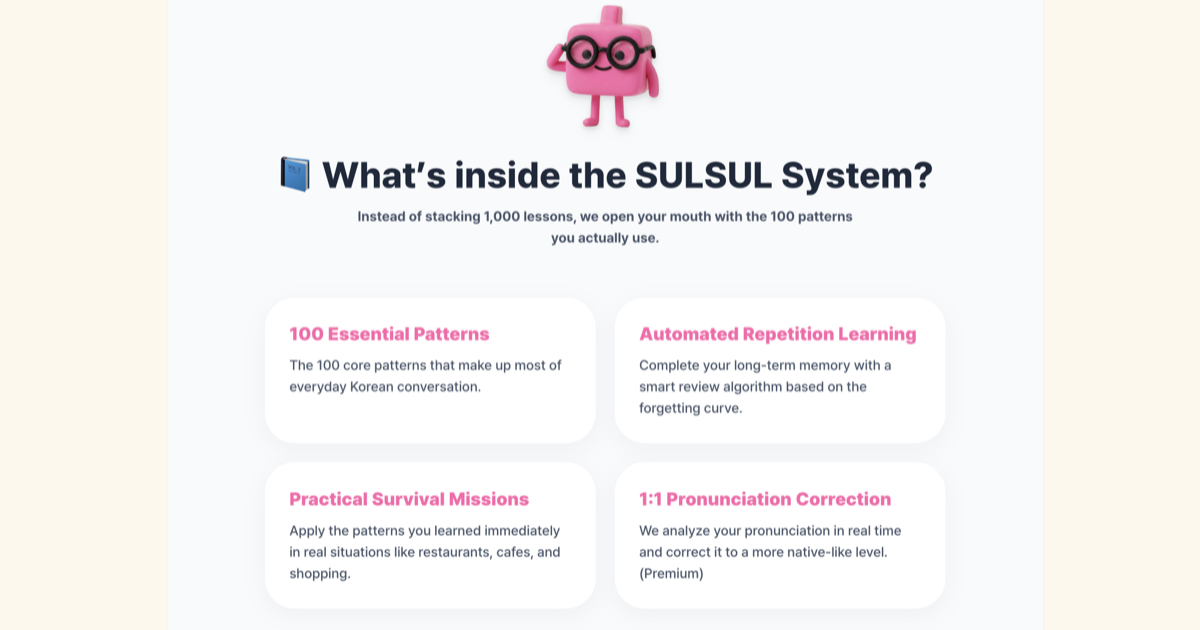
SULSUL is a speaking gym for exactly that moment: pick a survival pattern, say it out loud, get an instant fix from the AI pronunciation coach, then run the real situation as a mission. The 100-pattern PDF workbook comes along as a bonus.