Shopping in Korean: 얼마예요?, 그냥 볼게요, and 택스 리펀 돼요? — What to Say in Any Korean Store
When you shop in Korea, three short lines carry almost every store visit. 이거 얼마예요? (i-geo eol-ma-ye-yo?) asks "How much is this?" 그냥 볼게요 (geu-nyang bol-ge-yo) tells a hovering clerk "I'm just looking." And 택스 리펀 돼요? (taek-seu ri-peon dwae-yo?) asks "Can I get a tax refund?" before you pay, which is the line most visitors forget until the receipt is already printed. Everything else in a Korean store is a small variation on these, built from two patterns: 있어요? ("do you have…?") and -아/어도 돼요? ("may I…?").
Korean for shopping, the pocket version
- "How much is this?": 이거 얼마예요? — i-geo eol-ma-ye-yo?
- "I'm just looking.": 그냥 볼게요 — geu-nyang bol-ge-yo
- "Do you have this in another color?": 다른 색 있어요? — da-reun saek i-sseo-yo?
- "Can I try it?": 해 봐도 돼요? — hae bwa-do dwae-yo?
- "Can I get a tax refund?": 택스 리펀 돼요? — taek-seu ri-peon dwae-yo?
- "A bag, please.": 봉투 주세요 — bong-tu ju-se-yo
- "A receipt, please.": 영수증 주세요 — yeong-su-jeung ju-se-yo
The moment you walk in: 어서 오세요 and how to answer
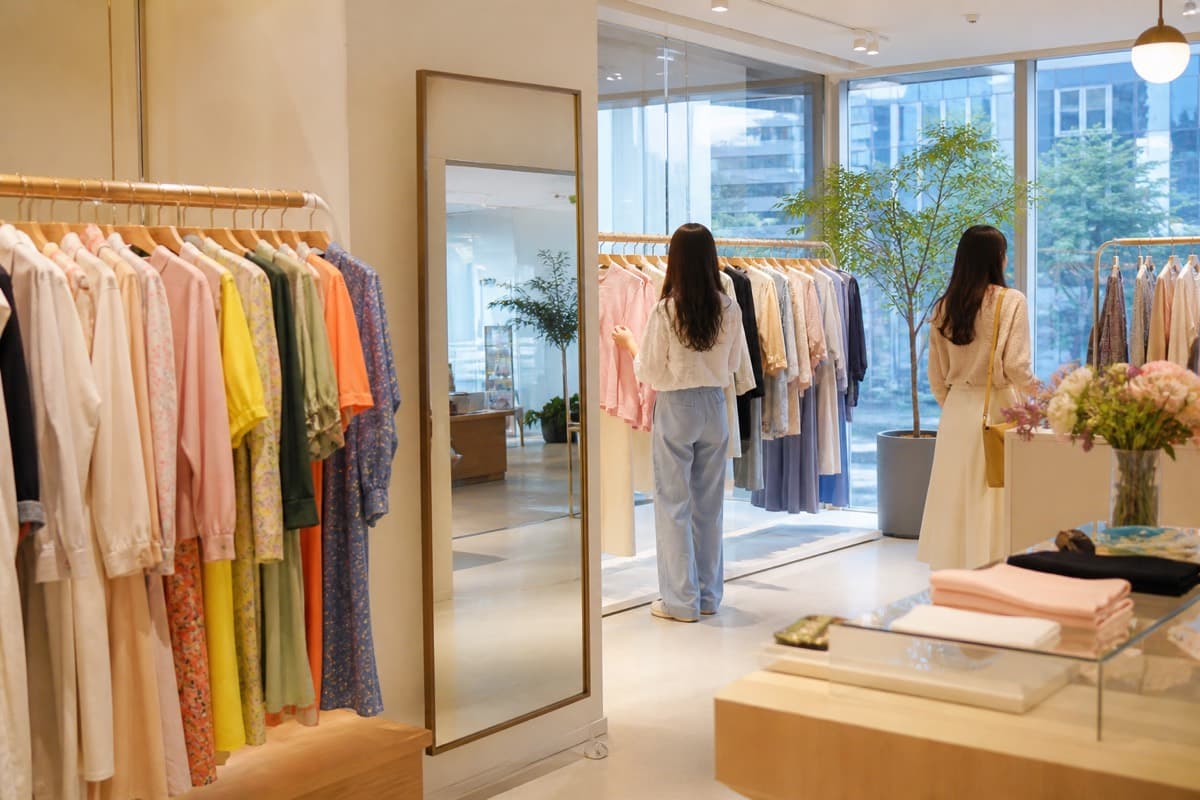
Almost every shop in Korea greets you at the door with 어서 오세요 (eo-seo o-se-yo), "Welcome." You don't need to say it back. A small nod or 안녕하세요 is plenty.
In cosmetics stores and clothing shops, a clerk may follow up within seconds with 찾으시는 거 있으세요? (cha-jeu-si-neun geo i-sseu-se-yo?), "Are you looking for anything?" This is where most visitors freeze, smile, and walk out faster than they wanted to. The answer that keeps you in the store is:
- 그냥 볼게요. — geu-nyang bol-ge-yo — "I'll just look around."
- 그냥 구경하는 거예요. — geu-nyang gu-gyeong-ha-neun geo-ye-yo — "I'm just browsing."
Both are polite. 구경 means sightseeing or looking around, so the second one has a relaxed, window-shopping feel. Add 감사합니다 at the end and the clerk will usually step back and let you browse in peace.
If you are looking for something, name it and add 있어요?:
- 선크림 있어요? — seon-keu-rim i-sseo-yo? — "Do you have sunscreen?"
- 이거 다른 색 있어요? — i-geo da-reun saek i-sseo-yo? — "Does this come in another color?"
- 더 작은 거 있어요? — deo ja-geun geo i-sseo-yo? — "Do you have a smaller one?"
있어요? is the most useful single word in a Korean store. Point at anything, say its name or 이거, add 있어요?, and you've asked a full question.
Practice this out loud with SULSUL — the app says it, you repeat it →
Asking the price without getting lost in the numbers
이거 얼마예요? works in a department store, a street stall, and a convenience store alike. Point at the item while you say it, and the clerk will often turn a calculator or phone screen toward you, which saves you from decoding Korean numbers on the spot.
If you want to know the total for several things, swap 이거 for 다 해서:
- 다 해서 얼마예요? — da hae-seo eol-ma-ye-yo? — "How much for everything?"
At markets and small independent shops, you may also hear or use:
- 좀 비싸네요. — jom bi-ssa-ne-yo — "That's a bit pricey."
- 할인돼요? — ha-rin-dwae-yo? — "Is there a discount?"
- 세일하는 거예요? — se-il-ha-neun geo-ye-yo? — "Is this on sale?"
Department stores and brand shops rarely move on price, so keep 좀 비싸네요 for markets. In a chain store, 할인돼요? is still worth asking, because the answer is often "yes, with a membership card or a promotion you didn't see."
Trying things on and testing samples
Korean asks permission with one pattern: take the verb, add -아/어도 돼요? ("is it okay if I…?"). In a store, three verbs cover nearly everything:
| What you want to do | Say this | Pronunciation |
|---|---|---|
| Try on clothes | 입어 봐도 돼요? | i-beo bwa-do dwae-yo? |
| Try on shoes | 신어 봐도 돼요? | si-neo bwa-do dwae-yo? |
| Test a sample | 발라 봐도 돼요? | bal-la bwa-do dwae-yo? |
| Anything else | 해 봐도 돼요? | hae bwa-do dwae-yo? |
| Take a photo | 사진 찍어도 돼요? | sa-jin jji-geo-do dwae-yo? |
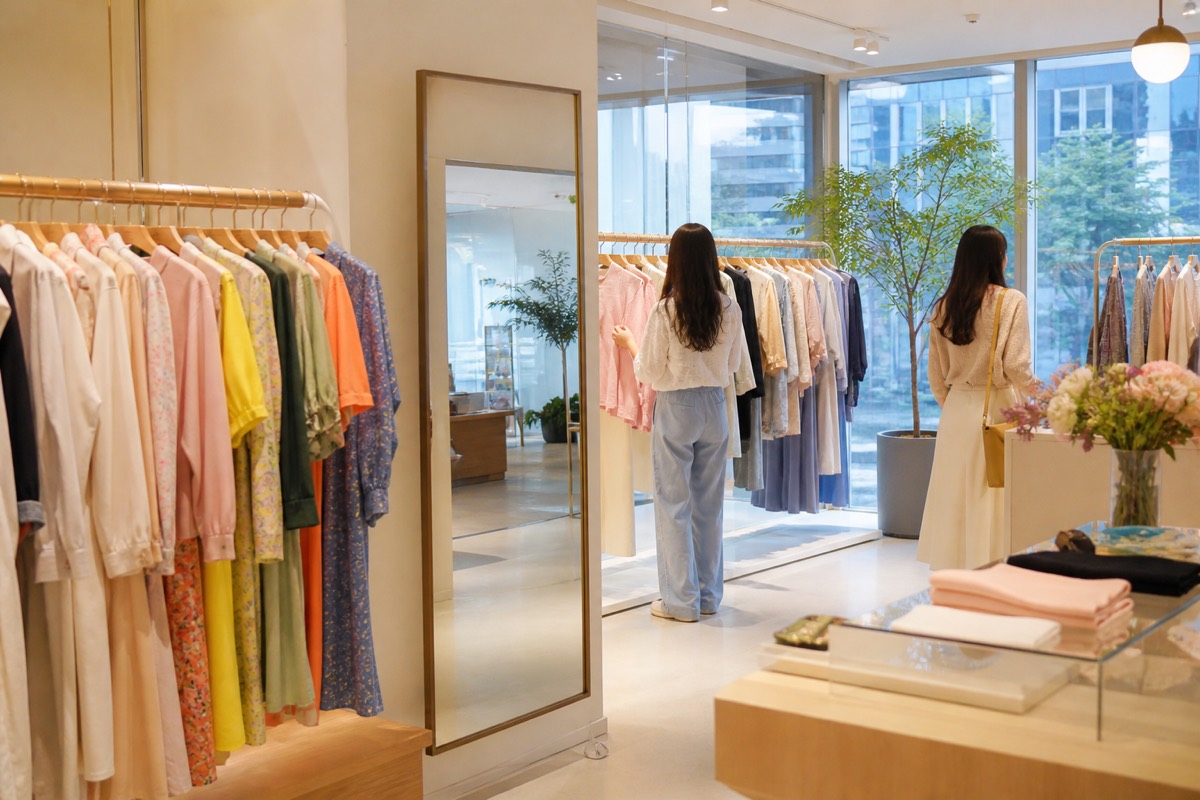
The answer you want is 네, 괜찮아요 or 네, 해 보세요, "Sure, go ahead." For clothes, the clerk will usually point you toward the 피팅룸 (pi-ting-rum) or 탈의실 (ta-ri-sil), the fitting room.
If it doesn't fit, you don't need a sentence about why. 좀 커요 (jom keo-yo, "It's a bit big") or 좀 작아요 (jom ja-ga-yo, "It's a bit small") is enough, and the clerk will bring the next size.
A short exchange at the counter
Here's how a full purchase usually sounds once you've picked something up. The clerk's lines are the ones to listen for.
Clerk: 어서 오세요. 찾으시는 거 있으세요? — eo-seo o-se-yo. cha-jeu-si-neun geo i-sseu-se-yo? — "Welcome. Looking for anything?" You: 그냥 볼게요. 감사합니다. — geu-nyang bol-ge-yo. gam-sa-ham-ni-da. — "I'll just look. Thank you."
(A few minutes later, at the counter.)
You: 이거 주세요. 택스 리펀 돼요? — i-geo ju-se-yo. taek-seu ri-peon dwae-yo? — "I'll take this. Can I get a tax refund?" Clerk: 네, 여권 있으세요? — ne, yeo-gwon i-sseu-se-yo? — "Yes, do you have your passport?" You: 네, 여기요. — ne, yeo-gi-yo. — "Yes, here." Clerk: 봉투 필요하세요? — bong-tu pi-ryo-ha-se-yo? — "Do you need a bag?" You: 네, 봉투 주세요. — ne, bong-tu ju-se-yo. — "Yes, a bag, please." Clerk: 카드로 하시겠어요? — ka-deu-ro ha-si-ge-sseo-yo? — "Paying by card?" You: 네, 카드로 할게요. — ne, ka-deu-ro hal-ge-yo. — "Yes, by card."
Notice 여권 (yeo-gwon), passport. Stores that offer tax refunds for visitors usually need to see it at the counter, so keep it with you on shopping days instead of leaving it in the hotel safe. Look for a Tax Free or Tax Refund sign at the door. Many larger stores and cosmetics chains deduct the tax right at the register, while others hand you a form to process at the airport.
Bags, receipts, and the little extras
Most Korean stores charge for plastic bags or don't stock them at all, so the clerk asks 봉투 필요하세요? almost every time. Answer 네, 주세요 if you want one, or 아니요, 괜찮아요 (a-ni-yo, gwaen-cha-na-yo), "No, I'm fine," if you've brought your own.
A few more lines that come up at the register:
- 영수증 주세요. — yeong-su-jeung ju-se-yo — "A receipt, please." Keep it if there's any chance you'll return or exchange the item.
- 선물 포장 돼요? — seon-mul po-jang dwae-yo? — "Can you gift-wrap it?"
- 따로 담아 주세요. — tta-ro da-ma ju-se-yo — "Please bag them separately."
- 샘플 있어요? — saem-peul i-sseo-yo? — "Do you have samples?" (In cosmetics stores, clerks often slip a few in anyway.)
Mistakes that make a store visit harder
Saying nothing when the clerk asks if you need help. Silence often reads as "I need help but can't ask," so the clerk keeps following you. 그냥 볼게요 gives them a clear answer and gives you space.
Asking 얼마예요? without 이거. Alone, 얼마예요? works, but in a shop full of items, the clerk has to guess what you mean. 이거 plus a point removes the guessing.
Asking about the tax refund after paying. Once the card is charged, many stores have to cancel and redo the sale. Ask 택스 리펀 돼요? while you hand over the item, not after.
Using 줘 instead of 주세요. 줘 is how you talk to a close friend. To a clerk, it sounds blunt. 주세요 is the default with anyone behind a counter.
Forgetting that 있어요? already makes a question. You don't need 혹시 … 가지고 계세요? or other long forms. Rising intonation on 있어요? is a complete, polite sentence.
Practice the three lines before your shopping day
Reading 택스 리펀 돼요? on your phone is easy. Saying it while a line forms behind you is different, especially the dwae in 돼요, which learners often flatten into de. Say 이거 얼마예요?, 그냥 볼게요, and 택스 리펀 돼요? out loud a few times today, then try swapping in your own words: 이거 다른 색 있어요?, 신어 봐도 돼요?, 봉투 주세요. Each one is the same pattern with a new noun or verb, which is exactly why they stick.
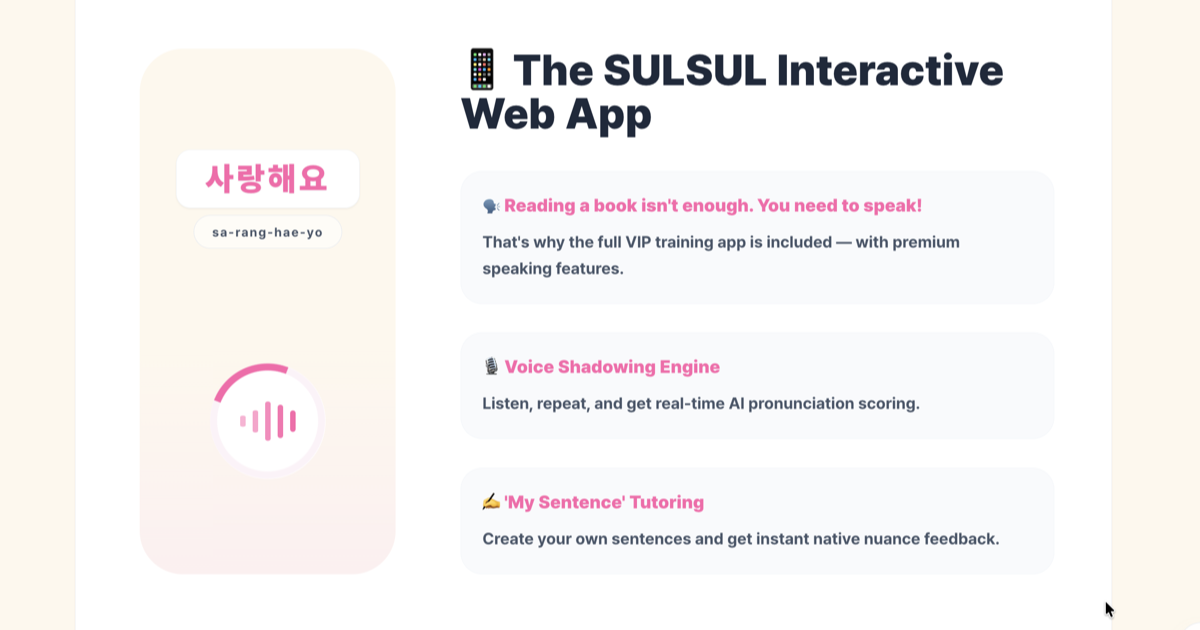
SULSUL is a speaking gym built for moments like that: pick a pattern, say it out loud, get an instant fix from the AI pronunciation coach, then run the real situation as a mission. The 100-pattern PDF workbook comes along as a bonus.
Now say it out loud
SULSUL says the phrase, you repeat it, and it tells you what came out wrong — 100 survival patterns for cafes, taxis and small talk in Seoul.
Start speaking Korean →