How to Ask the Price in Korean

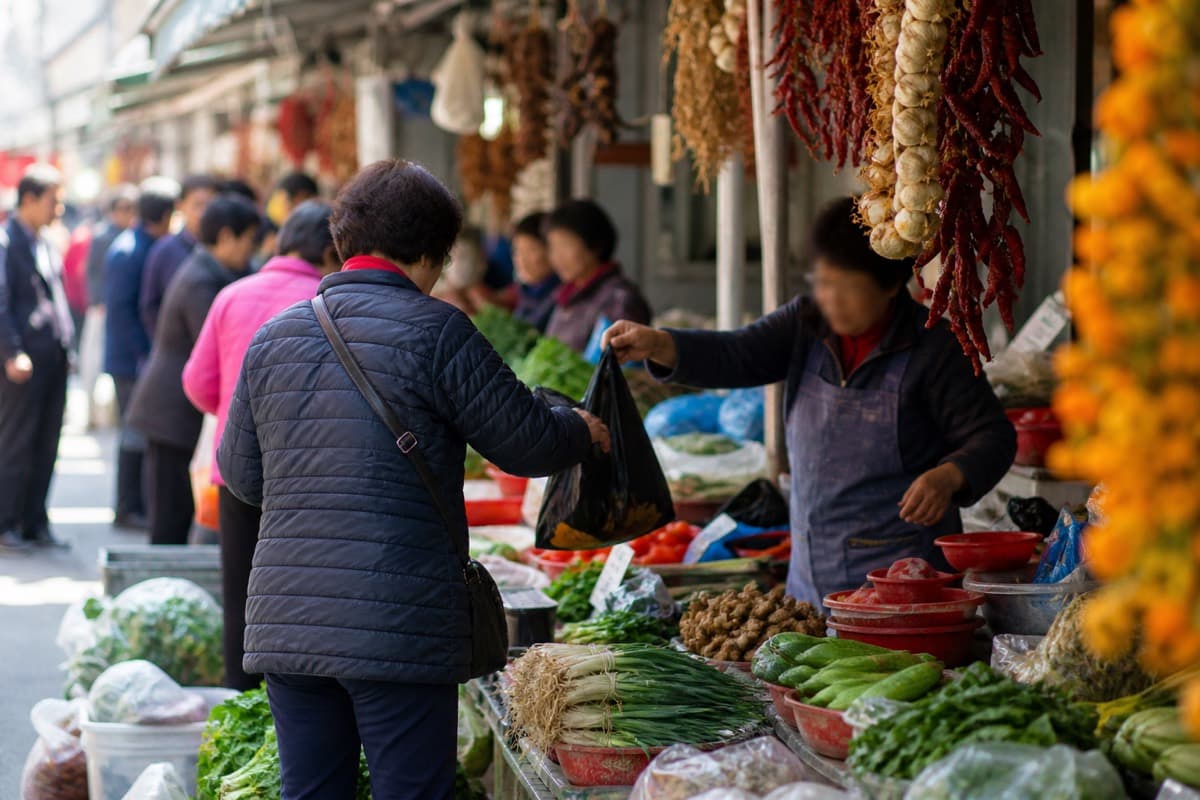
The line you want is 이거 얼마예요? (igeo eolmayeyo?), "How much is this?" Point at the thing, say it, and you are done — it works at a traditional market stall, a cafe counter, a clothing shop, a ticket window. If the item is across the room, swap the first word: 저거 얼마예요? (jeogeo eolmayeyo?), "How much is that one?" And if you are already holding the thing or the context is obvious, 얼마예요? on its own is a complete, polite question. This is Pattern 15 in the SULSUL workbook — a question word plus 예요/해요 — doing the simplest job it has. The part nobody warns you about is what happens two seconds later, when the answer comes back as a number in the number system you did not study.
- The default: 이거 얼마예요? (igeo eolmayeyo?) — "How much is this?"
- For something further away: 저거 얼마예요? (jeogeo eolmayeyo?) — "How much is that?"
- Getting attention first: 저기요, 이거 얼마예요? (jeogiyo, igeo eolmayeyo?) — "Excuse me, how much is this?"
- The total: 다 해서 얼마예요? (da haeseo eolmayeyo?) — "How much altogether?"
- Per item: 하나에 얼마예요? (hanae eolmayeyo?) — "How much for one?"
Which version of the question do you actually say?
얼마 (eolma) means "how much," and 예요 turns it into a question about price. That is the whole grammar. What changes between situations is the front of the sentence, not the back.
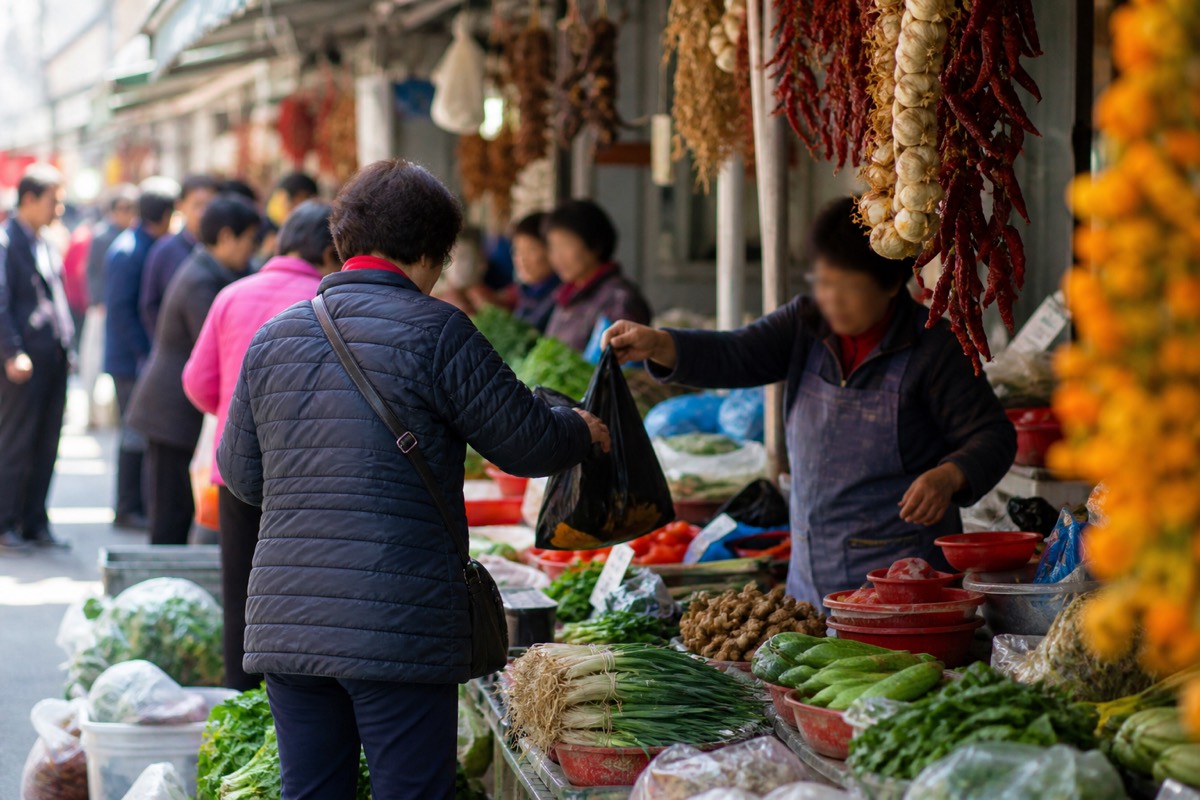
In a shop where nobody is looking at you yet, open with 저기요 (jeogiyo), "excuse me" — it is the standard way to flag a staff member, and it is not rude. At a market stall or a small family-run place you can go one better and call the owner 사장님 (sajangnim), literally "boss," which is the polite catch-all title for anyone running a business: 사장님, 이거 얼마예요?
If you want a slightly softer, more grown-up register, 가격이 어떻게 돼요? (gagyeogi eotteoke dwaeyo?), "What is the price?" uses the same indirect 어떻게 돼요 frame Korean uses for personal information. You will also hear 얼마죠? (eolmajyo?) and 얼마인가요? (eolmaingayo?), both gentler-sounding variants of the same question. Among close friends it drops to 얼마야? (eolmaya?). The formal 얼마입니까? (eolmaimnikka?) is real Korean, but it is what staff say to you, not what you say to staff.
You: 저기요, 이거 얼마예요? — jeogiyo, igeo eolmayeyo? — "Excuse me, how much is this?"
Them: 그거 만 오천 원이에요. — geugeo man ocheon wonieyo. — "That one's fifteen thousand won."
You: 아, 네. 이거 주세요. — a, ne. igeo juseyo. — "Ah, okay. I'll take this one."
이거 주세요 (igeo juseyo) is Pattern 01, the single most useful sentence in Korean, and it is how the price question almost always ends.
Practice this out loud with SULSUL — the app says it, you repeat it →
Catching the answer, which is the real difficulty
Money in Korean runs on Sino-Korean numbers — 일, 이, 삼 (il, i, sam) — not the native 하나, 둘, 셋 set. That much most learners know. What ambushes people is 만 (man), which is ten thousand, not a thousand. Korean groups large numbers in units of four digits, so a price that feels like "fifteen thousand" in English arrives as 만 오천, "one man five thousand."
| Won | Korean | Romanization |
|---|---|---|
| 1,000 | 천 원 | cheon won |
| 3,500 | 삼천오백 원 | samcheonobaek won |
| 10,000 | 만 원 | man won |
| 15,000 | 만 오천 원 | man ocheon won |
| 50,000 | 오만 원 | oman won |
Two habits make the answer land. First, listen for 만 as the hinge: whatever comes before it is the ten-thousands. Second, expect the word 원 to be dropped. Shopkeepers routinely say 삼천이요 (samcheoniyo) or 만 오천이요 (man ocheoniyo) with the currency left off entirely, and that clipped version is what you will hear most. The whole two-number-system problem is unpacked in Korean numbers for paying and counting in Korea.
When you miss it, do not nod. Pattern 22 exists for exactly this: 다시 말해 주세요 (dasi malhae juseyo), "Please say that again," or 천천히 말해 주세요 (cheoncheonhi malhae juseyo), "Please say it slowly." The move that never fails is 여기 좀 적어 주시겠어요? (yeogi jom jeogeo jusigesseoyo?), "Could you write it down here?" Vendors reach for a calculator or a phone screen without being asked half the time anyway.
Asking about totals, units, and the price you did not expect
One question rarely covers a real purchase. These four carry the rest of it.
다 해서 얼마예요? (da haeseo eolmayeyo?) — "How much for everything?" Use it once your items are on the counter, or when a stall owner has been piling things into a bag.
하나에 얼마예요? (hanae eolmayeyo?) — "How much each?" Markets price by the pile, the bundle, or the kilo, so the sticker you are looking at may not be a single-item price. The counter changes with the thing: 한 개에 (han gaee) for objects, 한 잔에 (han jane) for drinks, 한 장에 (han jange) for flat things like tickets and photocards.
이거 세일 가격이에요? (igeo seil gagyeogieyo?) — "Is this the sale price?" Useful when two numbers are printed on the same tag.
카드 돼요? (kadeu dwaeyo?) — "Can I pay by card?" In Korea the answer is almost always yes, including for small amounts, but old market stalls are the exception and will say 현금만 돼요 (hyeongeumman dwaeyo), "cash only."
Them: 다 해서 이만 삼천 원이에요. — da haeseo iman samcheon wonieyo. — "Twenty-three thousand won altogether."
You: 카드 돼요? — kadeu dwaeyo? — "Can I pay by card?"
Them: 네, 여기 놔 주세요. — ne, yeogi nwa juseyo. — "Yes, tap it here."
If the number is higher than you hoped, the polite reaction is 좀 비싸네요 (jom bissaneyo), "That's a bit pricey" — Pattern 94's cushion adverb 좀 keeping it light rather than confrontational. Whether you can push further depends entirely on where you are standing; the rules for that are in Korean phrases for bargaining in markets, and the clothing-shop version is in what to say when buying clothes in Korea.
What usually goes wrong
Saying 몇 원이에요? It looks logical — 몇 is "how many" — but Korean does not ask for a price that way. It is 얼마, always.
Confusing 얼마 with 얼마나. 얼마나 (eolmana) asks about extent or duration: 얼마나 걸려요? (eolmana geollyeoyo?), "How long does it take?" Attach it to a price and you have said something that makes no sense. Price is bare 얼마.
Using native numbers for money. 두 천 원 is not a thing. Counters like 두 개 take native numbers; won takes Sino-Korean. The two sets never cross.
Hearing 만 as a thousand. This is the expensive one. Hear 삼만 원 as three thousand and you will hand over a tenth of what you owe and look very confused. Anchor on 만 = 10,000 until it is automatic.
Bargaining in the wrong building. In a department store, a chain cafe, or Olive Young, prices are fixed and asking for a discount is genuinely awkward. Traditional markets, Dongdaemun stalls, and street vendors are where the question belongs.
Freezing after the answer. You asked, they answered, and now there is a silence. Bank two replies so there is never a gap: 이거 주세요 to buy, 좀 더 볼게요 (jom deo bolgeyo), "I'll look around a bit more," to leave politely.
Say it out loud before you need it
이거 얼마예요? takes half a second to read and somehow much longer to produce with a shopkeeper looking at you.
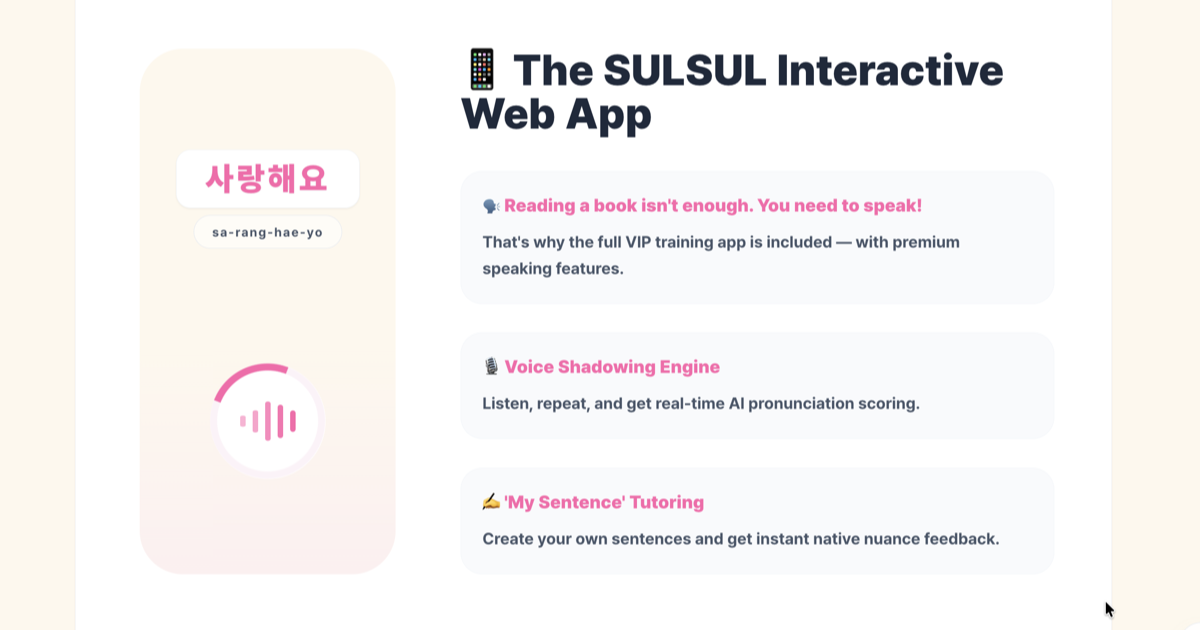
SULSUL is a speaking gym for exactly that gap: pick a survival pattern, say it out loud, get an instant fix from the AI pronunciation coach, then run the whole market exchange as a mission. The 100-pattern PDF workbook comes along as a bonus.