Korean Phrases for Bargaining in Markets

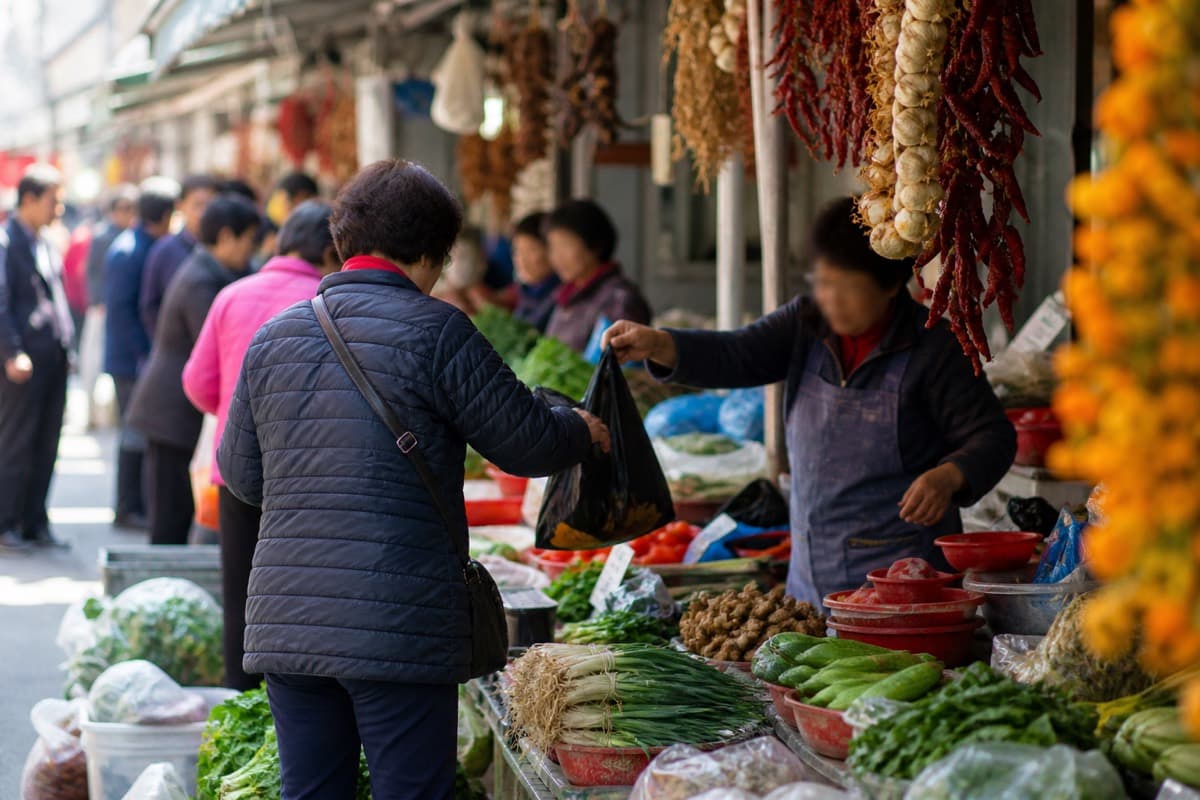
Korean phrases for bargaining in markets start with 이거 얼마예요? (igeo eolmayeyo?), "How much is this?" A lower price is only worth asking when a seller signals flexibility — most Korean shops, market stalls included, run on fixed prices.
- Ask 이거 얼마예요? (igeo eolmayeyo?), "How much is this?" before assuming a price is negotiable.
- Check with 정찰제예요? (jeongchaljeyeyo?), "Is it fixed-price?" If yes, the number on the tag is final.
- Where flexibility is signaled, ask once: 조금 깎아 주실 수 있어요? (jogeum kkakka jusil su isseoyo?), "Could you lower the price a little?"
- Accept the answer with 알겠습니다 (algetseumnida), "I understand."
Check the Price Before You Ask for Less
이거 얼마예요? (igeo eolmayeyo?) gets you the number; 정찰제예요? (jeongchaljeyeyo?) tells you if it can move at all. 정찰제 (jeongchalje) is a marked fixed-price system, common at department stores and many market stalls.
You: 이거 얼마예요? — igeo eolmayeyo? — "How much is this?"
Them: 만 오천 원이에요. 정찰제예요. — man ocheon wonieyo. jeongchaljeyeyo. — "It's 15,000 won. It's fixed-price."
You: 알겠습니다. — algetseumnida. — "I understand."
What usually goes wrong: learners keep pushing after hearing 정찰제예요 (jeongchaljeyeyo). That answer ends it — accepting it politely is correct, not weaker.
Practice this out loud with SULSUL — the app says it, you repeat it →
Ask Once, Only Where the Seller Signals Room
If a seller mentions the price can move, ask: 조금 깎아 주실 수 있어요? (jogeum kkakka jusil su isseoyo?), "Could you lower the price a little?" Avoid opening with 너무 비싸요 (neomu bissayo), "It's too expensive" — 조금 비싸네요 (jogeum bissaneyo), "That's a little expensive," states your reaction without demanding change.
You: 조금 비싸네요. 깎아 주실 수 있어요? — jogeum bissaneyo. kkakka jusil su isseoyo? — "That's a little expensive. Could you lower it?"
Them: 조금은 가능해요. — jogeumeun ganeunghaeyo. — "A little is possible."
You: 감사합니다. 이걸로 주세요. — gamsahamnida. igeollo juseyo. — "Thank you. I'll take this one."
Ask About a Bundle Instead of Assuming One
When you want two items and the seller shows flexibility, ask about the total rather than naming a number yourself.
| Ask this | It means |
|---|---|
| 두 개 사면 얼마예요? (du gae samyeon eolmayeyo?) | How much if I buy two? |
| 최종 가격이 얼마예요? (choejong gagyeogi eolmayeyo?) | What is the final price? |
| 카드 돼요? (kadeu dwaeyo?) | Can I pay by card? |
These ask rather than assume a bundle discount exists.
Close the Conversation Either Way
You: 두 개 사면 얼마예요? — du gae samyeon eolmayeyo? — "How much if I buy two?"
Them: 두 개에 이만 오천 원이에요. — du gaee iman ocheon wonieyo. — "It's 25,000 won for two."
You: 좋아요, 두 개 주세요. — joayo, du gae juseyo. — "Great, I'll take two."
If the price doesn't work, close with 생각해 볼게요 (saenggakhae bolgeyo), "I'll think about it," rather than treating a refusal as a contest.
A Four-Step Sequence for Any Stall
- Greet the seller with 안녕하세요 (annyeonghaseyo), "Hello."
- Ask the price with 이거 얼마예요? (igeo eolmayeyo?).
- Ask once, only if the seller signals room: 깎아 주실 수 있어요?
- Accept the answer with 감사합니다 (gamsahamnida) or 생각해 볼게요.
A note from Yona: the useful skill isn't a lower number — it's asking once and recognizing a fixed-price answer.
Say it out loud, not just in your head
Asking 조금 깎아 주실 수 있어요? out loud, and understanding what comes back, differs from reading it here.
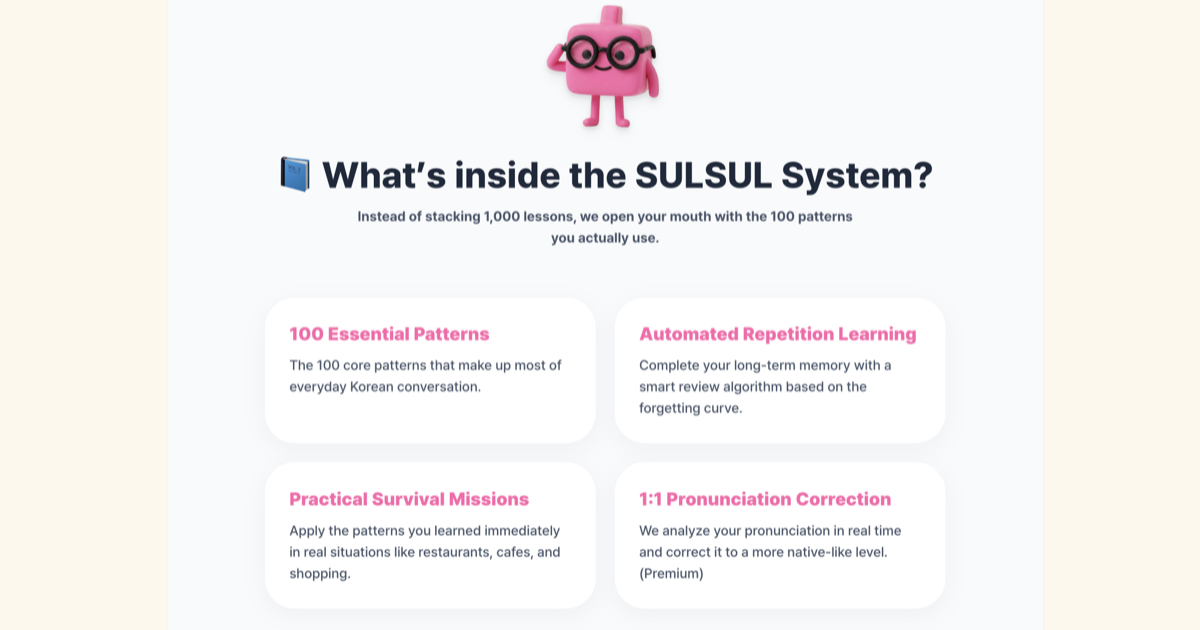
SULSUL is a speaking gym for exactly that moment: pick a survival pattern, say it out loud, get an instant fix from the AI pronunciation coach, then run the real situation as a mission. The 100-pattern PDF workbook comes along as a bonus.