Korean Phrases for Cooking Ramyeon at a Hangang Convenience Store


Instant noodles eaten on a mat by the Han River are in half the vlogs about Seoul, and the reason is a small metal box at the back of the convenience store: a 라면 기계 (ramyeon gigye), a ramyeon cooker that fills a paper pot with boiling water and counts down for you. The noodles are easy. Finding the machine and working out which button to press is where people stall, and 라면 기계 어디 있어요? (ramyeon gigye eodi isseoyo?), "Where's the ramyeon cooker?" is the line that skips the whole search.
- Find the machine: 라면 기계 어디 있어요? (ramyeon gigye eodi isseoyo?), "Where's the ramyeon cooker?"
- Ask how it works: 이거 어떻게 써요? (igeo eotteoke sseoyo?), "How do I use this?"
- Find the water: 뜨거운 물 어디서 받아요? (tteugeoun mul eodiseo badayo?), "Where do I get the hot water?"
- Get chopsticks: 젓가락 좀 주세요 (jeotgarak jom juseyo), "Could I have chopsticks, please."
- Check the timing: 얼마나 기다려요? (eolmana gidaryeoyo?), "How long do I wait?"
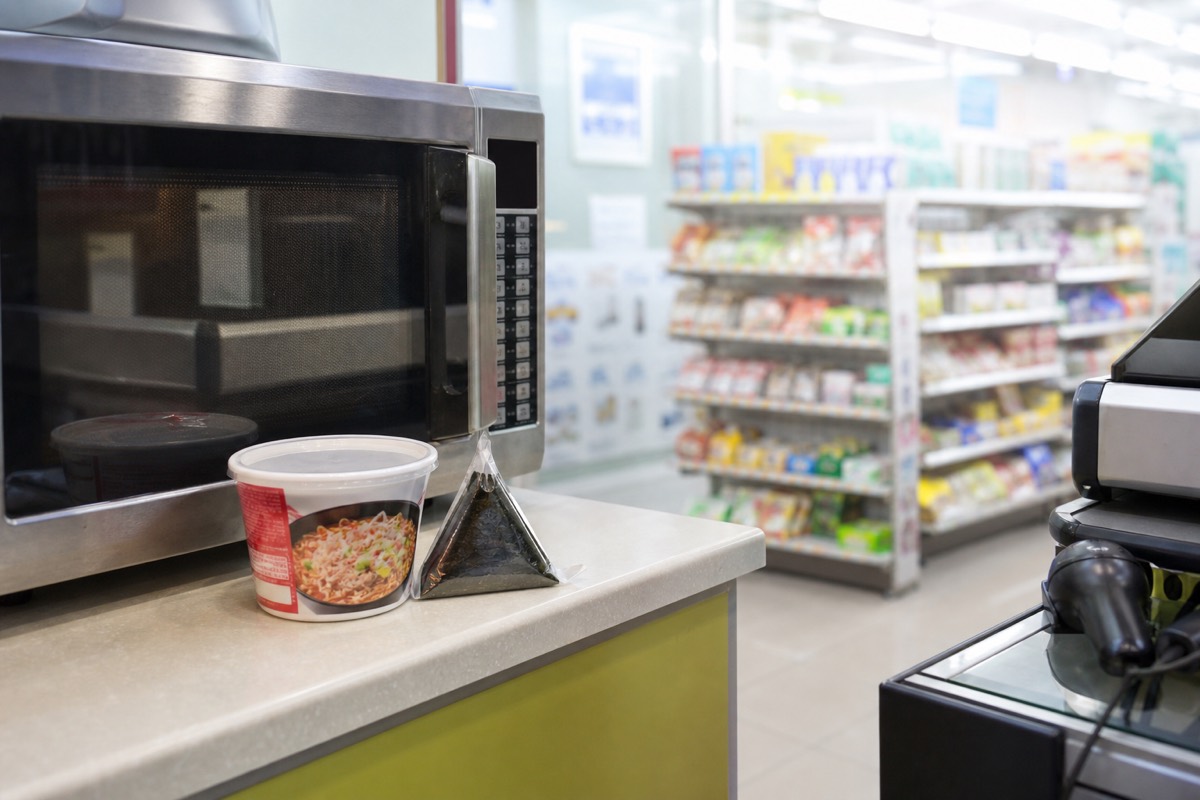
How do you get from the shelf to a hot pot?
The order is always the same, and the whole thing takes about as long as the countdown on the machine.
- Pick the cup from the shelf and pay first — the machine is for after the receipt, not before.
- 라면 기계 어디 있어요? at the counter, because in the riverside stores it is usually tucked beside the window seats rather than by the drinks.
- 이거 어떻게 써요? in front of the machine, and staff will point at the two buttons instead of explaining.
- 뜨거운 물 어디서 받아요? if the store has a plain hot-water dispenser instead of a cooker, which many smaller branches do.
- 젓가락 좀 주세요 before you sit down, since the chopstick box is often behind the counter and not out on the shelf.
| Moment | Say this |
|---|---|
| Looking for the cooker | 라면 기계 어디 있어요? (ramyeon gigye eodi isseoyo?) |
| Standing in front of it | 이거 어떻게 써요? (igeo eotteoke sseoyo?) |
| No machine, just a dispenser | 뜨거운 물 어디서 받아요? (tteugeoun mul eodiseo badayo?) |
| Before you sit | 젓가락 좀 주세요 (jeotgarak jom juseyo) |
| Waiting it out | 얼마나 기다려요? (eolmana gidaryeoyo?) |

Practice this out loud with SULSUL — the app says it, you repeat it →
What do Korean speakers say back?
Answers here are directions and two-word instructions, delivered while the staff keep scanning somebody else's basket.
You: 라면 기계 어디 있어요? — ramyeon gigye eodi isseoyo? — "Where's the ramyeon cooker?"
Them: 저쪽 창가에 있어요 — jeojjok changgae isseoyo — "It's over by the window."
You: 이거 어떻게 써요? — igeo eotteoke sseoyo? — "How do I use this?"
Them: 물 채우고 버튼 누르면 돼요 — mul chaeugo beoteun nureumyeon dwaeyo — "Fill it with water and press the button."
You: 얼마나 기다려요? — eolmana gidaryeoyo? — "How long do I wait?"
Them: 삼 분이면 돼요 — sam bunimyeon dwaeyo — "Three minutes will do it."
다 됐어요? (da dwaesseoyo?), "Is it ready?" is what you say to the person sitting next to you on the mat, and 다 익었어요 (da igeosseoyo), "It's cooked through," is the answer. For everything else inside the same store — the card reader, the bag, the warmer — see Korean phrases for a Korean convenience store.
What usually goes wrong at the ramyeon machine?
The first thing is the word on the machine itself. Signs say 온수 (onsu), the written word for hot water, while people say 뜨거운 물 out loud. Learners scan the buttons for something matching what they practised, don't find it, and give up on asking.
The second is the leftover broth. There is a separate container for it beside the bin, and pouring it into the regular trash is the one thing staff will come over about — 국물 버리는 곳 어디예요? (gungmul beorineun got eodiyeyo?), "Where do I pour out the broth?" handles it in one sentence. For picking the cup in the first place when every shelf is a flavour you have never seen, see Korean phrases for a viral convenience store snack.
Say it out loud, not just in your head
Nobody has time to type this into a translator: the counter is busy, the machine is beeping, and the mat by the river is already taken by the time you look up.
SULSUL is a speaking gym for exactly that moment: pick a survival pattern, say it out loud, get an instant fix from the AI pronunciation coach, then run the real situation as a mission. The 100-pattern PDF workbook comes along as a bonus.