Korean Phrases for Cooking the Dish You Saw in a K-Drama

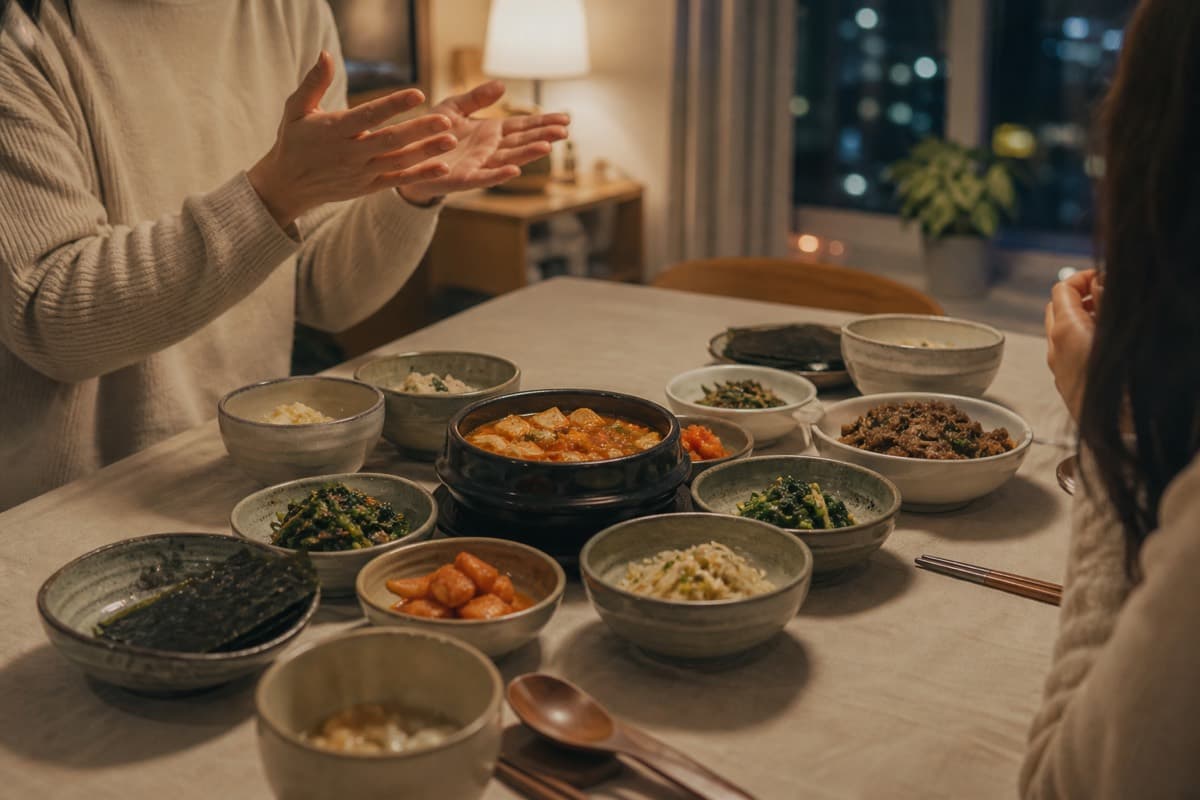
Some K-drama scenes end with the whole fandom hungry — a bowl of noodles eaten on a rooftop, a stew shared at a kitchen table — and the group chat turns into a recipe thread. 레시피 알려주세요 (resipi allyeojuseyo), "Please share the recipe," is the line that starts it, and 재료 어디서 사요? (jaeryo eodiseo sayo?), "Where do you buy the ingredients?" is the one that decides whether you actually cook it this week.
- Name the dish: 이거 드라마에 나온 거예요 (igeo deuramae naon geoyeyo), "This is the one from the drama."
- Ask for the recipe: 레시피 알려주세요 (resipi allyeojuseyo), "Please share the recipe."
- Find the ingredients: 재료 어디서 사요? (jaeryo eodiseo sayo?), "Where do you buy the ingredients?"
- Check the seasoning: 간 좀 봐주세요 (gan jom bwajuseyo), "Taste it and tell me if the seasoning is right."
- Report the result: 맛있게 됐어요 (masitge dwaesseoyo), "It turned out well."
How do you get from a drama scene to a real dish?
Fans who cook the scene almost always ask a Korean friend first, because the recipe blogs assume you already know the ingredient names.
- Send a screenshot with 이거 드라마에 나온 거예요 so everyone knows which scene you mean.
- Ask 레시피 알려주세요 — home versions come back shorter and easier than anything you would find searching.
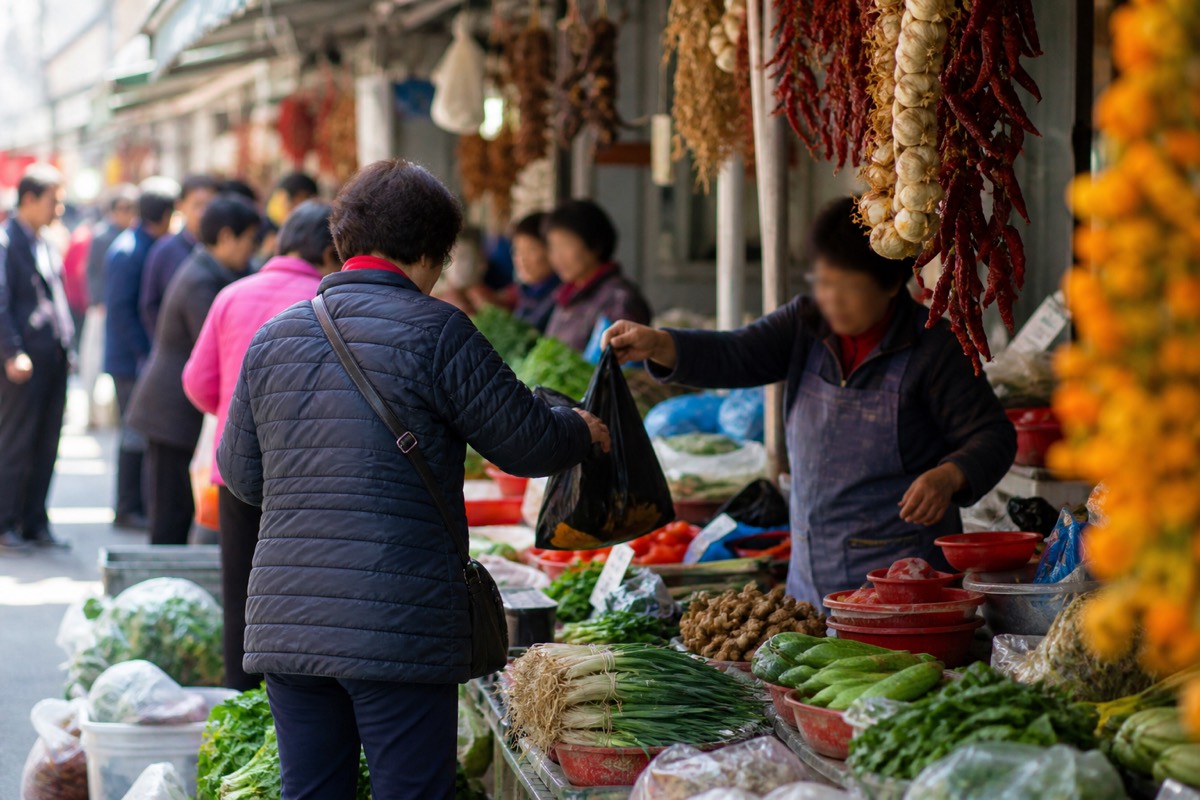
- At the store, 재료 어디서 사요? saves you from wandering the aisles guessing at labels.
- While it simmers, 간 좀 봐주세요 invites the person next to you to fix it before it is too late.
- Send a photo of the finished bowl with 맛있게 됐어요 — that is the reply the thread is waiting for.
| Moment | Say this |
|---|---|
| Name the dish | 이거 드라마에 나온 거예요 (igeo deuramae naon geoyeyo) |
| Ask for the recipe | 레시피 알려주세요 (resipi allyeojuseyo) |
| Find ingredients | 재료 어디서 사요? (jaeryo eodiseo sayo?) |
| Check the seasoning | 간 좀 봐주세요 (gan jom bwajuseyo) |
| Report the result | 맛있게 됐어요 (masitge dwaesseoyo) |

Practice this out loud with SULSUL — the app says it, you repeat it →
What do Korean speakers say back?
Recipe talk is warm and casual — people love being asked about food they grew up with.
You: 이거 드라마에 나온 거예요. — igeo deuramae naon geoyeyo. — "This is the one from the drama."
Them: 아, 그거 저도 봤어요. 집에서도 쉽게 만들어요 — a, geugeo jeodo bwasseoyo. jibeseodo swipge mandeureoyo — "Oh, I watched that too. It's easy to make at home."
You: 재료 어디서 사요? — jaeryo eodiseo sayo?
If the shop clerk points at a shelf instead of answering, repeating the ingredient name on its own is usually enough. For the aisles themselves, see Korean phrases at a Korean supermarket.
What usually goes wrong in the kitchen?
Learners look up the dish name in English, ask for it by that name, and get a blank look — the drama title travels, the food name often does not. Showing the scene with 이거 드라마에 나온 거예요 clears it up in one message.
The other slip is cooking the whole thing alone and only asking after it is done. 간 좀 봐주세요 halfway through is the sentence that saves the pot. When someone else cooks for you, see how to compliment a Korean friend's cooking.
Say it out loud, not just in your head
Kitchen conversations move too fast for looking up romanization mid-recipe.
SULSUL is a speaking gym for exactly that moment: pick a survival pattern, say it out loud, get an instant fix from the AI pronunciation coach, then run the real situation as a mission. The 100-pattern PDF workbook comes along as a bonus.