Korean Phrases for a Museum in Korea
Korean phrases for a museum combine Pattern 44 from the SULSUL workbook — 아/어도 돼요? (a/eodo dwaeyo?), "May I…?" — with Pattern 04 location questions. At the desk, ask about photos before you raise your phone inside a gallery. 입구 어디예요? (ipgu eodiyeyo?), "Where is the entrance?" gets you pointed to the right wing when the building has more than one door.
- Ask about photos: 사진 찍어도 돼요? (sajin jjigeodo dwaeyo?), "May I take photos?"
- Find the entrance: 입구 어디예요? (ipgu eodiyeyo?), "Where is the entrance?"
- Check admission: 입장료 얼마예요? (ipjangnyo eolmayeyo?), "How much is admission?"
- Leave a bag: 가방 맡길 수 있어요? (gabang matgil su isseoyo?), "Can I leave my bag here?"
- Ask to sit: 여기 앉아도 돼요? (yeogi anjado dwaeyo?), "May I sit here?"
How do you ask about photos and bags at the ticket desk?
Many Korean museums ban flash photography in special exhibitions but allow phone photos in the permanent collection. Staff answer faster when you ask before you walk through the gate.
You: 안녕하세요. 사진 찍어도 돼요? — annyeonghaseyo. sajin jjigeodo dwaeyo? — "Hello. May I take photos?"
Them: 플래시는 안 돼요. — peullaesineun an dwaeyo. — "Flash is not allowed."
You: 알겠습니다. 입장료 얼마예요? — algetseumnida. ipjangnyo eolmayeyo? — "Got it. How much is admission?"
| Situation | Say this |
|---|---|
| May I take photos? | 사진 찍어도 돼요? (sajin jjigeodo dwaeyo?) |
| Where is the entrance? | 입구 어디예요? (ipgu eodiyeyo?) |
| Admission price | 입장료 얼마예요? (ipjangnyo eolmayeyo?) |
| Leave a bag | 가방 맡길 수 있어요? (gabang matgil su isseoyo?) |
| May I sit here? | 여기 앉아도 돼요? (yeogi anjado dwaeyo?) |
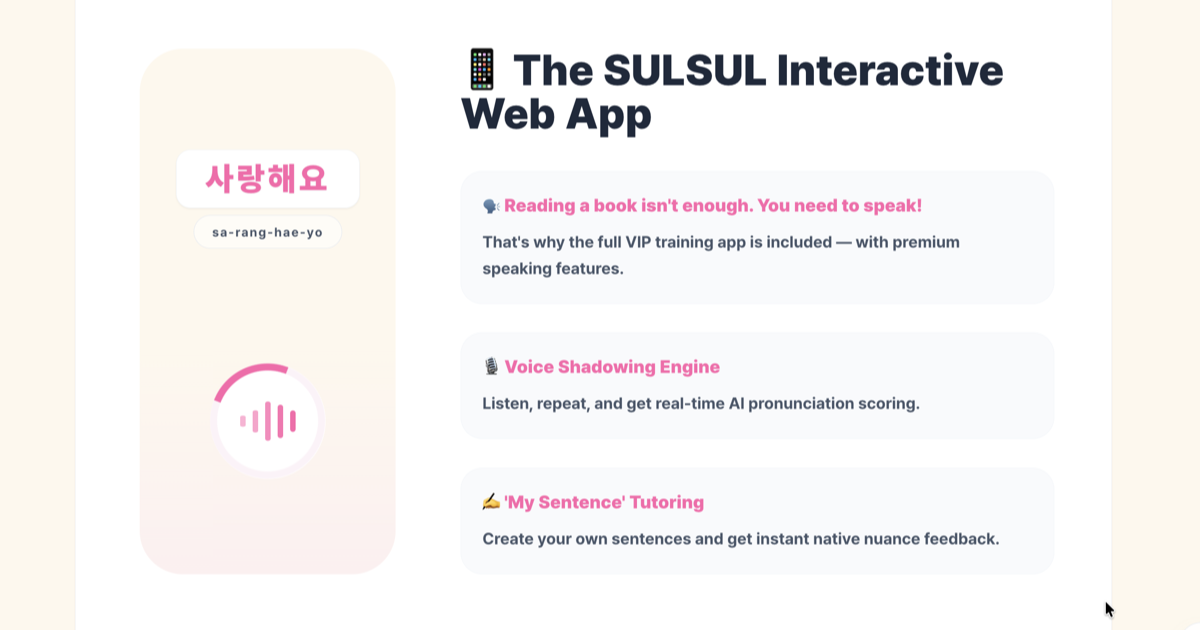
Practice this out loud with SULSUL — the app says it, you repeat it →
What do you say inside the gallery?
Exhibition halls in Seoul often split across floors. If a sign is only in Korean, point and ask 이게 뭐예요? (ige mwoyeyo?), "What is this?" A guard may add 만지면 안 돼요 (manjimyeon an dwaeyo), "You must not touch it," which is the prohibition side of Pattern 44.
You: 화장실 어디 있어요? — hwajangsil eodi isseoyo? — "Where is the restroom?"
Them: 1층이에요. — ilcheung-ieyo. — "It is on the first floor."
You: 감사합니다. — gamsahamnida. — "Thank you."
The same 어디 있어요? (eodi isseoyo?) line from asking where the restroom is works in every public building, not just cafes.
What usually goes wrong at a Korean museum?
Visitors snap a photo first and get a soft 안 돼요 (an dwaeyo) from staff — asking at the desk prevents that walk of shame. A second mistake is sitting on a ledge near a sculpture; 여기 앉아도 돼요? takes one second and shows you read the room.
When staff say 괜찮아요 (gwaenchanayo), "That is fine," they are answering your permission question the native way the workbook describes — you do not always hear 네, 돼요 (ne, dwaeyo) back. For permission phrases at a fan event where lines move fast, Korean phrases for a fan sign in Seoul uses the same Pattern 23 request ending in a louder room.
Say it out loud, not just in your head
Reading the photo-permission line on a museum brochure is not the same as saying it while a guard is already walking toward you.
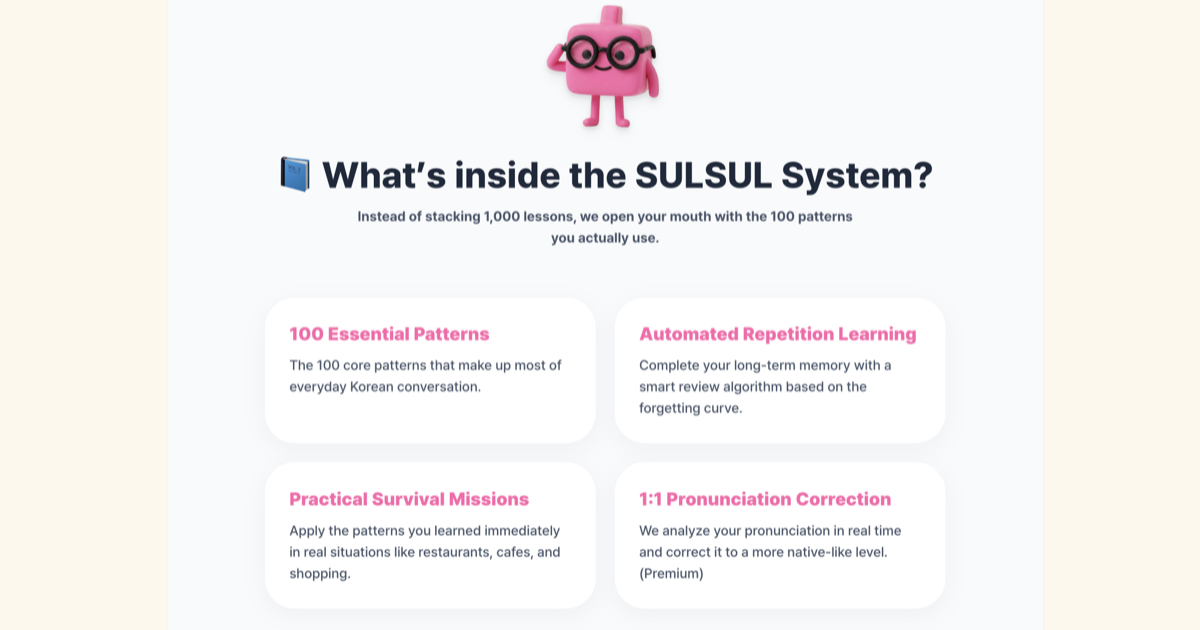
SULSUL is a speaking gym for exactly that moment: pick a survival pattern, say it out loud, get an instant fix from the AI pronunciation coach, then run the real situation as a mission. The 100-pattern PDF workbook comes along as a bonus.