Korean Phrases at a Hostel in Korea

Korean phrases at a 호스텔 (hoseutel, hostel) or 게스트하우스 (geseuteu hauseu, guesthouse) start with Pattern 05 from the SULSUL workbook — noun plus 이에요 / 예요 (ieyo / yeyo), "it is." Walk up to the desk and say 예약자예요 (yeoyakjayeoyo), "I have a reservation," or 체크인하려고 왔어요 (chekeu-in haryeogo wasseoyo), "I came to check in." Pattern 03 — 있어요? (isseoyo?) — covers basics the moment you drop your bag: 와이파이 있어요? (waipai isseoyo?), "Is there Wi-Fi?"
- I have a booking: 예약자예요 (yeoyakjayeoyo), "I have a reservation."
- Check in: 체크인하려고 왔어요 (chekeu-in haryeogo wasseoyo), "I came to check in."
- Wi-Fi available: 와이파이 있어요? (waipai isseoyo?), "Is there Wi-Fi?"
- Locker for bags: 짐 보관함 있어요? (jim bogwanham isseoyo?), "Is there a luggage locker?"
- Quiet hours: 몇 시까지 조용해야 해요? (myeot sikkaji joyonghaeya haeyo?), "Until what time should it be quiet?"
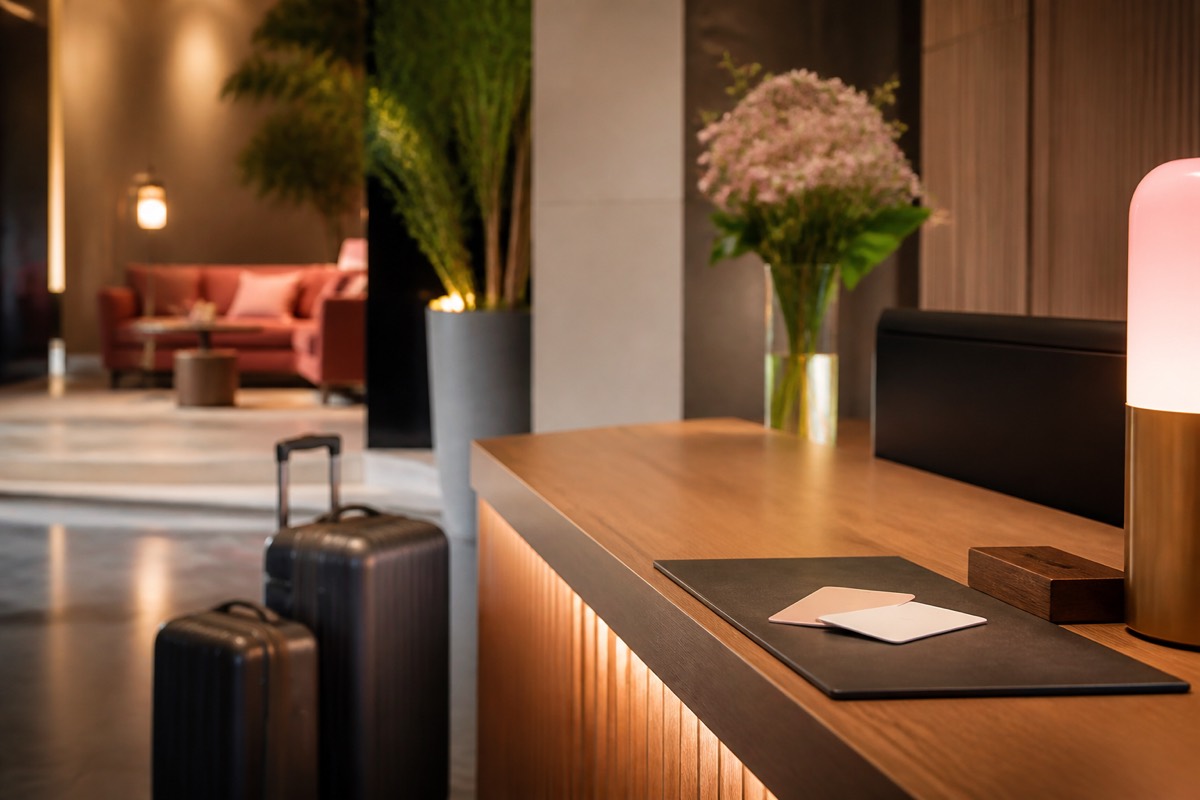
How do you check in at a Korean hostel?
Budget 호스텔 (hoseutel) desks are often staffed by one person who also answers KakaoTalk messages. Lead with Pattern 05 — who you are on the booking — not a long travel story.
You: 안녕하세요. 예약자예요. — annyeonghaseyo. yeoyakjayeoyo. — "Hello. I have a reservation."
Them: 성함이 어떻게 되세요? — seonghami eotteoke doeseyo? — "What is your name?"
You: 매튜예요. Booking.com으로 했어요. — maetyuyeoyo. Booking.com-euro haesseoyo. — "It is Matthew. I booked on Booking.com."
| Situation | Say this |
|---|---|
| Have a reservation | 예약자예요 (yeoyakjayeoyo) |
| Came to check in | 체크인하려고 왔어요 (chekeu-in haryeogo wasseoyo) |
| Wi-Fi? | 와이파이 있어요? (waipai isseoyo?) |
| Luggage locker | 짐 보관함 있어요? (jim bogwanham isseoyo?) |
| Quiet hours | 몇 시까지 조용해야 해요? (myeot sikkaji joyonghaeya haeyo?) |
Practice this out loud with SULSUL — the app says it, you repeat it →
What do you ask after you get your room key?
Hostels often use a code lock or a card instead of a metal key. Pattern 41 — 아/어야 해요 (a/eoya haeyo), "have to" — covers house rules: 신발 벗어야 해요? (sinbal beoseoya haeyo?), "Do I have to take off my shoes?" Pattern 23 — 알려 주세요 (allyeo juseyo) — gets the Wi-Fi password fast.
You: 와이파이 있어요? — waipai isseoyo? — "Is there Wi-Fi?"
Them: 네, 비밀번호는 reception123이에요. — ne, bimilbeonhoneun reception123-ieyo. — "Yes, the password is reception123."
You: 짐 보관함 있어요? — jim bogwanham isseoyo? — "Is there a luggage locker?"
For hotel front desks with more formal service, how to check into a hotel in Korean covers the same Pattern 05 opener with 예약했어요 (yeoyakhaesseoyo). For station lockers after checkout, see Korean phrases for using a coin locker in Korea.
What usually goes wrong at a Korean hostel?
Travelers walk into the dorm before staff assign a bed and get redirected — 체크인하려고 왔어요 at the desk first. A second mistake is showering during 조용 시간 (joyong sigan, quiet hours) without asking; 몇 시까지 조용해야 해요? at check-in saves an awkward note on the whiteboard later.
You: 몇 시까지 조용해야 해요? — myeot sikkaji joyonghaeya haeyo? — "Until what time should it be quiet?"
Them: 11시부터예요. — yeol han sibuteo-yeyo. — "From 11 p.m."
You: 네, 알겠어요. 감사합니다. — ne, algesseoyo. gamsahamnida. — "Okay, got it. Thank you."
Say it out loud, not just in your head
Reading 예약자예요 on a booking confirmation is not the same as saying it to a hostel host while other guests are checking in behind you.
SULSUL is a speaking gym for exactly that moment: pick a survival pattern, say it out loud, get an instant fix from the AI pronunciation coach, then run the real situation as a mission. The 100-pattern PDF workbook comes along as a bonus.