Korean Phrases at a Movie Theater in Korea

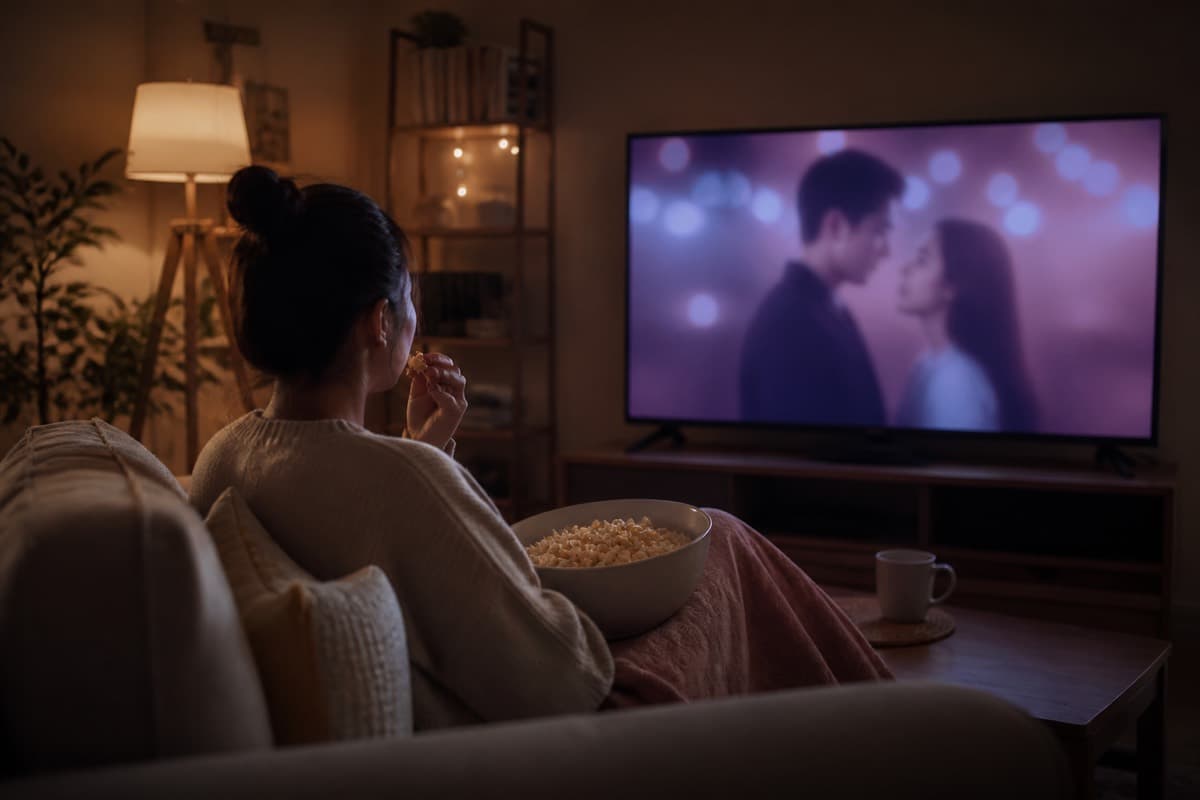
Korean phrases at a 영화관 (yeonghwagwan, movie theater) start with Pattern 03 from the SULSUL workbook — noun plus 있어요? (isseoyo?), "do you have?" Ask 표 있어요? (pyo isseoyo?), "Do you have tickets?" at the box office, then name the film with Pattern 02 — verb plus 고 싶어요 (go sipeoyo), "I want to" — 이 영화 보고 싶어요 (i yeonghwa bogo sipeoyo), "I want to watch this movie."
- Ask about tickets: 표 있어요? (pyo isseoyo?), "Do you have tickets?"
- Name the film: 이 영화 보고 싶어요 (i yeonghwa bogo sipeoyo), "I want to watch this movie."
- Snack counter: 팝콘 주세요 (papkon juseyo), "Popcorn, please."
- Pick a showtime: 몇 시 상영이에요? (myeot si sangyeong-ieyo?), "What time is the screening?"
- Theater rules: 극장에서 전화하면 안 돼요 (geukjang-eseo jeonhwahamyeon an dwaeyo), "You must not use your phone in the theater."
How do you buy tickets at a Korean cinema?
Major chains — CGV, 롯데시네마 (Lotte Cinema), 메가박스 (Megabox) — sell tickets at kiosks and counters. English menus appear on many screens, but staff still answer faster when you lead with Pattern 03 instead of a long English question.
You: 안녕하세요, 표 있어요? — annyeonghaseyo, pyo isseoyo? — "Hello, do you have tickets?"
Them: 몇 시요? — myeot siyo? — "For what time?"
You: 7시 상영 보고 싶어요. — ilgop si sangyeong bogo sipeoyo. — "I want the 7 o'clock screening."
| Situation | Say this |
|---|---|
| Tickets available? | 표 있어요? (pyo isseoyo?) |
| Want this movie | 이 영화 보고 싶어요 (i yeonghwa bogo sipeoyo) |
| What time? | 몇 시 상영이에요? (myeot si sangyeong-ieyo?) |
| Popcorn, please | 팝콘 주세요 (papkon juseyo) |
| No phone calls | 극장에서 전화하면 안 돼요 (geukjang-eseo jeonhwahamyeon an dwaeyo) |
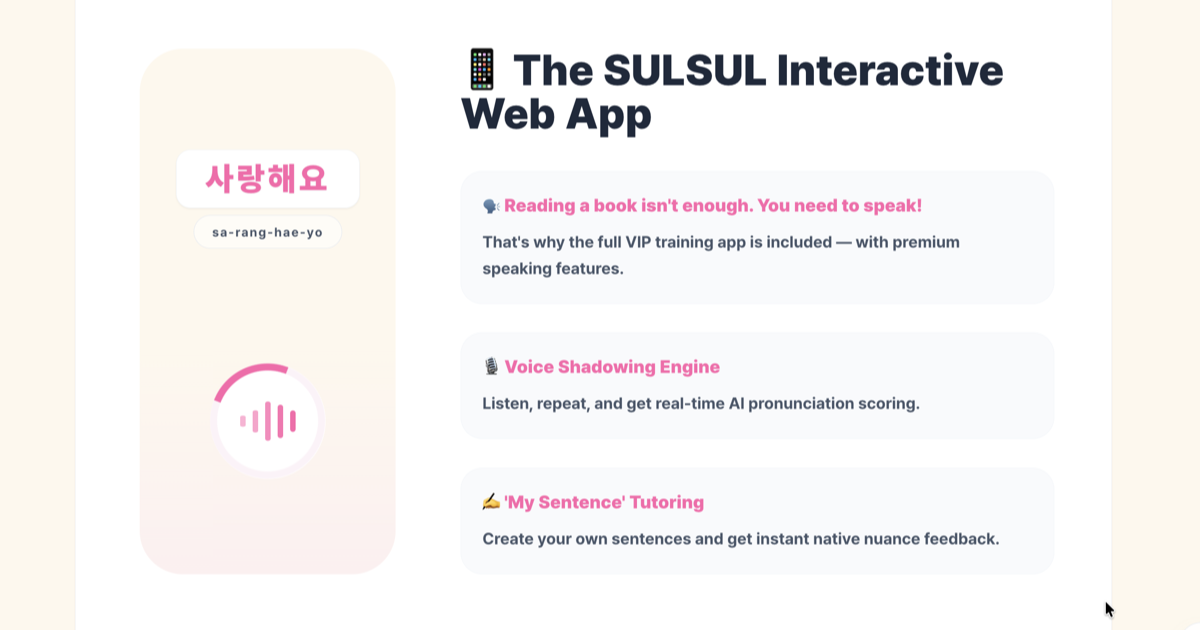
Practice this out loud with SULSUL — the app says it, you repeat it →
What do you say at the snack counter?
Pattern 01 — noun plus 주세요 (juseyo), "please give me" — is the fastest line at 매점 (maejeom, concession stand). Point at the combo on the menu board and add 콜라도 주세요 (kollado juseyo), "A cola too, please," when you want a drink with your 팝콘 (papkon, popcorn).
You: 팝콘 주세요. — papkon juseyo. — "Popcorn, please."
Them: 어떤 거요? — eotteon geoyo? — "Which kind?"
You: 버터 맛이요. — beoteo mas-iyo. — "Butter flavor."
For inviting a friend before you reach the lobby, Pattern 25 from the workbook — 같이 영화 볼래요? (gachi yeonghwa bollaeyo?), "Shall we watch a movie together?" — is covered in how to ask a Korean friend to hang out. At the counter, stick to Pattern 02 and Pattern 03.
What usually goes wrong at a Korean movie theater?
Travelers buy the wrong ticket type — 2D versus 4DX or IMAX — because the kiosk screen switched to Korean mid-flow. Say 영어 메뉴 있어요? (yeongeo menu isseoyo?), "Is there an English menu?" or tap the globe icon before you pay.
A second mistake is leaving the phone on silent. Pattern 44 in the workbook covers theater etiquette: 극장에서 전화하면 안 돼요 (geukjang-eseo jeonhwahamyeon an dwaeyo), "You must not make phone calls in the theater." Vibrate is fine; a bright screen during a quiet scene is not.
You: 자막 영화예요? — jamak yeonghwayeyo? — "Is this a subtitled screening?"
Them: 네, 한국어 자막이에요. — ne, hangugeo jamak-ieyo. — "Yes, Korean subtitles."
You: 알겠어요, 감사합니다. — algesseoyo, gamsahamnida. — "Got it, thank you."
Say it out loud, not just in your head
Reading 표 있어요? on a kiosk screen is not the same as saying it while the line behind you is growing.
SULSUL is a speaking gym for exactly that moment: pick a survival pattern, say it out loud, get an instant fix from the AI pronunciation coach, then run the real situation as a mission. The 100-pattern PDF workbook comes along as a bonus.