Korean Phrases at a Gym in Korea
Korean phrases at a 헬스장 (helseujang, gym) start with Pattern 12 from the SULSUL workbook — verb plus ㄹ/을 수 있어요? (l/eul su isseoyo?), "Can I…?" Ask 헬스장 이용할 수 있어요? (helseujang iyonghal su isseoyo?), "Can I use the gym?" at the front desk. Pattern 10 — verb plus 고 있어요 (go isseoyo), "I am doing" — covers what you are on: 런닝머신 사용하고 있어요 (reonningmeosin sayonghago isseoyo), "I am using the treadmill."
- Ask to use the gym: 헬스장 이용할 수 있어요? (helseujang iyonghal su isseoyo?), "Can I use the gym?"
- Say what you are on: 런닝머신 사용하고 있어요 (reonningmeosin sayonghago isseoyo), "I am using the treadmill."
- Need a day pass: 일일권 있어요? (ilirgwon isseoyo?), "Do you have a day pass?"
- Ask where to change: 탈의실 어디예요? (taruisil eodiyeyo?), "Where is the locker room?"
- Towel request: 수건 하나 주세요 (sugeon hana juseyo), "One towel, please."
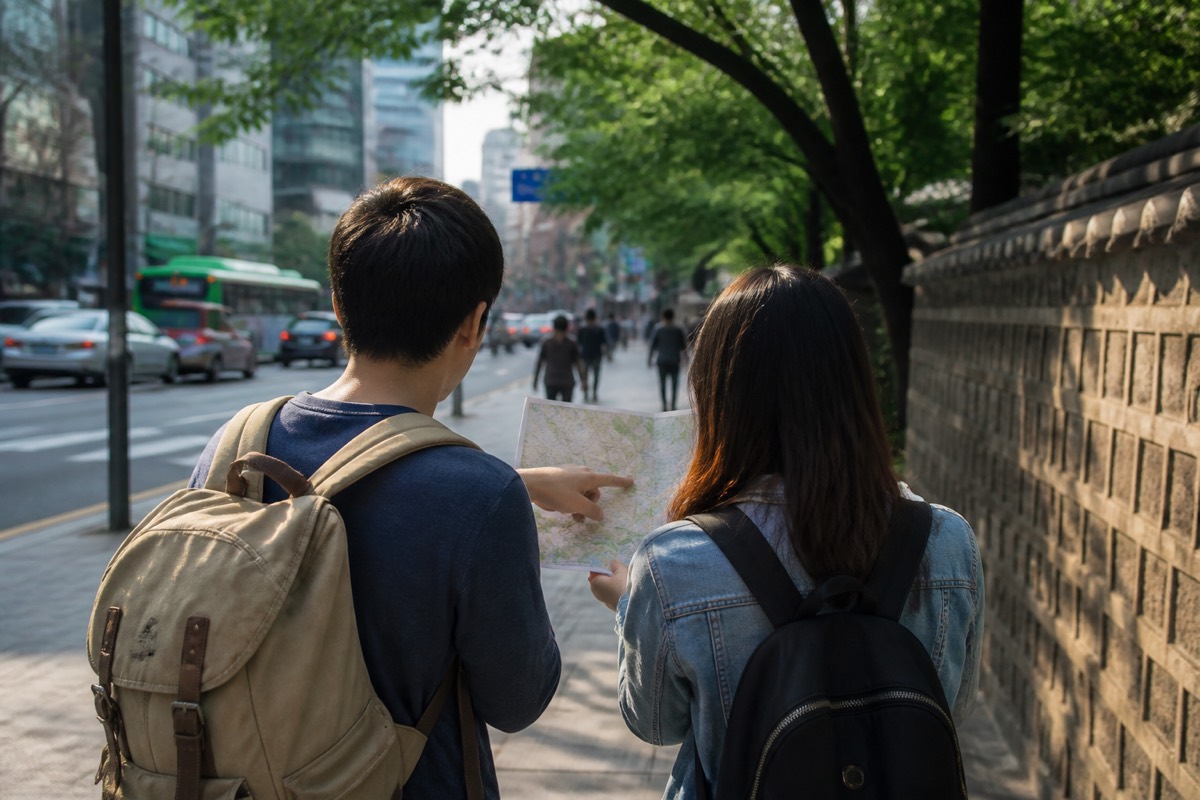
How do you check in at a Korean gym?
Hotel gyms and standalone 헬스장 (helseujang) often require a membership card or a one-day pass. Front-desk staff answer faster when you lead with Pattern 12 — can I — instead of a long English explanation.
You: 안녕하세요, 헬스장 이용할 수 있어요? — annyeonghaseyo, helseujang iyonghal su isseoyo? — "Hello, can I use the gym?"
Them: 호텔 투숙객이세요? — hotel tusukgaeg-iseyo? — "Are you a hotel guest?"
You: 네, 305호예요. — ne, sambaek oho-yeyo. — "Yes, room 305."
| Situation | Say this |
|---|---|
| Can I use the gym? | 헬스장 이용할 수 있어요? (helseujang iyonghal su isseoyo?) |
| Day pass available? | 일일권 있어요? (ilirgwon isseoyo?) |
| Where is the locker room? | 탈의실 어디예요? (taruisil eodiyeyo?) |
| One towel, please | 수건 하나 주세요 (sugeon hana juseyo) |
| Using the treadmill | 런닝머신 사용하고 있어요 (reonningmeosin sayonghago isseoyo) |
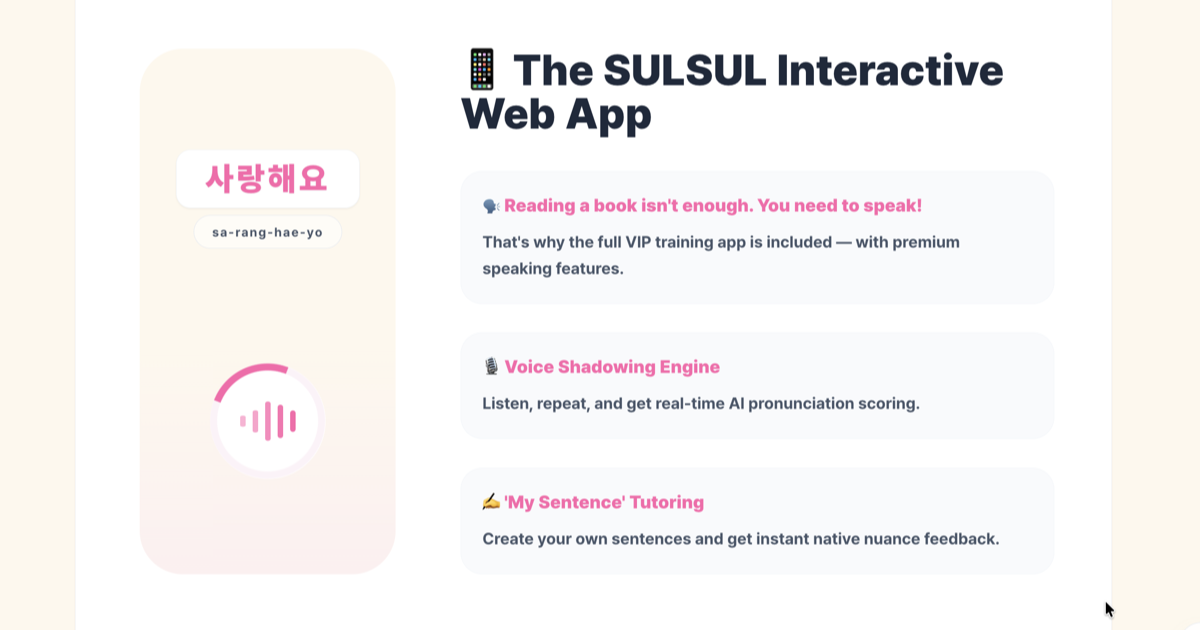
Practice this out loud with SULSUL — the app says it, you repeat it →
What do you say on the floor?
Pattern 10 tells staff what machine you are on without stopping your set. If someone asks whether a bench is free, answer with 네, 사용하고 있어요 (ne, sayonghago isseoyo), "Yes, I am using it," or 아니요, 비었어요 (aniyo, bieosseoyo), "No, it is free."
You: 이 기구 사용해도 돼요? — i gigu sayonghaedo dwaeyo? — "Can I use this machine?"
Them: 네, 괜찮아요. — ne, gwaenchanayo. — "Yes, that is fine."
You: 감사합니다. — gamsahamnida. — "Thank you."
Pattern 44 from the workbook — 해도 돼요? (haedo dwaeyo?), "May I?" — fits equipment questions the same way it works for parking in Korean phrases for parking in Korea.
What usually goes wrong at a Korean gym?
Travelers walk straight to the weights and get stopped at the turnstile — ask 일일권 있어요? at the desk first. A second mistake is wearing outdoor shoes on the mat floor; look for 실내화 (silnaehwa, indoor shoes) shelves near 탈의실 (taruisil, locker room) and swap before you stretch.
If your shoulder or knee hurts mid-session, 아파요 (apayo), "It hurts," from the SULSUL body-and-health unit is enough to pause — then 쉬어야 해요 (swieoya haeyo), "I have to rest," uses Pattern 41 (아/어야 해요, a/eoya haeyo, "have to").
You: 무릎이 아파요. — mureup-i apayo. — "My knee hurts."
Them: 잠깐 쉬세요. — jamkkan swiseyo. — "Rest for a moment."
You: 네, 쉬어야 해요. — ne, swieoya haeyo. — "Yes, I need to rest."
Say it out loud, not just in your head
Reading 헬스장 이용할 수 있어요? on a hotel map is not the same as saying it while the front desk phone is ringing.
SULSUL is a speaking gym for exactly that moment: pick a survival pattern, say it out loud, get an instant fix from the AI pronunciation coach, then run the real situation as a mission. The 100-pattern PDF workbook comes along as a bonus.