How to Check Into a Hotel in Korean

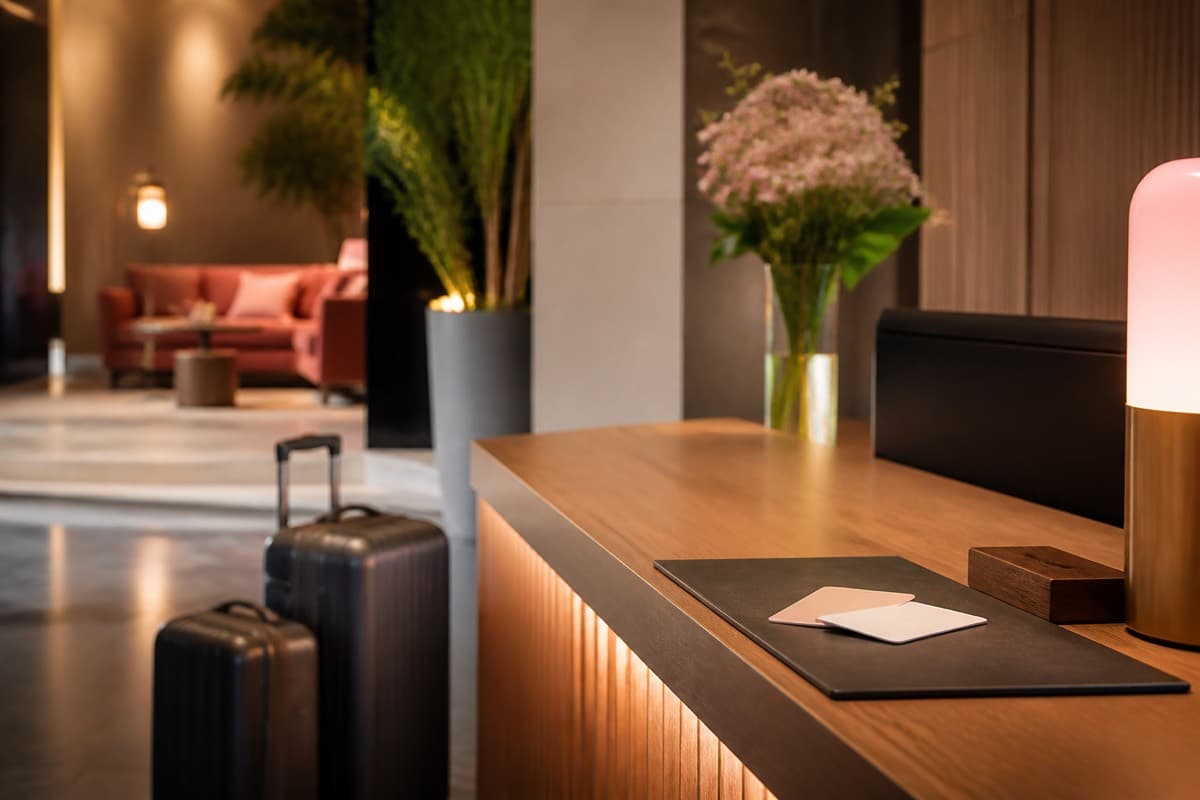
To check into a hotel in Korean, walk up to the desk and say 체크인하려고 왔어요 (chekeuinharyeogo wasseoyo), "I'm here to check in." The receptionist then asks your reservation name, hands over a room card, and states the checkout time — catching that reply matters as much as the opening line.
- Open with 체크인하려고 왔어요 (chekeuinharyeogo wasseoyo), "I'm here to check in," as soon as you reach the desk.
- Answer 예약하셨나요? (yeyakhasyeonnayo?), "Do you have a reservation?" with 네, 예약했어요 (ne, yeyakhaesseoyo), "Yes, I made a reservation."
- Ask 제 방 번호가 몇 번이에요? (je bang beonhoga myeot beonieyo?), "What is my room number?" if the receptionist doesn't say it clearly.
- If the reply is too fast, say 다시 말씀해 주세요 (dasi malsseumhae juseyo), "Please say that again."
Give Your Name and Show ID
Right after your opening line, the receptionist checks the booking and usually asks 예약하셨나요? (yeyakhasyeonnayo?), "Do you have a reservation?" Confirm with 네, 예약했어요 (ne, yeyakhaesseoyo), then give the exact name on the booking, not a nickname.
You: 네, 예약했어요. 이름은 데이비드 김이에요. — ne, yeyakhaesseoyo. ireumeun Deibideu Gimieyo. — "Yes, I made a reservation. The name is David Kim."
Them: 신분증 좀 보여 주시겠어요? — sinbunjeung jom boyeo jusigesseoyo? — "Could you show me your ID, please?"
You: 네, 여기 있어요. — ne, yeogi isseoyo. — "Yes, here it is."
Hand over whichever ID your booking confirmation actually lists — requirements differ by hotel.
Practice this out loud with SULSUL — the app says it, you repeat it →
Ask About Your Room, Wi-Fi, and Breakfast
Ask what you actually need before heading upstairs. Korean room numbers add 호 (ho) after the number, so 805호 means "room 805."
| Ask this | What it means |
|---|---|
| 제 방 번호가 몇 번이에요? (je bang beonhoga myeot beonieyo?) | What is my room number? |
| 와이파이 비밀번호가 뭐예요? (waipai bimilbeonhoga mwoyeyo?) | What is the Wi-Fi password? |
| 조식이 포함되어 있어요? (josigi pohamdoeeo isseoyo?) | Is breakfast included? |
| 짐을 맡길 수 있을까요? (jimeul matgil su isseulkkayo?) | Could I leave my luggage here? |
| 늦게 체크아웃할 수 있어요? (neutge chekeuauthal su isseoyo?) | Can I check out late? |
What usually goes wrong: travelers nod at the room number instead of repeating it. Confirm it as a question — 805호요? (palbaeg-ohoyo?) — before walking away.
Handle a Problem With the Room
If something in the room is actually broken, name it directly instead of describing the symptom in English.
You: 방에 문제가 있어요. 에어컨이 안 돼요. — bange munjega isseoyo. eeokeoni an dwaeyo. — "There's a problem with the room. The air conditioner isn't working."
Them: 확인해 드리겠습니다. — hwaginhae deurigetseumnida. — "I'll check on that for you."
You: 감사합니다. — gamsahamnida. — "Thank you."
Report it right away, not at checkout, and someone is sent up the same day.
A Five-Step Arrival Script
- Greet the desk with 안녕하세요 (annyeonghaseyo), "Hello."
- State why you're there and confirm your reservation.
- Give the exact name on your booking and show ID when asked.
- Confirm your room number and the checkout time before you leave the desk.
- Close with 감사합니다 (gamsahamnida), "Thank you."
A note from Yona: guests usually memorize the opening line, then freeze at the receptionist's reply — that reply is the half worth rehearsing.
Say it out loud, not just in your head
Reading 체크인하려고 왔어요 here isn't the same as saying it while a real receptionist is waiting for your answer.
SULSUL is a speaking gym for exactly that moment: pick a survival pattern, say it out loud, get an instant fix from the AI pronunciation coach, then run the real situation as a mission. The 100-pattern PDF workbook comes along as a bonus.