How to Check Out of a Hotel in Korean
To check out of a hotel in Korean, walk to the front desk and say 체크아웃하려고 왔어요 (chekeuautharyeogo wasseoyo), "I'm here to check out." Hand back your room key, listen for the final total, and say 영수증 주세요 (yeongsujeung juseyo), "The receipt, please," if you need a paper copy.
- Open with 체크아웃하려고 왔어요 (chekeuautharyeogo wasseoyo), "I'm here to check out."
- Return the key with 방 열쇠 드릴게요 (bang yeolsoe deurilgeyo), "I'll give you the room key."
- Ask about luggage: 짐 맡길 수 있어요? (jim matgil su isseoyo?), "Can I leave my luggage here?"
- Request a taxi: 택시 불러 주세요 (taeksi bulleo juseyo), "Please call a taxi for me."
What do you say when you reach the desk?
Most Seoul hotels expect you at the desk even if you paid online. The opening line uses Pattern 47 from the SULSUL workbook — the purpose ending in 하려고 왔어요 (ryeogo wasseoyo), "I came to…," tells staff why you are there in one breath.
- Greet with 안녕하세요 (annyeonghaseyo), "Hello."
- State your checkout line and place your key card on the counter.
- Wait while they pull up your bill on screen.
- Confirm the total if anything looks unfamiliar.
- Say 감사합니다 (gamsahamnida) and leave.
If you checked in with the lines from how to check into a hotel in Korean, the checkout side is the mirror image — same desk, shorter exchange.
| Situation | Say this |
|---|---|
| Here to check out | 체크아웃하려고 왔어요 (chekeuautharyeogo wasseoyo) |
| Returning the key | 방 열쇠 드릴게요 (bang yeolsoe deurilgeyo) |
| Need a receipt | 영수증 주세요 (yeongsujeung juseyo) |
| Pay minibar charges | 미니바 사용했어요 (miniba sayonghaesseoyo) |
| Late checkout request | 늦게 체크아웃할 수 있을까요? (neutge chekeuauthal su isseulkkayo?) |
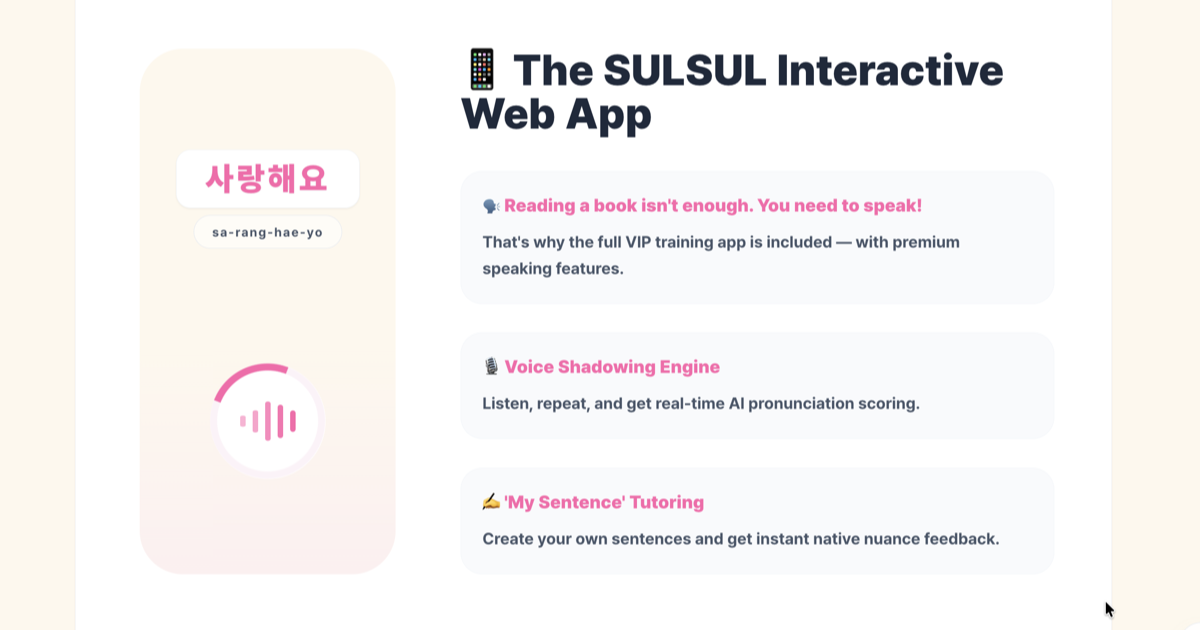
Practice this out loud with SULSUL — the app says it, you repeat it →
What does the receptionist usually reply?
Staff keep it short. Listen for the total and whether anything is still on your room account.
You: 체크아웃하려고 왔어요. 805호예요. — chekeuautharyeogo wasseoyo. palbaeg-ohoyo. — "I'm here to check out. Room 805."
Them: 카드로 결제하셨죠? 추가 요금 없으세요. — kadeuro gyeoljehasyeotjyo? chuga yogeum eopseuseyo. — "You paid by card, right? There are no extra charges."
You: 네, 감사합니다. — ne, gamsahamnida. — "Yes, thank you."
If they mention 미니바 (miniba), minibar, and you did use it, confirm with 네, 사용했어요 (ne, sayonghaesseoyo). If you did not, say 아니요, 안 썼어요 (aniyo, an sseosseoyo) calmly — one clear denial beats guessing.
What if you need to leave bags or catch a taxi?
Many travelers check out before an evening flight. 짐 맡길 수 있어요? (jim matgil su isseoyo?) uses Pattern 12 to ask whether leaving luggage is allowed. For a taxi, 택시 불러 주세요 (taeksi bulleo juseyo) applies Pattern 23, asking staff to do something for you.
A common mistake is walking away before the clerk finishes speaking — repeat the checkout time or room number as a quick question (11시까지요? (yeolhan sikkajiyo?), "Until 11?") so you do not miss a charge or a key deposit rule.
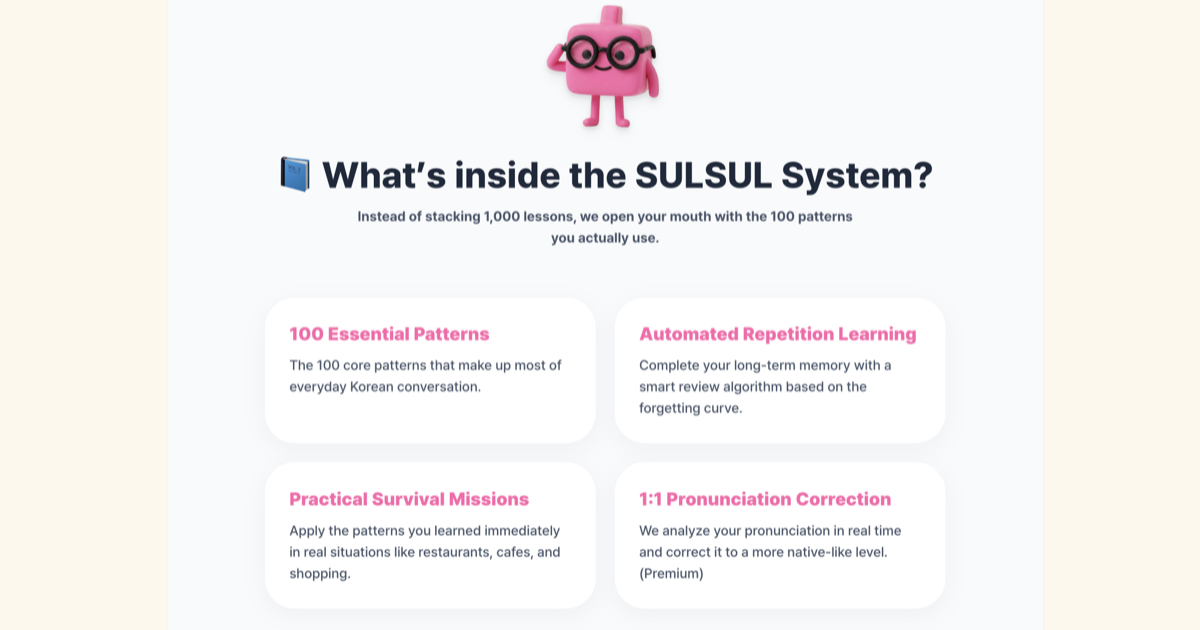
Say it out loud, not just in your head
Reading 체크아웃하려고 왔어요 on your phone is not the same as saying it while a receptionist is already reaching for your key card.
SULSUL is a speaking gym for exactly that moment: pick a survival pattern, say it out loud, get an instant fix from the AI pronunciation coach, then run the real situation as a mission. The 100-pattern PDF workbook comes along as a bonus.