Korean Phrases at a Library in Korea
Korean phrases at a library start with Pattern 04 from the SULSUL workbook — 어디 있어요? (eodi isseoyo?), "Where is…?" Ask 도서관 어디 있어요? (doseogwan eodi isseoyo?), "Where is the library?" at a subway information desk, then 책 빌릴 수 있어요? (chaek billil su isseoyo?), "Can I borrow books?" at the counter. Pattern 25 opens a study session with a Korean friend — 같이 공부할래요? (gachi gongbuhallaeyo?), "Shall we study together?"
- Find the building: 도서관 어디 있어요? (doseogwan eodi isseoyo?), "Where is the library?"
- Ask to borrow: 책 빌릴 수 있어요? (chaek billil su isseoyo?), "Can I borrow books?"
- Study together: 같이 공부할래요? (gachi gongbuhallaeyo?), "Shall we study together?"
- Ask where to sit: 앉을 자리 있어요? (anjeul jari isseoyo?), "Is there a seat?"
- Return a book: 반납하고 싶어요 (bannaphago sipeoyo), "I'd like to return (this)."
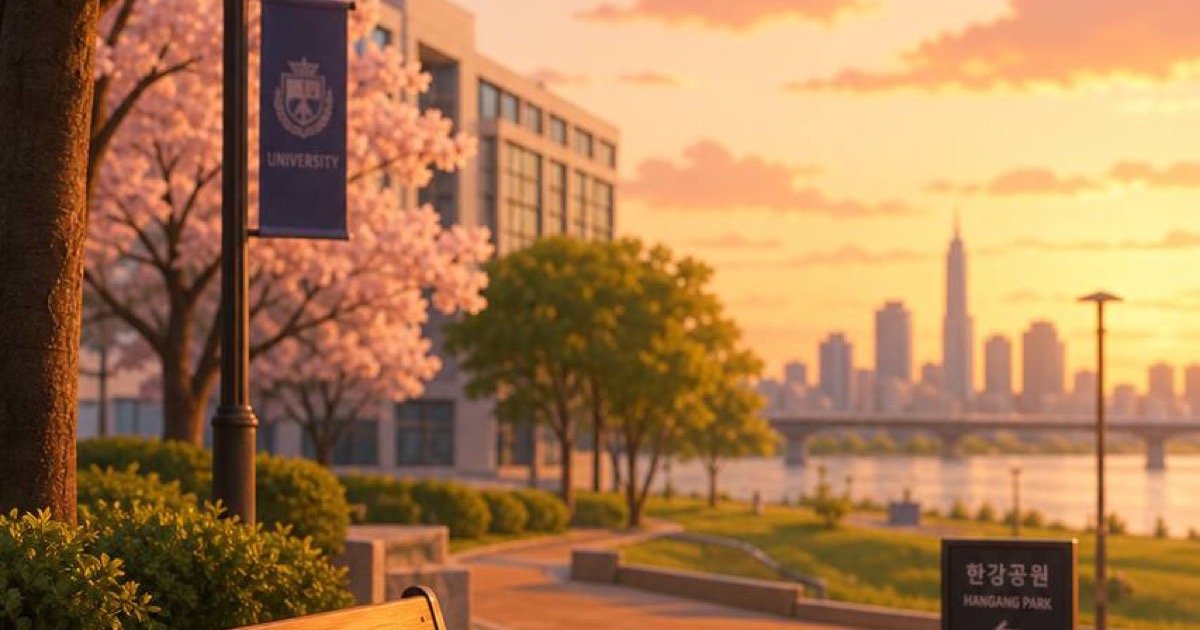
How do you find the library desk?
Public libraries in Seoul — 도서관 (doseogwan) — often share a building with a community center. Signs mix Korean and English, but the service desk is where you need Pattern 04 and Pattern 26 (에서, -eseo, "at/in").
You: 도서관 어디 있어요? — doseogwan eodi isseoyo? — "Where is the library?"
Them: 3층이에요. — samcheung-ieyo. — "It is on the third floor."
You: 책 빌릴 수 있어요? — chaek billil su isseoyo? — "Can I borrow books?"
| Situation | Say this |
|---|---|
| Where is the library? | 도서관 어디 있어요? (doseogwan eodi isseoyo?) |
| Can I borrow books? | 책 빌릴 수 있어요? (chaek billil su isseoyo?) |
| Is there a seat? | 앉을 자리 있어요? (anjeul jari isseoyo?) |
| Study together? | 같이 공부할래요? (gachi gongbuhallaeyo?) |
| Return this book | 반납하고 싶어요 (bannaphago sipeoyo) |
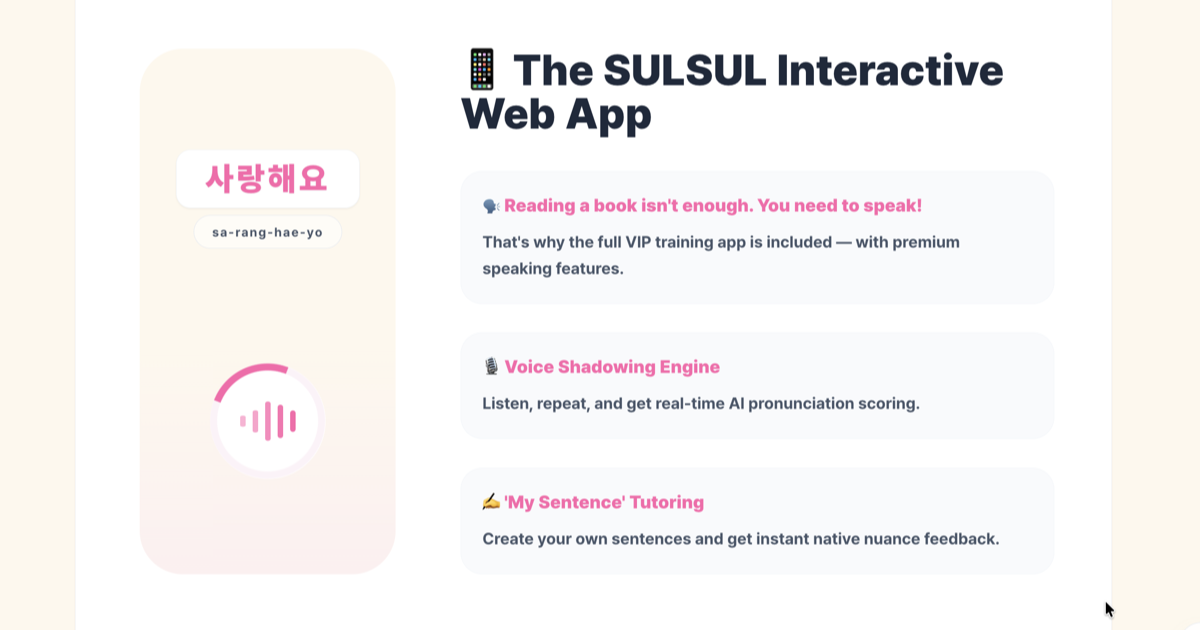
Practice this out loud with SULSUL — the app says it, you repeat it →
What do you say when you need a library card?
Many branches issue a free membership card with a passport or ARC. Ask 회원증 만들 수 있어요? (hoewonjeung mandeul su isseoyo?), "Can I get a membership card?" Staff may ask how long you stay — answer with 일주일 있어요 (iljuil isseoyo), "I am here for a week," or your actual dates.
You: 회원증 만들 수 있어요? — hoewonjeung mandeul su isseoyo? — "Can I get a membership card?"
Them: 여권 보여 주세요. — yeogwon boyeo juseyo. — "Please show your passport."
You: 네, 여기 있어요. — ne, yeogi isseoyo. — "Yes, here it is."
Pattern 25 from the workbook fits once you have a seat — text a study partner 내일 같이 도서관에서 공부할래요? (naeil gachi doseogwan-eseo gongbuhallaeyo?), "Shall we study at the library together tomorrow?" For asking a new friend to hang out, see how to ask a Korean friend to hang out.
What usually goes wrong at a Korean library?
Travelers often walk past the 반납 (bannap, return) slot and queue at the wrong desk — look for 대출 (daechul, checkout) at the main counter. A second mistake is whispering in English when staff ask 앉을 자리 있어요? — a short 네, 있어요 (ne, isseoyo), "Yes, there is," or 없어요 (eopseoyo), "There is not," keeps the line moving.
You: 반납하고 싶어요. — bannaphago sipeoyo. — "I'd like to return this."
Them: 여기 넣으시면 돼요. — yeogi neoeusimyeon dwaeyo. — "You can put it in here."
You: 감사합니다. — gamsahamnida. — "Thank you."
Say it out loud, not just in your head
Reading 도서관 어디 있어요? on a map app is not the same as saying it to a subway attendant while the train is boarding.
SULSUL is a speaking gym for exactly that moment: pick a survival pattern, say it out loud, get an instant fix from the AI pronunciation coach, then run the real situation as a mission. The 100-pattern PDF workbook comes along as a bonus.