What Does ㅋㅋ Mean in Korean Texting? ㅎㅎ, ㅠㅠ, ㅇㅇ and the Rest


In Korean texting, ㅋㅋ means "lol." It comes from 크크 (keu-keu), the sound of a laugh, cut down to just the first consonant ㅋ (k). Koreans type it after almost anything mildly funny, and the number matters: ㅋ alone can feel dry or even sarcastic, ㅋㅋ is a normal friendly laugh, and ㅋㅋㅋㅋㅋㅋ means you are actually laughing. The same trick, keeping only the first consonants of a word, gives you most of the other shortcuts you see in K-drama text scenes and idol posts: ㅎㅎ (a soft smile), ㅠㅠ (crying eyes), ㅇㅇ (yeah), ㄱㅅ (thanks), and ㅇㅋ (okay).
- ㅋㅋ — lol (from 크크)
- ㅎㅎ — a gentle "hehe" (from 하하 / 흐흐)
- ㅠㅠ / ㅜㅜ — crying eyes, "so sad" or "so touched"
- ㅇㅇ — "yeah" (from 응응)
- ㄴㄴ — "no no" (from 노노)
- ㄱㅅ — thanks (from 감사)
- ㅇㅋ — okay (from 오케이)
- ㅈㅅ — sorry (from 죄송)
Why Korean texts are full of single consonants
Hangul builds each syllable from blocks: a consonant, a vowel, and sometimes a final consonant. On a Korean phone keyboard, a lone consonant is one tap. A full syllable is two or three. So when people text fast, they drop everything except the first consonant of each syllable, and readers fill in the rest without thinking.
That is why 감사 (gamsa, thanks) becomes ㄱㅅ, and 응응 (eung-eung, yeah yeah) becomes ㅇㅇ. You are not reading a code. You are reading a word with its vowels taken out, the way English texters write "thx" or "pls."
Practice this out loud with SULSUL — the app says it, you repeat it →
ㅋㅋ vs ㅎㅎ: two kinds of laughing
Learners often treat these as the same. They are not.
ㅋㅋ is a real laugh. Something was funny, and you are reacting to it. A friend sends a meme, you send back ㅋㅋㅋㅋ. On screen, a K-drama character staring at their phone and grinning is usually reading a stream of ㅋ.
ㅎㅎ is a smile, not a laugh. It softens a message. Koreans add it to the end of a plain sentence so it doesn't sound cold: 내일 봐요 ㅎㅎ (naeil bwayo), "See you tomorrow :)". It is common with coworkers, with someone you just met, and with older people, because it sounds friendly without being loud. If you are not sure which one to use, ㅎㅎ is the safer choice.
A quick guide to the count:
| You type | How it reads |
|---|---|
| ㅋ | flat, sometimes "ha. sure." |
| ㅋㅋ | normal, friendly "lol" |
| ㅋㅋㅋㅋㅋ | really laughing |
| ㅋㅋㅋㅋㅋㅋㅋㅋㅋㅋㅋ | can't breathe |
| ㅎ | short, a bit distant |
| ㅎㅎ | warm little smile |
ㅠㅠ and ㅜㅜ: crying faces made of vowels
These two are vowels, not consonants, and they work as pictures. The vertical lines are tears falling from two eyes. ㅠㅠ and ㅜㅜ mean the same thing; ㅠ just looks like more tears.
The meaning is wider than "sad." Fans type ㅠㅠ when an idol posts a sweet message, when a drama couple finally holds hands, or when the concert ticket site crashes. It can mean "I'm so moved," "this is unfair," or "please?" all at once. 보고 싶어 ㅠㅠ (bogo sipeo) is "I miss you" with a little pout. 제발 ㅠㅠ (jebal) is "please" with begging eyes.
Yes, no, thanks, sorry: the everyday shortcuts
These are the ones you will see most in group chats.
ㅇㅇ — "yeah." Quick and casual. Fine between friends, but to someone older or a coworker it can feel lazy. A plain 네 (ne) or 넵 (nep) is better there.
ㄴㄴ — "no, no," from 노노. Casual and light: "nah."
ㅇㅋ — "okay," from 오케이. Also typed as ㅇㅋㅇㅋ for "okay okay, got it."
ㄱㅅ — "thanks," from 감사. Among friends you might also see ㄳ, which squeezes the two consonants together into one block.
ㅈㅅ — "sorry," from 죄송. Light and quick, so it fits small things like a late reply, not a real apology.
ㄹㅇ — "for real," from 리얼. ㄹㅇ 맛있어 (masisseo) is "this is seriously delicious."
ㅊㅋ — "congrats," from 축하. Doubled as ㅊㅋㅊㅋ for extra cheer.
ㅂㅂ — "bye bye," from 바이바이.

Reading a real chat
Here is a short KakaoTalk exchange between two friends planning to watch a drama:
A: 오늘 새 에피 나옴 ㅋㅋ — oneul sae episode naom — "New episode drops today lol" B: 헐 ㄹㅇ? 같이 볼래? — heol real? gachi bollae? — "Wait, for real? Wanna watch together?" A: ㅇㅋ 8시 ㄱㄱ — okay yeodeol-si go-go — "Okay, 8 o'clock, let's go" B: ㅇㅇ 치킨 시킬게 ㅎㅎ — eung chikin sikilge — "Yep, I'll order chicken :)" A: ㄱㅅㄱㅅ ㅠㅠ — gamsa gamsa — "Thank you thank you"
Notice ㄱㄱ, from 고고 (go go), and 헐 (heol), a written gasp that means "no way." Five messages, almost no full words, and the whole plan is made. Every shortcut here hides a normal spoken word: 응, 오케이, 감사. That is the key to reading them. Ask yourself, "What one-syllable sound starts with this letter?"
Mistakes learners make with Korean texting shortcuts
Sending ㅇㅇ to someone older. To a teacher, a boss, or a friend's parent, ㅇㅇ reads as "yeah whatever." Write 네 or 네 알겠습니다 (ne algetseumnida), "Yes, understood."
Using a single ㅋ to be cute. One ㅋ often reads as "lol, okay" with a straight face. If you meant to laugh, double it.
Reading ㅠㅠ as real sadness. A friend who writes 배고파 ㅠㅠ (baegopa) is just hungry. The tears are decoration.
Saying the letters out loud. You do not say "kieuk kieuk" in conversation. People sometimes say 크크 or laugh for real; for ㄱㅅ you say 감사 or 고마워. The shortcuts live on the screen.
Using them in a formal message. An email, a job application, or a message to your landlord should have none of these. Full sentences with polite endings only.
From the screen to your mouth
Texting shortcuts are easy to read once you know the trick. The harder part is that every one of them stands for a word you will eventually have to say out loud: 감사합니다, 응, 축하해, 보고 싶어. Typed, they take one tap. Spoken to a real Korean friend, they need the right sound and the right politeness level.
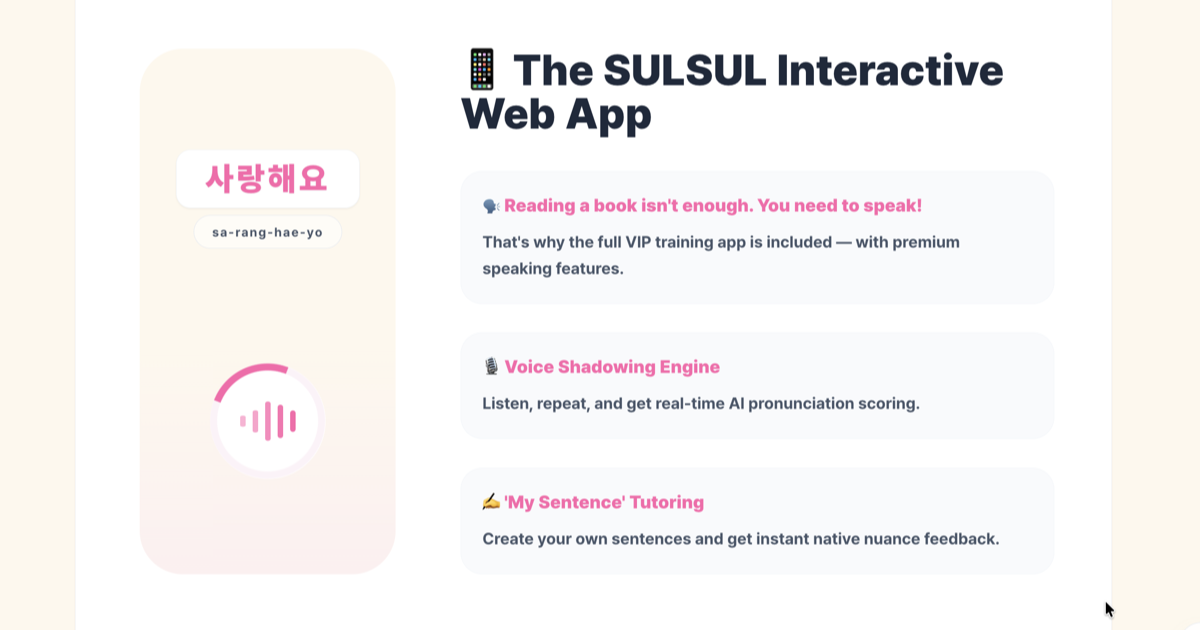
SULSUL is a speaking gym built for that step: pick a pattern, say it out loud, get an instant fix from the AI pronunciation coach, then run the whole situation as a mission. The 100-pattern PDF workbook comes along as a bonus. For full messaging manners, see Korean phrases for KakaoTalk texting, and for spoken slang, Korean slang words and what they actually mean.