How to Call a Waiter in Korean: 저기요, 여기요, and the Table Bell
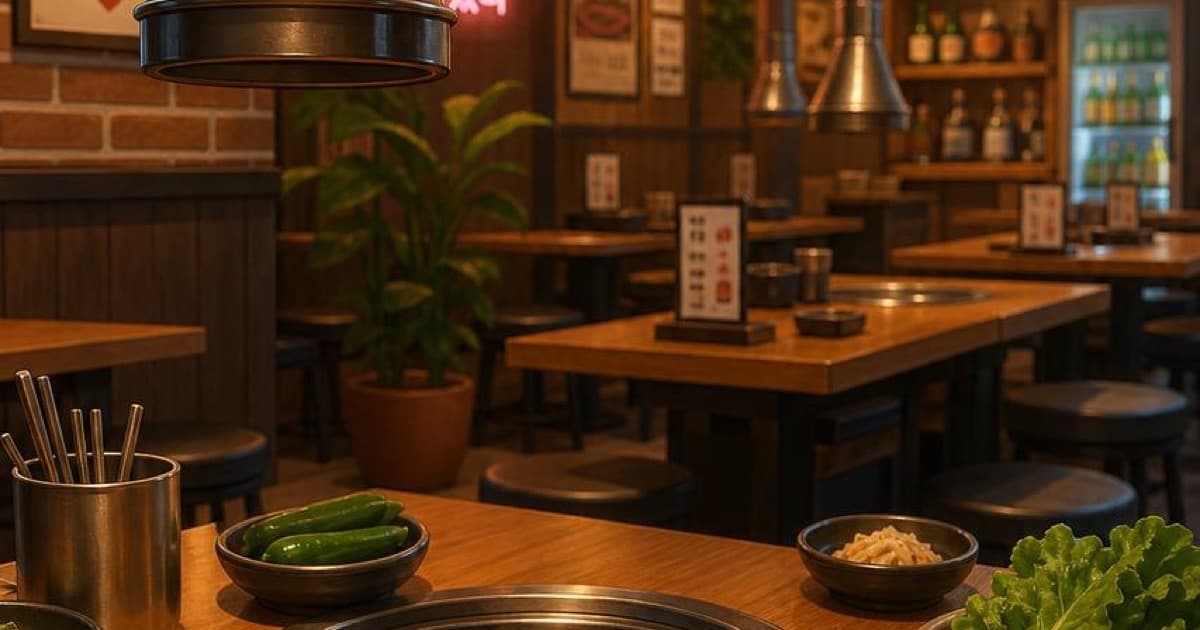
To call a waiter in Korea, you say 저기요 (jeo-gi-yo) or 여기요 (yeo-gi-yo), loud enough to carry across the room. Both work as "excuse me!" 저기요 literally points "over there" toward the staff, and 여기요 points "over here" toward your own table. Nobody in Korea will think you are rude for calling out. Servers usually don't circle back to check on you, so calling them is simply how it works. If your table has a small button, press that instead and you don't need to say anything.
- Excuse me! (toward the staff): 저기요! — jeo-gi-yo
- Over here! (toward your table): 여기요! — yeo-gi-yo
- We'd like to order: 주문할게요 — ju-mun-hal-ge-yo
- More of this, please: 이거 더 주세요 — i-geo deo ju-se-yo
- Check, please: 계산해 주세요 — gye-san-hae ju-se-yo
- Owner / boss (warm and polite): 사장님 — sa-jang-nim
Why calling out is normal in a Korean restaurant
Many visitors hesitate here. Where they come from, a waiter checks on the table and raising your voice would feel pushy. Korean restaurants work the other way. Staff are busy carrying trays, grilling meat, and refilling side dishes for a full room, and they expect you to tell them when you need something. A clear 저기요 helps them. A guest who sits silently waving a hand often waits a long time.
The trick is tone, not volume. Say it bright and friendly, with the last syllable lifted a little: jeo-gi-YO. It should sound like a friendly call, not an order. If the room is quiet, a normal voice is enough. In a busy barbecue place on a Friday night, go a bit louder.
Practice this out loud with SULSUL — the app says it, you repeat it →
저기요 or 여기요: which one to use
The two words mean almost the same thing in practice. The difference is where you are pointing.
저기요 comes from 저기, "over there." Use it to catch the attention of someone who is not looking at you: a server walking past, a clerk at the far counter, or a stranger on the street. It is the all-purpose "excuse me" of Korea, and the safest choice if you only learn one.
여기요 comes from 여기, "here." It says "here, at this table." Use it when the server is already scanning the room, or when you want to show which table is calling. Many people raise one hand while they say it.
If you're unsure, say 저기요. You can also chain them: 저기요, 여기요! — "Excuse me, over here!" — when the server has heard you but can't see you.
What to say once they come over
Calling is only half the job. The next sentence tells them why you called, and almost all of these use one pattern from basic Korean: [noun] 주세요, "please give me."
- 주문할게요. (ju-mun-hal-ge-yo) — "We'll order now." Use it the moment they arrive with a notepad.
- 이거 하나 주세요. (i-geo ha-na ju-se-yo) — "One of this, please," while pointing at the menu.
- 물 좀 주세요. (mul jom ju-se-yo) — "Some water, please." The 좀 makes it softer.
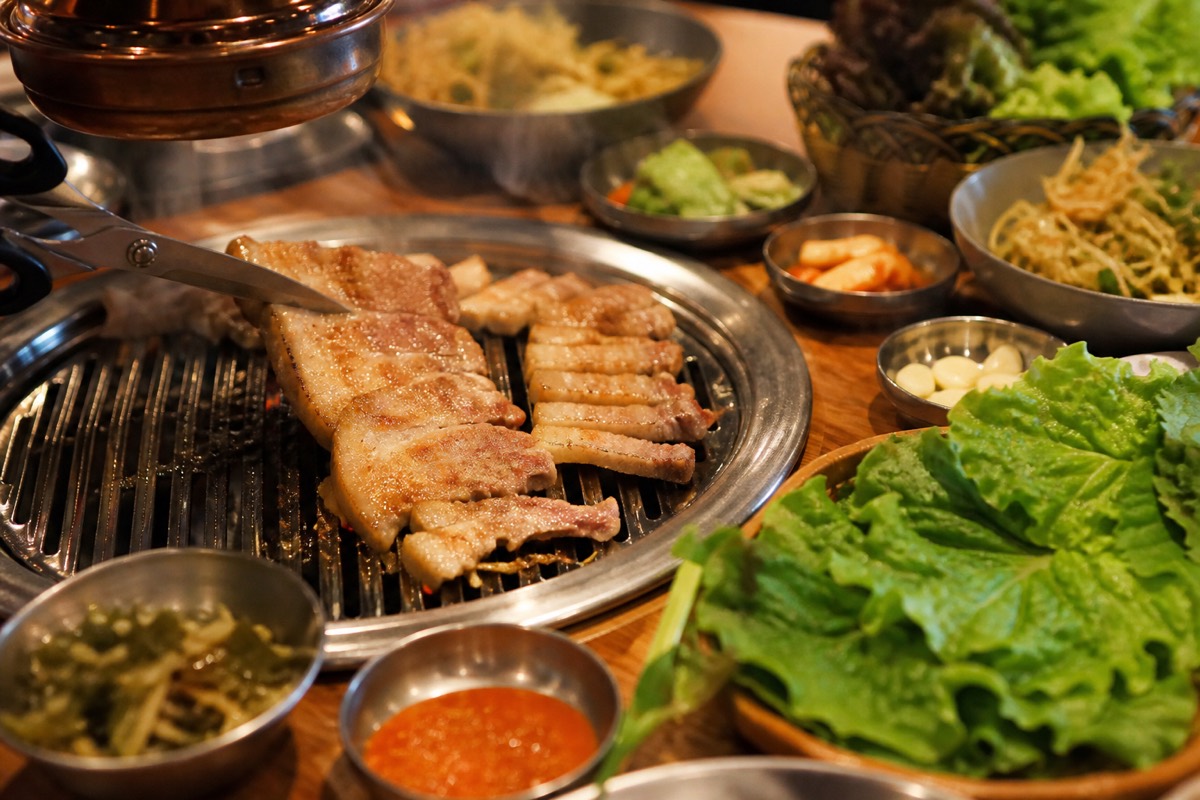
- 반찬 더 주세요. (ban-chan deo ju-se-yo) — "More side dishes, please." Refills of banchan are usually free, so asking is normal. Some places have a self-serve bar; look for 셀프 (sel-peu, "self") on a sign.
- 앞접시 주세요. (ap-jeop-si ju-se-yo) — "A small plate, please," for sharing.
- 불 좀 줄여 주세요. (bul jom ju-ryeo ju-se-yo) — "Please turn the heat down," at a grill table.
- 계산해 주세요. (gye-san-hae ju-se-yo) — "The check, please." In many places you pay at the counter by the door, so you can also just take the bill there.
The call bell, and the restaurants where you don't call at all
Many restaurants and pubs in Korea put a small wireless button on each table, often on the side or under the napkin box. Press it once and a number lights up on a board near the kitchen. That button is the 저기요, so you don't need to shout as well. Press it once and wait. Pressing again and again is the one thing that does annoy staff.
At places with a tablet or a QR code on the table, you order and often pay on the screen, and staff only come over to bring food. You may still need 저기요 for things the screen can't do, like more tongs or a new grill plate.
Fast-food chains and cafes work by counter and kiosk, so there is no one to call. Your number shows on a screen or a buzzer goes off, and you pick up the order yourself.
Words the regulars use: 사장님, 이모, and 삼촌
Listen in a small local restaurant and you will hear people call the staff by a title instead of 저기요.
사장님 (sa-jang-nim) means "boss" or "owner," and Koreans use it for almost anyone running a small shop or restaurant, even if they don't know who the actual owner is. It sounds polite and a little flattering. 사장님, 여기 소주 하나요! — "Boss, one soju over here!" — is a classic line.
이모 (i-mo) literally means "aunt on your mother's side," and it's a warm way to call an older woman serving in a homey restaurant. 삼촌 (sam-chon, "uncle") is the male version, though it is heard less. These feel friendly and familiar. As a visitor, 저기요 is always safe; save 이모 for a place you have been to a few times, or when you hear the other customers using it.
Avoid 웨이터 (wei-teo, "waiter") as a way to call someone. Koreans understand the word, but nobody calls staff with it, and it sounds stiff and odd.
A short scene at a busy table
You: 저기요! jeo-gi-yo! — Excuse me!
Server: 네, 잠시만요! ne, jam-si-man-yo! — Yes, just a moment!
Server: 주문하시겠어요? ju-mun-ha-si-ge-sseo-yo? — Are you ready to order?
You: 네, 이거 두 개 주세요. 그리고 물 좀 주세요. ne, i-geo du gae ju-se-yo. geu-ri-go mul jom ju-se-yo. — Yes, two of these, please. And some water, please.
(later)
You: 여기요! 반찬 더 주세요. yeo-gi-yo! ban-chan deo ju-se-yo. — Over here! More side dishes, please.
Server: 네, 갖다 드릴게요. ne, gat-da deu-ril-ge-yo. — Sure, I'll bring them.
Notice 잠시만요 from the server. It means "one moment," and it's your cue to wait. They heard you.
Small slips to avoid
- Waving silently. In a busy room no one will notice. Say 저기요.
- Snapping your fingers or whistling. That is rude anywhere, Korea included.
- Calling 저기요 flat and low. It can sound annoyed. Keep it light and lift the 요.
- Pressing the table bell over and over. One press is enough. It already shows your table number.
- Using 아저씨 or 아줌마 for staff. These mean "middle-aged man / woman," and they can sound rude to the person you are calling. 저기요 or 사장님 is safer.
Practice the call before you sit down
Most people can say 저기요 in their head but not out loud in a full restaurant. Say it out loud a few times now, with a bright lift at the end: jeo-gi-YO. Then add the next sentence: 저기요, 주문할게요. 여기요, 물 좀 주세요. 저기요, 계산해 주세요. Once those three come out without thinking, you can handle a whole Korean meal.