How to Ask Questions in Korean: 뭐, 어디, 언제, 왜

Asking a question in Korean takes less grammar than asking one in English. There is no word order to flip, no "do" to insert, no auxiliary verb to hunt for. You take the sentence you would have said, drop the question word into the exact spot where the answer belongs, and raise your voice at the end. 이름이 뭐예요? (ireumi mwoyeyo?) is literally "name is what?" — and that is the finished, polite, completely natural sentence. For yes/no questions it is even lighter: 있어요 means "there is," and 있어요? with a rising tone means "is there?" Same word, same ending, different pitch. That single habit — question word in place, voice up — covers almost every question you will need to ask in Korea.
- What is it? — 뭐예요? (mwoyeyo?)
- Where is it? — 어디예요? (eodiyeyo?)
- When is it? — 언제예요? (eonjeyeyo?)
- Who is it? — 누구예요? (nuguyeyo?)
- Why? — 왜요? (waeyo?)
- How do I do it? — 어떻게 해요? (eotteoke haeyo?)
- How much is it? — 얼마예요? (eolmayeyo?)
- Excuse me — 저기요 (jeogiyo)
- Do you have Wi-Fi? — 와이파이 있어요? (waipai isseoyo?)
- What about you? — ○○ 씨는요? (○○ ssineunyo?)
Six words that unlock every question
Korean runs its questions on six words. Learn these and you can ask about anything, even with a vocabulary of fifty nouns.
| English | Korean | Romanized | With a noun |
|---|---|---|---|
| what | 뭐 | mwo | 이거 뭐예요? — what is this? |
| where | 어디 | eodi | 화장실 어디예요? — where's the restroom? |
| when | 언제 | eonje | 생일이 언제예요? — when is your birthday? |
| who | 누구 / 누가 | nugu / nuga | 저 사람 누구예요? — who is that? |
| why | 왜 | wae | 왜요? — why? |
| how | 어떻게 | eotteoke | 어떻게 가요? — how do I get there? |
The mechanic is always the same. English moves the question word to the front of the sentence ("where is the subway station?"). Korean leaves it in the slot where the answer would sit, which means you can build the sentence in the order you already know it: 지하철역 어디예요? — subway station, where is it?
Two endings finish the job. 예요/이에요? attaches to a noun — use 예요 after a vowel, 이에요 after a consonant. And when you are asking about an action, you attach the question word to a verb instead: 뭐 해요? (mwo haeyo?), "what are you doing?"
Practice this out loud with SULSUL — the app says it, you repeat it →
Yes/no questions: your voice does the work
This is the part that surprises people. Korean has no question form for yes/no questions in everyday polite speech. The statement and the question are spelled identically and end in the same ~요. Pitch is the whole difference.
있어요. — there is. / 있어요? — is there? 매워요. — it's spicy. / 매워요? — is it spicy? 한국 사람이에요. — I'm Korean. / 한국 사람이에요? — are you Korean?
So the practical lesson is to let the last syllable climb. English speakers often flatten the ending while mentally translating, and the sentence lands as a statement — which is how you end up saying "it's spicy" to a server who was waiting for a question. Push the 요 up and the ambiguity disappears.
Three yes/no questions do a huge amount of travel work:
있어요? — "do you have it?" Point or name the thing first: 영어 메뉴 있어요? (yeongeo menyu isseoyo?), "do you have an English menu?" 돼요? — "is that possible / is that okay?" 카드 돼요? (kadeu dwaeyo?), "can I pay by card?" ~아/어도 돼요? — "may I?" 여기 앉아도 돼요? (yeogi anjado dwaeyo?), "may I sit here?"

뭐예요? or 뭐 해요? — the one choice you have to make
뭐 is "what," and the only decision is whether you are asking about a thing or an action.
Asking about a thing, you need 예요/이에요: 이거 뭐예요? (what is this?), 이름이 뭐예요? (what is your name?), 직업이 뭐예요? (what do you do?), 전화번호가 뭐예요? (what's your phone number?). Name questions have their own etiquette layer — the polite upgrade is 성함이 어떻게 되세요?, which is unpacked in how to ask someone's name in Korean.
Asking about an action, you drop the 예요 and put a verb there: 뭐 해요? (what are you doing?), 뭐 먹어요? (what are you eating?), 뭐 찾으세요? (what are you looking for? — what a shop clerk will say to you), 주말에 뭐 해요? (what do you do on weekends?).
Get this backwards and you produce 뭐 해예요, which is not a sentence. One or the other, never both.
누구 or 누가 — the mistake almost everyone makes
누구 is "who." It becomes 누가 the moment you ask about an action, because the subject particle 가 fuses onto it.
저 사람 누구예요? — jeo saram nuguyeyo? — "who is that person?" (asking about identity) 누가 왔어요? — nuga wasseoyo? — "who came?" (asking about an action) 이거 누가 먹었어요? — igeo nuga meogeosseoyo? — "who ate this?"
So: 누구예요? for a noun question, 누가 + verb for an action question. "누가예요" is wrong and "누구 왔어요" sounds unfinished. One more useful form — 누구세요? (nuguseyo?) is the honorific "who is it?", the line you say through an intercom or into a phone.
은/는요? — the one-word question that keeps a conversation alive
Once you have answered something, Korean has a tiny, graceful way to hand the question straight back: attach 은요? or 는요? to a noun. 은요 after a consonant, 는요 after a vowel.
저는 커피요. 지민 씨는요? — jeoneun keopiyo. jimin ssineunyo? — "I'll have coffee. How about you, Jimin?" 저는 잘 지내요. 선생님은요? — jeoneun jal jinaeyo. seonsaengnimeunyo? — "I'm doing well. And you, teacher?" 김치는 있어요. 그럼 밥은요? — gimchineun isseoyo. geureom babeunyo? — "There's kimchi. What about rice, then?"
Two syllables, no verb, no conjugation — and it turns a one-sided answer into an actual exchange. It is the single highest-value question form for a beginner, and it pairs naturally with the openers in Korean small talk phrases for total beginners.
Opening the question to a stranger
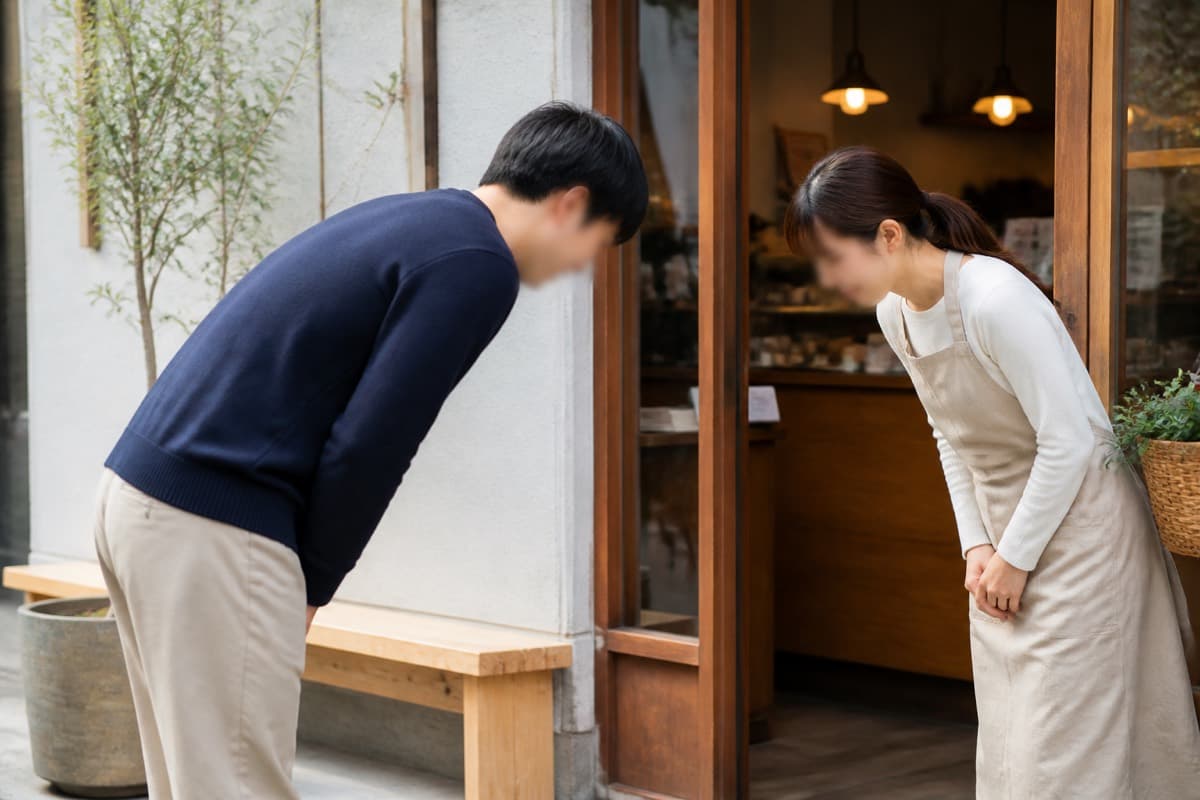
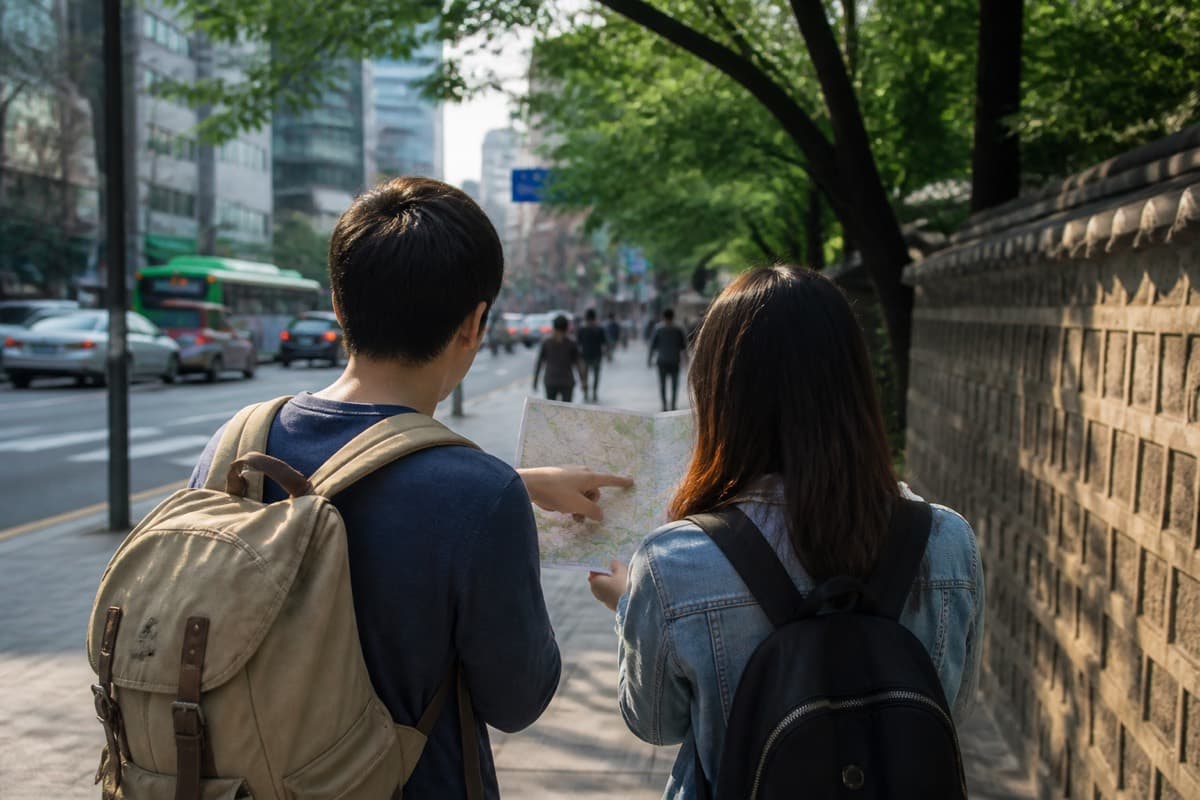
A question aimed at someone you do not know needs a doorway, and in Korea that doorway is 저기요 (jeogiyo) — "excuse me." Say it to get a server's attention, to stop someone on the street, to flag a staff member in a shop. 여기요 (yeogiyo) does the same job from a restaurant table.
Softer still: 죄송한데요 (joesonghandeyo), "sorry, but…", or 실례지만 (sillyejiman), "excuse me, but…" — both of which buy you a second before the question itself.
Then stack them: 저기요, 화장실 어디예요? or 죄송한데요, 지하철역 어떻게 가요? Direction questions get their own vocabulary at the station, covered in how to ask for directions in the Korean subway, and restroom questions in how to ask where the restroom is in Korean.
And when the answer comes back too fast to catch, you need the follow-up questions more than the original one:
뭐라고요? — mworagoyo? — "sorry, what?" 다시 말해 주세요 — dasi malhae juseyo — "please say that again." 천천히 말해 주세요 — cheoncheonhi malhae juseyo — "please speak slowly."
How it runs in a real exchange
At a counter in a small restaurant, nobody there speaks English:
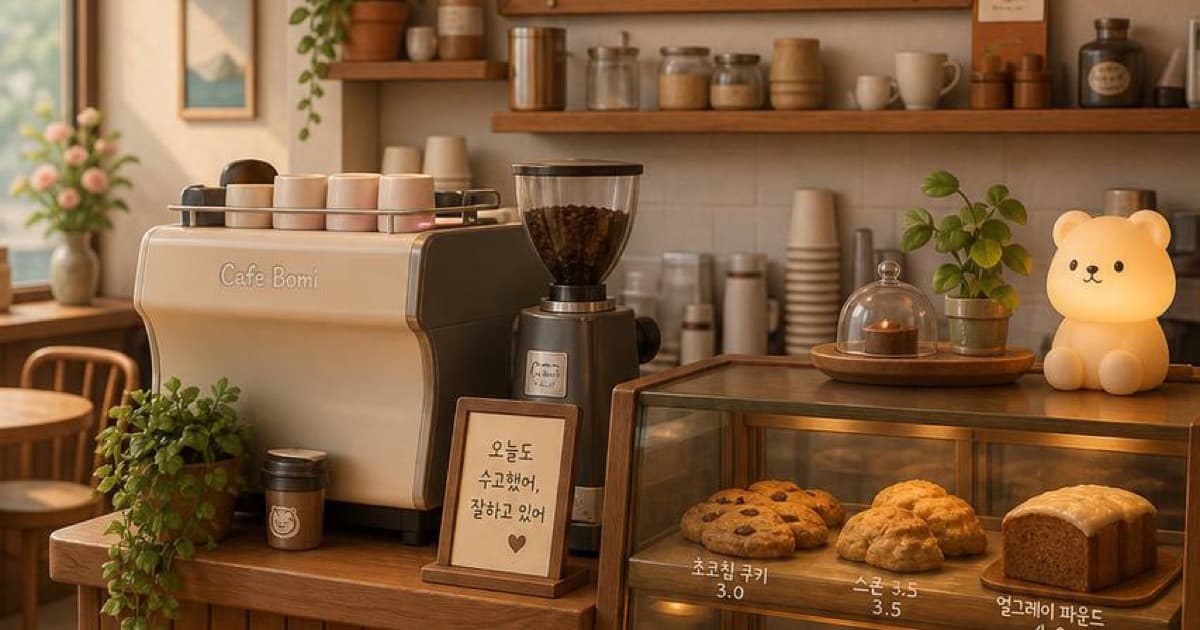
You: 저기요, 영어 메뉴 있어요? — jeogiyo, yeongeo menyu isseoyo? — "Excuse me, do you have an English menu?" Them: 아니요, 없어요. — "No, we don't." You: 이거 뭐예요? — igeo mwoyeyo? — "What's this?" Them: 김치찌개예요. — "It's kimchi stew." You: 매워요? — maewoyo? — "Is it spicy?" Them: 좀 매워요. — "A little spicy." You: 얼마예요? — eolmayeyo? — "How much is it?"
Seven words of grammar, a whole transaction. Price questions and the numbers that come back are handled in how to ask the price in Korean.
Now a first conversation with someone you just met:
Them: 어디에서 왔어요? — "Where are you from?" You: 캐나다에서 왔어요. ○○ 씨는요? — kaenadaeseo wasseoyo. ○○ ssineunyo? — "I'm from Canada. How about you?" Them: 저는 부산이요. — "I'm from Busan." You: 한국에 언제 왔어요? 아, 저요? 작년에 왔어요. — "When did you come to Korea? Oh, me? Last year." Them: 진짜요? — "Really?"
That 진짜요? is the most common reaction you will hear, and its rising and falling versions mean different things — see how to ask really in Korean.
What goes wrong
Flattening the ending. Without the rise, 있어요? is just 있어요 and your question reads as a statement. This is the number one reason a Korean listener pauses and looks confused at a perfectly correct sentence.
Fronting the question word. "어디 지하철역이에요?" is English order wearing Korean words. Leave 어디 where the answer would go: 지하철역 어디예요?
Saying 누가예요. Identity questions take 누구예요?; action questions take 누가 + verb.
Mixing 뭐예요 with a verb. 뭐 해요? or 뭐예요? — pick the one that matches thing versus action.
Using 왜요? too bluntly. 왜요? is grammatically fine and tonally sharp, close to "why, though?" With someone older or a stranger, soften it to 무슨 일이에요? (museun irieyo?), "what's going on?", or 어떻게 된 거예요? (eotteoke doen geoyeyo?), "what happened?"
Dropping the honorific when you ask up. To someone clearly older, 누구세요? beats 누구예요? and 어디 가세요? beats 어디 가요? The politeness ladder behind that choice is laid out in how to greet someone in different Korean politeness levels.
Asking 몇 살이에요? too early. Age is normal small talk in Korea but the phrasing matters a lot — the safe versions are in how to ask someone's age in Korean.
The rise at the end is a speaking skill
Everything above is readable in five minutes. The part that decides whether a Korean stranger answers you is not the word order — it is whether 있어요? actually went up at the end while you were nervous, standing at a counter, with someone waiting.
SULSUL is a speaking gym built for that gap: pick a pattern, say it out loud, get an instant fix from the AI pronunciation coach, then run the whole exchange as a mission until the rising tone is automatic. The 100-pattern PDF workbook comes along as a bonus.