Korean Food Phrases: How to Read a Korean Menu (찌개, 볶음, 구이, 탕) and Ask What's in a Dish

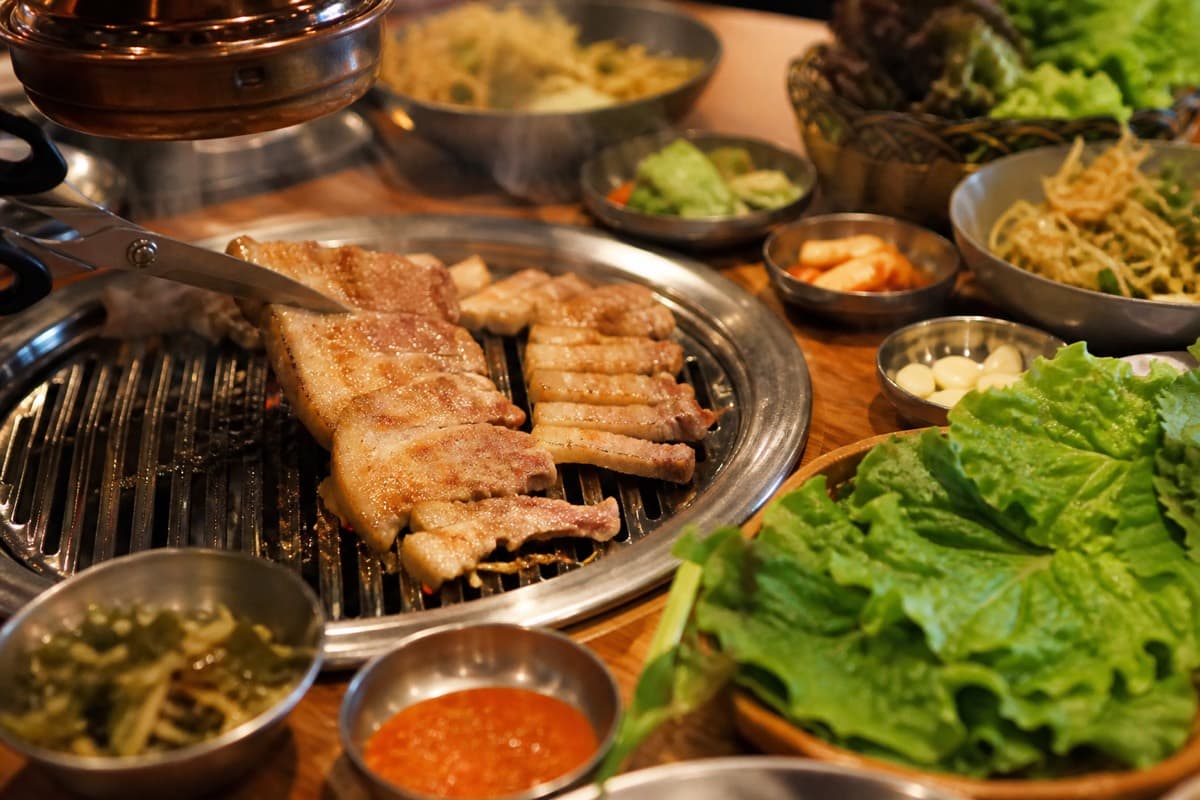
The fastest way to read a Korean menu is to stop treating each dish name as one word. Almost every name is two parts glued together: the main ingredient first, the cooking method last. 김치찌개 (gimchi-jjigae) is kimchi + stew. 제육볶음 (jeyuk-bokkeum) is pork + stir-fried. 생선구이 (saengseon-gui) is fish + grilled. Learn about a dozen endings — 찌개, 탕, 국, 볶음, 구이, 조림, 전, 무침, 밥, 면 — and you can guess most of a menu even when you have never seen the dish. For everything else, three spoken lines carry you: 이거 뭐예요? (igeo mwoyeyo?), "What is this?", 많이 매워요? (mani maewoyo?), "Is it very spicy?", and 추천해 주세요 (chucheonhae juseyo), "Please recommend something."
Korean food phrases, the short version
- Read the last word of a dish name: it tells you how it is cooked.
- Read the first word: it tells you what is in it.
- Point and ask: 이거 뭐예요? — "What is this?"
- Check the heat: 많이 매워요? — "Is it very spicy?"
- Let them choose: 추천해 주세요 — "Please recommend something."
The cooking word at the end: what the dish actually is
This is the part of the name that matters most, because it tells you whether a bowl of soup, a sizzling plate, or a pile of rice is coming. These are the endings you will see on almost every wall menu in Korea:
| Ending | Say it | What arrives | On the menu |
|---|---|---|---|
| 찌개 | jjigae | Thick, salty stew in a small pot, eaten with rice | 김치찌개, 된장찌개, 순두부찌개 |
| 탕 | tang | Big, long-simmered soup, often with bone or meat | 갈비탕, 감자탕, 삼계탕 |
| 국 | guk | Lighter everyday soup | 미역국, 콩나물국 |
| 볶음 | bokkeum | Stir-fried, usually saucy | 제육볶음, 오징어볶음 |
| 구이 | gui | Grilled or pan-roasted | 생선구이, 삼겹살구이 |
| 조림 | jorim | Braised in a soy or spicy sauce | 갈치조림, 감자조림 |
| 전 | jeon | Savory pancake, pan-fried in batter | 김치전, 해물파전 |
| 무침 | muchim | Cold, seasoned and tossed, like a salad | 골뱅이무침, 오이무침 |
| 밥 | bap | A rice dish | 비빔밥, 볶음밥, 김밥 |
| 면 / 국수 | myeon / guksu | Noodles | 냉면, 칼국수 |
Two endings deserve a warning. 찌개 and 탕 are both "soup" in English, but 찌개 is concentrated and meant to be eaten with rice, while 탕 is a full meal in a big bowl. And 볶음밥 (bokkeum-bap) combines two endings: stir-fried + rice, which is exactly what it is — fried rice.
Practice this out loud with SULSUL — the app says it, you repeat it →
The word at the front: what is inside
Once you know the cooking method, the first word fills in the rest. A handful of ingredient words cover most menus:
- 돼지 / 제육 (dwaeji / jeyuk) — pork. 제육 almost always means spicy stir-fried pork.
- 소 / 소고기 (so / sogogi) — beef. 불고기 (bulgogi) is marinated beef.
- 닭 (dak) — chicken. 닭갈비, 닭볶음탕.
- 해물 (haemul) — seafood mix. 오징어 (ojingeo) — squid. 생선 (saengseon) — fish.
- 된장 (doenjang) — soybean paste. 순두부 (sundubu) — soft tofu.
- 김치 (gimchi) — kimchi, which usually means the dish will be red and a little spicy.
Put the two halves together and you can decode dishes cold. 해물파전: seafood + green onion + pancake. 오징어볶음: squid + stir-fried. 된장찌개: soybean paste + stew. You are not memorising a hundred dishes; you are reading a pattern.
Menu words that are not dishes at all
Some of the most useful words on a Korean menu are labels around the dishes:
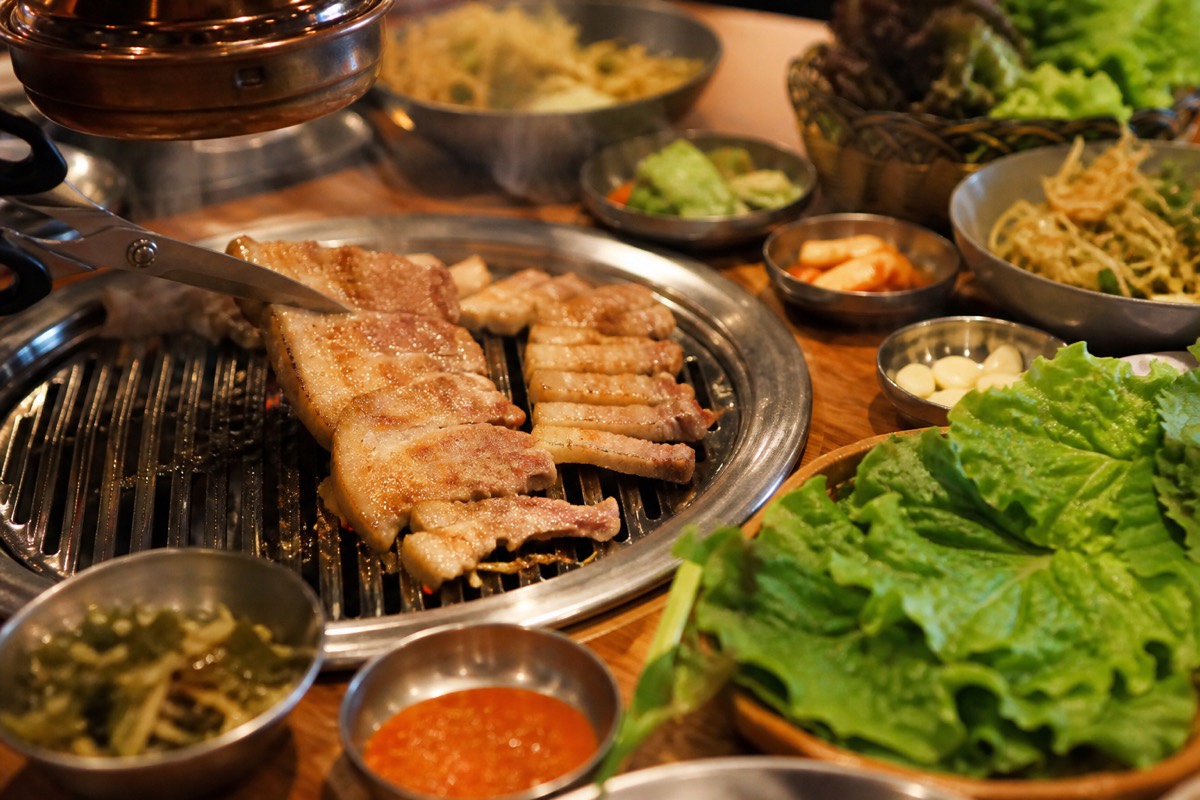
- 1인분 (il-inbun) — "one serving." Barbecue and some stews are sold by the serving, and many places have a 2인분 이상 (i-inbun isang) rule: "two servings minimum." If you are alone and see that line, that dish is not for you.
- (소) (중) (대) (so, jung, dae) — small, medium, large, common for shared stews like 감자탕.
- 공기밥 (gonggi-bap) — a bowl of rice, listed separately when the main dish does not include it.
- 사리 (sari) — add-on noodles or rice cakes dropped into a hot pot. 라면사리 is ramyeon noodles added to your stew.
- 세트 (seteu) — a set meal; 정식 (jeongsik) — a full set with rice and side dishes.
- 시가 (siga) — "market price," common next to fish and seafood.
Asking about a dish you can't read
Sometimes the name gives you nothing — a regional dish, a house special, a word you have never met. Point at it and use the question pattern from the SULSUL textbook, 이거 뭐예요?, "What is this?" Raise your voice at the end so it lands as a question.
The answer will usually be the ingredient and the cooking word you just learned, which means you can now follow it. Then a few follow-up questions do the real work:
- 뭐 들어가요? (mwo deureogayo?) — "What goes in it?"
- 많이 매워요? (mani maewoyo?) — "Is it very spicy?"
- 고기 들어가요? (gogi deureogayo?) — "Does it have meat?"
- 양 많아요? (yang manayo?) — "Is it a big portion?"
If you have a real restriction, not just a preference, the stronger lines are in Korean phrases for food allergies and diet restrictions.
Letting the restaurant choose
When the menu is long and every name looks equally good, hand the decision over. The textbook's request pattern, V-아/어 주세요 ("please do V for me"), turns 추천하다, "to recommend," into 추천해 주세요. Two more shapes of the same request:
- 뭐가 제일 맛있어요? (mwoga jeil masisseoyo?) — "What's the most delicious here?"
- 여기 뭐가 유명해요? (yeogi mwoga yumyeonghaeyo?) — "What is this place known for?"
Small restaurants often have one dish they are proud of, and this question gets you straight to it. Then order the way you order anything in Korea: name it and add 주세요. 이거 하나 주세요 (igeo hana juseyo), "One of this, please," works even while pointing at a picture. The ordering routine itself is in Korean phrases for ordering at a restaurant.
A short scene at the table
You (pointing at the wall menu): 저기요, 이거 뭐예요? Staff: 아, 그거 닭볶음탕이에요. 닭이랑 감자 들어가요. You: 많이 매워요? Staff: 조금 매워요. 덜 맵게 해 드릴 수 있어요. You: 그럼 덜 맵게 해 주세요. 2인분 주세요. 공기밥도 두 개 주세요. Staff: 네, 알겠습니다.
Every word in that exchange came from a menu you can now read: 닭 (chicken), 볶음탕 (braised in a spicy broth), 2인분 (two servings), 공기밥 (rice). Notice 덜 맵게 (deol maepge), "less spicy" — the most useful two words you can add to a stew order.
Mistakes people make with Korean menus
Reading the dish name as one block. 순두부찌개 is not a mysterious word; it is soft tofu + stew. Split it at the cooking word and it opens up.
Ordering a 2인분 dish alone. The staff will politely say 2인분부터예요 (i-inbunbuteoyeyo), "it starts from two servings." Check for that label before you choose.
Assuming 국 and 탕 are side soups. 국 can be small, but 탕 is usually the whole meal. Ordering 갈비탕 plus a main is a lot of food.
Expecting rice with everything. If 공기밥 is listed separately, your stew may arrive without it. Add 공기밥 하나 주세요.
Trusting the colour. Not every red dish is fiery and not every pale one is mild. When in doubt, ask 많이 매워요? before you order, not after.

Say the menu out loud before you sit down
Reading 찌개 on paper is one thing; saying 김치찌개 하나 주세요 clearly while a busy server waits is another. The double ㅉ in 찌개 and the ending of 볶음 are exactly the sounds that come out wrong under pressure, and the fix is saying them out loud a few times before you need them.
SULSUL is a speaking gym built for that: pick a pattern, say it out loud, get an instant fix from the AI pronunciation coach, then run the whole situation as a mission. The 100-pattern PDF workbook comes along as a bonus.