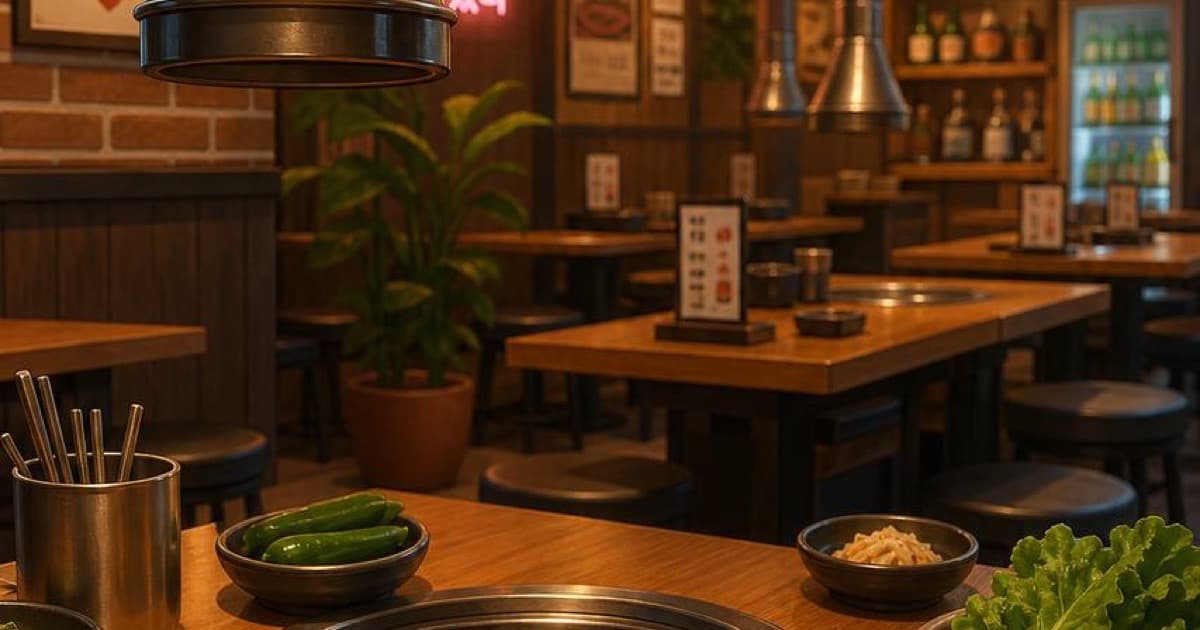
Korean Eating Phrases: 맛있어요, 너무 매워요, 배불러요 — What to Say in the Middle of a Meal

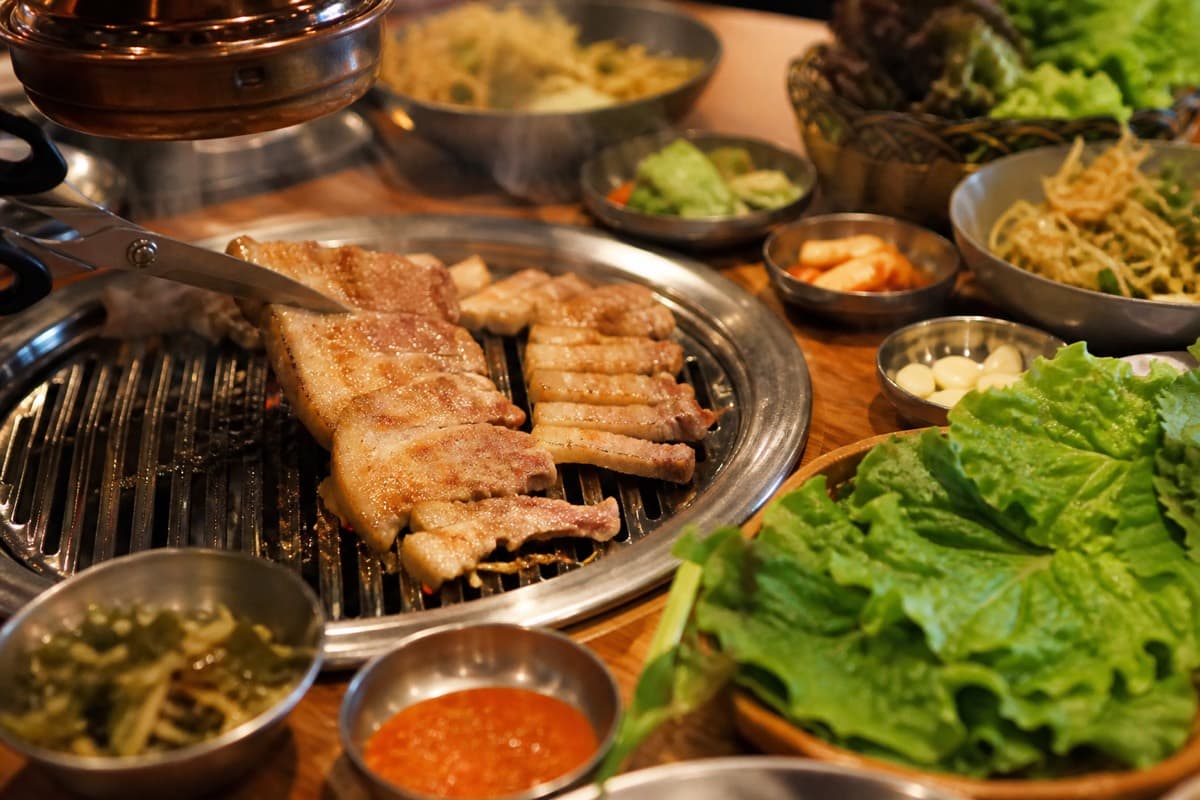
The Korean eating phrases you will use most are not the famous before-and-after lines — they are the small reactions you say while the food is still on the table. 맛있어요 (masisseoyo) means "It's delicious." 너무 매워요 (neomu maewoyo) means "It's too spicy." 배불러요 (baebulleoyo) means "I'm full." And when you want more of something, add 더 주세요 (deo juseyo), "more, please," to the thing you want: 김치 좀 더 주세요, "a little more kimchi, please." Those four lines, plus a couple of answers to what Koreans say to you while you eat, cover almost every meal in Korea.
Korean eating phrases, the short version
- It's good: 맛있어요 — masisseoyo
- It's really good: 진짜 맛있어요 — jinjja masisseoyo
- Too spicy: 너무 매워요 — neomu maewoyo
- More, please: (N) 좀 더 주세요 — jom deo juseyo
- I'm full: 배불러요 — baebulleoyo
Why one adjective ending does most of the work
In the SULSUL workbook, Pattern 11 — (A)아/어요 — is the pattern for "describing your mood, the weather, the taste of food." Korean adjectives behave like verbs, so you do not need "is." 맛있다, "to be tasty," becomes 맛있어요, "(it's) tasty." 맵다, "to be spicy," becomes 매워요. That single ending turns any taste word into a full, polite sentence.
That is why eating Korean feels easy once it clicks. You are not building sentences; you are picking one adjective and saying it with 요 on the end. Here are the taste words you will reach for most:
| Korean | Say it | Meaning | When you say it |
|---|---|---|---|
| 맛있어요 | masisseoyo | It's delicious | First bite, every time |
| 매워요 | maewoyo | It's spicy | 떡볶이, 김치찌개, 불닭 |
| 짜요 | jjayo | It's salty | Stews that have boiled down |
| 달아요 | darayo | It's sweet | 불고기, 양념치킨, desserts |
| 싱거워요 | singgeowoyo | It's bland, needs salt | Soups like 설렁탕 before you season them |
| 뜨거워요 | tteugeowoyo | It's hot (temperature) | A stone bowl straight off the fire |
| 시원해요 | siwonhaeyo | It's refreshing | Hot soup, oddly — more below |
Two of these trip people up. 매워요 is spicy-hot, but 뜨거워요 is temperature-hot; mixing them up makes a server bring water when you wanted to wait for the bowl to cool. And 시원해요 literally means "cool," yet Koreans say it about a steaming bowl of 해장국. It means the broth feels clean and satisfying, the way a cold drink feels on a hot day.
Practice this out loud with SULSUL — the app says it, you repeat it →
Turning the reaction up or down
A plain 맛있어요 is fine, but Koreans rarely leave it plain. Put a strength word in front:
- 진짜 맛있어요 (jinjja masisseoyo) — "It's really delicious." The most natural compliment at any table.
- 너무 맛있어요 (neomu masisseoyo) — "It's so delicious." 너무 technically means "too much," but in speech it is just strong praise.
- 좀 매워요 (jom maewoyo) — "It's a bit spicy."
- 너무 매워요 (neomu maewoyo) — "It's too spicy." With a taste you don't want, 너무 goes back to meaning "too."
- 하나도 안 매워요 (hanado an maewoyo) — "It's not spicy at all."
If you only remember one, make it 진짜 맛있어요. Said with a small nod, it is the line that makes a restaurant owner smile — and Pattern 17's reaction words, 대박 (daebak), "amazing," work the same way between friends.
Asking for more without stopping the meal
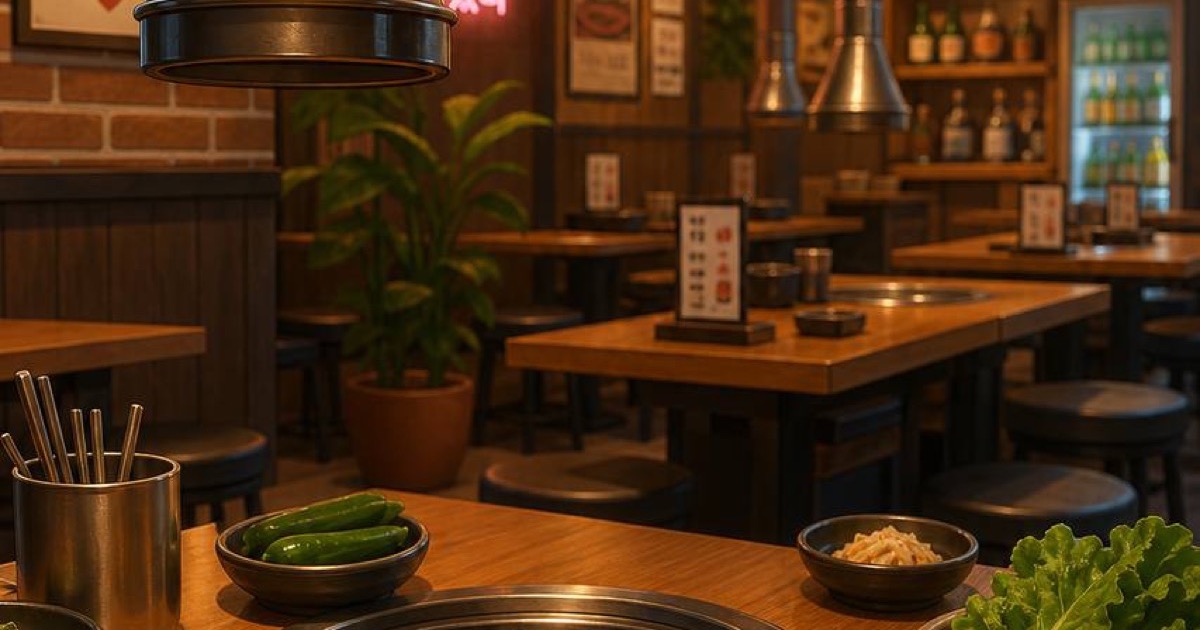
Korean meals come with refillable side dishes, and you are expected to ask. This is Pattern 01, (N) 주세요, with 더 (deo), "more," slipped in before it. Add 좀 (jom), "a little," and it becomes softer and more natural:
- 김치 좀 더 주세요 (gimchi jom deo juseyo) — "A little more kimchi, please."
- 반찬 좀 더 주세요 (banchan jom deo juseyo) — "More side dishes, please."
- 물 좀 주세요 (mul jom juseyo) — "Some water, please."
- 공기밥 하나 더 주세요 (gonggi-bap hana deo juseyo) — "One more bowl of rice, please."
- 앞접시 주세요 (apjeopsi juseyo) — "A small plate for sharing, please."
Many places have a self-serve station marked 셀프 (selpeu) for side dishes and water. If you see that sign, the refill is yours to fetch. Getting the server's attention in the first place is covered in how to call a waiter in Korean.
Asking them to do something to the food
Pattern 23, (V)아/어 주세요, "please do V for me," handles anything you need done at the table. It is the same 주세요, now after a verb:
- 잘라 주세요 (jalla juseyo) — "Please cut it." Servers cut 냉면 noodles and grilled meat with scissors.
- 데워 주세요 (dewo juseyo) — "Please heat it up."
- 덜 맵게 해 주세요 (deol maepge hae juseyo) — "Please make it less spicy." Best said when you order, not after.
- 불 좀 줄여 주세요 (bul jom jullyeo juseyo) — "Please turn the heat down." Useful at a table with its own burner.
- 포장해 주세요 (pojanghae juseyo) — "Please pack it to go." The full routine is in to-go box in Korean.
What Koreans say to you while you eat — and how to answer
Half of eating Korean is answering. Hosts, older coworkers, and restaurant owners will throw these at you:
Host: 많이 드세요. You: 네, 감사합니다. 잘 먹을게요.
Host: 입에 맞아요? You: 네, 진짜 맛있어요.
Host: 더 드세요. 많이 남았어요. You: 아니에요, 배불러요. 너무 많이 먹었어요.
많이 드세요 (mani deuseyo) means "Eat a lot" — it is hospitality, not an instruction. 입에 맞아요? (ibe majayo?) means "Does it suit your taste?" The answer they hope for is 네, followed by 맛있어요. And when the food keeps coming, 배불러요 is the polite way out. Add 너무 많이 먹었어요 (neomu mani meogeosseoyo), "I ate too much," and nobody will push a fourth helping on you.
If you can't eat something at all, keep it light and true: 매운 거 잘 못 먹어요 (maeun geo jal mot meogeoyo), "I can't handle spicy food very well." That uses Pattern 07, 못, and it lands as an honest limit rather than a complaint. For real allergies, use the stronger lines in Korean phrases for food allergies and diet restrictions.
Mistakes people make at the Korean table
Saying 매워요 for a hot bowl. If the soup burns your tongue but has no chili, it is 뜨거워요. Mixing them up gets you the wrong fix.
Saying 배고파요 when you mean full. 배고파요 (baegopayo) is "I'm hungry"; 배불러요 is "I'm full." They both start with 배, "stomach," so they are easy to swap when you are nervous. Hungry before, full after.
Complaining with 맛없어요. 맛없어요 (madeopseoyo), "It's not tasty," is grammatically perfect and socially rough. If a dish is not for you, say 좀 짜요 or 저한테 좀 매워요 (jeohante jom maewoyo), "It's a bit spicy for me." Describe the taste; don't judge the cook.
Staying silent when the host asks. A quiet nod reads as "not great." Even a short 맛있어요! is better than nothing.
Forgetting 좀. 김치 더 주세요 is correct, but 김치 좀 더 주세요 sounds warmer. That one syllable is what makes requests sound native.
The meal, start to finish
You open with 잘 먹겠습니다, react through the meal with 맛있어요 and 좀 매워요, ask for refills with 좀 더 주세요, wave off seconds with 배불러요, and close with 잘 먹었습니다. The opening and closing lines are explained in what to say in Korean before and after eating; what you say at the counter on the way out is in what to say in Korean when leaving a restaurant.
Say it with your mouth full of practice, not food
맛있어요 looks simple, but the 있 in the middle comes out as a double ㅆ sound, and 배불러요 has two ㄹ sounds that run together. Under the pressure of a host watching you take the first bite, those are exactly the syllables that blur. Saying them out loud a few times before dinner is what makes them come out clean at the table.
SULSUL is a speaking gym built for that: pick a pattern, say it out loud, get an instant fix from the AI pronunciation coach, then run the whole situation as a mission — including a full restaurant roleplay. The 100-pattern PDF workbook comes along as a bonus.