What to Say in Korean When Leaving a Restaurant: 계산할게요, 잘 먹었습니다, and 안녕히 계세요
When you leave a restaurant in Korea, you say three things, in this order. At the counter: 계산할게요 (gyesanhalgeyo), "I'll pay now." As you hand over your card or take it back: 잘 먹었습니다 (jal meogeosseumnida), "I ate well" — the Korean thank-you for a meal. And at the door: 안녕히 계세요 (annyeonghi gyeseyo), "stay well," because the staff are the ones staying. The staff will answer with 안녕히 가세요 (annyeonghi gaseyo), "go well," and very often 또 오세요 (tto oseyo), "come again." That is the whole exit. Everything below is about getting it right when the bill is split, the card reader asks a question, or nobody is standing at the register.
The exit, in three lines
- At the counter: 계산할게요 (gyesanhalgeyo) — "I'll pay."
- To the staff: 잘 먹었습니다 (jal meogeosseumnida) — "I ate well / thank you for the meal."
- At the door: 안녕히 계세요 (annyeonghi gyeseyo) — "Goodbye" to the person staying.
First, know where you pay
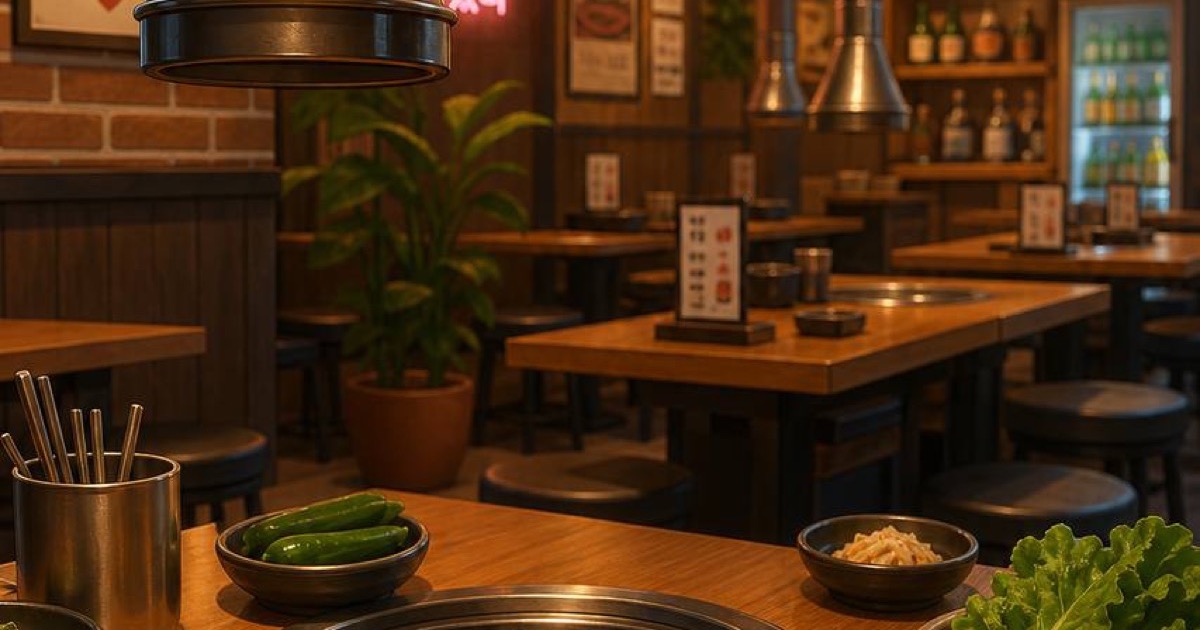
Most Korean restaurants do not bring the bill to your table. The check is usually already sitting there — a slip clipped to a holder, or tucked under the cutlery tray — and you carry it to the counter by the door. That is why 계산할게요 is the line you need, not "the bill, please." You are announcing that you are paying, not asking for something to be brought.
If you look around and there is no slip, two lines cover it:
- 계산서 주세요 (gyesanseo juseyo) — "The bill, please." Useful in places with table service, often the pricier ones.
- 여기서 계산해요? (yeogiseo gyesanhaeyo?) — "Do I pay here?" Ask this at the table when you are not sure whether to stay seated or walk up.
Some newer spots use a tablet on the table or a kiosk by the entrance, and you paid before the food came. In that case there is no counter step at all — you go straight to the goodbye.
Practice this out loud with SULSUL — the app says it, you repeat it →
계산할게요 — the line at the counter
계산할게요 is built from 계산 (gyesan, "calculation," the everyday word for paying a bill) plus 할게요 (halgeyo), "I will do it." It is a polite announcement of what you are about to do. Walk up, put the slip down, and say it. If the staff member is busy at the back, add the word that gets attention anywhere in Korea: 저기요, 계산할게요 (jeogiyo, gyesanhalgeyo).
The softer version some people use is 계산해 주세요 (gyesanhae juseyo), "please ring me up." Both are natural. The difference is only who you put at the centre of the sentence — you paying, or them processing it.
Then come the questions you are likely to hear back, and the answers:
| Staff says | Meaning | You answer |
|---|---|---|
| 카드세요? (kadeuseyo?) | "Card?" | 네, 카드요 (ne, kadeuyo) — "Yes, card." |
| 같이 계산하세요? (gachi gyesanhaseyo?) | "Paying together?" | 네, 같이요 / 아니요, 따로요 |
| 영수증 드릴까요? (yeongsujeung deurilkkayo?) | "Do you want the receipt?" | 네, 주세요 / 아니요, 괜찮아요 |
| 포인트 적립하세요? (pointeu jeongnipaseyo?) | "Collecting points?" | 아니요, 괜찮아요 |
That last one catches a lot of visitors. It is a loyalty-points question, usually asking for a phone number, and 아니요, 괜찮아요 (aniyo, gwaenchanayo), "no, it's fine," closes it politely.
Splitting the bill: 같이 or 따로
Korean friends often take turns paying for the whole table, but splitting is completely normal, and the counter staff hear it all day. Two words decide it:
- 같이 계산할게요 (gachi gyesanhalgeyo) — "We'll pay together."
- 따로 계산해 주세요 (ttaro gyesanhae juseyo) — "Separately, please."
When paying separately, each person points at what they had: 저는 이거요 (jeoneun igeoyo), "Mine is this one." And if you want to treat everyone, the confident line is 제가 낼게요 (jega naelgeyo), "I'll pay." Expect a friendly argument about it.
Asking for the small things on the way out
The exit is also when people remember they need one more thing. These all use the same request pattern from the SULSUL textbook, (Noun) 주세요, "please give me (noun)" — attach 주세요 straight to the noun, and add 좀 (jom) in between to soften it:
- 영수증 주세요 (yeongsujeung juseyo) — "The receipt, please."
- 물티슈 좀 주세요 (multisyu jom juseyo) — "Some wet wipes, please."
- 사탕 하나 가져가도 돼요? (satang hana gajyeogado dwaeyo?) — "Can I take one candy?" Many restaurants keep a bowl of mints or candy by the register for exactly this moment.
If there is food left over, ask before you stand up, not at the door — 남은 거 포장해 주세요 (nameun geo pojanghae juseyo), "Please pack the leftovers." The full routine is in to-go box in Korean.
The goodbye: 잘 먹었습니다 and 안녕히 계세요
Once the card is back in your hand, say 잘 먹었습니다. It is the meal-specific thank-you, and it lands better than a plain 감사합니다 because it tells the staff the food was good. If it really was, stretch it: 잘 먹었습니다. 정말 맛있었어요 (jal meogeosseumnida. jeongmal masisseosseoyo), "Thank you for the meal. It was really delicious." Owners of small places remember the customers who say that. The line before the meal and how it pairs with this one are covered in what to say in Korean before and after eating.
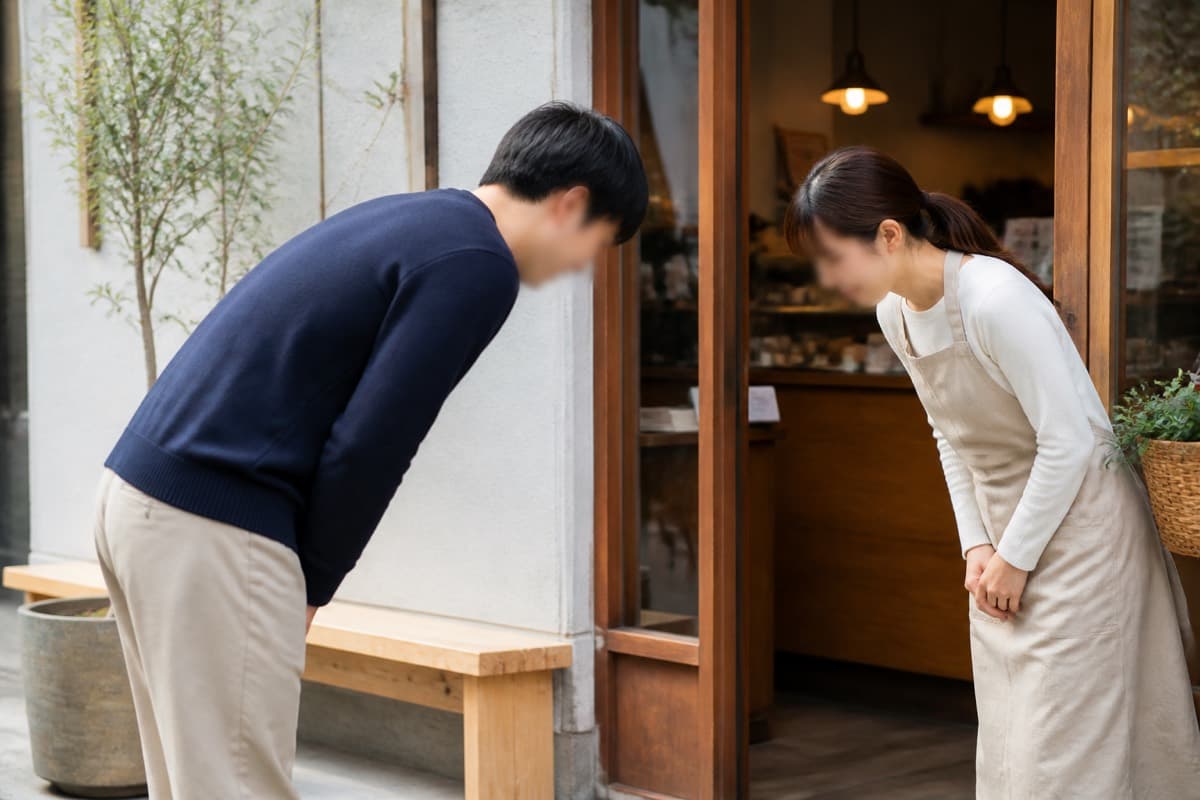
Then, as you open the door, 안녕히 계세요. The logic is simple: you are leaving, they are staying, so you wish them "stay well." The staff, watching you go, say 안녕히 가세요, "go well." If you mix them up, nobody will be offended — but getting it right is one of the clearest signals that you actually know Korean rather than a phrasebook. The full goodbye system is in how to say goodbye in Korean.
The whole exit as one short scene
You (at the counter): 저기요, 계산할게요. Staff: 네. 같이 계산하세요? You: 네, 같이요. 카드요. Staff: 영수증 드릴까요? You: 아니요, 괜찮아요. 잘 먹었습니다! Staff: 감사합니다. 안녕히 가세요, 또 오세요! You (at the door): 안녕히 계세요!
Seven lines, under a minute, and every one of them is something you will use again at the next meal.
Mistakes that make the exit awkward
Waiting at the table for a bill that never comes. In most casual restaurants it is already on your table. Pick it up and walk to the counter.
Saying 안녕히 가세요 to the staff. That tells them to go, while you are the one leaving. You stay-well them: 안녕히 계세요.
Saying 계산서 주세요 at the register. It is not wrong, but at the counter you already have the slip in hand. 계산할게요 fits the moment.
Leaving a tip on the table. Tipping is not part of eating out in Korea, and staff may chase you down the street to return it. The thank-you is spoken: 잘 먹었습니다.
Answering the points question with silence. A simple 괜찮아요 is all it takes; an awkward pause makes the staff ask again.
Practise the exit before the meal
계산할게요 and 안녕히 계세요 look easy written down, and then the moment arrives with a queue behind you and the card reader beeping, and the words come out in the wrong order. The fix is saying them out loud a few times before you need them, until the sequence runs on its own.
SULSUL is a speaking gym built for that: pick a pattern, say it out loud, get an instant fix from the AI pronunciation coach, then run the whole situation as a mission. The 100-pattern PDF workbook comes along as a bonus.