Korean Small Talk Phrases for Total Beginners


Korean small talk phrases for beginners work best when you stick to a few reliable topics: where you're from, what you think of Korea, and what you're studying. Ask 어디서 왔어요? (eodiseo wasseoyo?), "Where are you from?" and answer with 미국에서 왔어요 (migukeseo wasseoyo), "I'm from the US." Add 한국어 공부하고 있어요 (hangugeeo gongbuhago isseoyo), "I'm studying Korean," and most conversations open up on their own.
- Ask where someone is from: 어디서 왔어요? (eodiseo wasseoyo?), "Where are you from?"
- Tell them your country: 미국에서 왔어요 (migukeseo wasseoyo), "I'm from the US." — swap in your country name.
- Show enthusiasm for Korea: 한국 음식 너무 좋아해요 (hanguk eumsik neomu joahaeyo), "I really love Korean food."
- Admit you're still learning: 한국어 공부하고 있어요 (hangugeeo gongbuhago isseoyo), "I'm studying Korean."

What topics work for Korean small talk?
Three topics carry almost any first conversation: origin, impressions of Korea, and language. They're low-risk because they invite the other person to share too, and most Koreans enjoy hearing that someone has made the effort to study.
| Topic | Say this |
|---|---|
| Where are you from? | 어디서 왔어요? (eodiseo wasseoyo?) |
| I'm from Australia | 호주에서 왔어요 (hojueseo wasseoyo) |
| Love Korean food | 한국 음식 너무 좋아요 (hanguk eumsik neomu joayo) |
| Studying Korean | 한국어 공부하고 있어요 (hangugeeo gongbuhago isseoyo) |
| First time in Korea? | 한국 처음 왔어요? (hanguk cheoeum wasseoyo?) |
One quick note: 좋아해요 (joahaeyo) means "I like it" in general, while 좋아요 (joayo) agrees with something right in front of you — "it's good." Both work in small talk; just pick one and stay consistent.
Practice this out loud with SULSUL — the app says it, you repeat it →
How does a first-conversation exchange actually go?
Understanding the reply is the moment most people get stuck, not the opener. Here's a realistic exchange:
You: 어디서 왔어요? — eodiseo wasseoyo? — "Where are you from?"
Them: 저는 서울 사람이에요. — jeoneun Seoul saramieyo. — "I'm from Seoul."
You: 서울이 정말 좋아요! — Seouli jeongmal joayo! — "Seoul is really great!"
After the opening, they'll often ask 한국어 잘 하네요! (hangugeeo jal haneyo!), "Your Korean is good!" — the natural reply is 아직 배우고 있어요 (ajik baeugo isseoyo), "I'm still learning." That keeps the conversation going without overselling your level.
What usually goes wrong in Korean small talk?
The most common mistake is going quiet after the first exchange because you don't know what to say next. Prepare one follow-up question in advance so the silence doesn't catch you off guard.
A second mistake is treating small talk as a grammar test. Koreans in casual settings are forgiving of imperfect sentences — what matters is that you tried. Use -요 (-yo) endings throughout; they're polite without being stiff, and the right default for anyone you just met. If you're still working out when to use formal versus casual Korean, the guide on greeting people with the right politeness level covers exactly that.
I've seen learners memorize twenty phrases and still go blank when a Korean person responds. The problem is almost never vocabulary — it's that they've never said the phrases out loud with someone actually listening.
How do you keep the conversation going?
Once you've exchanged origins, shift to impressions or plans. 한국에 얼마나 있을 거예요? (hanguke eolmana isseul geoyeyo?), "How long will you be in Korea?" opens up a natural follow-up. If they ask what you've seen, say the name of a place and add 정말 좋았어요 (jeongmal joasseoyo), "it was really great." You don't need a full opinion — one adjective is enough.
If you want to continue the conversation another time, try 카카오톡 있어요? (KakaoTok isseoyo?), "Are you on KakaoTalk?" It's the most common way Koreans exchange contact information in casual settings.

Say it out loud, not just in your head
Reading 어디서 왔어요? here is not the same as saying it when a Korean person is standing right in front of you, waiting to see if you'll actually speak.
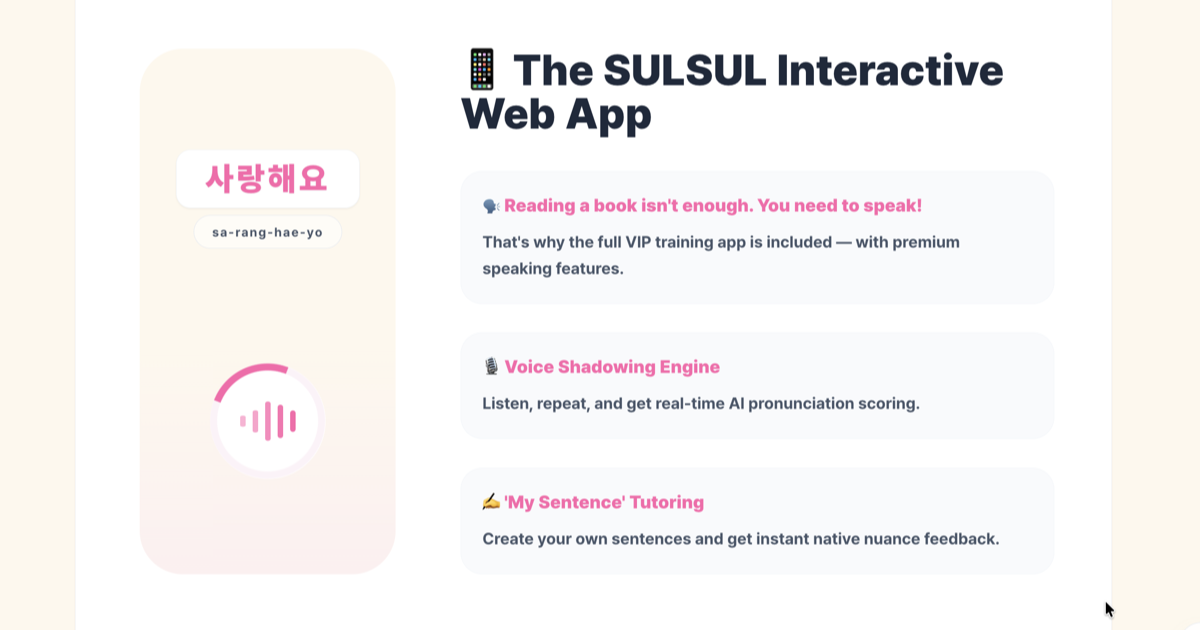
SULSUL is a speaking gym for exactly that moment: pick a survival pattern, say it out loud, get an instant fix from the AI pronunciation coach, then run the real situation as a mission. The 100-pattern PDF workbook comes along as a bonus.