How to Say Ask in Korean: 물어보다, 여쭤보다, and 부탁하다

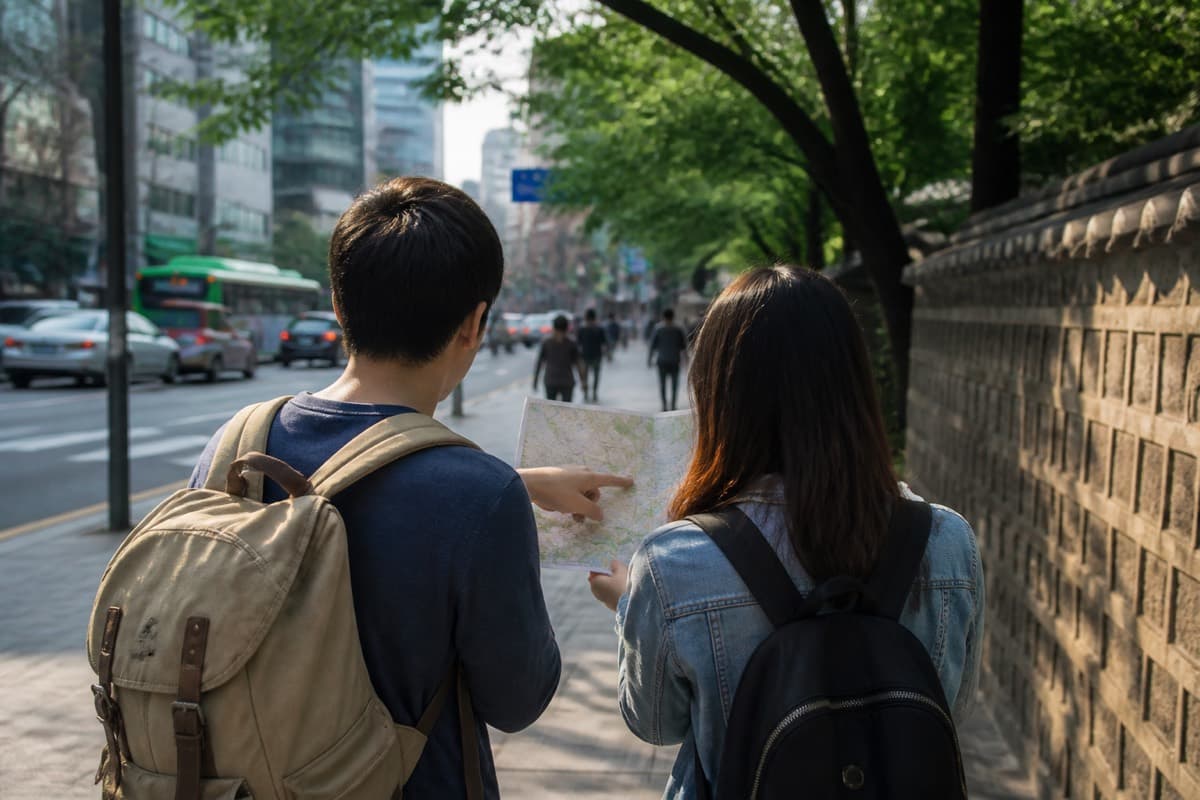
"Ask" in Korean is 물어보다 (mul-eo-bo-da) when you mean asking a question. When you are asking someone older, a teacher, or a stranger you want to be extra polite to, it becomes 여쭤보다 (yeo-jjwo-bo-da). But when "ask" means asking someone to do something for you — a favor, a photo, a little help — Korean uses a different word entirely: 부탁하다 (bu-tak-ha-da). English packs all of this into one verb. Korean splits it in two, and picking the right one is most of the battle.
- 물어보다 — to ask (a question) — everyday word
- 여쭤보다 — to ask (a question), humbly — to elders, teachers, staff
- 부탁하다 — to ask (a favor), to request
- 질문 — a question (the noun)
- 뭐 하나 물어봐도 돼요? — Can I ask you something?
- 부탁이 있어요 — I have a favor to ask
The sentence you will actually say most is the last-but-one: 뭐 하나 물어봐도 돼요? It is the polite door-opener before any question to a stranger. Below: how each verb changes when you speak, the door-opener line, a full street dialogue, and the small mistakes that make a question sound off.
Asking a question vs. asking a favor
Think of it this way. If the answer is information, use 물어보다. If the answer is an action, use 부탁하다.
| You want… | English | Korean verb |
|---|---|---|
| directions, a price, a name | "Can I ask where…?" | 물어보다 |
| someone to take your photo | "Can I ask you to…?" | 부탁하다 |
| the teacher's opinion | "I'd like to ask you…" | 여쭤보다 |
| a stranger to watch your bag | "Could I ask a favor?" | 부탁하다 |
A lot of learners say 물어봐도 돼요? and then ask for a photo. Koreans will understand, but it sounds like "Can I ask a question?" followed by a request. The natural opener for a request is 부탁 하나 해도 돼요? (bu-tak ha-na hae-do dwae-yo?), "Can I ask you a favor?"
Practice this out loud with SULSUL — the app says it, you repeat it →
The verb forms you will actually say
Dictionary forms like 물어보다 almost never come out of a mouth in conversation. These do:
| Korean | Romanization | Meaning |
|---|---|---|
| 물어볼게요 | mul-eo-bol-ge-yo | I'll ask (someone) |
| 물어봤어요 | mul-eo-bwa-sseo-yo | I asked |
| 물어보세요 | mul-eo-bo-se-yo | Please ask / Go ahead and ask |
| 물어봐 | mul-eo-bwa | Ask (casual, to a friend) |
| 여쭤볼게요 | yeo-jjwo-bol-ge-yo | I'll ask (my boss, the teacher) |
| 부탁해요 | bu-tak-hae-yo | Please (I'm counting on you) |
| 부탁드려요 | bu-tak-deu-ryeo-yo | I kindly ask you (extra polite) |
You will hear 물어보세요 a lot from shop staff and guides. It means "go ahead, ask me." And 부탁해요 is one of the most useful words in Korea: hand a taxi driver an address and say 여기로 부탁해요, "here, please."
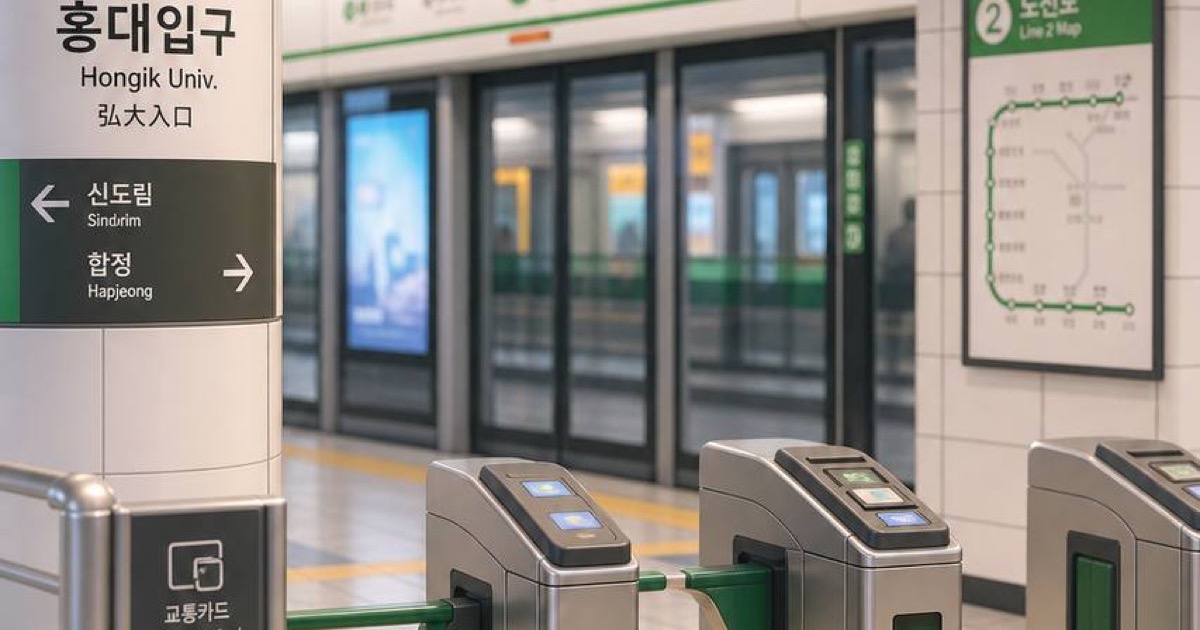
"Can I ask you something?" — the one line to memorize
In Korea you rarely jump straight into a question with a stranger. You open with a short permission line first. It comes from a textbook pattern: (V)아/어도 돼요?, "Is it okay if I…?"
- 물어보다 → 물어봐도 돼요? — Is it okay if I ask?
- 뭐 하나 물어봐도 돼요? — Can I ask you one thing?
- 잠깐 물어봐도 될까요? — Could I ask you something for a second? (softer)
- 하나 여쭤봐도 될까요? — May I ask you one thing? (to an older person)
Put 저기요 (jeo-gi-yo, "excuse me") in front, and you have the full approach:
저기요, 뭐 하나 물어봐도 돼요? jeo-gi-yo, mwo ha-na mul-eo-bwa-do dwae-yo? "Excuse me, can I ask you something?"
Most people will stop, nod, and say 네, 물어보세요 or just 네? Then ask your real question.
A real street conversation
You are near a subway exit with your map app spinning in circles.
You: 저기요, 뭐 하나 물어봐도 돼요? Excuse me, can I ask you something?
Local: 네, 말씀하세요. Sure, go ahead.
You: 경복궁 어떻게 가요? How do I get to Gyeongbokgung?
Local: 3번 출구로 나가서 쭉 가세요. Go out exit 3 and walk straight.
You: 감사합니다! 그리고… 부탁 하나 해도 돼요? 사진 좀 찍어 주세요. Thank you! And… can I ask a favor? Please take a photo for me.
Local: 네, 그럼요. Sure, of course.
Notice the switch in the middle: 물어봐도 돼요 for the directions, 부탁 for the photo. That is the whole difference, said out loud.
When to use 여쭤보다
여쭤보다 is the humble version of 물어보다. You lower yourself a little to show respect. Use it when the person you are asking is older, senior, or in a role you respect:
- To a teacher: 선생님, 하나 여쭤봐도 될까요?
- To a hotel concierge: 여쭤볼 게 있는데요… ("I have something to ask…")
- About your boss: 팀장님께 여쭤볼게요. ("I'll ask the team leader.")
You never use 여쭤보다 about yourself being asked. If someone asks you, it is still 물어보다: 친구가 물어봤어요, "My friend asked me."
Mistakes that make a question sound off
Using 질문하다 in casual speech. 질문하다 means "to ask a question," but it sounds formal, like a classroom or a press conference. In daily life, 물어보다 is what people say. Use 질문 as a noun instead: 질문 있어요! ("I have a question!") works well in a class or tour.
Asking for a favor with 물어보다. As above — a request is 부탁. 사진 좀 물어봐도 돼요 makes no sense in Korean.
Forgetting 좀. 좀 (jom) softens any request. 사진 좀 찍어 주세요 is friendly; without 좀 it sounds blunter than you mean.
Skipping the opener. Firing a question at a stranger without 저기요 or 물어봐도 돼요 is not rude, but it can startle people. One short line first gets you a warmer answer.
Say it out loud
Practice these three until they come out in one breath:
- 저기요, 뭐 하나 물어봐도 돼요? — to a stranger on the street.
- 부탁 하나 해도 돼요? — before asking for a photo.
- 하나 여쭤봐도 될까요? — to an older shop owner or a guide.

Then run the street dialogue above as both roles. The next time you are lost in Seoul, the question will already be in your mouth before you finish reaching for your phone.
SULSUL is a speaking gym for that moment: pick a pattern, say it out loud, get an instant fix from the AI pronunciation coach, then run the real situation as a mission. The 100-pattern PDF workbook comes along as a bonus.