K-Drama Sayings: The Korean Proverbs Characters Keep Quoting, and What They Mean
The sayings you keep hearing in K-dramas are mostly 속담 (sokdam), old Korean proverbs that every Korean learned as a child. A grandmother pushing rice at a guest says 금강산도 식후경 (geumgangsan-do sikhugyeong, "even Mount Geumgang comes after a meal"). A friend who sees the person they were just gossiping about walk in says 호랑이도 제 말 하면 온다 (horangido je mal hamyeon onda, "speak of the tiger and it shows up"). A boss scolding a team after a disaster says 소 잃고 외양간 고친다 (so ilko oeyanggan gochinda, "fixing the barn after losing the cow"). The subtitles usually swap in an English idiom, so you never see how much of the scene was a proverb.
Here are the ones that come up most, grouped by the kind of scene they belong to:
- 금강산도 식후경 — eat first, sightseeing later.
- 누워서 떡 먹기 (nuwoseo tteok meokgi) — "eating rice cake lying down," a piece of cake.
- 그림의 떡 (geurimui tteok) — "rice cake in a painting," something you can't have.
- 호랑이도 제 말 하면 온다 — speak of the devil.
- 낮말은 새가 듣고 밤말은 쥐가 듣는다 — walls have ears.
- 믿는 도끼에 발등 찍힌다 — betrayed by the person you trusted.
- 소 잃고 외양간 고친다 — too late now.
- 개구리 올챙이 적 생각 못 한다 — forgot where they came from.
- 시작이 반이다 (sijagi banida) — starting is half the work.
- 원숭이도 나무에서 떨어진다 — even experts slip.
Around the dinner table: food proverbs
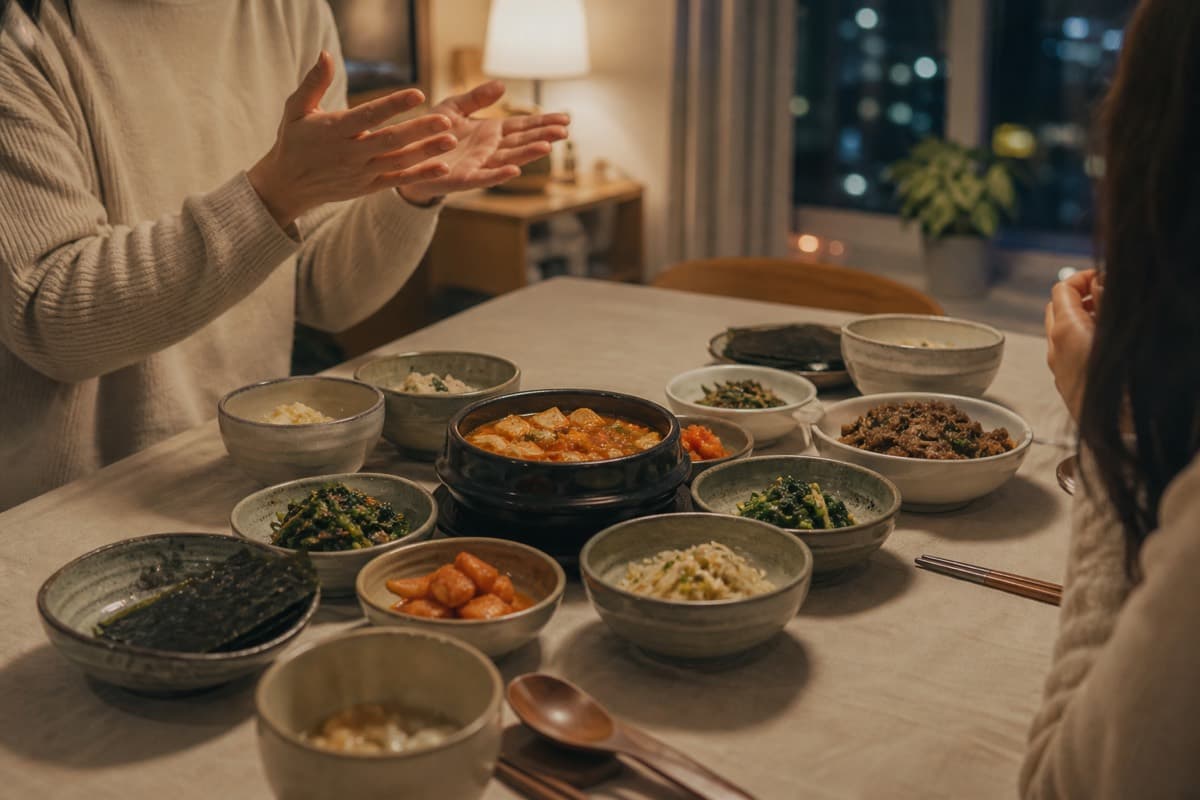
Korean has a surprising number of proverbs about rice cake, and dramas use them in the kitchen and at the table.
금강산도 식후경 is the one a drama mom says when everyone wants to rush out. Mount Geumgang is famously beautiful, and the proverb says even that view can wait until you have eaten. In real life it is the polite way to say "let's eat first": 금강산도 식후경이라는데, 밥부터 먹어요. — "They say even Geumgang comes after a meal, so let's eat first."
누워서 떡 먹기 means something is very easy. Characters say it while bragging, usually right before it goes wrong: 이 정도는 누워서 떡 먹기지. — "This is a piece of cake."
그림의 떡 is the rice cake in a painting — you can look, you can't eat. It is the line for the expensive coat in the window, or the handsome chaebol heir who will never notice you. 나한테는 그림의 떡이야. — "For me, it's just a picture of rice cake."
남의 떡이 커 보인다 (namui tteogi keo boinda), "other people's rice cake looks bigger," is the Korean "the grass is always greener."
Practice this out loud with SULSUL — the app says it, you repeat it →
When someone walks in at the wrong moment
Dramas love a scene where two people are talking about someone, and the door opens. The line is almost always 호랑이도 제 말 하면 온다 — often cut down to just 호랑이도 제 말 하면... with a nervous laugh. Koreans shorten long proverbs all the time; saying the first half is enough, the way English speakers stop at "speak of the devil."
낮말은 새가 듣고 밤말은 쥐가 듣는다 (nanmareun saega deutgo bammareun jwiga deunneunda) means "birds hear daytime words, mice hear nighttime words." It is the warning before a secret gets out: be careful, someone is always listening. In office dramas it is said in a whisper next to the coffee machine.
등잔 밑이 어둡다 (deungjan michi eodupda), "it's darkest under the lamp," is for when the answer was right in front of you the whole time. The missing key is in your pocket; the culprit was the assistant who brought everyone tea.

Makjang moments: betrayal and lectures
믿는 도끼에 발등 찍힌다 (minneun dokkie baldeung jjikinda) is "your foot gets chopped by the axe you trusted." It is the line for the moment in a makjang drama when the best friend turns out to be the one who stole the company. You will also hear it, much lighter, when a friend spoils the ending you asked them not to.
개구리 올챙이 적 생각 못 한다 (gaeguri olchaengi jeok saenggak mot handa), "the frog can't remember being a tadpole," is aimed at someone who got rich or promoted and now looks down on people where they started. Mothers-in-law say it, ex-classmates say it, and it always stings.
소 잃고 외양간 고친다 is the lecture after a disaster. You lost the cow, now you fix the barn? Bosses use it about late security fixes; parents use it about studying the night before an exam.
세 살 버릇 여든까지 간다 (se sal beoreut yeodeunkkaji ganda), "habits from age three last until eighty," is the grandparent's line when a child does something bad. Basically, "you can't teach an old dog new tricks," only Korean blames the habit while you are still young.
가는 말이 고와야 오는 말이 곱다 (ganeun mari gowaya oneun mari gopda) means "the words you send must be kind for kind words to come back." A character says it right after someone speaks rudely to them — a polite way to tell them to watch their tone.
When a character needs encouragement
Not every proverb is a scolding. These are the ones that show up in the episode where the hero almost gives up.
시작이 반이다 — "starting is half." Said to someone who keeps putting off the first step: signing up for the class, sending the message.
티끌 모아 태산 (tikkeul moa taesan), "gather dust and you get a mountain," is about small efforts adding up. Characters say it while dropping coins into a jar.
원숭이도 나무에서 떨어진다 (wonsungido namueseo tteoreojinda), "even monkeys fall from trees," is the kind thing to say when an expert makes a mistake: the top chef burns the rice, the star player misses. It means "it happens to everyone."
하늘의 별 따기 (haneurui byeol ttagi), "picking a star from the sky," describes something almost impossible. Koreans use it constantly for concert tickets and apartments in Seoul.
For the longer, more emotional lines — the ones characters say on a rooftop at night — K-drama quotes about life covers those separately.
How proverbs sit inside a real sentence
Koreans rarely say a proverb on its own. They wrap it in one of three endings:
- -(이)라더니 / -다더니 — "they say..., and sure enough": 호랑이도 제 말 하면 온다더니! — "Speak of the devil, and here you are!"
- -잖아(요) — "you know how...": 시작이 반이잖아요. — "You know, starting is half of it."
- -(이)라고 — quoting it: 누워서 떡 먹기라고 했지? — "Didn't you say it'd be a piece of cake?"
Learn one proverb with -더니 and you can reuse that ending for dozens of others.
A scene built from sayings
Two coworkers at lunch, talking about a manager:
A: 팀장님이 또 회의를 늦게 잡았어요. — timjangnimi tto hoeuireul neutge jabasseoyo. — "The team lead scheduled another late meeting."
B: 쉿, 낮말은 새가 듣고 밤말은 쥐가 듣는다잖아요. — swit, nanmareun saega deutgo bammareun jwiga deunneundajanayo. — "Shh, you know — walls have ears."
(The team lead walks in.)
A: 어... 호랑이도 제 말 하면 온다더니. — eo... horangido je mal hamyeon ondadeoni. — "Uh... speak of the tiger."
Team lead: 무슨 얘기 해요? 일단 금강산도 식후경이니까 밥부터 먹어요. — museun yaegi haeyo? ildan geumgangsan-do sikhugyeong-inikka bapbuteo meogeoyo. — "What are you talking about? Anyway, Geumgang after a meal — let's eat first."
Three proverbs in four lines, and every Korean viewer would hear the joke.
Mistakes learners make with Korean proverbs
Translating them into English mid-conversation. "Even monkeys fall from trees" lands fine in Korean and sounds strange in English. Say the Korean.
Changing the words. Proverbs are fixed. 누워서 떡 먹기 cannot become 앉아서 떡 먹기 ("eating rice cake sitting down") — people will understand, but they will hear a mistake.
Lecturing someone older. 개구리 올챙이 적 생각 못 한다 and 세 살 버릇 여든까지 간다 are criticisms. In dramas, older people say them to younger people. Turned the other way, they sound rude. The safe ones with anyone are 금강산도 식후경, 시작이 반이다, and 원숭이도 나무에서 떨어진다.
Overdoing it. One proverb in a conversation sounds clever. Three in a row sounds like a grandmother on a variety show — which, to be fair, is sometimes the goal.
If you want the everyday words around these sayings, Korean words in K-dramas you hear in every episode and common K-drama phrases to use in conversation are the next step.
From recognizing a saying to saying it
Catching 호랑이도 제 말 하면 in an episode feels great. Getting 호랑이도 제 말 하면 온다더니 out of your own mouth, on time, when your friend actually walks in, is a different skill.
SULSUL is a speaking gym for that moment: pick a pattern, say it out loud, get an instant fix from the AI pronunciation coach, then run the real situation as a mission. The 100-pattern PDF workbook comes along as a bonus.