K-Pop Words and What They Mean in Korean
Most K-pop words you already use are real Korean, but a few of the biggest ones are not. 막내 (maknae, the youngest member), 애교 (aegyo, acted-out cuteness), 대박 (daebak, "no way"), 화이팅 (hwaiting, "you've got this") are Korean words you can say to a Korean person today. Bias, stan, ult, comeback, and lightstick are English-speaking fandom inventions — Korean fans use completely different words for all five, and that gap is the reason a conversation with a Korean fan can stall even when you both love the same group. The Korean for "bias" is 최애 (choe-ae). The Korean for "stanning" is 덕질 (deokjil). Here is the whole vocabulary, sorted by what each word is for.
- 최애 (choe-ae) — your bias. Literally "most loved."
- 차애 (cha-ae) — your second favourite.
- 입덕 (ipdeok) — the moment you fell into the fandom.
- 덕질 (deokjil) — stanning, as an activity.
- 덕후 (deokhu) — a serious fan of anything, not just K-pop.
- 막내 (maknae) — the youngest member of a group.
- 애교 (aegyo) — cuteness performed on purpose.
- 직캠 (jikkaem) — a fancam, one member filmed for a whole song.
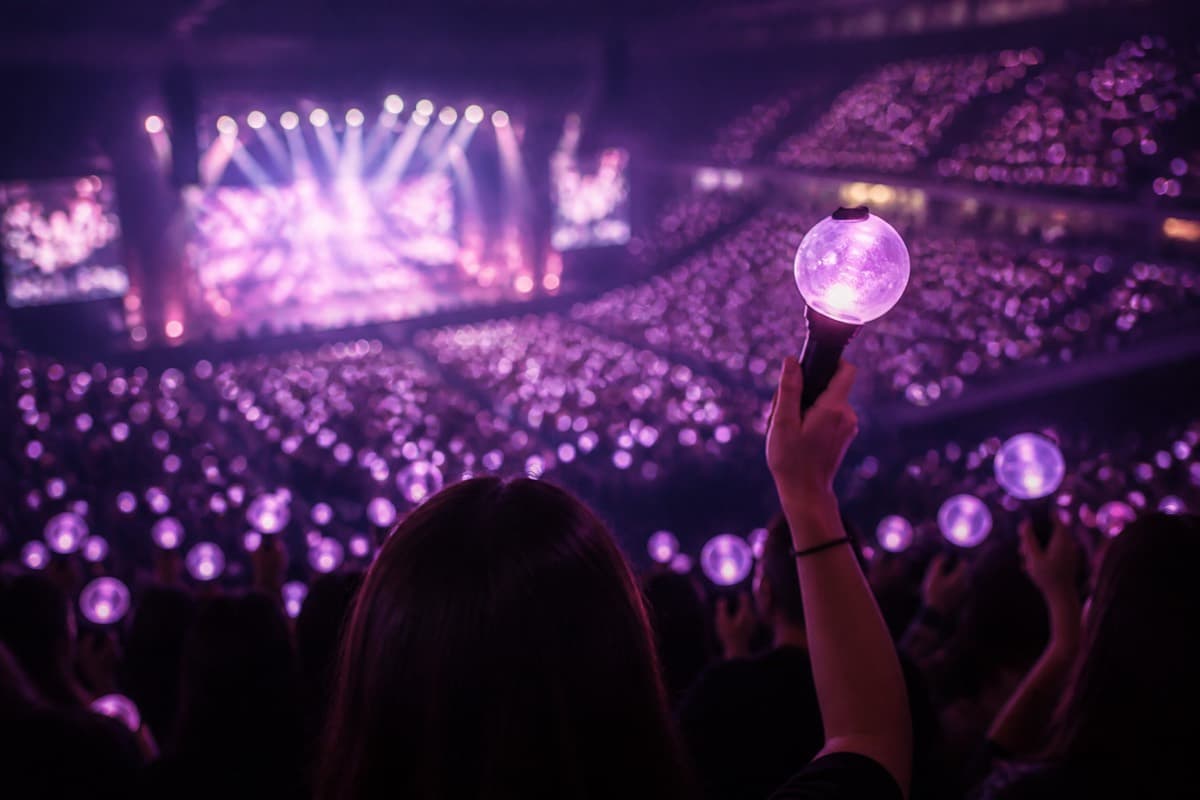
- 응원봉 (eungwonbong) — lightstick. Literally "cheering stick."
- 떼창 (ttechang) — a whole crowd singing along at once.
- 영업 (yeongeop) — recruiting a friend into your fandom.
The words English fandom made up, and their Korean replacements
This is the part no glossary tells you. English-speaking fandom built its own vocabulary over fifteen years, and Korean fandom built a separate one. They barely overlap.
| You say | Korean fans say | Literally |
|---|---|---|
| my bias | 최애 (choe-ae) | most loved |
| bias wrecker | 차애 (cha-ae) | second loved |
| I stan them | 덕질해요 (deokjilhaeyo) | I do fan activity |
| lightstick | 응원봉 (eungwonbong) | cheering stick |
| fanchant | 응원법 (eungwonbeop) | cheering method |
| fancam | 직캠 (jikkaem) | direct cam |
| photocard | 포카 (poka) | short for 포토카드 |
| fansign | 팬싸 (paenssa) | short for 팬사인회 |
| merch | 굿즈 (gutjeu) | goods |
| title track | 타이틀곡 (taiteulgok) | title song |
Say "who's your bias?" to a Korean fan in English and they will usually understand — they read international fan accounts too. Say 최애 누구예요? (choe-ae nuguyeyo?) and the conversation changes temperature completely, because you asked in the words they actually use at home.
Two of these deserve a note. 컴백 (keombaek, "comeback") is used in Korean, borrowed straight from English, so that one travels fine. And 팬 (paen) is simply the Korean word for fan — a borrowing, written in hangul, pronounced with a short flat vowel. The native word 부채 means the thing you wave to cool yourself down, so if you want to say "I'm a fan," it is 팬이에요 (paenieyo), never 부채.
Practice this out loud with SULSUL — the app says it, you repeat it →
덕: the one syllable most fandom words are built from
If you learn one piece of K-pop Korean, learn this. The syllable 덕 came from the Japanese otaku — it entered Korean as 오타쿠, got Koreanised into 오덕후, then shortened to 덕후 — and it now generates new words constantly.
입덕 (ipdeok) — 입 "enter" + 덕. The moment a group pulled you in. 입덕 영상 is the video that did it to you.
덕질 (deokjil) — 덕 + 질, a suffix meaning "doing that activity." Streaming, buying albums, learning the dance: all 덕질.
탈덕 (taldeok) — 탈 "escape" + 덕. Leaving a fandom.
성덕 (seongdeok) — short for 성공한 덕후, "a fan who succeeded." The one who met their 최애, or grew up to work with them.
입덕부정기 (ipdeok bujeonggi) — "the denial period after falling in." The weeks you insist you are not into them while watching every video. There is no English word for this and there should be.
덕밍아웃 (deokmingaut) — 덕 + coming out. Admitting your fandom to coworkers.
Once you see the machine, you can read fandom words you have never met before. That is worth more than memorising a list, because this vocabulary turns over fast.
최애 and how to actually say it in a sentence
최애 is written with two hanja-derived syllables: 최 "most" and 애 "love." Pronounce it chwe-ae, two beats, both short — not "cho-ay."
- 최애 누구예요? — choe-ae nuguyeyo? — "Who's your bias?"
- 제 최애는 막내예요. — je choe-aeneun maknaeyeyo. — "My bias is the youngest one."
- 차애도 있어요. — cha-aedo isseoyo. — "I have a second favourite too."
- 저는 올팬이에요. — jeoneun olpaenieyo. — "I'm an all-fan," meaning you refuse to pick.
올팬 (olpaen, all-fan) and 개인팬 (gaeinpaen, individual fan) are the two camps, and Korean fans will ask which one you are. Saying 올팬이에요 is the safe, warm answer at a first meeting.
Words for the members themselves
Group vocabulary is mostly about position and age, because Korean treats age as information you have to know.
막내 (maknae) — the youngest. Pronounced mang-nae, because ㄱ softens before ㄴ. 막내라인 (maknae-line) is the younger half of the group.
맏형 (matyeong) — the oldest male member; 맏라인 (mat-line) the older half. For a girl group, the oldest is the 큰언니 (keuneonni), "big older sister."
리더 (rideo), 비주얼 (bijueol), 센터 (senteo), 메보 (mebo, short for 메인보컬) — English borrowings used exactly as you would expect.
애교 (aegyo) — cuteness switched on deliberately: the voice, the hand hearts, the pout. It is a skill, not a personality. 애교 많아요 (aegyo manayo) means someone does a lot of it.
꿀보이스 (kkulboiseu) — "honey voice." 심멎 (simmeot) — "heart stopped," the shorter cousin of 심쿵.

Words for the things fans do
직캠 (jikkaem) is a fancam, and 직찍 (jikjjik) is a photo you took yourself rather than reposted. 홈마 (homma) is a fansite master, the one with the lens longer than your arm.
떼창 (ttechang) is the sound of an entire arena singing the chorus without being asked. Korean concert culture treats it as the point of being there, and foreign artists mention it in interviews for a reason.
첫공 (cheotgong) and 막공 (makgong) are the first and last shows of a tour. 막공 is the emotional one.
떡밥 (tteokbap) literally means fish bait — the crumbs of information a company drops before a comeback. 떡밥 뿌렸어 (tteokbap ppuryeosseo) is "they scattered bait."
영업 (yeongeop) means "sales," and fans use it for converting friends. 영업 성공 (yeongeop seonggong) is "my recruitment worked." If someone sends you nine videos in a row, you are being 영업당하는 중.
소통 (sotong) is communication, and in fandom it means an idol interacting with fans directly — a live, a reply, a handwritten note.
The words to handle carefully
사생 (sasaeng) is short for 사생팬, 사생 meaning "private life." It describes a fan who follows idols to their home or airport gate, and in Korean it is a serious accusation, not a joke about being obsessed. Never use it about yourself as a punchline — Korean fans read it as "criminal," not "enthusiastic."
오빠 (oppa), 언니 (eonni), 누나 (noona), 형 (hyeong) are relationship positions tied to your own age and gender, not free-floating cute words. Calling an idol 오빠 when you are older than him lands oddly. What 오빠 actually means and what 누나 means and who can say it sort out the rules, and Korean family titles and how to address people covers the full system.
빠순이 and similar words are insults aimed at female fans. You will see them in comment sections. Do not borrow them.
A conversation made almost entirely of fandom words
Two fans meeting in a merch line:
Them: 최애 누구예요? — choe-ae nuguyeyo? — "Who's your bias?"
You: 저는 막내예요. 입덕 영상이 직캠이었어요. — jeoneun maknaeyeyo. ipdeok yeongsangi jikkaemieosseoyo. — "The youngest. A fancam is what got me in."
Them: 아 진짜요? 저는 올팬이에요. — a jinjjayo? jeoneun olpaenieyo. — "Oh really? I'm an all-fan."
You: 덕질 얼마나 하셨어요? — deokjil eolmana hasyeosseoyo? — "How long have you been stanning?"
Them: 삼 년이요. 막공도 갔어요. — sam nyeoniyo. makgongdo gasseoyo. — "Three years. I went to the last show too."
Five lines, and a subtitle would flatten most of it into "fan."

Four ways fans get these words wrong
Reading romanization as English. Choe-ae is not "cho-ay," jikkaem is not "jick-cam," and 막내 is pronounced mang-nae. Romanization is a map, not the sound.
Using fandom shorthand with non-fans. 덕질, 떡밥, 막공 are in-group words. A taxi driver will not follow them. 팬이에요 works with everyone.
Borrowing 반말 from fan videos. Idols talk to fans in casual Korean because they are performing closeness. Add -요: 최애 누구예요, not 최애 누구야, when you meet someone new.
Treating 애교 as a compliment to demand. Asking a Korean person to "do aegyo" is a thing idols are asked on variety shows, and it is awkward everywhere else.
If you want the lines that work out loud in a venue rather than the vocabulary behind them, Korean fan phrases to know at a K-pop concert and Korean phrases for trading K-pop photocards are built for that, and Korean slang words and what they actually mean covers the general slang sitting underneath all of this.
Knowing the word is the easy half
You can read every word on this page and still freeze when a Korean fan turns around in the merch line and asks you something. The gap is not vocabulary — it is the half second between hearing 최애 누구예요? and getting a sentence out of your own mouth at normal speed.
SULSUL is a speaking gym for that half second: pick a pattern, say it out loud, get an instant fix from the AI pronunciation coach, then run the real situation as a mission. The 100-pattern PDF workbook comes along as a bonus.