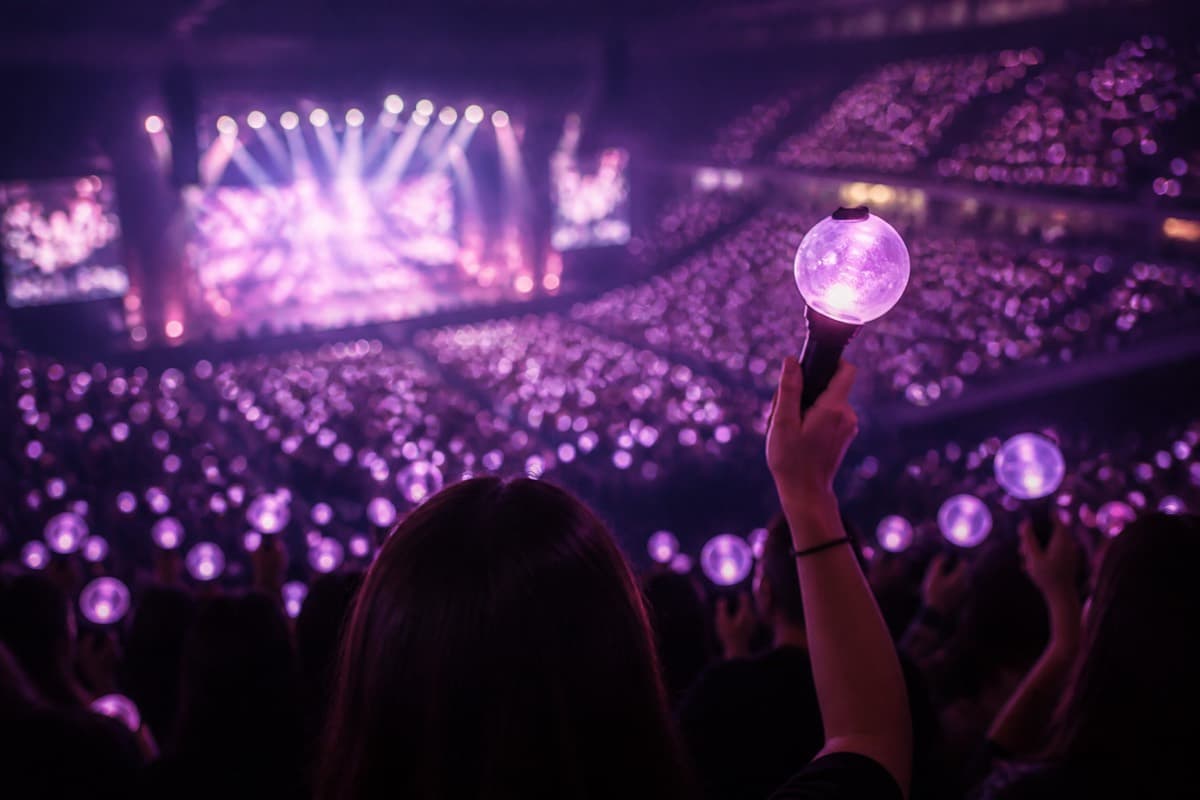
Korean Fan Phrases to Know at a K-pop Concert


When STARNEWS covered aespa's debut appearance at Lollapalooza Chicago on August 2, 2026, the report noted fans singing along to every song in the 14-track set. Those fans knew when to cheer, what to shout, and how to react — in Korean. Korean fan phrases at a K-pop concert are a short list, but they land completely differently when you say them in the artist's language rather than just clapping at the right time. The core phrase is 화이팅! (hwaiting!), "You've got this!" — easy to say, impossible to misread.
- Cheer during the performance: 화이팅! (hwaiting!), "You've got this!"
- React after a great stage: 최고예요! (choegoyeyo!), "You're the best!"
- Show love directly: 사랑해요! (saranghaeyo!), "I love you!"
- Express you've missed them: 보고 싶었어요! (bogo sipeosseoyo!), "I missed you so much!"

Which phrases work in the concert venue itself?
Loud, short, and clear — those are the rules for anything you shout in a concert hall. Longer sentences get swallowed by the crowd. These four cover the key moments from the opening number to the encore:
| Moment | Say this |
|---|---|
| During a hype song | 화이팅! (hwaiting!) |
| After a powerful performance | 최고예요! (choegoyeyo!) |
| Expressing love | 사랑해요! (saranghaeyo!) |
| When they walk out for the encore | 보고 싶었어요! (bogo sipeosseoyo!) |
화이팅 comes from the English word "fighting" but carries a completely Korean meaning: it's a cheer that says "I'm with you, go for it." You'll hear Korean fans shout it before a difficult moment in the set, not after — it's forward-looking encouragement, not a reaction.
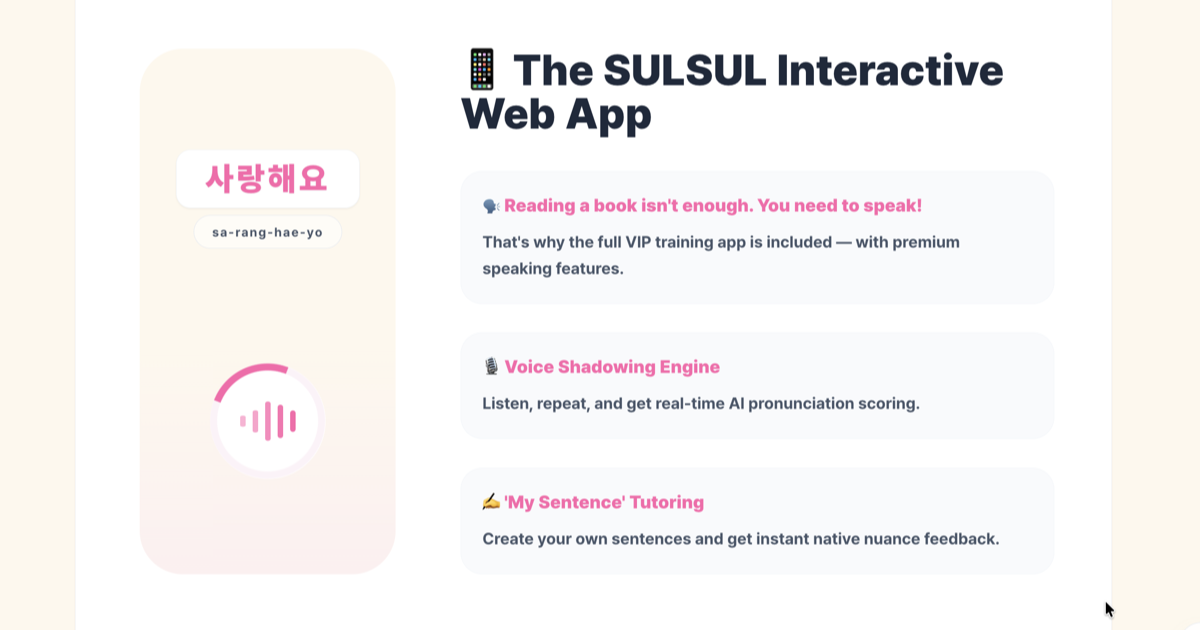
Practice this out loud with SULSUL — the app says it, you repeat it →
What do you say if you actually meet the artist?
Fan signs and hi-touch events are brief, and the pressure to say something real in five seconds is intense. Here's an exchange that fits:
You: 공연 정말 최고였어요! — gongyeon jeongmal choegoyeosseoyo! — "The concert was truly the best!"
Them: 감사해요! 정말요? — gamsahaeyo! jeongmaryo? — "Thank you! Really?"
You: 네, 화이팅! — ne, hwaiting! — "Yes, fighting!"
Keep it short. A single sentence lands better than a paragraph you stumble through. 최고였어요 (choegoyeosseoyo) is the past tense "was the best" — use this for something already finished, and 최고예요 (choegoyeyo) for something happening right now. Getting that distinction right shows you're actually speaking Korean, not reciting a phrase.
What usually goes wrong for international fans?
The most common mistake is switching to English the moment the artist looks at you. Practice the Korean version enough times that it comes out before your English brain kicks in — that's a reflex built by repetition, not by reading.
A second mistake is assuming 화이팅 is only for cheering at sports. Korean fans use it everywhere: before an artist enters the stage, before they announce a solo comeback, and in the moments that feel emotionally heavy. It's versatile.
If you're going to a K-pop concert and want to connect beyond the music, learning a few lines in Korean goes further than any banner or sign. The post on K-drama Korean phrases for real conversation covers emotional vocabulary that also helps in fan-meeting situations.
I've worked with fans who had never spoken Korean in front of a Korean person before their first concert. Getting the cheer right in the room changes how they feel about speaking Korean everywhere else — it's proof that they can do it under pressure.
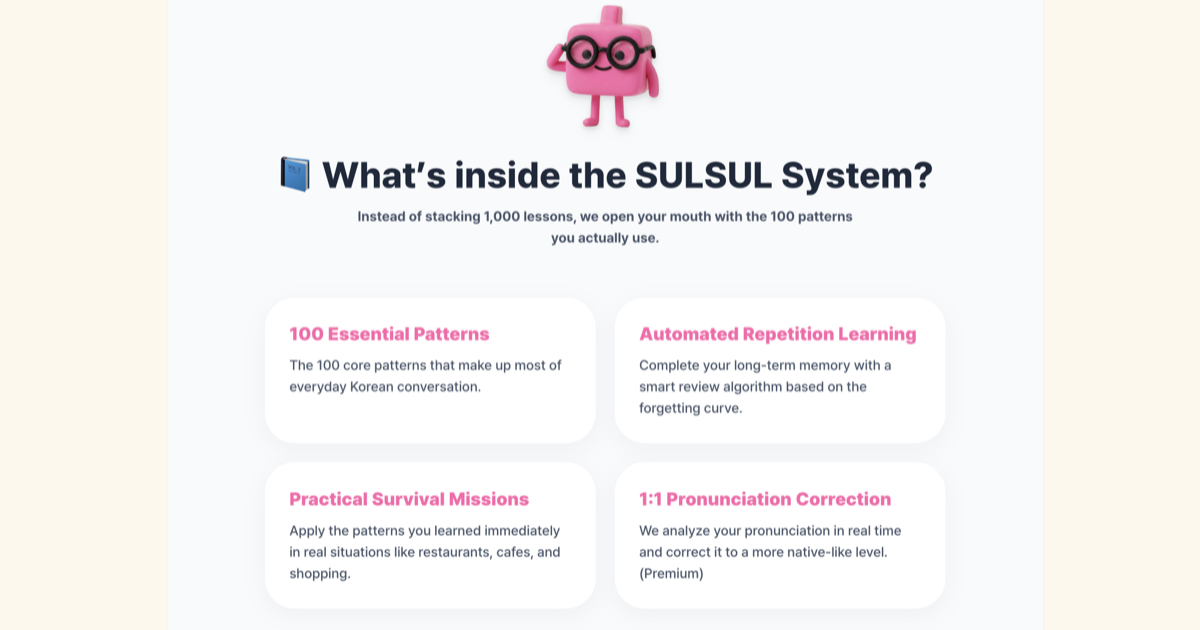
Say it out loud, not just in your head
Reading 화이팅! before you get to the concert is not the same as shouting it with conviction when the lights drop and the artist steps out.
SULSUL is a speaking gym for exactly that moment: pick a survival pattern, say it out loud, get an instant fix from the AI pronunciation coach, then run the real situation as a mission. The 100-pattern PDF workbook comes along as a bonus.