Korean Words in K-Dramas You Hear in Every Episode


The Korean words you hear most in K-dramas are short ones: 야 (ya), 왜 (wae), 진짜 (jinjja), 아이고 (aigo), 괜찮아 (gwaenchana), 알았어 (arasseo). You notice them because they repeat in every episode of every show — and you cannot look them up, because the subtitles usually do not translate them at all. A subtitle has about two seconds and forty characters to carry a whole line, so the first things cut are the sounds and the tiny words that colour a sentence without changing its facts. That is exactly the layer your ear is picking up. Here is what each of those words is actually doing in the scene, and which ones work when you say them yourself.
- 야 (ya) — "hey," but only downward or sideways: close friends, younger people. Never at a stranger.
- 왜 (wae) — "why," and also "what?" when someone calls your name.
- 진짜 (jinjja) — "really." Statement, question, and complaint, depending on the tone.
- 아이고 (aigo) — the all-purpose sigh: pity, tiredness, mild disaster.
- 어머 (eomeo) — "oh my," surprise, used mostly by women.
- 역시 (yeoksi) — "just as I thought," "as expected of you."
- 괜찮아 (gwaenchana) — "it's okay / are you okay," casual form.
- 알았어 (arasseo) — "got it," "fine," sometimes "yeah, yeah."
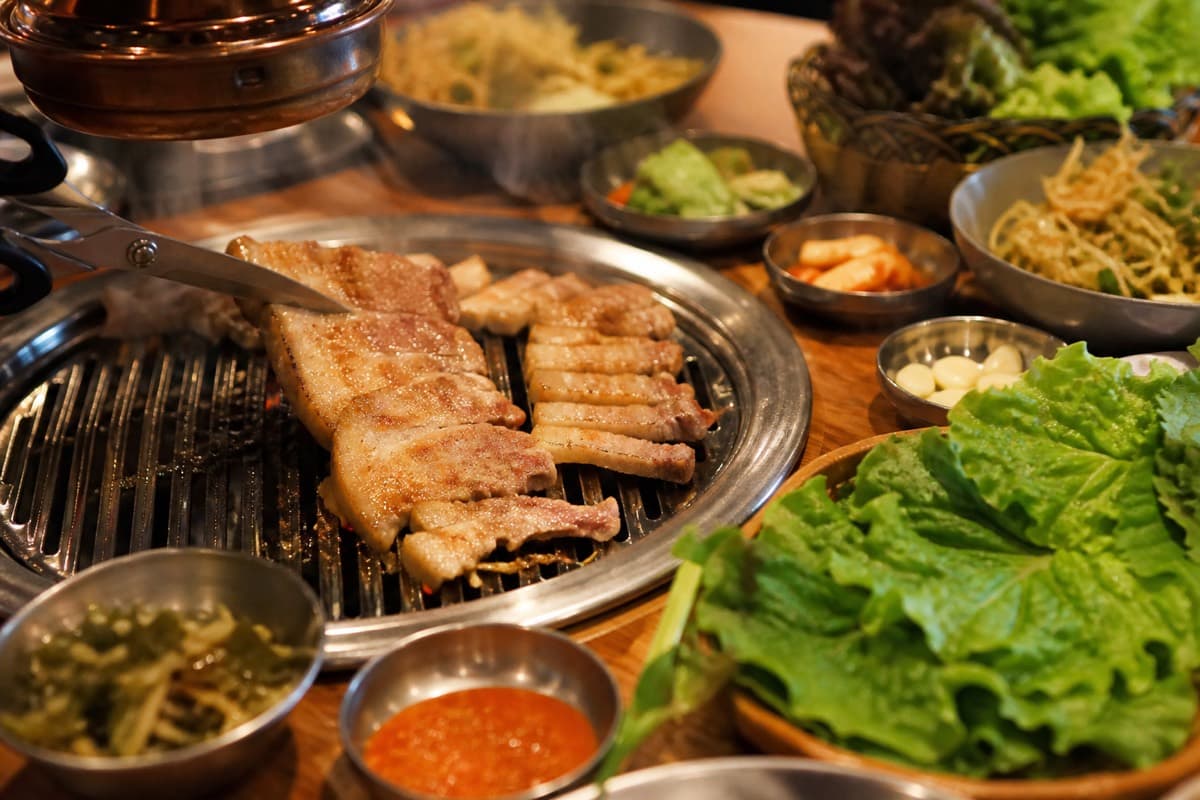
- 밥 (bap) — rice, and also a meal, and also caring about someone.
Why you hear words that never show up in the subtitles
Three things vanish in translation, and they are the three things you hear loudest.
Interjections. 아이고, 어머, 아휴 — a translator cannot write "aigo" and expect an English reader to follow, and "oh dear" would sound wrong in a hospital scene. So the sound stays in the audio and disappears from the text.
Softeners and intensifiers. 좀 (jom, "a bit"), 그냥 (geunyang, "just"), 막 (mak, "like, all over the place"), 진짜. They change how a line feels, not what it says, and feeling is the first thing cut for space.
Names and titles. Korean dialogue repeats the other person's name or title constantly — 선배, 사장님, 수현아 — where English would say "you." Subtitles swap in "you" because that is how English works, so the repeated word you keep hearing never appears.
Once you know these three categories are missing, the audio stops being noise. You are hearing the part of the language subtitles are structurally unable to show you.
Practice this out loud with SULSUL — the app says it, you repeat it →
One syllable, the whole scene
Korean leans on single-syllable words far more than English does, and a change of pitch is enough to flip the meaning.
| Word | Romanization | What it's doing |
|---|---|---|
| 야 | ya | "Hey!" — calling a close friend, or starting a fight |
| 왜 | wae | "Why?" — or "What?" when someone calls you |
| 뭐 | mwo | "What?" — flat for a question, stretched for disbelief |
| 어 | eo | "Yeah," the casual yes; also a surprised "oh" |
| 응 | eung | A softer "mm-hm," warmer than 어 |
| 참 | cham | "Honestly…" — fond exasperation, usually at someone you like |
왜 is the one that confuses fans first. A character shouts someone's name, and the answer is 왜? — which looks like a hostile "why?" but is simply "what is it?" It is the normal response to being called, between people close enough to use casual speech.
야 is the word to understand and then leave alone. It is natural between friends of the same age and from an older person downward, and it is an insult pointed at anyone else — a stranger, a shop clerk, someone senior to you. In dramas it is everywhere, because dramas are full of people who grew up together or are about to argue. Your own life in Korea is mostly neither.

The sounds that are not quite words
These carry emotion and nothing else, which is why they survive subtitling only as a tone of voice.
아이고 (aigo) is the national exhale. An older person lowering themselves into a chair, a mother seeing a scraped knee, anyone watching a plan collapse. It reads as sympathy and weariness at once, and a long 아이고오 means things are worse.
어머 (eomeo) is surprise, closer to "oh my." Overwhelmingly used by women in dramas, and it is the sound of being startled by something interesting, not something frightening.
아휴 (ahyu) and 에휴 (ehyu) are the sighs of resignation — the sound of giving up on arguing.
어머나 and 아이구 are warmer, more theatrical variants of the two above. If an older woman in a drama is delighted by you, you will hear them.
None of these need grammar. You can drop them into Korean conversation on day one, and they make you sound like someone who has listened rather than studied.
Words the subtitles quietly translate away
진짜 (jinjja) means "really," and it does three jobs. 진짜? is "seriously?" 진짜 맛있어 (jinjja masisseo) is "this is so good." A flat, lowered 진짜… is a complaint about a person. Same word, three scenes.
역시 (yeoksi) has no clean English equivalent and shows up constantly. It means the world confirmed what you expected. 역시 너야 (yeoksi neoya) — "of course it's you," as a compliment. 역시 안 되네 (yeoksi an doene) — "yeah, it didn't work, as I thought."
그냥 (geunyang) is "just," in the sense of no particular reason. 그냥 왔어 (geunyang wasseo) — "I just came by." It is how Korean characters avoid explaining themselves.
좀 (jom) is the politeness lubricant. It literally means "a little," and it makes any request softer: 물 좀 주세요 (mul jom juseyo) — "could I get some water."
혹시 (hoksi) opens a careful question: "by any chance…" Hearing it tells you the next line is a delicate one.
Words that only exist because the scene is Korean
Some of the repetition is cultural, not grammatical.
밥 (bap) is rice, meal, and affection. 밥 먹었어? (bap meogeosseo?) — "did you eat?" — is a real question and also the standard way to say I care about you. Count how often a drama uses a meal to resolve a conflict.
수고 (sugo) is effort spent. 수고했어 (sugohaesseo) closes a workday, a shoot, a shift. There is no English line that does this job.
눈치 (nunchi) is the ability to read a room. 눈치 없다 (nunchi eopda), "has no 눈치," is a sharper criticism in Korean than "oblivious" is in English.
화이팅 (hwaiting) is "you've got this," shouted before anything difficult. Borrowed from English "fighting," unrelated to fighting.
정 (jeong) is the attachment that builds between people over time, and it is the engine of most drama endings.
Strung together, an ordinary exchange sounds like this:
Them: 야, 밥 먹었어? — ya, bap meogeosseo? — "Hey, did you eat?"
You: 아니, 아직. — ani, ajik. — "No, not yet."
Them: 아이고, 진짜. 가자. — aigo, jinjja. gaja. — "Oh come on. Let's go."
You: 알았어. 고마워. — arasseo. gomawo. — "Okay. Thanks."
Four short lines, and the only part a subtitle would fully carry is "did you eat."
Four ways fans get these words wrong
Saying 야 to the wrong person. The most common and the most costly. Use a name, a title, or 저기요 (jeogiyo) for a stranger.
Copying casual endings. Drama leads speak 반말 — casual Korean — because they are close or angry. 괜찮아 becomes 괜찮아요, 알았어 becomes 알았어요, and you are safe with anyone you just met.
Repeating the volume. Drama acting is loud by design. The words are real; the shouting is a performance. Said at normal volume, 아이고 and 진짜 sound completely natural.
Treating titles as nicknames. 오빠, 언니, 선배 are relationship positions, not cute words to sprinkle in. What 오빠 actually means and Korean family titles and how to address people sort out who gets called what, while common K-drama phrases to use in conversation and Korean slang words and what they actually mean cover the full lines and the newer vocabulary.
Hearing them is the easy half
You already recognise most of these words — that is why you searched for them. The gap is between recognising 아이고 in an episode and letting it out of your own mouth at the right moment, with the right length, while a Korean person is looking at you.
SULSUL is a speaking gym for exactly that gap: pick a pattern, say it out loud, get an instant fix from the AI pronunciation coach, then run the real situation as a mission. The 100-pattern PDF workbook comes along as a bonus.