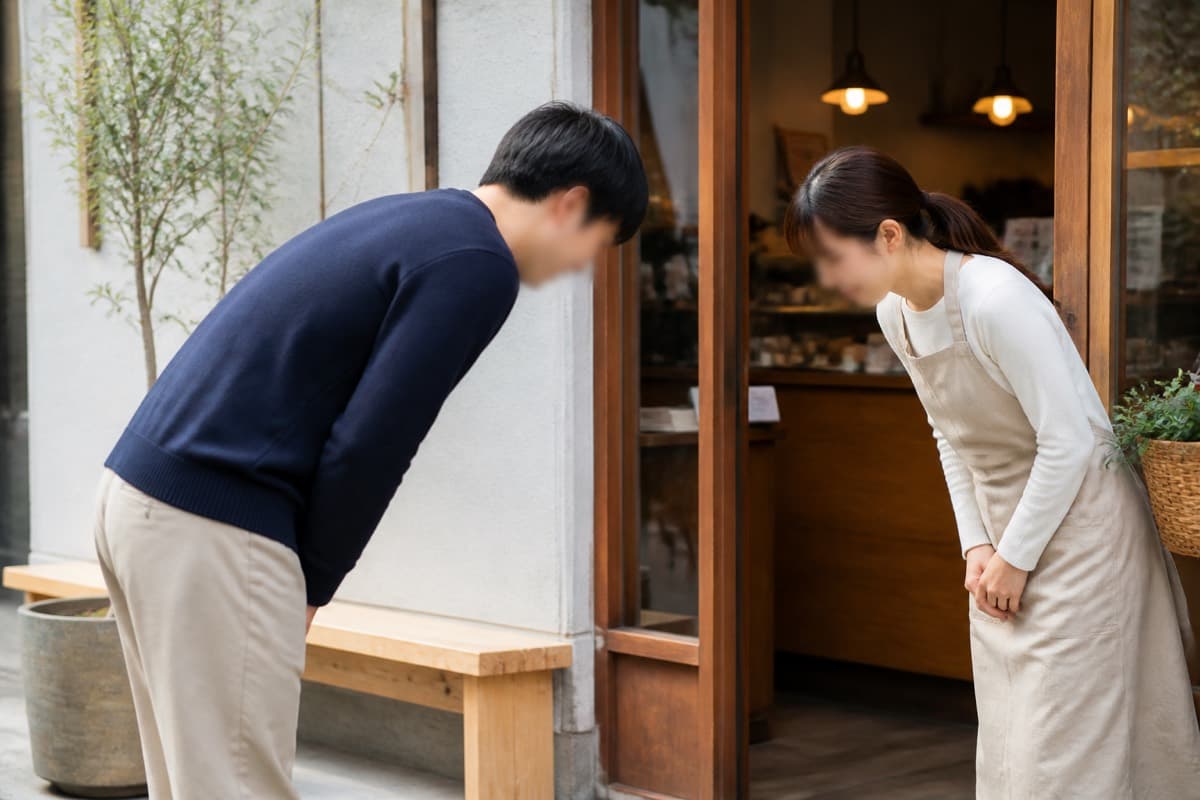
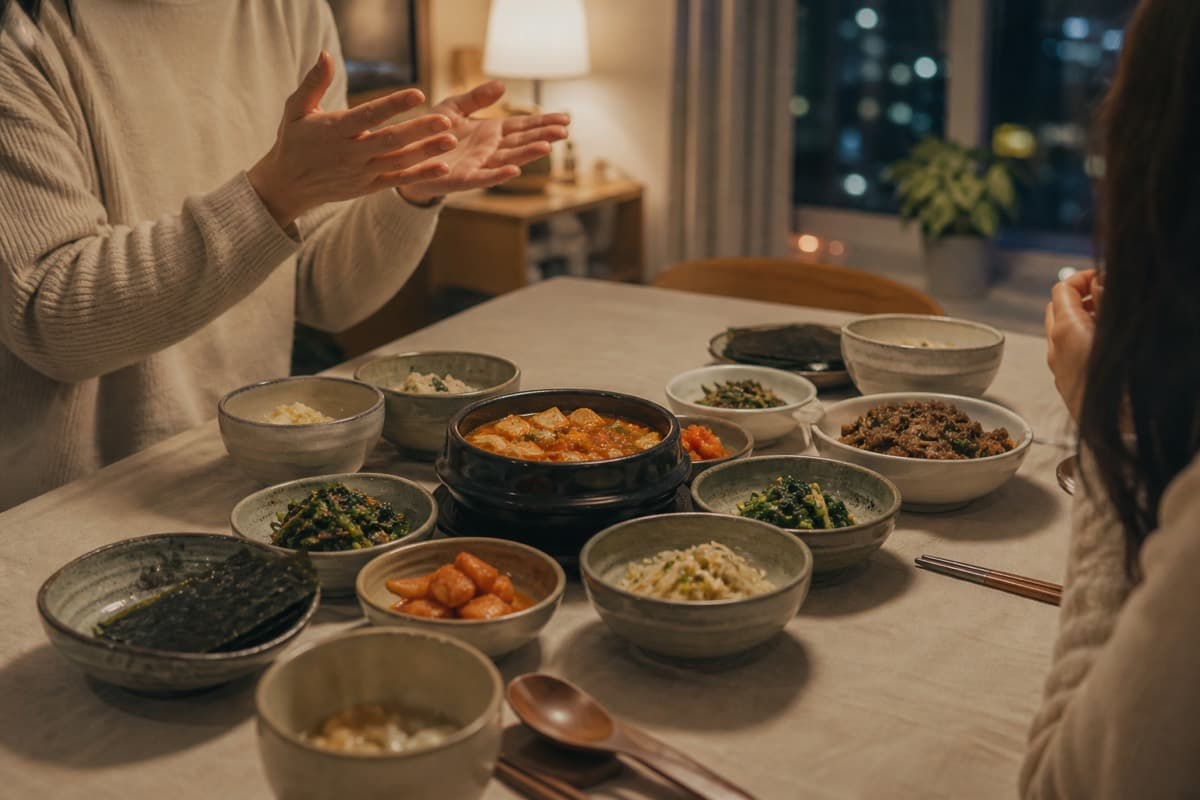
Korean Words Meaning in Sinhala: අම්මා, අක්කා, අයියා and the K-Drama Words Sri Lankan Fans Already Know

If you speak Sinhala and watch K-dramas with subtitles, half the family words are already yours. 엄마 (eom-ma) is අම්මා (amma) — "mom." 언니 (eon-ni) and 누나 (nu-na) are both අක්කා (akka) — "older sister." 오빠 (o-ppa) and 형 (hyeong) are both අයියා (ayya) — "older brother." 사랑해 (sa-rang-hae) is මම ඔයාට ආදරෙයි — "I love you." And when a drama mother asks 밥 먹었어? (bap meo-geo-sseo?), she is asking exactly what a Sri Lankan mother asks at the door: කෑවද? — "Did you eat?"
- 엄마 / 아빠 (eom-ma / a-ppa) — අම්මා / තාත්තා — "mom / dad"
- 언니, 누나 (eon-ni, nu-na) — අක්කා — "older sister"
- 오빠, 형 (o-ppa, hyeong) — අයියා — "older brother"
- 동생 (dong-saeng) — නංගී / මල්ලී — "younger sibling"
- 밥 먹었어요? (bap meo-geo-sseo-yo?) — කෑවද? — "Have you eaten?"
Below: the sibling words and the one twist Korean adds, why Korean and Sinhala sentences line up word for word, the reactions you hear in every episode, and the mistakes Sinhala speakers make when they translate in their heads.
අම්මා and 엄마: start with the word you already say
Say අම්මා out loud, then say 엄마. The mouth shape is almost the same — a short open vowel, then a long m. Korean children say 엄마 and 아빠; adults in dramas switch to 어머니 (eo-meo-ni) and 아버지 (a-beo-ji) when they speak politely or talk about parents to someone else. Sinhala does something similar when තාත්තා becomes පියා in formal writing. Same idea: one warm word for home, one careful word for outside.
Another happy accident: Korean 밥 (bap) — cooked rice, and by extension "a meal" — sits very close to Sinhala බත් (bath). In both languages, "rice" quietly means "food." When a K-drama character says 밥 먹자 (bap meok-ja, "let's eat"), hear බත් කමු.
Practice this out loud with SULSUL — the app says it, you repeat it →
අක්කා, අයියා, නංගී, මල්ලී — and the Korean twist
Sinhala has one word for older sister and one for older brother, no matter who is speaking. Korean splits them by the speaker's gender:
| You are | Older sister | Older brother |
|---|---|---|
| a woman | 언니 (eon-ni) | 오빠 (o-ppa) |
| a man | 누나 (nu-na) | 형 (hyeong) |
So a female fan calls a male idol 오빠, while his male bandmates call him 형 — both are අයියා. When a male lead calls a woman 누나, he is the younger one; that word alone can set up an entire romance plot.
Younger siblings go the other way. Sinhala splits them — නංගී for a younger sister, මල්ලී for a younger brother — but Korean usually says only 동생 (dong-saeng). Add 여 or 남 only when it matters: 여동생 (younger sister), 남동생 (younger brother).
Just like Sri Lankans call a shopkeeper අයියා or a neighbor අක්කා, Koreans use these words beyond blood family. Close friends, coworkers, even a regular at the restaurant down the street can become 언니 or 형.
Korean grammar walks in Sinhala order
This is the part that surprises Sinhala speakers most. Both languages put the verb at the end and put little markers after nouns instead of prepositions before them.
මම බත් කනවා. — I rice eat. 나는 밥을 먹어. (na-neun ba-beul meo-geo) — I rice eat.
Word for word, the order is the same. 는 marks the topic like the Sinhala subject position, 을/를 marks the object, and the verb 먹어 lands at the end exactly where කනවා does. Questions work the same way too: Sinhala adds ද (කෑවද?), Korean raises the end of the sentence or adds 요?. You never have to reshuffle a sentence the way you do for English.
Avoiding "you": Korean and Sinhala share the same habit
In Sinhala you rarely say ඔයා to an elder, and උඹ to a stranger starts a fight. You use අක්කා, අයියා, or ඇන්ටි instead. Korean works the same way. The dictionary word 당신 (dang-sin, "you") almost never appears in polite speech; Koreans say a title or the person's name instead:
- 선배님, 식사하셨어요? (seon-bae-nim, sik-sa-ha-syeo-sseo-yo?) — "Senior, have you eaten?" (no "you" anywhere)
- 언니, 어디 가? (eon-ni, eo-di ga?) — "Sis, where are you going?"
The ending does the politeness work. 요 at the end of a sentence is the safe default with anyone you are not close to — think of the difference between ඔයා and the softer, respectful tone you use with an aunty.
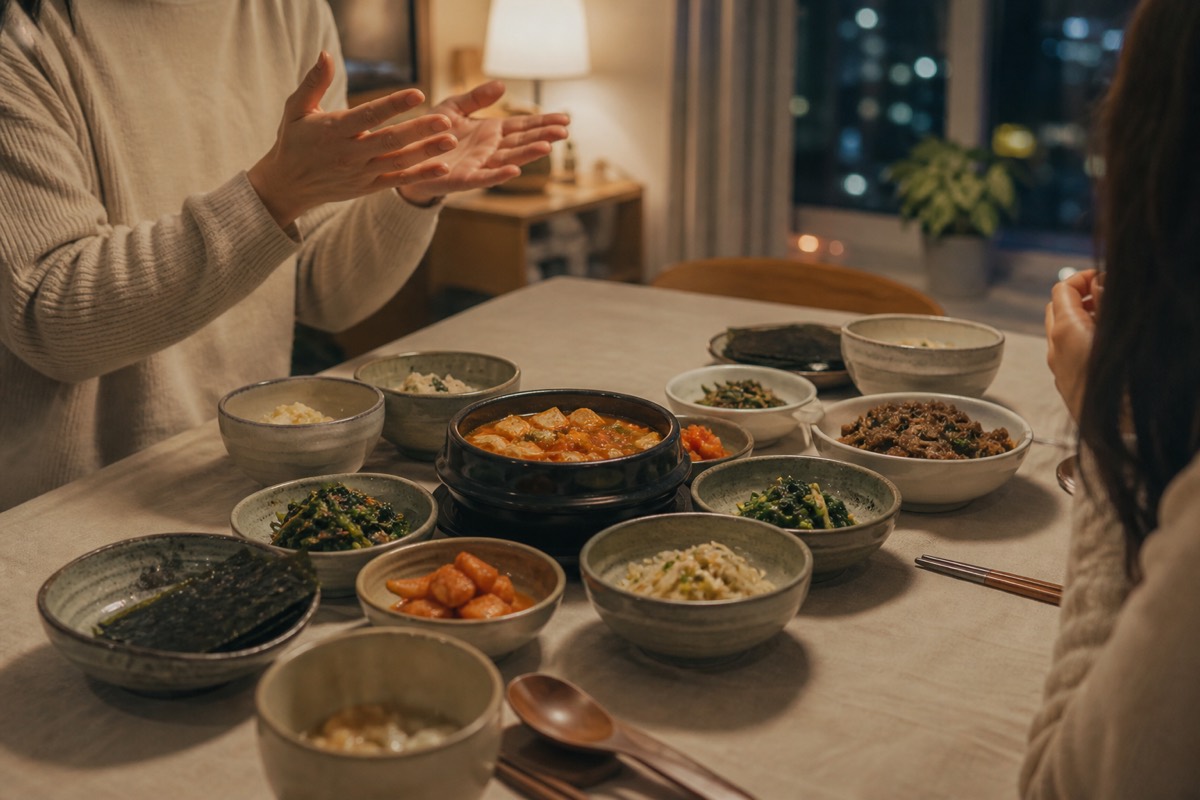
කෑවද? and 밥 먹었어? — the greeting both countries share
Both cultures check whether you ate before they ask how you are. In K-dramas you hear it at the door, on the phone, and after every fight:
A: 밥 먹었어? (bap meo-geo-sseo?) — කෑවද? — "Did you eat?" B: 응, 먹었어. 너는? (eung, meo-geo-sseo. neo-neun?) — ඔව්, කෑවා. ඔයා? — "Yeah, I ate. You?" A: 아직. 같이 먹자. (a-jik. ga-chi meok-ja.) — තාම නෑ. එකට කමු. — "Not yet. Let's eat together."
To an older person, add the polite ending: 식사하셨어요? (sik-sa-ha-syeo-sseo-yo?). It is the Korean version of asking an elder in your gentlest Sinhala.
Reactions you hear every episode, with a Sinhala match
| Korean | Sinhala feeling | English |
|---|---|---|
| 아이고 (a-i-go) | අනේ | "oh dear," sighing or sympathizing |
| 헐 (heol) | අපොයි | "no way," shock |
| 진짜? (jin-jja?) | ඇත්තද? | "really?" |
| 괜찮아 (gwaen-cha-na) | කමක් නෑ | "it's okay" |
| 고마워 / 감사합니다 (go-ma-wo / gam-sa-ham-ni-da) | ස්තූතියි | "thanks / thank you" |
| 사랑해 (sa-rang-hae) | මම ඔයාට ආදරෙයි | "I love you" |
아이고 is the one to steal first. A grandmother says it when she sits down, a mother says it when her son comes home thin, and a friend says it when you spill coffee — the same range as අනේ.
Where thinking in Sinhala leads you to the wrong Korean
- Calling every older girl 언니. If you are a man, she is 누나. Sinhala අක්කා hides this choice; Korean forces it.
- Forgetting 요 with older people. Dropping 요 to a stranger sounds like using උඹ. Keep 요 until someone tells you 말 놓으세요 ("speak casually with me").
- Translating ඔයා as 당신. It sounds cold or even like an argument. Use the person's title or name.
- Using 오빠 for any male stranger. Sri Lankans say අයියා to a three-wheel driver without thinking, but 오빠 to a stranger in Korea sounds flirty. For staff, say 저기요 (jeo-gi-yo, "excuse me") or 사장님 (sa-jang-nim, "boss/owner").
Say them out loud before the next episode
Pick three lines from this page — 언니 or 누나, 아이고, 밥 먹었어? — and say each one five times, out loud, at drama speed. Then play both A and B in the dialogue above. The next time a character calls out 오빠, you will hear අයියා — and you can answer in Korean.
SULSUL is a speaking gym for that moment: pick a pattern, say it out loud, get an instant fix from the AI pronunciation coach, then run the real situation as a mission. The 100-pattern PDF workbook comes along as a bonus.