Korean Words Meaning in Tamil: அம்மா, அக்கா, ஐயோ and the K-Drama Words Tamil Fans Already Know

If you are a Tamil speaker watching K-dramas, some Korean words will sound like your own house. 엄마 (eom-ma) means அம்மா — "mom." 아빠 (a-ppa) means அப்பா — "dad." 나 (na) means நான் — "I." 너 (neo, often said ni) means நீ — "you." 와 (wa) means வா — "come." And when a Korean grandmother sighs 아이고 (a-i-go), she is saying exactly what your grandmother means by ஐயோ.
- 엄마 (eom-ma) — அம்மா — "mom"
- 아빠 (a-ppa) — அப்பா — "dad"
- 나 / 너 (na / neo) — நான் / நீ — "I / you"
- 이리 와 (i-ri wa) — இங்கே வா — "come here"
- 아이고 (a-i-go) — ஐயோ — "oh no, oh my"
Below are the words that sound alike, the family words that match அக்கா and அண்ணா, the reactions and care lines you hear in every episode, and the places where the Tamil match leads you wrong.
Five Korean words that already sound Tamil
Say these out loud and you will hear it:
- 엄마 (eom-ma) — அம்மா — mom. The first word of every crying scene.
- 아빠 (a-ppa) — அப்பா — dad. Same sound, same meaning.
- 나 (na) — நான் — I, me. 나 괜찮아 — "I'm okay."
- 너 (neo) — நீ — you, to a friend or someone younger. In casual speech many Koreans say 니 (ni), which is almost நீ.
- 와 (wa) — வா — come. 이리 와 (i-ri wa) — இங்கே வா — "come here," the line every drama hero says with an open arm.
Are Korean and Tamil related? In the early 1900s the missionary Homer Hulbert wrote a whole book comparing Korean with Dravidian languages, and the idea still goes viral on social media. Most linguists today treat these matches as coincidence. For a learner it does not matter much: a coincidence you can hear is still a free word you will never forget.
Practice this out loud with SULSUL — the app says it, you repeat it →
அக்கா and அண்ணா in Korean: four words, not two
Tamil does not call an older friend by name alone — you say அக்கா or அண்ணா. Korean does the same. The twist is that in Korean, the word changes with who is speaking.
| Korean | Who says it | Tamil | English |
|---|---|---|---|
| 언니 (eon-ni) | a girl, to an older woman | அக்கா | older sister |
| 누나 (nu-na) | a boy, to an older woman | அக்கா | older sister |
| 오빠 (o-ppa) | a girl, to an older man | அண்ணா | older brother |
| 형 (hyeong) | a boy, to an older man | அண்ணா | older brother |
| 동생 (dong-saeng) | anyone, about someone younger | தம்பி / தங்கச்சி | younger sibling |
So a girl's 오빠 and a boy's 형 are both அண்ணா. And like அண்ணா for the man at the tea stall, these words reach beyond family: a senior in college, a close friend's older brother, a friendly neighbour.
One big difference. A Tamil girl would never call her boyfriend அண்ணா. A Korean girl calls her boyfriend 오빠 all the time — that is why the word sounds so sweet in a romance and so strange the first time you hear it.
Same word order: Korean sentences feel Tamil
English says "I ate rice." Tamil and Korean both put the verb at the end:
나는 밥을 먹었어. (na-neun ba-beul meo-geo-sseo.) நான் சோறு சாப்பிட்டேன். (naan soru saappitten.) I — rice — ate.
Both languages also stick little endings onto words instead of using separate words like "to" or "at." Korean 학교에 (hak-gyo-e) is "to school," just like Tamil பள்ளிக்கு (pallikku). If you think in Tamil, you can build a Korean sentence in the same order your brain already uses. English speakers have to flip everything around; you do not.
நீ and நீங்க: Korean politeness, the Tamil way
You already switch between வா and வாங்க, between நீ and நீங்க, without thinking. Korean has the same switch, and it lives at the end of the sentence:
- 와 (wa) — வா — come (to a friend)
- 오세요 (o-se-yo) — வாங்க — please come (polite)
- 고마워 (go-ma-wo) — தேங்க்ஸ் — thanks (to a friend)
- 감사합니다 (gam-sa-ham-ni-da) — நன்றிங்க — thank you (polite)
- 미안해 (mi-an-hae) — சாரி டா / சாரி டி — sorry (to a friend)
- 죄송합니다 (joe-song-ham-ni-da) — மன்னிக்கணும் — I apologize (formal)
Think of Korean -요 as Tamil -ங்க. Add it, and you are speaking to an elder or a stranger. Leave it off, and you are speaking like close friends in a drama.
K-drama reactions you already shout in Tamil
These are the sounds of every episode:
- 아이고 (a-i-go) — ஐயோ — the perfect match. Pain, surprise, tiredness, a big bill — one word does it all.
- 대박 (dae-bak) — செம! / வேற லெவல்! — "Amazing!"
- 헐 (heol) — என்னது?! — "Wait, what?"
- 진짜? (jin-jja?) — உண்மையா? — "Really?"
- 어떡해 (eo-tteo-ke) — இப்போ என்ன பண்றது? — "What do I do now?"
- 괜찮아 (gwaen-chan-a) — பரவாயில்லை — "It's okay."
- 화이팅 (hwa-i-ting) — ஆல் தி பெஸ்ட்! — "You've got this!" It comes from English "fighting," but nobody is fighting.
சாப்பிட்டியா? Care lines in Korean
A Tamil mother asks சாப்பிட்டியா? before anything else. A Korean mother does too.
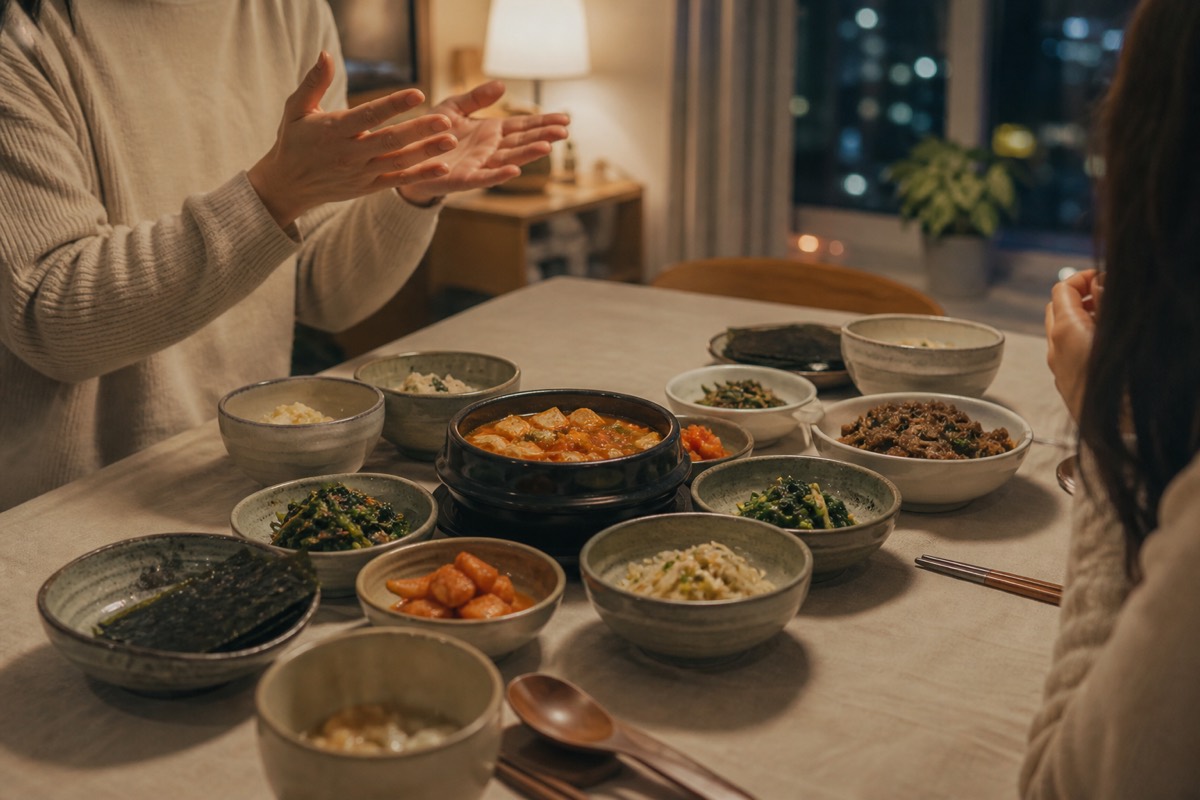
- 밥 먹었어? (bap meo-geo-sseo?) — சாப்பிட்டியா? — "Did you eat?" It really means "I care about you."
- 밥 먹었어요? (bap meo-geo-sseo-yo?) — சாப்பிட்டீங்களா? — the polite version.
- 잘 자 (jal ja) — நல்லா தூங்கு — "Sleep well."
- 조심해 (jo-sim-hae) — பார்த்து போ — "Be careful."
- 보고 싶어 (bo-go si-peo) — உன்னைப் பார்க்கணும் — "I miss you," literally "I want to see you" — the same picture as the Tamil.
A short exchange between friends:
A: 밥 먹었어? (bap meo-geo-sseo?) — சாப்பிட்டியா? B: 아직. 너는? (a-jik. neo-neun?) — இன்னும் இல்லை. நீ? A: 나도. 같이 먹자! (na-do. ga-chi meok-ja!) — நானும் இல்லை. சேர்ந்து சாப்பிடலாம்!
Where the Tamil match breaks
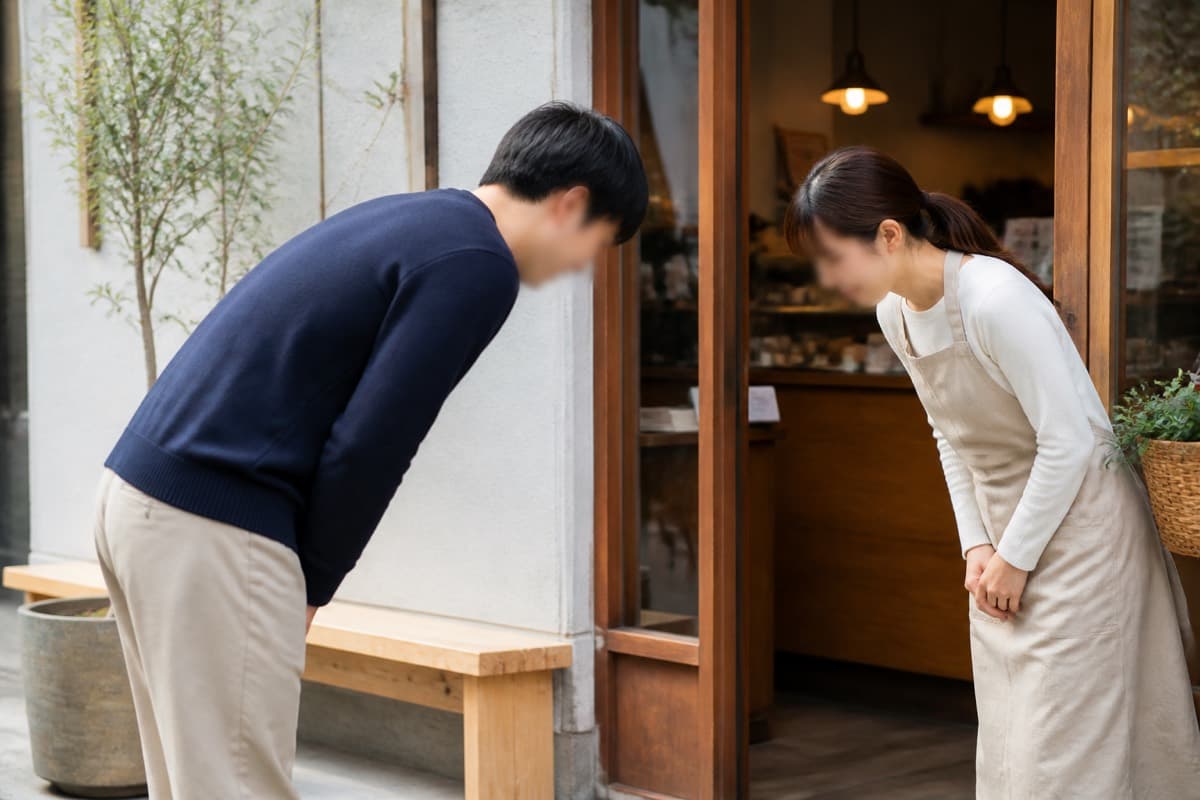
Calling a stranger 오빠 like அண்ணா. In Tamil, any shopkeeper can be அண்ணா. In Korean, a girl saying 오빠 to a stranger sounds flirty. Use 사장님 (sa-jang-nim, "boss") for a shop owner, or 저기요 (jeo-gi-yo, "excuse me") to get attention.
Using 너 with elders. 너 is நீ, never நீங்க. Saying it to a Korean friend's mother is like saying நீ to your own aunt. Use her title or skip "you" altogether — Korean drops it easily.
Mixing up 엄마 and 어머니. 엄마 is the warm அம்மா at home. 어머니 (eo-meo-ni) is closer to அம்மா said formally, and it is what you use for a friend's mother.
Pushing too much air. Tamil speakers have an advantage here. Korean ㅂ, ㄷ, ㄱ are soft, unaspirated sounds — closer to Tamil ப, த, க than to English "p, t, k." And just as Tamil ப can sound like "b" between vowels, Korean ㅂ becomes "b" in 아버지 (a-beo-ji). Trust your Tamil ear.
Say them before you read the next one
Knowing that 밥 먹었어? is சாப்பிட்டியா? takes a second. Asking it out loud to a Korean friend, with the right rhythm and no pause to build the sentence, takes practice. Words stay when your mouth has said them.
Pick three lines from this page — 이리 와, 아이고, 밥 먹었어? — and say each one five times. Then play both A and B in the dialogue above. Next time a drama hero says 이리 와, you will hear இங்கே வா and say it with him.
SULSUL is a speaking gym for that moment: pick a pattern, say it out loud, get an instant fix from the AI pronunciation coach, then run the real situation as a mission. The 100-pattern PDF workbook comes along as a bonus.