Korean Etiquette for Tourists: The Words That Do the Work
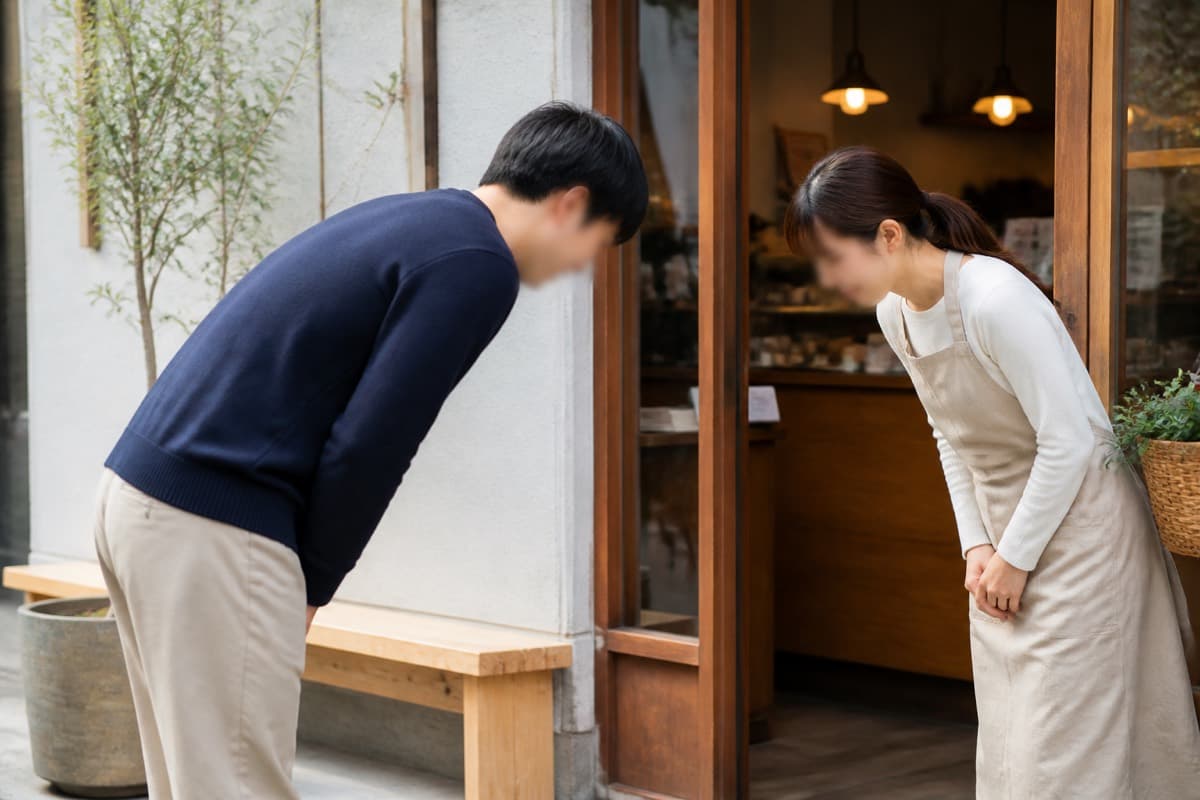
Korean etiquette for tourists is less about memorizing rules and more about having the right short sentence ready. Say 실례합니다 (sillyehamnida, "excuse me") when you squeeze past someone or start a question, ask 사진 찍어도 돼요? (sajin jjigeodo dwaeyo?, "May I take a photo?") before pointing a camera at a person or a shop, and close almost every exchange with a small nod and 감사합니다 (gamsahamnida). Do those three things and most Koreans will read you as polite, even if you break a smaller rule you never heard of.
- Getting someone's attention, or getting past them: 실례합니다 (sillyehamnida)
- Asking permission: (V)아/어도 돼요? — 사진 찍어도 돼요? 앉아도 돼요?
- Hearing a no: (V)면 안 돼요 — 여기서 찍으면 안 돼요.
- Closing any exchange: a slight bow + 감사합니다
- When you got it wrong: 죄송합니다 (joesonghamnida)
Why words matter more than the rulebook
Lists of Korean dos and don'ts can feel endless: shoes off on heated floors, two hands for a business card, no chopsticks standing in rice. They are real, but nobody expects a visitor to know all of them. What people notice is whether you acknowledge the person in front of you. A tourist who misses a custom but says 죄송합니다 right away is forgiven in a second. A tourist who does everything correctly in total silence comes across as cold.
That is good news, because the acknowledging part is only a few sentences, and two of them come straight from a single grammar pair: asking permission and hearing a refusal.
Practice this out loud with SULSUL — the app says it, you repeat it →
실례합니다 — the sentence that opens doors
실례합니다 literally means "I am committing a rudeness." You say it before the small intrusion, not after. Use it when you:
- need to get past someone in a narrow aisle or a packed subway car,
- want to ask a stranger a question,
- walk into a small office or someone's shop and nobody has greeted you yet.
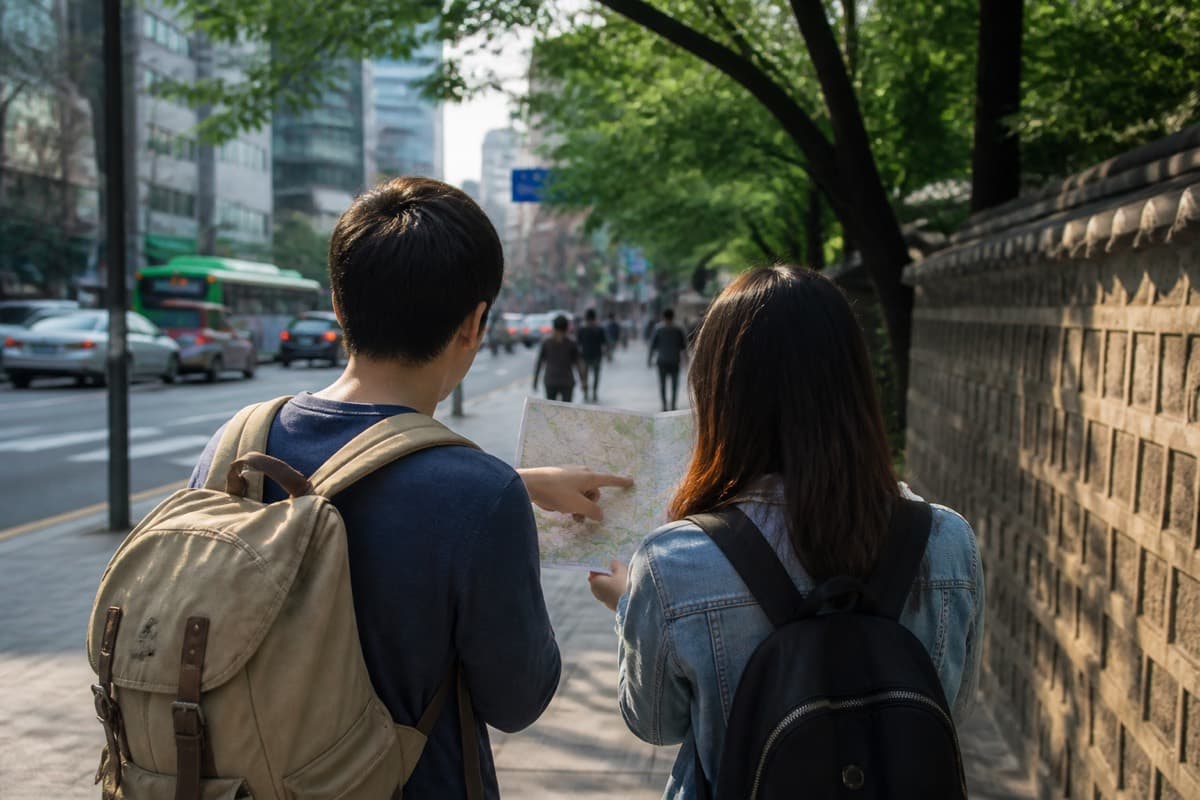
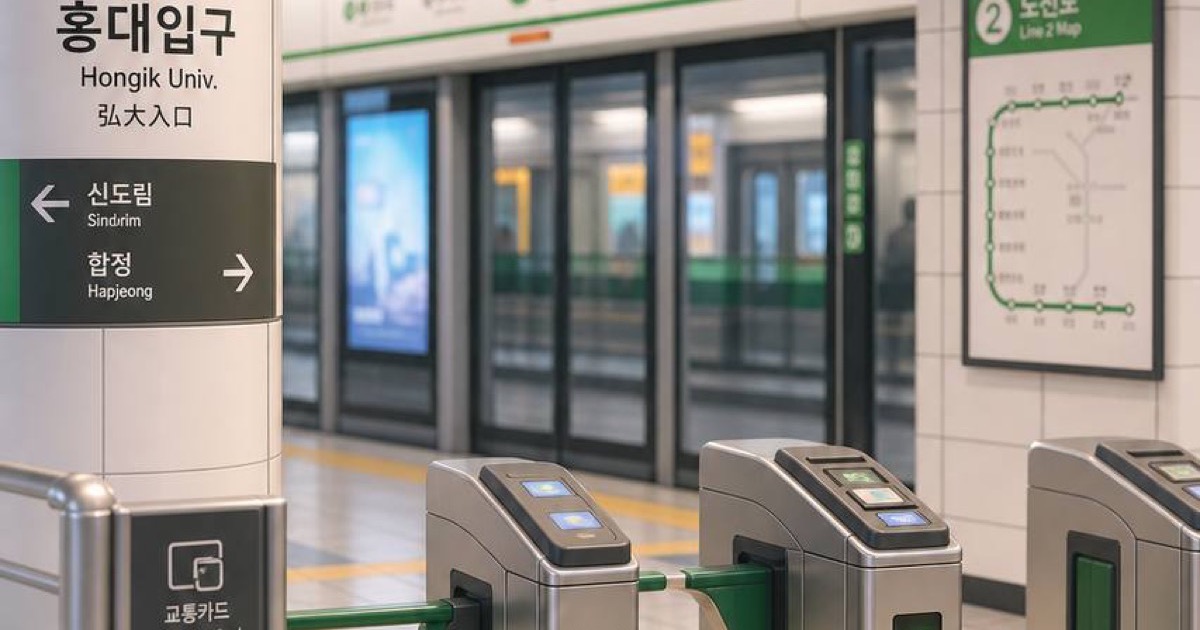
On a crowded train, a quiet 잠시만요 (jamsimanyo, "just a moment") works the same way and is what most locals actually mutter while shuffling to the door. The longer 실례합니다 is better for starting a real question, like asking for directions in the Korean subway.
Pronunciation note: the double ㄹ turns into a long L — sil-lye-ham-ni-da. And just like every 습니다 ending, the ㅂ before ㄴ softens into an M sound.
Asking before you act: (V)아/어도 돼요?
This is the pattern that turns tourist etiquette into a habit. Take any verb, add -아/어도 돼요?, and you get "Is it okay if I…?"
| Korean | Romanization | Meaning |
|---|---|---|
| 사진 찍어도 돼요? | sajin jjigeodo dwaeyo? | May I take a photo? |
| 여기 앉아도 돼요? | yeogi anjado dwaeyo? | May I sit here? |
| 들어가도 돼요? | deureogado dwaeyo? | May I go in? |
| 만져 봐도 돼요? | manjyeo bwado dwaeyo? | May I touch it? |
| 신발 신어도 돼요? | sinbal sineodo dwaeyo? | Can I keep my shoes on? |
Photos are where this matters most. Market vendors, temple monks, shop interiors, and other people's children are all things Koreans would rather be asked about. A quick 사진 찍어도 돼요? with a raised phone almost always gets a smile and a nod. If you want the reverse — someone taking a picture of you — that is a different sentence, covered in how to ask someone to take your photo in Korean.
The shoe question is worth knowing too. Traditional restaurants with floor seating, temples, guesthouses, and homes all expect shoes off at the step. If you are not sure whether you have reached the step yet, asking costs nothing.
Hearing no: (V)면 안 돼요 and (V)지 마세요
The flip side of the permission pattern is the one you will see on signs and hear from staff. (V)면 안 돼요 means "you must not," and (V)지 마세요 means "please don't."
- 여기서 사진 찍으면 안 돼요. — yeogiseo sajin jjigeumyeon an dwaeyo. — "You can't take photos here."
- 음식 가지고 들어가면 안 돼요. — eumsik gajigo deureogamyeon an dwaeyo. — "You can't bring food inside."
- 만지지 마세요. — manjiji maseyo. — "Please don't touch."
You will rarely need to say these yourself, but recognizing 안 돼요 at the end of a sentence tells you instantly that the answer was no. The polite reply is short: 아, 네. 죄송합니다. (a, ne. joesonghamnida.) — "Oh, okay. Sorry." For the difference between 죄송합니다 and 미안해요, see how to say sorry in Korean.
Small moments where tourists slip
Sitting in the priority seats. On the subway, the seats at each end of the car are for older passengers, pregnant women, and people with disabilities. Locals leave them empty even on full trains. The pink seats in the middle are for pregnant passengers.
Talking loudly on public transport. Seoul trains are quiet. Phone calls happen in a low voice, and a group of friends laughing at full volume stands out more than any language mistake.
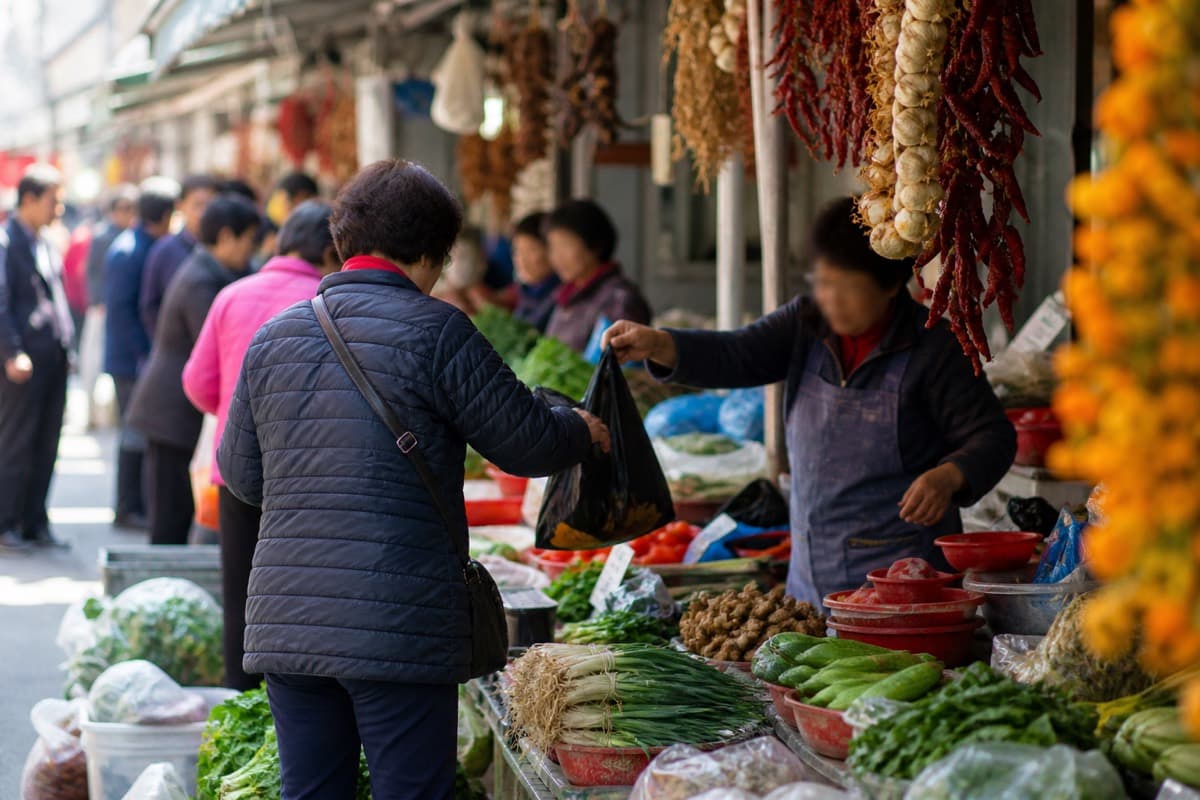
Handing things over with one hand to an older person. Money, a card, a drink — use two hands, or touch your left hand to your right forearm. With shop staff your age it matters less, but with a grandmother at a market stall it reads as respect.
Pouring your own drink. At a shared meal people pour for each other. Hold your glass with both hands when someone older pours for you, then offer to pour back.
Skipping the closing line. Leaving a shop or restaurant without a word feels abrupt. 감사합니다 or 안녕히 계세요 (annyeonghi gyeseyo, "stay well") on the way out finishes the exchange. The before-and-after meal lines are in what to say in Korean before and after eating.
A short scene: at a temple gate
You: 실례합니다. 여기 들어가도 돼요? sillyehamnida. yeogi deureogado dwaeyo? Excuse me. May I go in here?
Staff: 네, 신발 벗고 들어가세요. ne, sinbal beotgo deureogaseyo. Yes, please take your shoes off and go in.
You: 안에서 사진 찍어도 돼요? aneseo sajin jjigeodo dwaeyo? May I take photos inside?
Staff: 아니요, 법당 안에서는 찍으면 안 돼요. aniyo, beopdang aneseoneun jjigeumyeon an dwaeyo. No, you can't take photos inside the main hall.
You: 아, 네. 감사합니다. a, ne. gamsahamnida. Oh, okay. Thank you.
Four short lines from you, and every one of them is etiquette: an opener, a question before acting, an acceptance of the no, and a thank-you.
Practice the asking, not just the rules
Reading that you should ask before taking a photo is easy. Getting 사진 찍어도 돼요? out smoothly while a vendor is looking at you is the hard part, and it only comes from saying it out loud a few dozen times before the trip.
SULSUL is a speaking gym for that gap: pick a pattern, say it out loud, get an instant fix from the AI pronunciation coach, then run the real conversation as a mission. The 100-pattern PDF workbook comes along as a bonus.