Korean Phrases for Hiking in Korea


Korean phrases for hiking in Korea start with Pattern 04 from the SULSUL workbook — 어디예요? (eodiyeyo?), "Where is…?" At a 국립공원 (gungnipgongwon, national park) entrance, ask 등산로 어디예요? (deungsanro eodiyeyo?), "Where is the hiking trail?" Pattern 56 — verb plus 기로 했어요 (giro haesseoyo), "decided to" — is how locals plan a trip: 주말에 등산하기로 했어요 (jumare deungsanhagirop haesseoyo), "We decided to hike this weekend."
- Find the trail: 등산로 어디예요? (deungsanro eodiyeyo?), "Where is the hiking trail?"
- Plan with friends: 주말에 등산하기로 했어요 (jumare deungsanhagirop haesseoyo), "We decided to hike this weekend."
- Ask about difficulty: 여기 어려워요? (yeogi eoryeowoyo?), "Is this part difficult?"
- Need water: 물 있어요? (mul isseoyo?), "Is there water?"
- Check time left: 정상까지 얼마나 걸려요? (jeongsangkkaji eolmana geollyeoyo?), "How long to the summit?"

How do you start at the trailhead?
Park rangers and volunteer guides at popular peaks like 북한산 (Bukhansan) or 설악산 (Seoraksan) expect short Korean questions. Show your map and use Pattern 04 before you follow the wrong fork.
You: 안녕하세요. 등산로 어디예요? — annyeonghaseyo. deungsanro eodiyeyo? — "Hello. Where is the hiking trail?"
Them: 저쪽 표지판 따라가세요. — jeojjok pyojipan ttaragaseyo. — "Follow the sign over there."
You: 정상까지 얼마나 걸려요? — jeongsangkkaji eolmana geollyeoyo? — "How long to the summit?"
| Situation | Say this |
|---|---|
| Where is the trail? | 등산로 어디예요? (deungsanro eodiyeyo?) |
| Plan a weekend hike | 주말에 등산하기로 했어요 (jumare deungsanhagirop haesseoyo) |
| Is this section hard? | 여기 어려워요? (yeogi eoryeowoyo?) |
| Water available? | 물 있어요? (mul isseoyo?) |
| Time to summit | 정상까지 얼마나 걸려요? (jeongsangkkaji eolmana geollyeoyo?) |

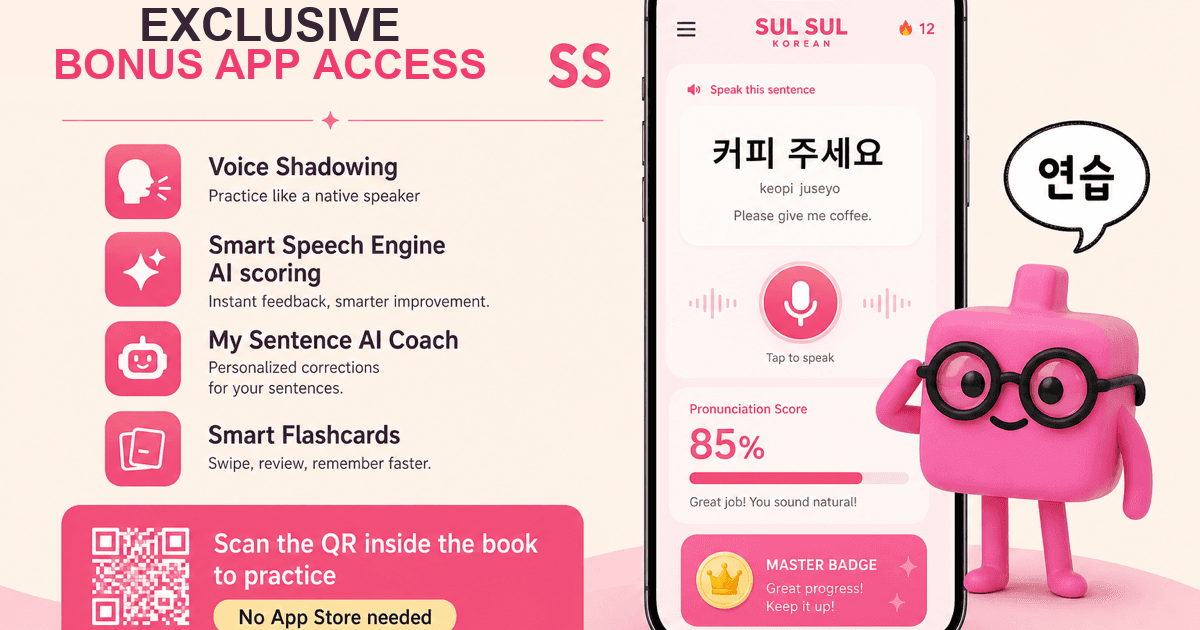
Practice this out loud with SULSUL — the app says it, you repeat it →
What do you say when you meet other hikers on the path?
Trail culture in Korea is friendly — a quick 안녕하세요 (annyeonghaseyo) and 수고하세요 (sugohaseyo), "Keep up the good work," go a long way on steep stairs.
You: 정상까지 얼마나 남았어요? — jeongsangkkaji eolmana namasseoyo? — "How much is left to the summit?"
Them: 30분쯤이에요. — samsip bun jjeum-ieyo. — "About thirty minutes."
You: 감사합니다. 수고하세요. — gamsahamnida. sugohaseyo. — "Thank you. Keep it up."
For asking directions when you are still in the city before the mountain, 어디 있어요? (eodi isseoyo?) from asking for directions on the Korean subway works the same way at a bus stop bound for the trailhead.
What usually goes wrong on a Korean hiking trail?
Travelers often skip the 등산로 (deungsanro, hiking trail) sign and follow a paved road meant for service vehicles — if the path looks like a driveway, double-check with 여기 등산로 맞아요? (yeogi deungsanro majayo?), "Is this the hiking trail?"
A second mistake is starting too late in summer. Ask at the booth 몇 시까지 올라갈 수 있어요? (myeot sikkaji ollagal su isseoyo?), "Until what time can we go up?" so you are not turned back near sunset.
Say it out loud, not just in your head
Reading 등산로 어디예요? on a trail map is not the same as asking a ranger while rain clouds are rolling in.
SULSUL is a speaking gym for exactly that moment: pick a survival pattern, say it out loud, get an instant fix from the AI pronunciation coach, then run the real situation as a mission. The 100-pattern PDF workbook comes along as a bonus.