Korean Phrases for the Pharmacy in Korea
Korean phrases for the pharmacy start with knowing what you need. Say 두통약 있어요? (dutong yak isseoyo?), "Do you have headache medicine?", and you get what you came for in ten seconds. Say 이 약 어떻게 먹어요? (i yak eotteoke meogeoyo?), "How do I take this medicine?", and you leave knowing the dosage. Every other pharmacy visit is a variation on those two questions.
- Ask for headache medicine: 두통약 있어요? (dutong yak isseoyo?), "Do you have headache medicine?"
- Ask for antacid: 소화제 있어요? (sohwaje isseoyo?), "Do you have antacid?"
- Ask about dosage: 이 약 어떻게 먹어요? (i yak eotteoke meogeoyo?), "How do I take this medicine?"
- Report an allergy: 알레르기 있어요 (allereugi isseoyo), "I have an allergy."

How do you ask for medicine at a Korean pharmacy?
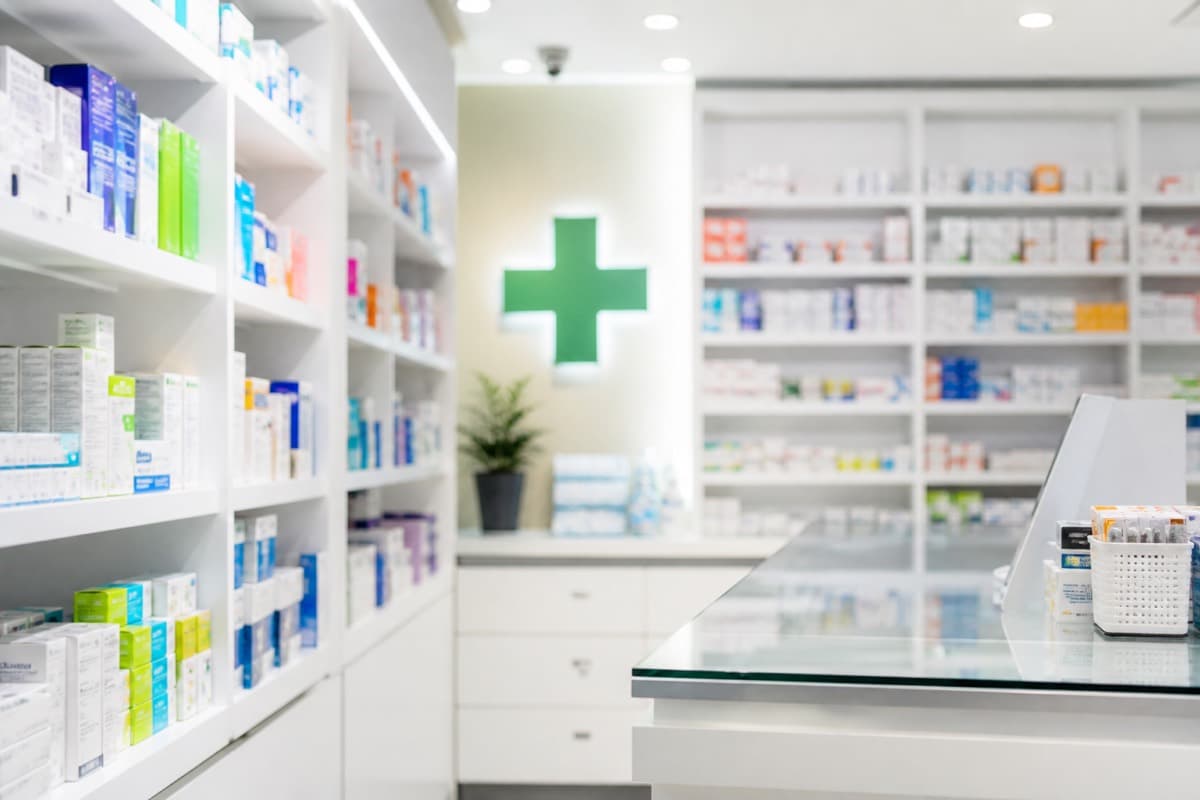
Korean pharmacies (약국, yakguk) are easy to find — look for the green cross sign. They carry fever reducers, pain relievers, antacids, cold medicine, and allergy pills without a prescription. The pharmacist speaks enough to help if you name what you need.
Name the symptom and add 있어요? (isseoyo?) — "Do you have…?" — and the pharmacist will grab the right box.
| Symptom | Say this |
|---|---|
| Headache | 두통약 있어요? (dutong yak isseoyo?) |
| Stomach pain | 소화제 있어요? (sohwaje isseoyo?) |
| Fever | 해열제 있어요? (haeyeolje isseoyo?) |
| Cold or runny nose | 감기약 있어요? (gamgiyak isseoyo?) |
If you want to say where it hurts, point and say 여기 아파요 (yeogi apayo), "It hurts here." Pointing is allowed. Pharmacists see it every day.
Practice this out loud with SULSUL — the app says it, you repeat it →
What do you say when you have an allergy or need a prescription?
Tell the pharmacist before they hand you anything:
알레르기 있어요 — allereugi isseoyo — "I have an allergy."
Follow it with the allergen if you know it in Korean. Penicillin is 페니실린 (penisyllin), aspirin is 아스피린 (aseupirin), and ibuprofen is 이부프로펜 (ibupeurofen). For anything complicated, show the pharmacist the name on your phone in English — they can read it.
If your medicine requires a prescription (처방전, cheobangjeon), the pharmacist will tell you right away. Say 처방전 없이 살 수 있어요? (cheobangjeon eopsi sal su isseoyo?), "Can I buy it without a prescription?" to check before you look for a clinic.
What happens when the pharmacist speaks and you don't follow?
Most dosage instructions follow the same pattern. Listen for three things: the number, the time word, and 드세요 (deuseyo), "please take."
You: 이 약 어떻게 먹어요? — i yak eotteoke meogeoyo? — "How do I take this medicine?"
Them: 하루에 세 번, 식후에 드세요. — harue se beon, sikhue deuseyo. — "Three times a day, after meals."
You: 알겠어요. 감사합니다. — algessoyo. gamsahamnida. — "I understand. Thank you."
하루에 (harue) means "per day." 식후 (sikhu) means "after eating." 식전 (sikjeon) means "before eating." Those four words decode every standard dosage instruction a Korean pharmacist will give you.

Can you practice these phrases before you need them on the road?
The problem with pharmacy Korean is that you only need it when you already feel terrible. Practicing before you travel is the only way to say 두통약 있어요? clearly when your head is pounding and you slept badly.
If you are still figuring out how to ask for directions or navigate transport in Korea, the post on asking for directions in the Korean subway covers the phrases you need for getting around when something goes wrong.
Say it out loud, not just in your head
Reading 이 약 어떻게 먹어요? is one thing. Saying it to a pharmacist who is already reaching for the box is another.
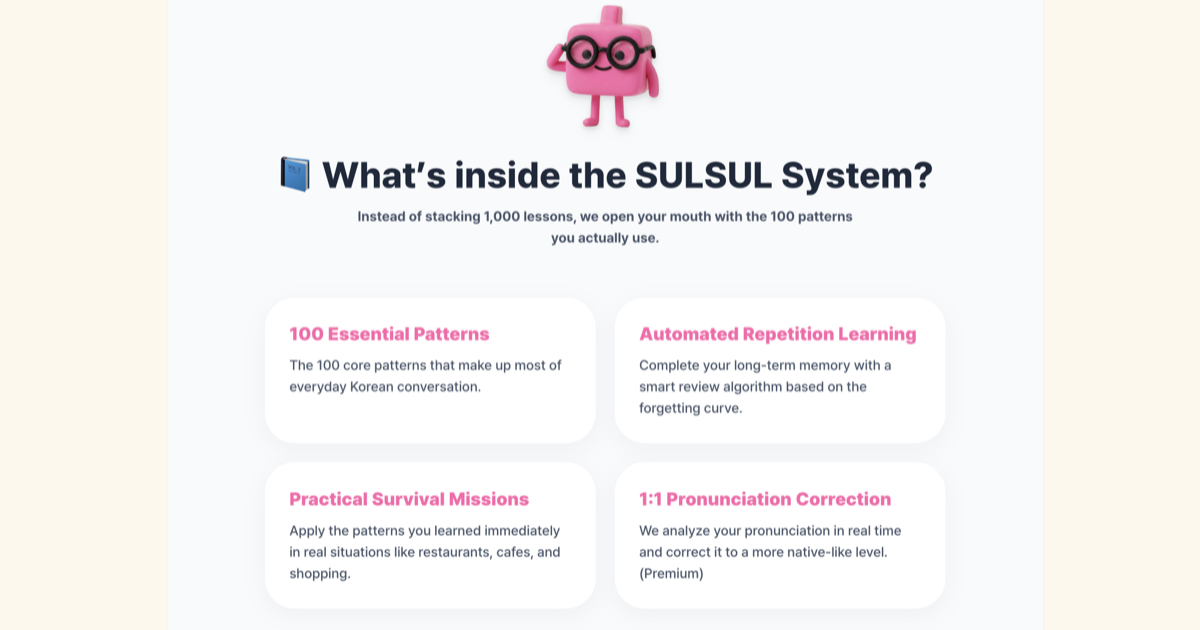
SULSUL is a speaking gym for exactly that moment: pick a survival pattern, say it out loud, get an instant fix from the AI pronunciation coach, then run the real situation as a mission. The 100-pattern PDF workbook comes along as a bonus.