Korean Phrases for a Random Play Dance in Hongdae

On a weekend afternoon in Hongdae, a speaker goes down on the pavement, a song cuts in at the chorus, and whoever knows that part runs into the middle — 랜덤플레이댄스 (raendeompeulleidaenseu), random play dance. 저도 껴도 돼요? (jeodo kkyeodo dwaeyo?), "Can I join in too?" is the whole entry fee, and 이거 다음에 뭐예요? (igeo daeume mwoyeyo?), "What's after this one?" is how you get ready for the song you actually know.
- Ask to join: 저도 껴도 돼요? (jeodo kkyeodo dwaeyo?), "Can I join in too?"
- Check the queue: 이거 다음에 뭐예요? (igeo daeume mwoyeyo?), "What's after this one?"
- Admit the gap: 이 부분 몰라요 (i bubun mollayo), "I don't know this part."
- Ask for the count: 어디서 시작해요? (eodiseo sijakhaeyo?), "Where does it start?"
- Say it after: 같이 춰서 좋았어요 (gachi chwoseo joasseoyo), "That was fun, dancing with you."

How do you get from watching to dancing?
The circle looks closed from outside, but nobody there is auditioning anyone. The organiser is usually the person crouched by the speaker with a phone.
- 저도 껴도 돼요? to that person, between songs, not during one.
- 이거 다음에 뭐예요? so you know whether to move to the front or stay in the ring.
- 어디서 시작해요? when a song you half know comes up and you need the entry beat.
- 이 부분 몰라요 said out loud, which in this crowd gets you taught rather than passed over.
- 같이 춰서 좋았어요 to whoever ended up next to you when the playlist runs out.
| Moment | Say this |
|---|---|
| Ask to join | 저도 껴도 돼요? (jeodo kkyeodo dwaeyo?) |
| Check the queue | 이거 다음에 뭐예요? (igeo daeume mwoyeyo?) |
| Admit the gap | 이 부분 몰라요 (i bubun mollayo) |
| Ask for the count | 어디서 시작해요? (eodiseo sijakhaeyo?) |
| Say it after | 같이 춰서 좋았어요 (gachi chwoseo joasseoyo) |
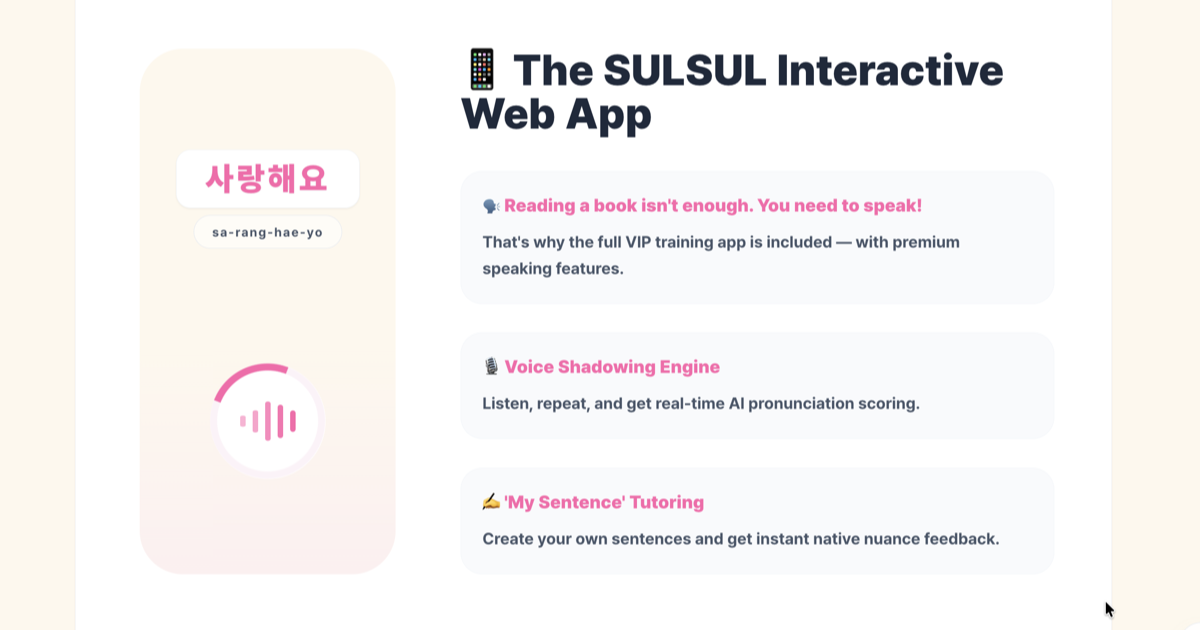
Practice this out loud with SULSUL — the app says it, you repeat it →
What do Korean speakers say back?
The answers come fast, because the next song is already loading.
You: 저도 껴도 돼요? — jeodo kkyeodo dwaeyo? — "Can I join in too?"
Them: 네, 아무나 껴도 돼요. 아는 노래 나오면 그냥 나오세요 — ne, amuna kkyeodo dwaeyo. aneun norae naomyeon geunyang naoseyo — "Sure, anyone can join. When a song you know comes on, just come out."
You: 이 부분 몰라요 — i bubun mollayo — "I don't know this part."
Them: 제가 앞에서 할게요. 따라 하세요 — jega apeseo halgeyo. ttara haseyo — "I'll go in front. Just follow me."
That last exchange is the one people remember from the trip. If you have been learning the choreography at home first, see Korean phrases when K-pop fans study a dance practice video.
What usually goes wrong at a random play dance?
The common one is waiting for a personal invitation. There isn't one — the circle refills every ninety seconds and the only signal anyone gives is stepping forward, so 저도 껴도 돼요? once at the start covers you for the whole afternoon.
The other is going quiet when a song you only half know starts. Standing in the middle guessing is worse than saying 이 부분 몰라요 and getting the count from someone. Ask 어디서 시작해요? and you come in on the beat instead of two bars late. For the version of this that happens on your phone instead of the street, see Korean phrases for a viral K-pop dance challenge.
Say it out loud, not just in your head
Every one of these is shouted over a speaker, to someone who is already moving.
SULSUL is a speaking gym for exactly that moment: pick a survival pattern, say it out loud, get an instant fix from the AI pronunciation coach, then run the real situation as a mission. The 100-pattern PDF workbook comes along as a bonus.