Korean Phrases for Asking About Wi-Fi in Korea

Korean phrases for asking about Wi-Fi in Korea come down to two short lines. Say 와이파이 있어요? (waipai isseoyo?), "Is there Wi-Fi?" when you sit down at a cafe or check into a guesthouse, then 비밀번호 알려 주세요 (bimilbeonho allyeo juseyo), "Please tell me the password," when they say yes. Pattern 03 in the SULSUL workbook — noun plus 있어요? (isseoyo?) — handles the first question, and Pattern 23 — verb stem plus 주세요 (juseyo) — covers the second.
- 와이파이 있어요? (waipai isseoyo?) — "Is there Wi-Fi?"
- 비밀번호 알려 주세요 (bimilbeonho allyeo juseyo) — "Please tell me the password."
- 와이파이 비밀번호 뭐예요? (waipai bimilbeonho mwoyeyo?) — "What is the Wi-Fi password?"
- 여기서 써도 돼요? (yeogiseo sseodo dwaeyo?) — "Can I use it here?"

How do you ask at a cafe counter?
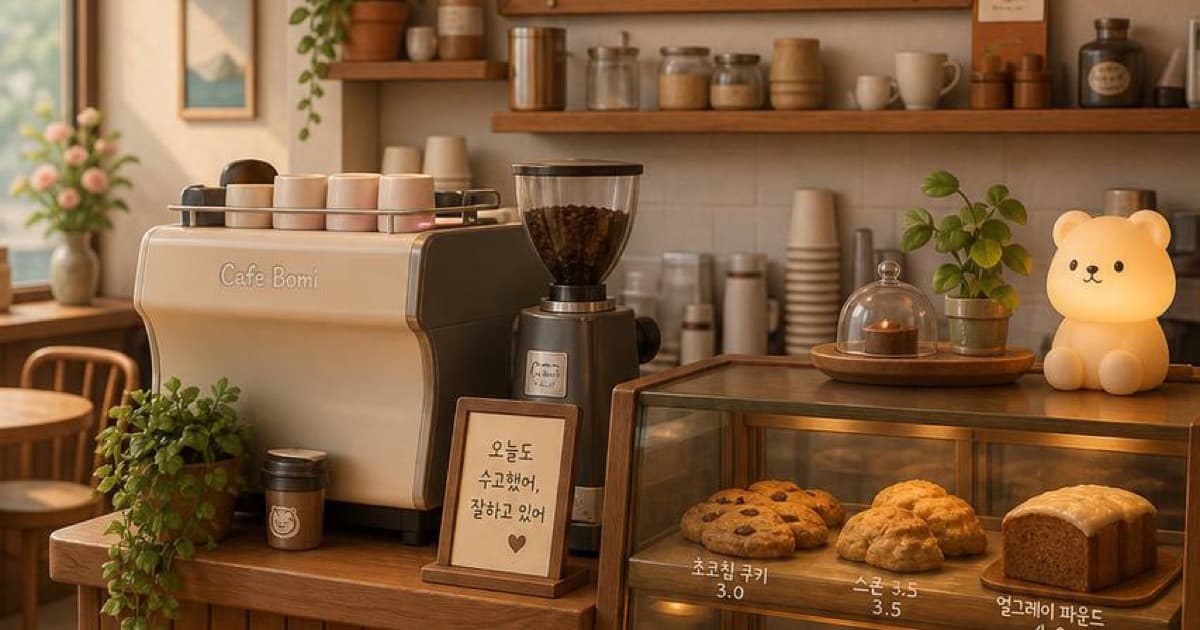
Most Seoul cafes have guest Wi-Fi, but the password is rarely posted where you can see it from the door. Order first, then ask while you are paying or picking up your drink.
You: 안녕하세요. 와이파이 있어요? — annyeonghaseyo. waipai isseoyo? — "Hello. Is there Wi-Fi?"
Them: 네, 있어요. — ne, isseoyo. — "Yes, there is."
You: 비밀번호 알려 주세요. — bimilbeonho allyeo juseyo. — "Please tell me the password."
| Situation | Say this |
|---|---|
| Is there Wi-Fi? | 와이파이 있어요? (waipai isseoyo?) |
| Tell me the password | 비밀번호 알려 주세요 (bimilbeonho allyeo juseyo) |
| What is the password? | 와이파이 비밀번호 뭐예요? (waipai bimilbeonho mwoyeyo?) |
| Can I use it here? | 여기서 써도 돼요? (yeogiseo sseodo dwaeyo?) |
| It is not connecting | 연결이 안 돼요 (yeongyeori an dwaeyo) |
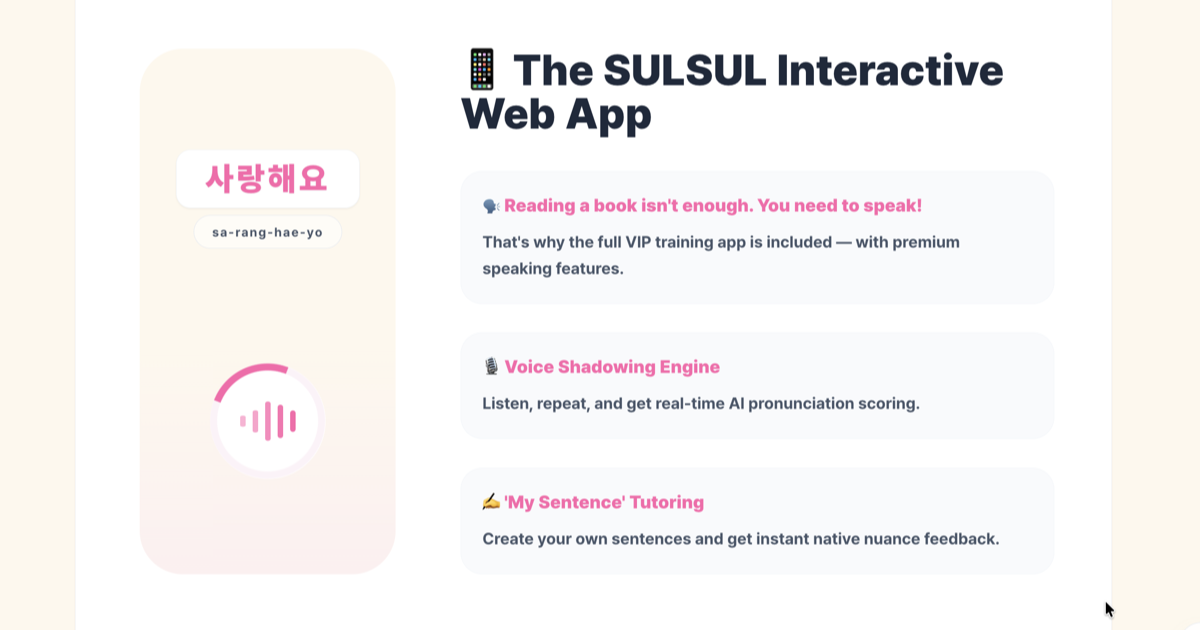
Practice this out loud with SULSUL — the app says it, you repeat it →
What does staff say when you ask?
Staff often point at a small card on the counter or write the password on your receipt. Catch 카운터 (kaunteo, counter) or 영수증 (yeongsujeung, receipt) if they mention where to look.
You: 와이파이 비밀번호 뭐예요? — waipai bimilbeonho mwoyeyo? — "What is the Wi-Fi password?"
Them: 영수증 뒤에 있어요. — yeongsujeung dwie isseoyo. — "It is on the back of the receipt."
You: 감사합니다. — gamsahamnida. — "Thank you."
If the network name is unusual, repeat it once: 네트워크 이름이 뭐예요? (neteuwokeu ireumi mwoyeyo?), "What is the network name?" For ordering at the same counter, see Korean phrases for ordering iced drinks at a Seoul cafe.
What usually goes wrong?
Travelers often skip the existence question and jump straight to password in English. Staff understand, but you miss a clean two-step pattern. Another mistake is asking before you order — some small shops only share Wi-Fi with paying customers, so ask right after 이거 주세요 (igeo juseyo), not from the doorway.
You: 연결이 안 돼요. — yeongyeori an dwaeyo. — "It is not connecting."
Them: 다시 한번 해보세요. — dasi hanbeon haeboseyo. — "Try once more."
You: 아, 됐어요. 감사합니다. — a, dwaesseoyo. gamsahamnida. — "Oh, it works. Thank you."
A second slip is typing the password wrong — Korean passwords sometimes mix letters and numbers that look alike. Ask them to 써 주세요 (sso juseyo), "please write it," on a napkin if the connection keeps failing.
Say it out loud, not just in your head
Reading 와이파이 있어요? on your phone is not the same as saying it while a barista is already calling the next order.
SULSUL is a speaking gym for exactly that moment: pick a survival pattern, say it out loud, get an instant fix from the AI pronunciation coach, then run the real situation as a mission. The 100-pattern PDF workbook comes along as a bonus.