See You Later in Korean: 다음에 봐요, 이따 봐요, and 또 봐요 — Which One Fits


To say "see you later" in Korean, pick the phrase by when you'll meet again. If it's later the same day, say 이따 봐요 (itta bwayo). If it's tomorrow, say 내일 봐요 (naeil bwayo). If there's no date at all — a new friend, a guesthouse host, a café you might visit again — say 다음에 봐요 (da-eume bwayo), "see you next time." That's the line people search as daeume bwayo, and it is the most useful of the three on a trip. To someone older, or anyone you'd call 선생님, swap 봐요 for 봬요 (bwaeyo): 다음에 봬요.
See you later in Korean, the short version
- Later today: 이따 봐요 — itta bwayo
- Tomorrow: 내일 봐요 — naeil bwayo
- Next time (no date): 다음에 봐요 — da-eume bwayo
- See you again: 또 봐요 — tto bwayo
- Polite version of any of these: …봬요 — bwaeyo
Why Korean needs a time word in front
English "see you later" stretches from ten minutes to never. Korean doesn't let you stay that vague; it wants a time word before 봐요, "(we'll) see each other." That is Pattern 28 from the SULSUL workbook, (Time)에 (V) — "making time appointments." The time goes first, the verb goes last, and the whole thing works as a goodbye:
| Korean | Say it | Meaning | Use it when |
|---|---|---|---|
| 이따 봐요 | itta bwayo | See you later (today) | You're meeting again in a few hours |
| 내일 봐요 | naeil bwayo | See you tomorrow | Classmates, a tour group, a day-two guide |
| 주말에 봐요 | jumare bwayo | See you this weekend | Plans already made |
| 월요일에 봐요 | woryoire bwayo | See you Monday | Work or class |
| 다음에 봐요 | da-eume bwayo | See you next time | No plan, but you hope to meet again |
| 나중에 봐요 | najunge bwayo | See you later on | Vague, some time in the future |
| 또 봐요 | tto bwayo | See you again | Warm, friendly, any time frame |
Notice that 이따 and 내일 take no 에, while 주말, 월요일 and 다음 do. That's normal: 이따 ("in a bit"), 내일 ("tomorrow") and 오늘 ("today") are already time adverbs. Saying 내일에 봐요 sounds off to a Korean ear.
Practice this out loud with SULSUL — the app says it, you repeat it →
다음에 봐요 vs 나중에 봐요 vs 또 봐요
These three overlap, and travelers mix them up. Here's how Koreans actually hear them.
다음에 봐요 — "next time." It points to the next occasion, whenever that is. It's what you say to the host of your guesthouse on checkout day, to the person you met at a language exchange, or to a shop owner who chatted with you for ten minutes. Friendly, hopeful, no commitment.
나중에 봐요 — "later on." A little more distant in time and a little looser. Fine between friends, but on a trip 다음에 usually sounds warmer.
또 봐요 — "see you again." The 또 means "again," so it carries a little smile. Pair it with 다음에 for the warmest version: 다음에 또 봐요.
The 봬요 version for people you respect
봐요 is polite, but it's built on 보다, "to see." For an elder, a teacher, a client, or a host who is much older than you, Koreans switch to the humble verb 뵙다, and 봐요 becomes 봬요:
- 내일 봬요 (naeil bwaeyo) — "See you tomorrow" (respectful).
- 다음에 또 봬요 (da-eume tto bwaeyo) — "See you again next time" (respectful).
- 이따 뵐게요 (itta boelgeyo) — "I'll see you later today."
The last one adds -ㄹ게요, "I will," a promise ending close to Pattern 09, (V)ㄹ/을 거예요. You'll hear it constantly at the end of conversations: 연락할게요 (yeollakhalgeyo), "I'll get in touch," and 또 올게요 (tto olgeyo), "I'll come again."
What it sounds like on a trip
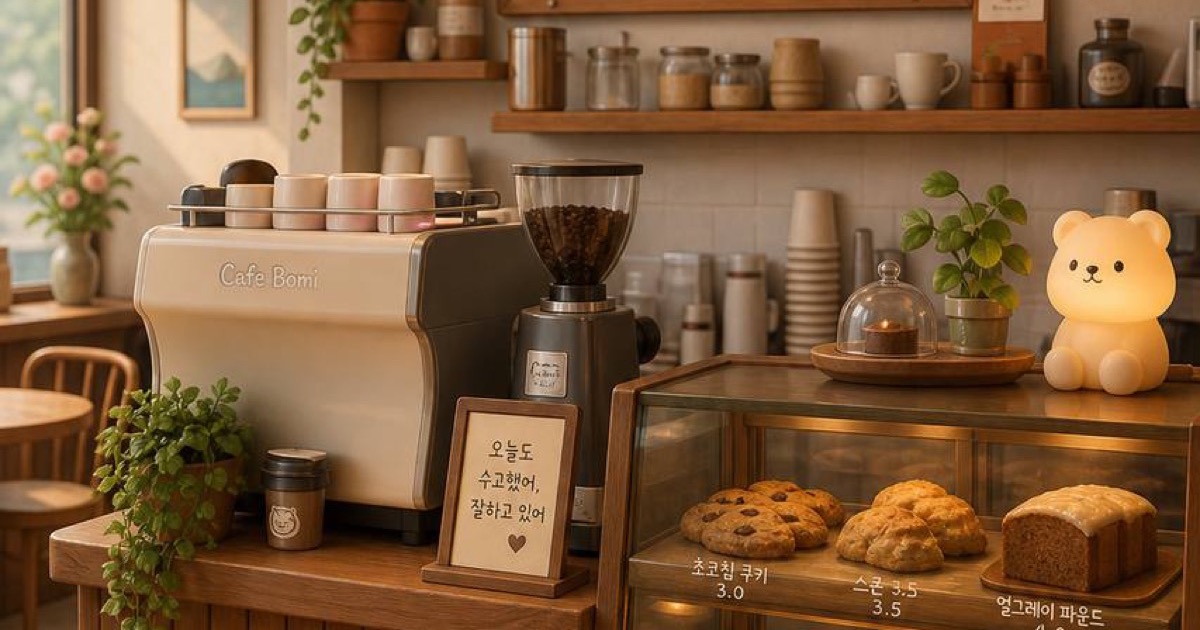
Here's the moment it comes up most — checking out of a small guesthouse after a few nights:
Host: 벌써 가요? 아쉽네요. You: 네, 오늘 부산 가요. 정말 감사했어요. Host: 조심히 가세요. 다음에 또 오세요! You: 네, 다음에 또 올게요. 다음에 봬요!
벌써 가요? (beolsseo gayo?) is "Leaving already?" and 아쉽네요 (aswimneyo) is "That's a shame" — the way Koreans say they'll miss you. 다음에 또 오세요 is what they say: "Come again next time." Your answer flips the verb to the promise form — 또 올게요 — and closes with 다음에 봬요.
And between two travelers who just spent a day together:
A: 오늘 진짜 재밌었어요! B: 저도요. 내일도 시간 있어요? A: 네! 그럼 내일 봐요. B: 좋아요, 내일 봐요!
저도요 is Pattern 16's ping-pong reply, "me too." Once a time is fixed, 다음에 becomes 내일.
When 다음에 means "not now"
Here's the part guidebooks skip. 다음에요 on its own — "next time" — is also the politest way to say no. A street vendor offers a sample, a shop clerk shows you one more jacket, a friend suggests a second round of drinks: 다음에요! or 다음에 올게요 (da-eume olgeyo), "I'll come next time," gets you out with nobody embarrassed. It's the shopping version of a smile and a wave.
The flip side: if a Korean says 다음에 밥 한번 먹어요 and never sets a date, don't take it personally. It's a warm goodbye, not a booking. If you really want to meet, follow up with a day — 토요일 어때요? (toyoil eottaeyo?), "How about Saturday?"
Mistakes people make with "see you later"
Saying 이따 봐요 when you won't meet today. 이따 is "in a little while," same day only. For "someday," use 다음에 or 나중에. Saying 이따 봐요 to a host on checkout day makes them wonder if you're coming back tonight.
Writing 있다 for 이따. They sound almost the same, but 있다 means "to exist." In a KakaoTalk message, 이따 봐 is the right spelling.
Writing 뵈요. The polite form is 봬요 — it's 뵈어요 shortened. 뵈요 is one of the most common spelling mistakes even among Koreans, so you'll see it online, but 봬요 is correct.
Using 봐 with someone older. 이따 봐, 내일 봐, 담에 봐 (the texting shorthand for 다음에) are casual — friends your age only. With anyone older, keep the 요, or go to 봬요.
Stopping at 안녕히 가세요 with someone you liked. It's correct, but it closes the door. Add 다음에 또 봐요 and it opens it again. The basic goodbye rules are in how to say goodbye in Korean, and the lines for walking out of a restaurant are in what to say in Korean when leaving a restaurant.
Say it before the door closes
Goodbyes happen fast. The host is already waving, the bus is pulling in, and you have one second to choose between 이따, 내일 and 다음에 — then remember 봬요 for the older host. The 봬 sound (bwae) is the one learners swallow, and 다음에 runs together as da-eu-me, not three separate words. Saying them out loud a few times before your trip is what makes them come out without a pause.
SULSUL is a speaking gym built for that: pick a pattern, say it out loud, get an instant fix from the AI pronunciation coach, then run the whole situation as a mission — check-in to checkout. The 100-pattern PDF workbook comes along as a bonus.