At the Boarding Gate in Korean: 탑승 시작, 탑승권, and the Announcements You Hear Before You Fly

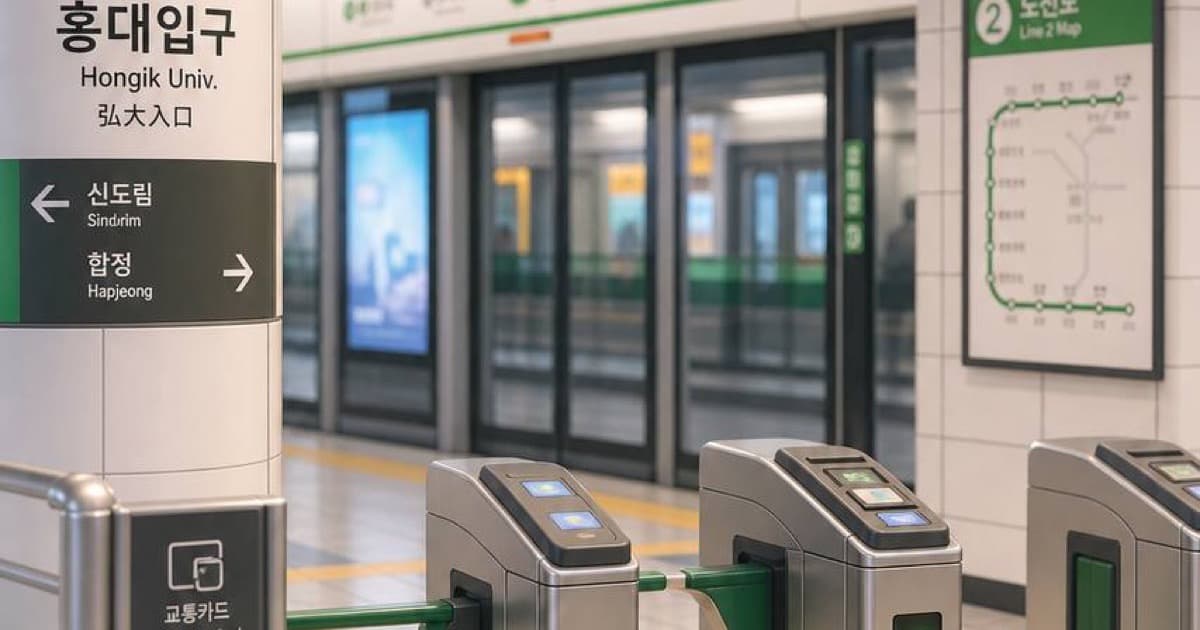
At a Korean airport boarding gate, the sentence everyone waits for is 탑승을 시작하겠습니다 (tapsseungeul sijakhagetseumnida), "We will now begin boarding." The moment you hear 탑승 (tapsseung, boarding) and 시작 (sijak, start), stand up and get two things ready: your 탑승권 (tapsseunggwon, boarding pass) and your 여권 (yeogwon, passport). The gate staff will say 탑승권하고 여권 보여 주세요 — "Please show your boarding pass and passport."
- 탑승구 (tapsseunggu) — boarding gate
- 탑승권 (tapsseunggwon) — boarding pass
- 탑승을 시작하겠습니다 — We will now begin boarding
- 탑승권하고 여권 보여 주세요 — Please show your boarding pass and passport
- 지연되었습니다 (jiyeondoeeotseumnida) — It has been delayed
- 최종 탑승 안내 (choejong tapsseung annae) — Final boarding call
- 이거 부산행 맞아요? — Is this the flight to Busan? (your question)
Gate announcements in Korea usually come in Korean first, then English. That sounds like good news, but the Korean version is the one that starts the line moving, and on domestic flights to Jeju or Busan the English one is sometimes short or missing. If you can catch four or five key words, you will never be the last person running down the jet bridge.
The one word that runs the whole gate: 탑승
Almost every gate sentence is built on 탑승 (tapsseung), "boarding." Once you know it, the rest are just small pieces stuck to the front or back.
| Korean | Pronunciation | Meaning |
|---|---|---|
| 탑승 | tapsseung | boarding |
| 탑승구 | tapsseunggu | boarding gate (구 = opening, gate) |
| 탑승권 | tapsseunggwon | boarding pass (권 = ticket) |
| 탑승 시작 | tapsseung sijak | boarding starts |
| 탑승 마감 | tapsseung magam | boarding closed |
| 우선 탑승 | useon tapsseung | priority boarding |
| 최종 탑승 안내 | choejong tapsseung annae | final boarding call |
Notice the spelling says 탑승 but it sounds like tap-sseung. The ㅂ at the end of 탑 makes the next ㅅ come out hard and tense. If you say a soft tap-seung, people will still understand you — but listening for the hard "ss" helps you catch the word inside a fast announcement.
If you still need to find the gate itself, the post on finding your gate at Incheon Airport covers 탑승구 어디예요? and the signs to follow. This post picks up the moment you sit down in front of the gate.
Practice this out loud with SULSUL — the app says it, you repeat it →
What the gate announcements actually say
Airport Korean uses the most formal ending, -습니다, and the polite future -겠습니다. You do not need to speak this way. You only need to recognize it. Here are the announcements you will hear, roughly in the order they come.
1. Boarding starts. 지금부터 부산행 탑승을 시작하겠습니다. "From now, we will begin boarding for the flight to Busan." -행 (-haeng) means "bound for." 부산행 = to Busan, 제주행 = to Jeju, 도쿄행 = to Tokyo.
2. Who goes first. 도움이 필요하신 분과 어린이 동반 승객께서는 먼저 탑승해 주시기 바랍니다. "Passengers who need assistance and those traveling with children, please board first." Then comes the group or row call: 그룹 3번 승객께서는 탑승해 주십시오 — "Group 3 passengers, please board." Check the group number printed on your 탑승권.
3. Have your documents ready. 탑승권과 여권을 미리 준비해 주시기 바랍니다. "Please have your boarding pass and passport ready." At the scanner, staff shorten it to 탑승권 보여 주세요 or just hold out a hand and say 여권이요.
4. Something changed. 출발이 지연되고 있습니다 — "Departure is being delayed." 탑승구가 변경되었습니다 — "The boarding gate has been changed." If you hear 변경 (byeongyeong, change), look at the screen right away. A gate change at Incheon can mean a train ride to another concourse.
5. Last chance. 최종 탑승 안내 말씀 드립니다. — "This is the final boarding call." If your name follows — Korean staff will read it as best they can — walk to the desk now.
Four questions you can ask at the gate
You only need short questions here, and the textbook patterns cover all of them.
Check you are at the right gate — (N) 맞아요?, "Is it (N)?": 이거 제주행 맞아요? (igeo jejuhaeng majayo?) — "Is this the flight to Jeju?" 여기 23번 탑승구 맞아요? — "Is this gate 23?" A 네, 맞아요 means you can sit back down.
Ask when boarding starts — 언제 (V)해요?, a question-word sentence: 탑승 언제 시작해요? (tapsseung eonje sijakhaeyo?) — "When does boarding start?" The answer usually sounds like 30분 후에요 — "In 30 minutes."
Ask if you can do something — (V)아/어도 돼요?, "Is it okay if I…?": 지금 타도 돼요? (jigeum tado dwaeyo?) — "Can I board now?" 이 가방 들고 타도 돼요? — "Can I take this bag on board?" 화장실 다녀와도 돼요? — "Is it okay if I go to the restroom?" The reply 네, 돼요 is yes; 안 돼요 is no.
Ask them to repeat — 다시 말해 주세요: 죄송한데, 다시 한 번 말해 주세요. — "Sorry, please say that once more." Add 천천히 (cheoncheonhi, slowly) if the first try was too fast.
A real exchange at the gate
You are at Gimpo, flying to Jeju. The screen just changed and you are not sure what happened.
You: 저기요, 이거 제주행 맞아요? Excuse me, is this the flight to Jeju?
Staff: 네, 맞아요. 근데 출발이 20분 지연됐어요. Yes, it is. But departure is delayed by 20 minutes.
You: 아, 그래요? 탑승 언제 시작해요? Oh, really? When does boarding start?
Staff: 10시 40분쯤 시작할 거예요. 방송 나오면 오세요. Around 10:40. Come when the announcement comes on.
You: 네. 그럼 화장실 다녀와도 돼요? Okay. Then can I go to the restroom?
Staff: 네, 그럼요. 탑승권 잊지 마세요. Sure. Don't forget your boarding pass.
Notice 지연됐어요 — the casual spoken form of the announcement's 지연되었습니다. Staff switch to the friendly -요 ending when they talk to you one on one, so the conversation is easier than the speaker system.
Mistakes that trip travelers up
Waiting for the English announcement. The Korean version comes first, and lines start forming during it. When you hear 탑승 plus 시작, stand up. Do not wait for the translation.
Mixing up 탑승권 and 여권. 탑승권 is the boarding pass; 여권 is the passport. If staff ask for one and you hand over the other, it is fine — but knowing both saves a few awkward seconds at the scanner.
Missing -행. Travelers hear "부산" and assume it is the arrival from Busan. 부산행 is going to Busan. A flight arriving from Busan is 부산발 (busanbal). The little syllable at the end tells you the direction.
Saying 탑승구 when you mean the plane. The gate is 탑승구; the plane is 비행기 (bihaenggi); your seat is 좌석 (jwaseok). If you want to ask about your seat, say 좌석 바꿀 수 있어요? — "Can I change my seat?"
Not answering your name. If staff call your name at the desk, walk over and say 네, 저예요 (ne, jeoyeyo) — "Yes, that's me." It is often just a seat change or a baggage check, not a problem.
Practice before the next flight
Say these out loud until they come out on one breath:
- 이거 제주행 맞아요? — checking the gate.
- 탑승 언제 시작해요? — checking the time.
- 지금 타도 돼요? — asking if you can go.
- 다시 한 번 말해 주세요. — buying time when it is too fast.
Then try the listening side: read 지금부터 제주행 탑승을 시작하겠습니다 aloud at normal speed and pick out 제주행, 탑승, 시작. If you can find those three words in your own voice, you will find them in the speaker at the gate too.
SULSUL is a speaking gym for moments like this: pick a pattern, say it out loud, get an instant fix from the AI pronunciation coach, then run the real situation as a mission. The 100-pattern PDF workbook comes along as a bonus.