Korean Phrases for Finding Your Gate at Incheon Airport

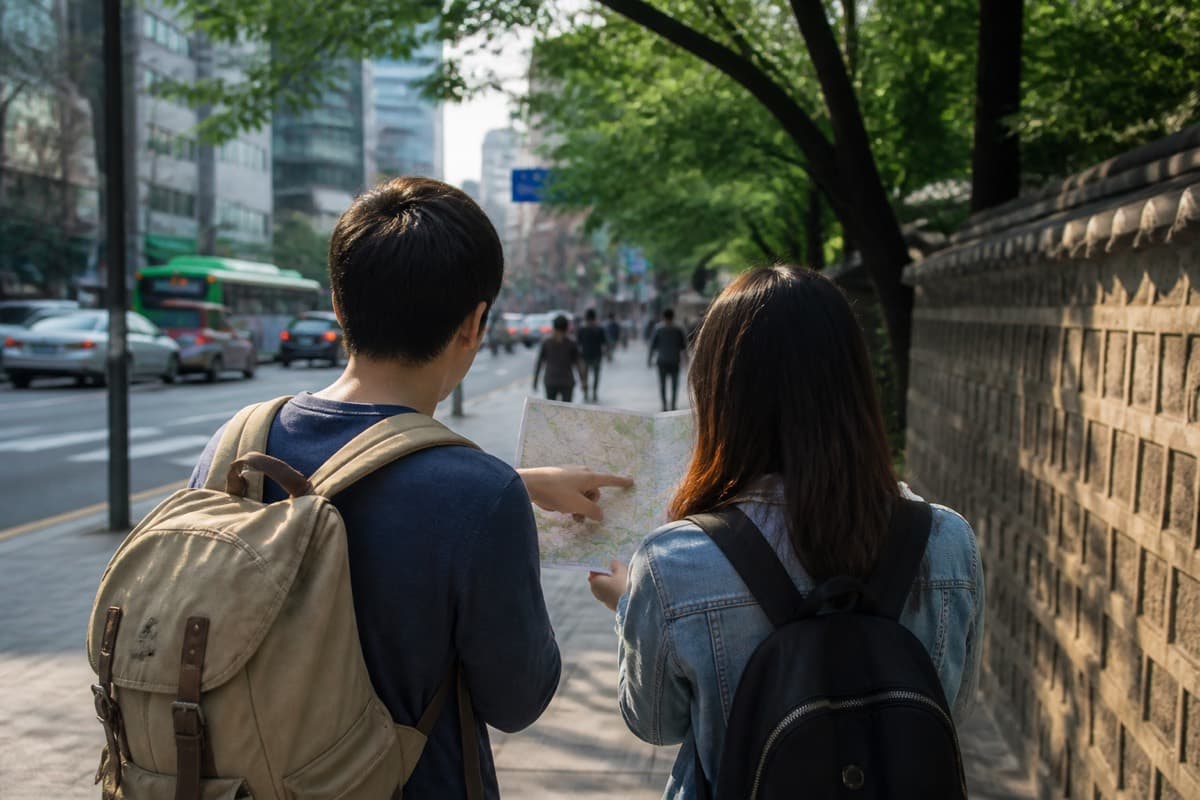
Korean phrases for finding your gate at Incheon Airport come down to one location question and one backup line. Say 탑승구 어디예요? (tapsseunggu eodiyeyo?), "Where is the boarding gate?" when the departure board moves too fast, then name your gate number if the staff asks for it.
- Ask for your gate: 탑승구 어디예요? (tapsseunggu eodiyeyo?), "Where is the boarding gate?"
- Name a specific gate: 115번 게이트요 (ilbaeksip-o beon geiteuyo), "Gate 115."
- Find the exit area: 출구 어디예요? (chulgu eodiyeyo?), "Where is the exit?"
- If the reply is too fast: 다시 말해 주세요 (dasi malhae juseyo), "Please say that again."
How do you ask for your boarding gate?
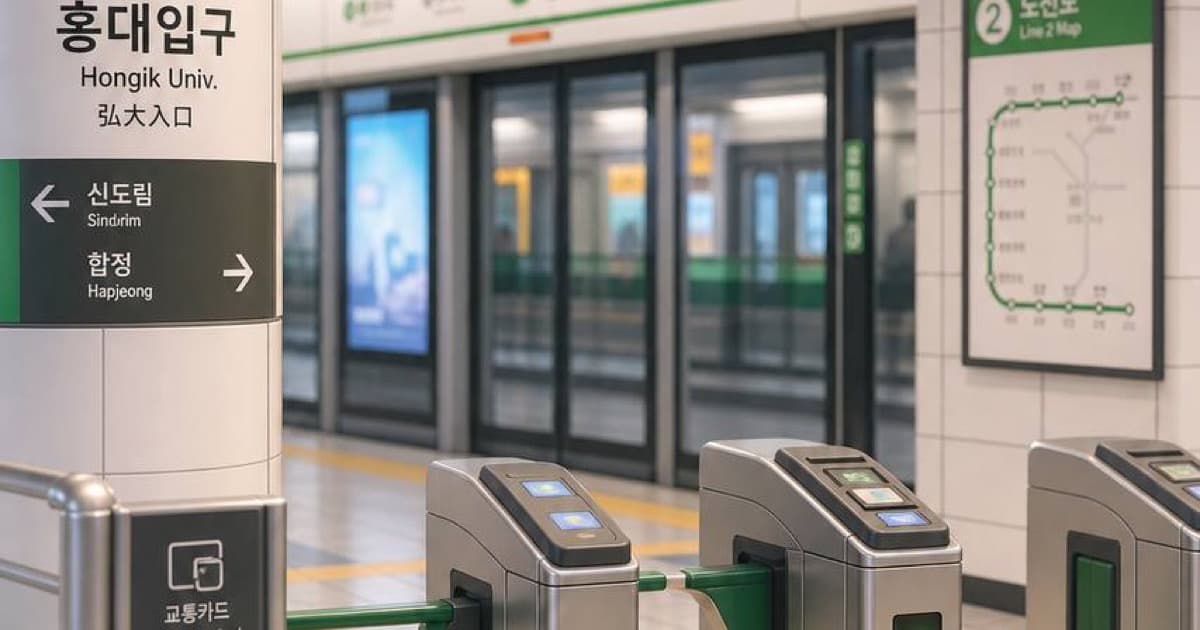
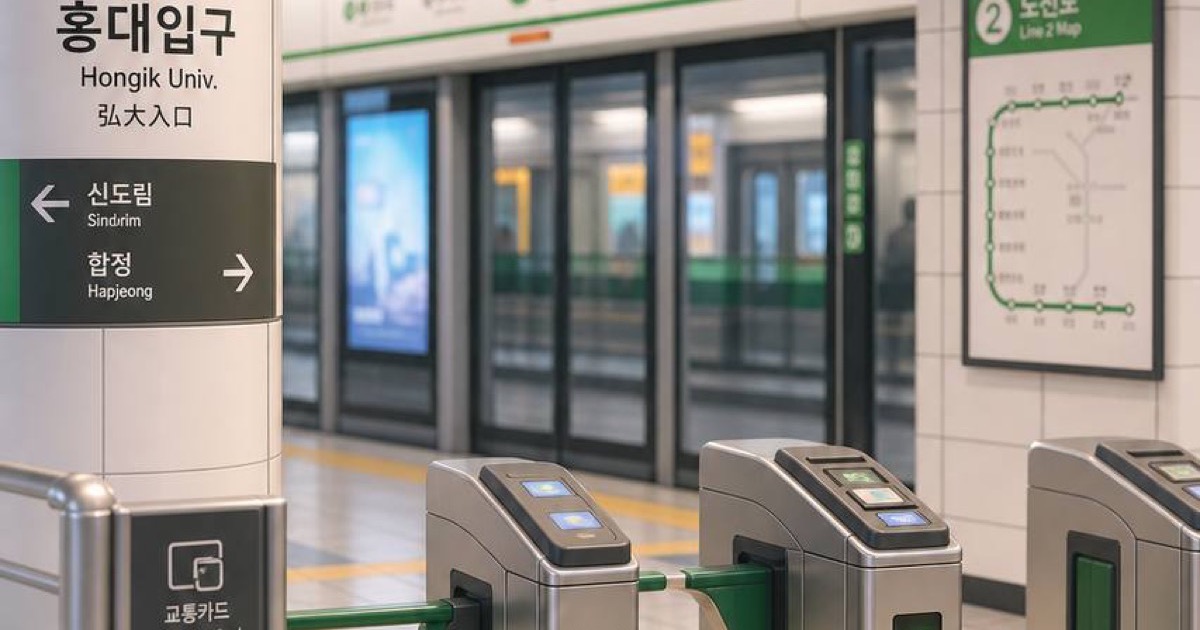
Incheon Airport signs are bilingual, but the departure board refreshes quickly and gate changes happen. The textbook location pattern puts 어디예요? (eodiyeyo?) right after the place noun — toss the key word and raise your voice at the end.
You: 저기요, 탑승구 어디예요? — jeogiyo, tapsseunggu eodiyeyo? — "Excuse me, where is the boarding gate?"
Them: 몇 번 게이트세요? — myeot beon geiteseyo? — "Which gate number?"
You: 115번이요. — ilbaeksip-o beoniyo. — "Gate 115."
| Situation | Say this |
|---|---|
| Ask for boarding gate | 탑승구 어디예요? (tapsseunggu eodiyeyo?) |
| Name your gate | 115번 게이트요 (ilbaeksip-o beon geiteuyo) |
| Ask for the exit | 출구 어디예요? (chulgu eodiyeyo?) |
| Find immigration area | 입국 심사 어디예요? (ipguk simsa eodiyeyo?) |
| Too fast to follow | 다시 말해 주세요 (dasi malhae juseyo) |
Practice this out loud with SULSUL — the app says it, you repeat it →
What does staff say when you ask?
Airport staff usually answer with a direction plus a floor number. You only need to catch 왼쪽 (oenjjok, left), 오른쪽 (oreunjjok, right), or 2층 (icheung, second floor).
You: 115번 게이트 어디예요? — ilbaeksip-o beon geiteu eodiyeyo? — "Where is Gate 115?"
Them: 2층 왼쪽이에요. — icheung oenjjog-ieyo. — "Second floor, to the left."
You: 감사합니다. — gamsahamnida. — "Thank you."
If you miss the direction, point at your boarding pass and say 여기요 (yeogiyo), "this one," while showing the gate number. Most staff switch to English for a single word, but repeating 115번이요? (ilbaeksip-o beoniyo?) as a one-word check works just as well.
What usually goes wrong before boarding?
Travelers often look for 공항 (gonghang, airport) on signs when they actually need 탑승구 (tapsseunggu, boarding gate) or 출국장 (chulgukjang, departures hall). The airport is the whole building — your gate is one counter inside it.
You: 출국장 어디예요? — chulgukjang eodiyeyo? — "Where is the departures hall?"
Them: 3층이에요. 엘리베이터 타세요. — samcheung-ieyo. ellibeiteo taseyo. — "Third floor. Take the elevator."
You: 네, 감사합니다. — ne, gamsahamnida. — "Yes, thank you."
A second mistake is waiting until the final boarding call. Ask early at any information desk — 안내 데스크 어디예요? (annae deseukeu eodiyeyo?) — so you have time if the gate moves. For getting from the airport into the city, the post on asking for a taxi in Korean covers the first phrase you need after baggage claim.
Say it out loud, not just in your head
Reading 탑승구 어디예요? here is not the same as saying it while a departure board is scrolling and a line is forming behind you.
SULSUL is a speaking gym for exactly that moment: pick a survival pattern, say it out loud, get an instant fix from the AI pronunciation coach, then run the real situation as a mission. The 100-pattern PDF workbook comes along as a bonus.