Korean Words for Tourists: The 20 Single Words That Carry a Whole Trip

The Korean words a tourist actually uses are short, single nouns: 화장실 (hwajangsil, toilet), 이거 (igeo, this), 물 (mul, water), 역 (yeok, station), 출구 (chulgu, exit), and a handful more. You don't need grammar to use them. Say the word, then add one of three endings — 주세요 (juseyo, "please give me"), 어디예요? (eodiyeyo?, "where is it?") or 있어요? (isseoyo?, "do you have it?") — and a single word becomes a polite, complete request. Twenty words and three endings will carry you from the airport to your last dinner.
The trick in one line
- Word + 주세요 → "___, please." (물 주세요 — "Water, please.")
- Word + 어디예요? → "Where is ___?" (화장실 어디예요? — "Where's the toilet?")
- Word + 있어요? → "Do you have ___?" (봉투 있어요? — "Do you have a bag?")
Why single words work so well in Korea
Korean drops a lot of what English keeps. Subjects, "the," "a," even the little particles that mark objects — in everyday speech people leave them out. A Korean shopper really does say 물 주세요, not a longer textbook sentence. So when you walk up with one word and a polite ending, you are not speaking broken Korean. You are speaking the way people already talk at a counter.
The other reason is that staff in tourist areas hear the same few questions all day. The moment they catch 화장실 or 얼마, they know what you want. Your job is just to land the key word clearly.
Practice this out loud with SULSUL — the app says it, you repeat it →
The 20 words, grouped by where you'll need them
Getting around
| Korean | Sound | Meaning |
|---|---|---|
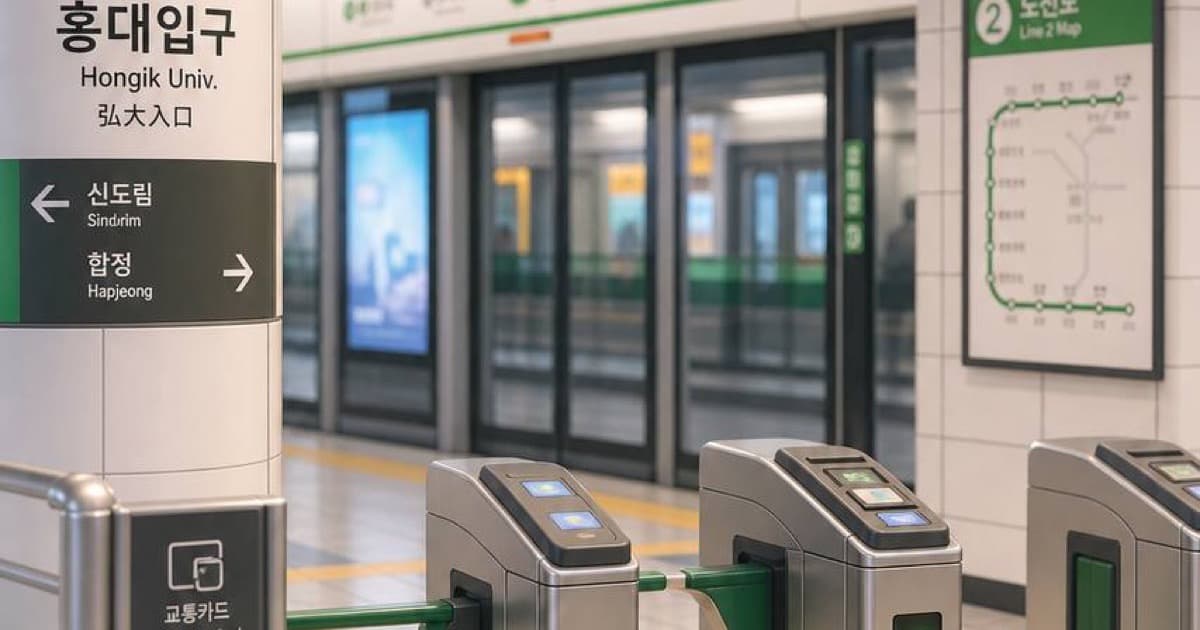
| 역 | yeok | station |
| 출구 | chulgu | exit (subway exits are numbered: 3번 출구 = exit 3) |
| 지하철 | jihacheol | subway |
| 버스 | beoseu | bus |
| 택시 | taeksi | taxi |
| 여기 | yeogi | here |
Eating and shopping
| Korean | Sound | Meaning |
|---|---|---|
| 이거 | igeo | this (the most useful word on the list) |
| 저거 | jeogeo | that, over there |
| 물 | mul | water |
| 메뉴 | menyu | menu |
| 얼마 | eolma | how much |
| 카드 | kadeu | card |
| 봉투 | bongtu | bag (at the checkout) |
| 영수증 | yeongsujeung | receipt |
Comfort and trouble
| Korean | Sound | Meaning |
|---|---|---|
| 화장실 | hwajangsil | toilet / restroom |
| 와이파이 | waipai | Wi-Fi |
| 약국 | yakguk | pharmacy |
| 병원 | byeongwon | hospital / clinic |
| 경찰 | gyeongchal | police |
| 영어 | yeongeo | English |
Notice how many are borrowed from English — 버스, 택시, 카드, 메뉴, 와이파이. Say them the Korean way, with even beats and no strong stress: beo-seu, not "BUS." That small change is often the difference between being understood and being asked to repeat.
Three endings that turn a word into a request
주세요 — when you want something. This is the pattern behind most of a trip. 이거 주세요 while pointing at a menu photo. 물 주세요 at a table. 영수증 주세요 at the register. If you want to soften it, slip 좀 (jom) in the middle: 물 좀 주세요 sounds less like an order and more like "could I get some water."
어디예요? — when you need to find something. 화장실 어디예요? is the single most-asked question by visitors in Korea, and for good reason. It works for anything with a location: 역 어디예요?, 약국 어디예요?, 3번 출구 어디예요? Expect the answer to be a pointing hand plus 저기요 (jeogiyo, "over there") or 쭉 가세요 (jjuk gaseyo, "go straight").
있어요? — when you're not sure they have it. 와이파이 있어요? at a cafe. 봉투 있어요? at the convenience store. 영어 메뉴 있어요? at a restaurant. The answer is either 네, 있어요 ("yes, we have it") or 없어요 (eopseoyo, "we don't").
And one bonus that stands alone: 얼마예요? (eolmayeyo?), "how much is it?" Point at the item and say it.
A short scene: one word at a time
You land, take the train into the city, and step out at your stop. Here is how a first afternoon sounds with nothing but the list above.
At the station, you stop a staff member: 실례합니다, 5번 출구 어디예요? — "Excuse me, where's exit 5?" They point: 저기요.
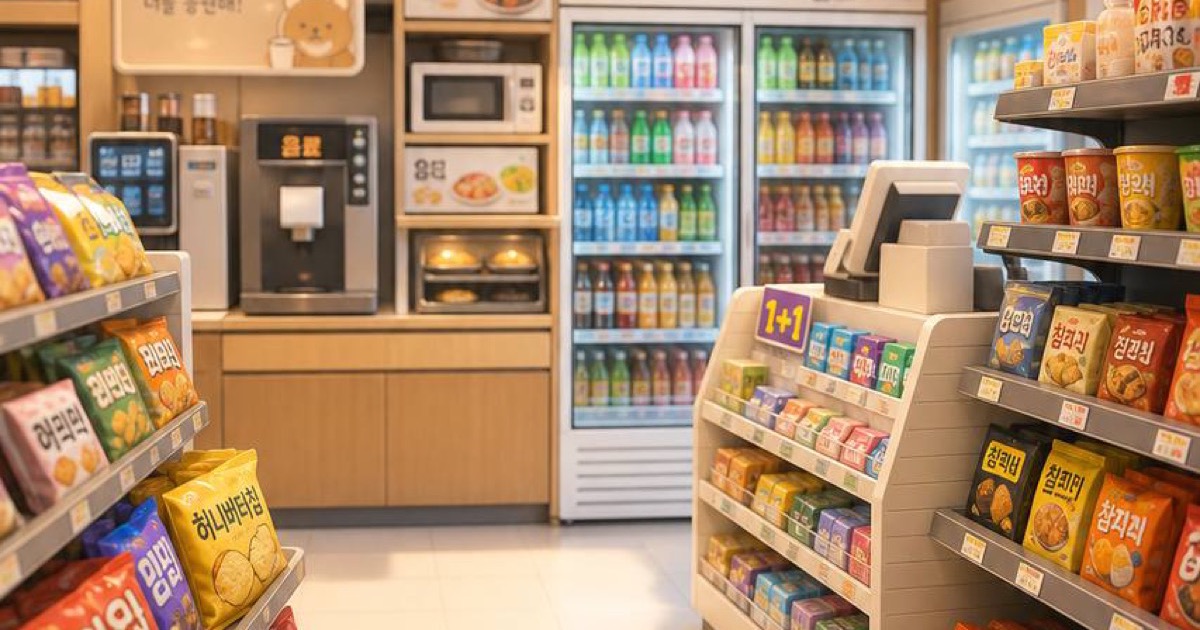
At the convenience store, you hold up a bottle: 이거 얼마예요? The clerk says the price and asks 봉투 필요하세요? ("Do you need a bag?"). You answer 아니요, 괜찮아요 — "No, it's fine."
At a small restaurant, you sit down and say 메뉴 주세요, then point at a photo: 이거 하나 주세요 — "One of this, please." Halfway through: 물 좀 주세요. Before you leave: 화장실 어디예요?
That is a full afternoon in Korean, and you never built a sentence longer than four words.
Small slips that trip up tourists
Saying the word with a question in English. "Toilet? 화장실?" with rising English intonation can confuse people. Add 어디예요? instead and let the ending carry the question.
Forgetting 이거. Visitors try to pronounce the name of every dish on the menu. You don't have to. 이거 plus a finger does the job in any restaurant, market or shop.
Dropping 요 with strangers. 물 줘 (mul jwo) is what you'd say to a close friend. With staff, always end with 주세요 or 요 — it is the word-level version of "please."
Mixing up 역 and 출구. At big stations you're already "at the station" — what you actually need is the exit number. Asking for the 출구 gets you a far more useful answer.
Freezing when they answer in a full sentence. You will catch one or two words — 저기, 없어요, a number. That is enough. Reply 네, 감사합니다 (ne, gamsahamnida), "Yes, thank you," and follow the hand.
Say the words before you need them
Reading 화장실 어디예요? on a screen is easy. Saying it out loud to a stranger at a busy station, with your bag in one hand, is a different skill — and it only gets easier if your mouth has done it a few times before. Practise each word with each ending until the pairing comes out on its own: 화장실 어디예요, 물 주세요, 와이파이 있어요.
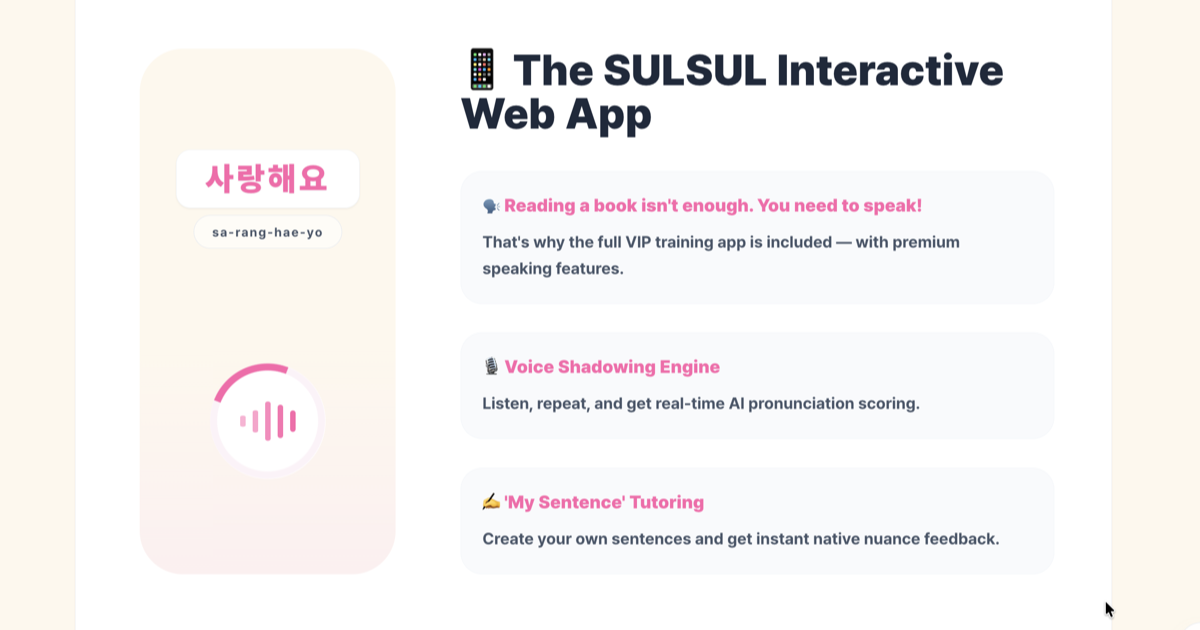
SULSUL is a speaking gym built for exactly that: pick a pattern, say it out loud, get an instant fix from the AI pronunciation coach, then run the whole situation as a mission. The 100-pattern PDF workbook comes along as a bonus.