Basic Korean Phrases for Everyday Use: 괜찮아요, 잠깐만요, and the Lines Koreans Say All Day

The basic Korean phrases you will actually use every day are not long sentences. They are five or six short lines that fill the gaps between bigger conversations: 괜찮아요 (gwaenchanayo), "it's okay"; 잠깐만요 (jamkkanmanyo), "one moment"; 알겠습니다 (algetseumnida), "got it"; 수고하세요 (sugohaseyo), the "take care" you say to anyone who is working; and 다녀오겠습니다 (danyeoogetseumnida), "I'm heading out." Learn those, plus the reaction 아, 그래요? (a, geuraeyo?), and you can get through a normal Korean day without freezing in the small moments.
- It's okay / No thanks / Are you okay? — 괜찮아요 (gwaenchanayo)
- One moment / Excuse me, coming through — 잠깐만요 (jamkkanmanyo)
- Got it — 알겠습니다 / 알겠어요 (algetseumnida / algesseoyo)
- I'm not sure — 잘 모르겠어요 (jal moreugesseoyo)
- Leaving a shop or office — 수고하세요 (sugohaseyo)
- Leaving home — 다녀오겠습니다 (danyeoogetseumnida)
- Coming home — 다녀왔습니다 (danyeowatseumnida)
- I'm on my way — 지금 가는 길이에요 (jigeum ganeun girieyo)
- Oh, really? — 아, 그래요? (a, geuraeyo?)
- That's a relief — 다행이에요 (dahaengieyo)
- See you later — 이따 봐요 (itta bwayo)
- Good night — 잘 자요 (jal jayo)
Why these phrases come first
A beginner's list usually starts with hello, thank you, and sorry. Those matter, and they each have their own guide — how to say how are you and how to say goodbye among them. But the words that fill a day are the ones in between. Someone holds a door, someone asks if you need a bag, someone is blocking the subway exit. In each of those moments, a Korean speaker says one short line without thinking, and a learner stands there building a sentence.
Most of these lines also do more than one job. That is what makes them worth learning first: one phrase, several situations.
Practice this out loud with SULSUL — the app says it, you repeat it →
괜찮아요 — the phrase with four meanings
괜찮아요 literally means "it is fine," and the situation decides the rest:
| Situation | 괜찮아요 means | Tone |
|---|---|---|
| Cashier: "Do you need a bag?" | "No thanks." | Flat, with a small head shake |
| Someone bumps you and apologizes | "It's okay, don't worry." | Soft, quick |
| A friend trips on the stairs | "Are you okay?" — 괜찮아요? | Rising, worried |
| Someone asks how the food is | "It's fine / pretty good." | Neutral |
The second meaning, the polite refusal, is the one that trips visitors up. When a convenience store clerk asks 봉투 필요하세요? (bongtu piryohaseyo?), "Do you need a bag?", 괜찮아요 means no. It does not mean "yes, that would be fine." If you do want one, say 네, 주세요 (ne, juseyo). That is Pattern 01, (N) 주세요, doing its usual work. More of the checkout script is in Korean phrases for the convenience store.
With friends, drop the 요: 괜찮아 (gwaenchana). As a question to a close friend, 괜찮아?, it is one of the most common lines in any K-drama.
잠깐만요 and the phrases for small moments
잠깐만요 means "just a moment," and Koreans use it in two very different places. On the phone or at a counter, it means "hold on, let me check." In a crowded subway car, said while you move toward the door, it means "excuse me, coming through." Nobody will think it rude; it is the normal way to get past people.
Two more short lines handle the moments when you do not fully understand. Both come from the textbook's conversation-help patterns:
- 잘 모르겠어요 (jal moreugesseoyo) — "I'm not sure / I don't really know." Pattern 21. Softer than a plain "I don't know," so it works with strangers.
- 다시 말해 주세요 (dasi malhae juseyo) — "Please say it again." Pattern 22. Add 천천히 (cheoncheonhi), "slowly," if the speed was the problem. If that happens often, Korean phrases for when someone speaks too fast goes further.
And when you did understand, 알겠습니다 (algetseumnida) is "understood" — the formal version you say to staff, a teacher, or someone older. 알겠어요 (algesseoyo) is the everyday polite version. 네 (ne) on its own works as a nod in sound form.

Leaving and coming back: the greetings Koreans say at the door
Korean has fixed lines for leaving and returning, and English has no real match for them.
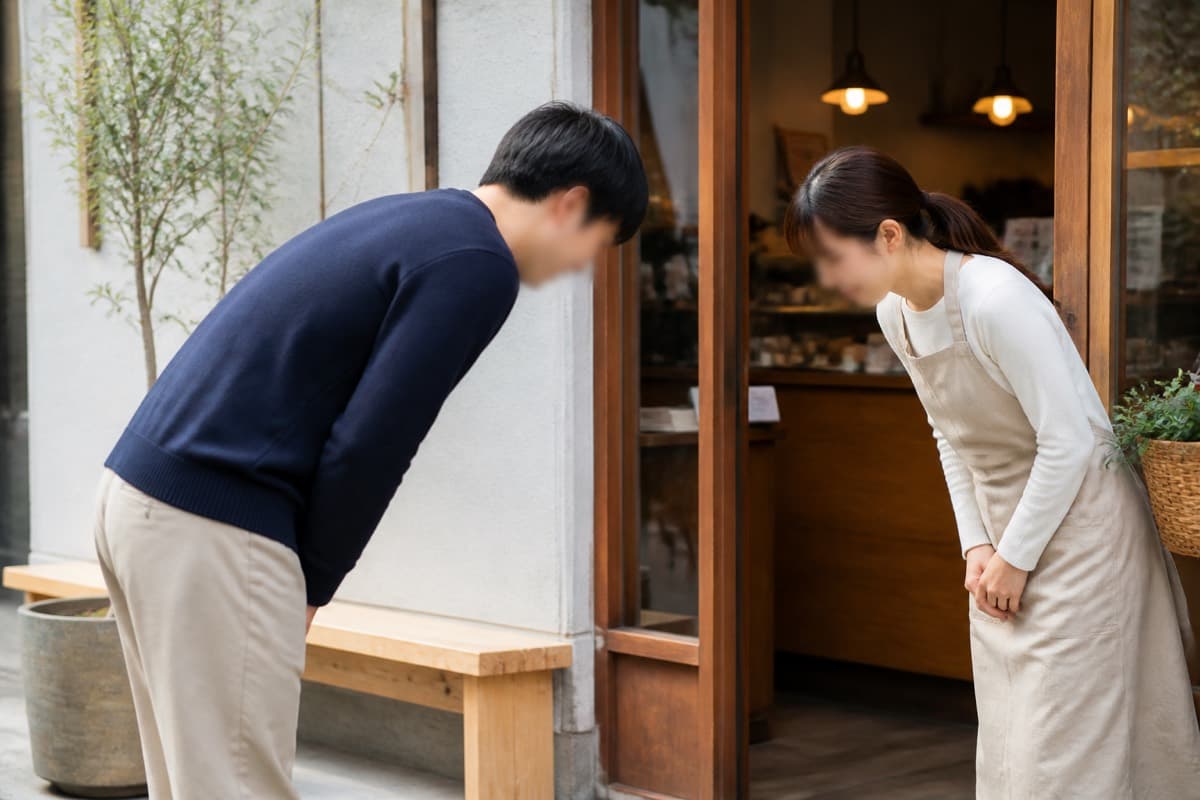
다녀오겠습니다 (danyeoogetseumnida) means roughly "I will go and come back." You say it to whoever stays home when you leave in the morning. They answer 잘 다녀와요 (jal danyeowayo), "go and come back safe." When you return, you say 다녀왔습니다 (danyeowatseumnida), "I'm back," and the reply is 왔어요? (wasseoyo?), "you're here?" Homestay families and Korean roommates notice when you use these, because it shows you understand how a Korean household works.
수고하세요 (sugohaseyo) is the line for leaving a place where someone is working: a shop, a hair salon, a taxi, an office. It means something like "keep up the good work." At the end of a workday, colleagues say 수고하셨습니다 (sugohasyeotseumnida), "thank you for your hard work today." That is part of Pattern 91, the comfort-and-encouragement family that also includes 힘내세요 (himnaeseyo), "hang in there."
One caution: 수고하세요 sounds like you are speaking down to the person if you say it to your boss or a much older person. To them, say 감사합니다 or 안녕히 계세요 instead.
Texting through the day: on my way, see you, good night
Pattern 93 is built for daily routines: 지금 (V) 가는/오는 길이에요, "I'm on my way to / from (doing)." It is the first line most Koreans type when they are running late.
- 지금 가는 길이에요. — jigeum ganeun girieyo. — "I'm on my way now."
- 퇴근하는 길이에요. — toegeunhaneun girieyo. — "I'm on my way home from work."
- 벌써 먹었어요. — beolsseo meogeosseoyo. — "I already ate." (The other half of Pattern 93.)
That last one answers the most Korean question of all: 밥 먹었어요? (bap meogeosseoyo?), "Did you eat?" It is a greeting, not an invitation, so "yes, I did" is a complete answer.
To close the day: 이따 봐요 (itta bwayo), "see you later (today)"; 내일 봐요 (naeil bwayo), "see you tomorrow"; 잘 자요 (jal jayo), "sleep well." To someone older, 안녕히 주무세요 (annyeonghi jumuseyo) is the respectful good night.
A normal day in six short lines
Here is how these phrases sound strung together. You are staying with a Korean host family.
You (leaving): 다녀오겠습니다! — danyeoogetseumnida! — "I'm heading out!" Host mom: 잘 다녀와요. 밥 먹었어요? — jal danyeowayo. bap meogeosseoyo? — "Have a good day. Did you eat?" You: 네, 벌써 먹었어요. — ne, beolsseo meogeosseoyo. — "Yes, I already ate."
At the convenience store:
Clerk: 봉투 필요하세요? — bongtu piryohaseyo? — "Do you need a bag?" You: 괜찮아요. 수고하세요. — gwaenchanayo. sugohaseyo. — "No thanks. Have a good day."
Texting a friend at 6:58 for a 7:00 dinner:
You: 미안해요, 지금 가는 길이에요! — mianhaeyo, jigeum ganeun girieyo! — "Sorry, I'm on my way!" Friend: 괜찮아요. 천천히 와요. — gwaenchanayo. cheoncheonhi wayo. — "No worries. Take your time."
Back home that night:
You: 다녀왔습니다. — danyeowatseumnida. — "I'm back." Host mom: 왔어요? 오늘 어땠어요? — wasseoyo? oneul eottaesseoyo? — "You're home? How was today?" You: 좋았어요. 그럼 안녕히 주무세요. — joasseoyo. geureom annyeonghi jumuseyo. — "It was good. Good night, then."
Mistakes learners make with everyday Korean
- Saying 괜찮아요 when you mean yes. If the clerk offers a bag, a receipt, or a straw, 괜찮아요 is a no. Say 네, 주세요 to accept.
- Using 수고하세요 upward. Fine for staff and equals, awkward toward your boss or an elderly host. Swap in 감사합니다.
- Answering 밥 먹었어요? with your menu. It is closer to "how are you" than a real question. 네, 먹었어요 and a question back — 밥 먹었어요? — is enough.
- Dropping 요 too early. 괜찮아, 알겠어, and 잘 자 are for close friends and people younger than you. With anyone new, keep the 요. Korean small talk phrases covers how that shift usually happens.
- Overusing 진짜요? It is a great reaction, but 아, 그래요? is calmer and fits more situations. The difference is in how to ask "really" in Korean.

Say them until they come out on their own
Everyday phrases only help if they come out fast. Nobody waits while you build 잠깐만요 in your head in the middle of a subway crowd. Pick three from the list at the top — 괜찮아요, 수고하세요, 지금 가는 길이에요 is a good set — and say each one out loud five times today, then use one of them for real tomorrow.
SULSUL is a speaking gym for exactly that: pick a pattern, say it out loud, get an instant fix from the AI pronunciation coach, then run the real situation as a mission. The 100-pattern PDF workbook comes along as a bonus.