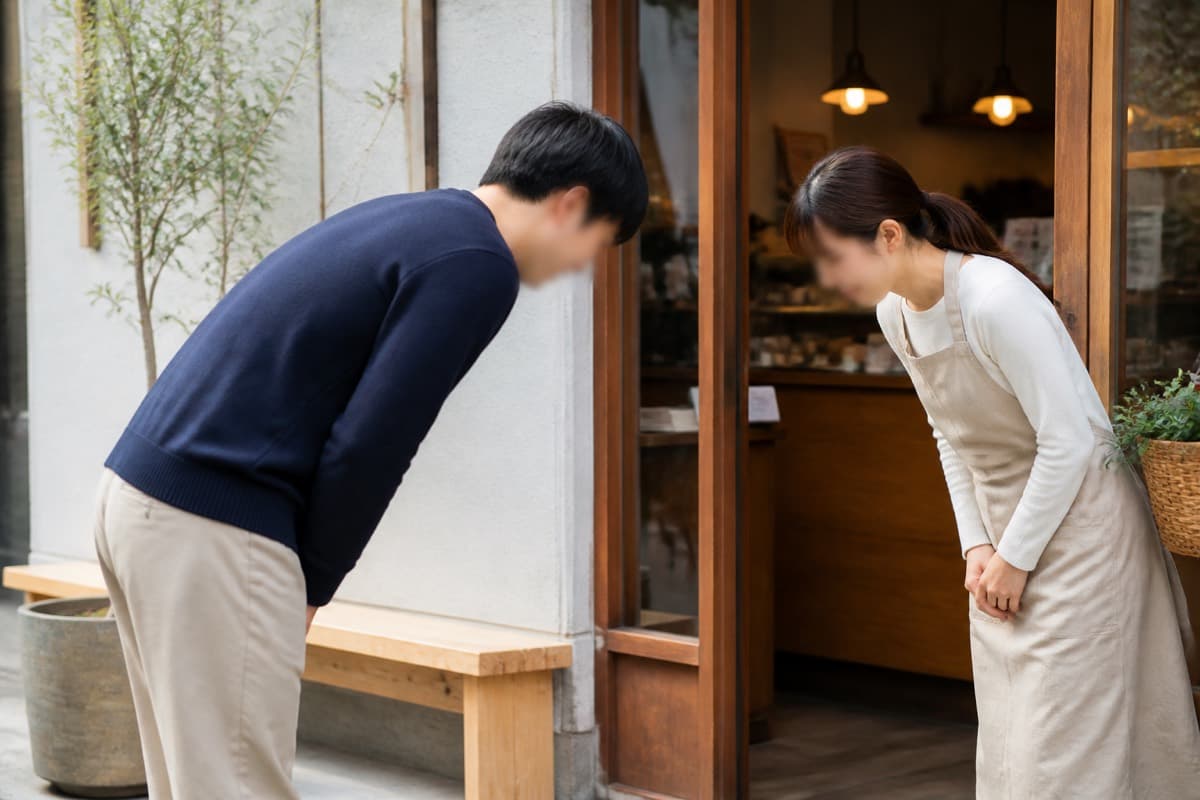
What to Say in Korean Before and After Eating

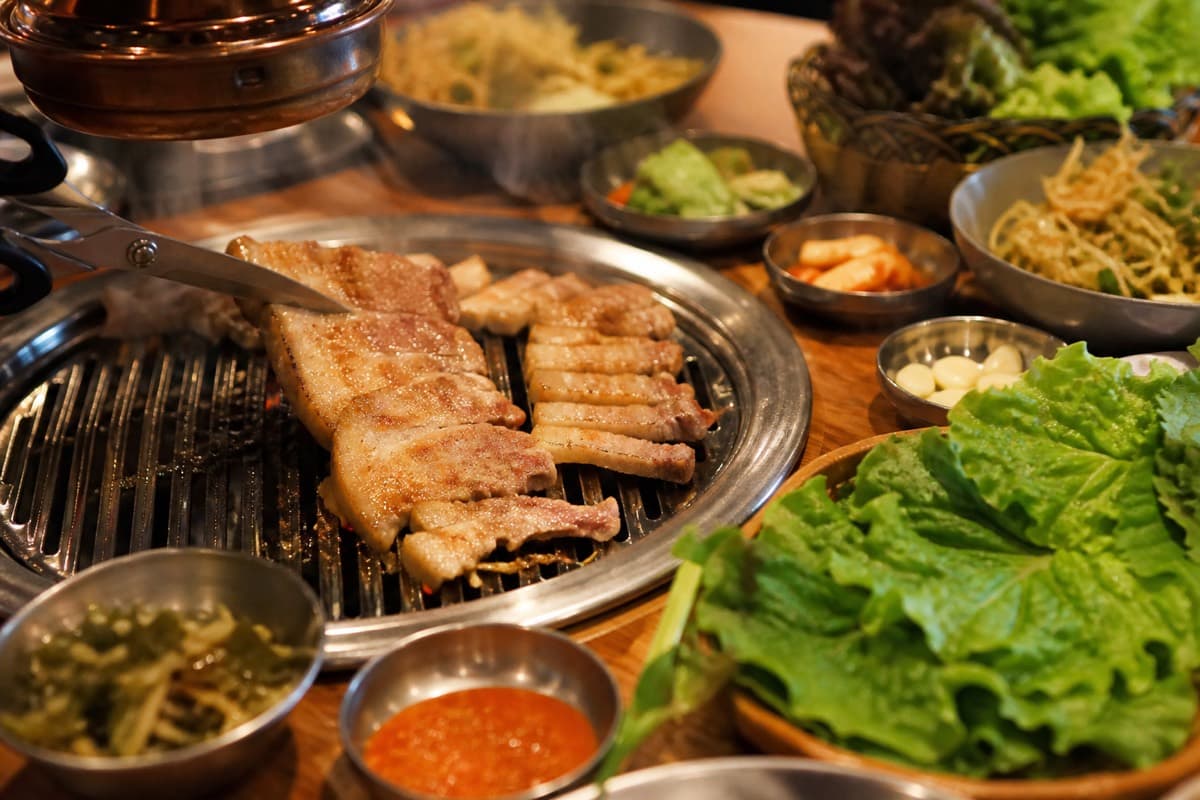
Before the first bite you say 잘 먹겠습니다 (jal meokgesseumnida) — literally "I will eat well." When the meal is over you say 잘 먹었습니다 (jal meogeosseumnida) — "I ate well." Same verb, same 잘, one flipped into the past. Those two lines are not decoration. They are the opening and closing brackets of a Korean meal, and a table full of Koreans will notice the silence if you skip them. The line on your way out of a restaurant is the second one again, often stretched slightly to 맛있게 먹었습니다 (masitge meogeosseumnida), "I ate deliciously," aimed at whoever is nearest the register.
- Before eating: 잘 먹겠습니다 (jal meokgesseumnida)
- After eating: 잘 먹었습니다 (jal meogeosseumnida)
- Casual, with friends: 잘 먹을게 / 잘 먹었어 (jal meogeulge / jal meogeosseo)
- Said to the eater: 맛있게 드세요 (masitge deuseyo), "Enjoy your meal."
- Walking out of a restaurant: 맛있게 먹었습니다 (masitge meogeosseumnida).
What 잘 먹겠습니다 is actually doing
The English subtitle usually reads "thank you for the food," and that is the function, but it is not the grammar. 잘 means "well," 먹다 is "to eat," and -겠- is the piece that announces an intention about to happen. So you are saying "I am going to eat well" — a small promise to the person who cooked it, ordered it, or is paying for it.
That last part is the rule that decides when you say it. 잘 먹겠습니다 points at a person. If someone is feeding you, they get the line. Eating alone with a bowl of ramyeon at midnight, most Koreans say nothing at all.
Pronunciation trips people at the end, not the start: 습니다 comes out as seum-ni-da, never seup-ni-da. Five flat beats — jal · meok · ge · sseum · ni · da — with no stress dropped on any one of them.
Practice this out loud with SULSUL — the app says it, you repeat it →
Who you say it to, and how casual you go
| Situation | What you say | Romanization |
|---|---|---|
| Your friend's parents cooked | 잘 먹겠습니다 | jal meokgesseumnida |
| Your boss is paying | 잘 먹겠습니다 | jal meokgesseumnida |
| A friend your age is treating | 잘 먹을게 | jal meogeulge |
| Slightly polite, casual company | 잘 먹을게요 | jal meogeulgeyo |
| You are the one feeding people | 맛있게 드세요 | masitge deuseyo |
맛있게 드세요 is the reply, and it is the one learners forget exists. Servers say it when the food lands. Hosts say it before they sit down. If you ever pay for a Korean friend's lunch, that is your line, and 많이 드세요 (mani deuseyo), "eat a lot," is the warmer version of it.
There is one more piece of table choreography worth knowing: at a formal table, the oldest person lifts their spoon first. You say 잘 먹겠습니다, then you wait half a second. At a company dinner in Korea that half-second matters more than your grammar does.
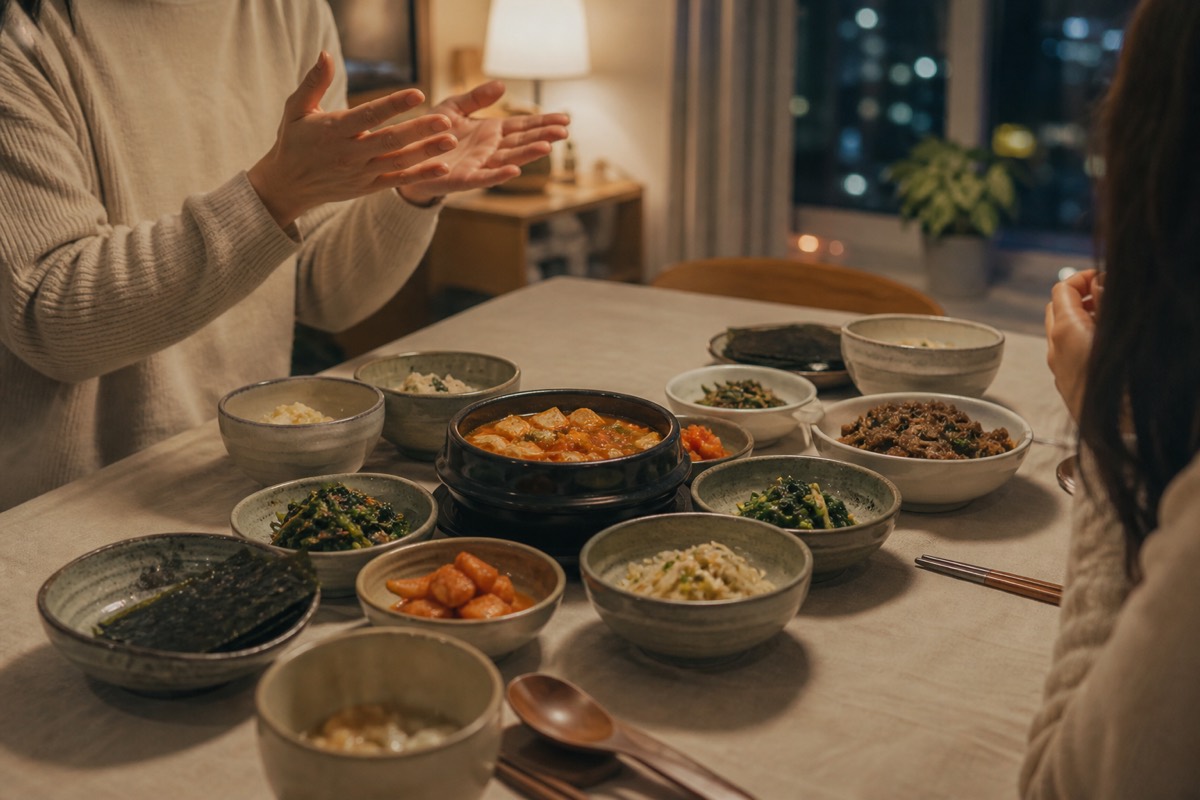
잘 먹었습니다 — the line that closes the meal
Say it while you are putting your spoon down, not later at the door. 잘 먹었습니다 is past tense, so it reports on the meal, and it carries the thank-you that English would deliver as a separate sentence. You can stack the real thank-you on top and nobody will find it excessive:
- 잘 먹었습니다. 정말 맛있었어요. — jal meogeosseumnida. jeongmal masisseosseoyo. — "I ate well. It was really delicious."
- 배불러요. 진짜 잘 먹었어요. — baebulleoyo. jinjja jal meogeosseoyo. — "I'm full. I really ate well."
- 어머니 음식 최고예요. — eomeoni eumsik choegoyeyo. — "Your mother's cooking is the best."
If the food came out of a friend's kitchen, that third line does more work than the first two. Korean hosts answer compliments by shrinking them — 아니에요, 뭘요 (anieyo, mwolyo), "No, it's nothing" — and the polite move is to compliment once more anyway. How to compliment a Korean friend's cooking walks through that back-and-forth.
What to say when you are leaving a restaurant
Nothing formal is required, but silence feels cold, and Koreans almost always say something on the way past the counter. Pick one:
| Korean | Romanization | When it fits |
|---|---|---|
| 잘 먹었습니다 | jal meogeosseumnida | Always safe, anywhere |
| 맛있게 먹었습니다 | masitge meogeosseumnida | Small restaurant, owner is right there |
| 감사합니다 | gamsahamnida | Chain restaurant, busy staff |
| 수고하세요 | sugohaseyo | "Keep up the good work" — casual, common |
| 안녕히 계세요 | annyeonghi gyeseyo | "Goodbye" to the person staying |
맛있게 먹었습니다 is the one that gets a real smile in a small family-run place, because it is a review, not a formality. And if you need to interrupt the meal for something — the staff reaching for a plate you are not finished with — the sentence is 아직 먹고 있어요 (ajik meokgo isseoyo), "I'm still eating." The rest of the mid-meal requests live in Korean phrases for ordering at a restaurant in Korea.
Reuse the pattern: 먹기 전에 and 먹고 나서
Once these two lines are in your mouth, the grammar underneath them opens up. (V)기 전에 means "before doing," and (V)고 나서 means "after doing" — the same before-and-after frame, now attached to any verb.
- 밥 먹기 전에 손 씻어요. — bap meokgi jeone son ssiseoyo. — "I wash my hands before eating."
- 밥 먹고 나서 커피 마실래요? — bap meokgo naseo keopi masillaeyo? — "Want coffee after we eat?"
- 자기 전에 약 먹어야 해요. — jagi jeone yak meogeoya haeyo. — "I have to take medicine before sleeping."
Notice that 밥 (bap) means "rice," but in these sentences it means "a meal." That slide is everywhere in Korean — 밥 먹었어요? ("Did you eat?") is a standard greeting, closer to "how are you" than to a real question about food.
Mistakes that show up at the table
Saying 잘 먹겠습니다 after the meal. The 겠 makes it a plan. Used at the end, it sounds like you are announcing a second dinner.
Saying it to nobody. Alone at a food court, the line lands strangely. It belongs to a person who fed you.
Translating "bon appétit" onto yourself. 맛있게 드세요 is said to the person eating. Saying it about your own plate is like wishing yourself a nice meal out loud.
Skipping the reply when you are the host. If a guest says 잘 먹겠습니다 and you say nothing, the bracket never closed. 네, 맛있게 드세요 takes one second.
Mixing registers at a formal table. 잘 먹을게 to your friend's father is too flat. When you are not sure which rung you are on, how to greet someone at different Korean politeness levels lays the ladder out in order.
Say it out loud, not just in your head
잘 먹겠습니다 is the kind of sentence that sits perfectly in your notes and then collapses at a real table, because it has to arrive on time — the moment before the first bite, not four seconds after everyone else has started.
SULSUL is a speaking gym for that gap: pick a pattern, say it out loud, get an instant fix from the AI pronunciation coach, then run the real conversation as a mission. The 100-pattern PDF workbook comes along as a bonus.