ATM in Korean: 에이티엠, 현금인출기, and the Words on a Korean ATM Screen

ATM in Korean is just 에이티엠 (e-i-ti-em), the English letters read the Korean way, and it's the word people actually say: 에이티엠 어디 있어요? (e-i-ti-em eo-di i-sseo-yo?), "Where's an ATM?" On signs, bank websites, and the machines themselves you'll also see the formal word 현금인출기 (hyeon-geum-in-chul-gi), literally "cash-withdrawal machine," and in bank lobbies the area is labeled 자동화 코너 (ja-dong-hwa ko-neo), the "automated corner." Once you're standing at the machine, four screen words do almost all the work: 출금 (withdraw), 조회 (check balance), 비밀번호 (PIN), and 수수료 (fee).
- 에이티엠 어디 있어요? (e-i-ti-em eo-di i-sseo-yo?) — "Where's an ATM?"
- 여기 에이티엠 있어요? (yeo-gi e-i-ti-em i-sseo-yo?) — "Is there an ATM here?"
- 외국 카드 돼요? (oe-guk ka-deu dwae-yo?) — "Do foreign cards work?"
- 돈 좀 뽑으려고요 (don jom ppo-beu-ryeo-go-yo) — "I'm trying to take out some cash."
- 카드가 안 나와요 (ka-deu-ga an na-wa-yo) — "My card won't come out."
Which word to say: 에이티엠, 현금인출기, or 자동화 코너
Three words point at the same machine, and each one lives in a different place.
에이티엠 is the spoken word. If you ask a convenience store clerk or a passerby, this is the one they'll understand fastest, and it's the one they'll use back. Say it as four even beats, e-i-ti-em, not the clipped English "ay-tee-em."
현금인출기 is the written word. You'll find it on signage, in map apps, and on the side of the machine. 현금 (hyeon-geum) means cash, and 인출 (in-chul) means withdrawal. It's worth recognizing, but you rarely need to say it. When it's read aloud, the sounds link up: hyeon-geu-min-chul-gi.
자동화 코너 is what banks call the glass-walled room with the machines, often marked 365 because it stays open after the bank closes. If you're looking for a bank ATM late in the day, that's the sign to scan for.
For searching in a map app, type ATM or 현금인출기. Both work, and the second one pulls up bank branches that don't use the English label.
Practice this out loud with SULSUL — the app says it, you repeat it →
Asking where one is, and whether your card works
Finding an ATM is Pattern 04 from the SULSUL workbook: noun + 어디 있어요? (eo-di i-sseo-yo?), "Where is ___?"
- 에이티엠 어디 있어요? — "Where's an ATM?"
- 은행 어디 있어요? (eun-haeng eo-di i-sseo-yo?) — "Where's a bank?"
Inside a shop or a station, switch to Pattern 03, noun + 있어요?, "Is there ___?":
- 여기 에이티엠 있어요? — "Is there an ATM here?"
The bigger question for travelers is whether the machine takes a card from abroad. Not every Korean ATM does. Look for a sticker that says Global ATM or 해외카드 (hae-oe-ka-deu, "overseas card"). If you can't see one, ask:
- 외국 카드 돼요? (oe-guk ka-deu dwae-yo?) — "Do foreign cards work?"
돼요? (dwae-yo?) is one of the most useful little words in Korean. It means "does it work / is it possible," and you can attach it to almost anything: 카드 돼요? (card OK?), 영어 돼요? (English OK?).
A real exchange at a convenience store
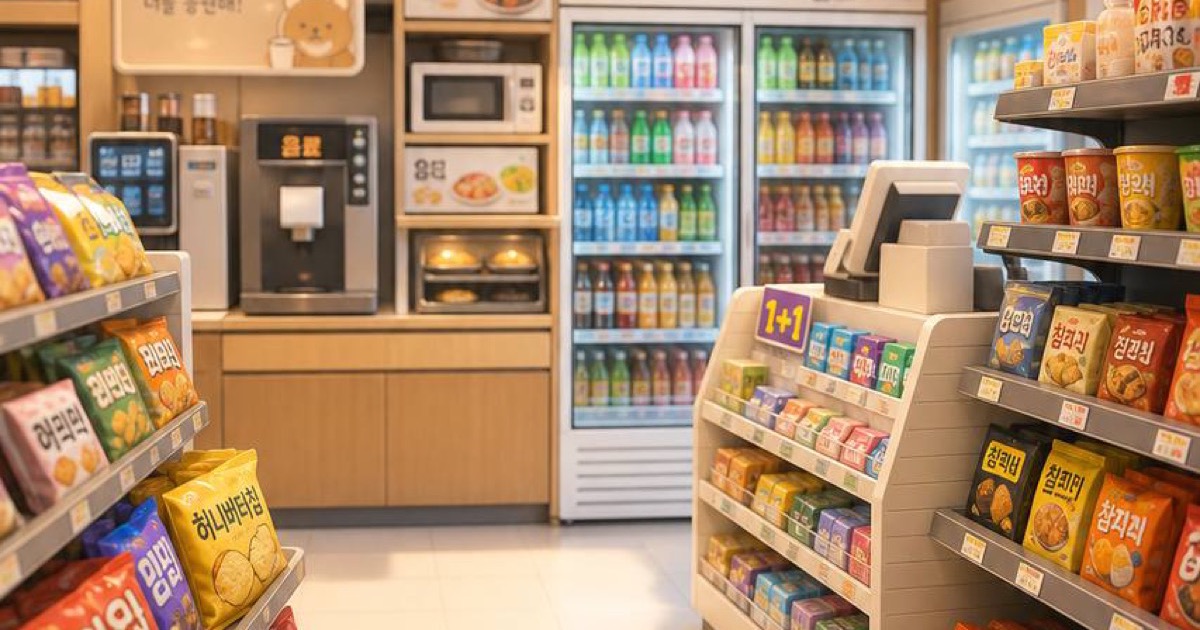
Many ATMs in Korea sit in the corner of a 편의점 (pyeo-nui-jeom), the convenience store. Here's how a quick check with the clerk usually goes.
You: 저기요, 여기 에이티엠 있어요? jeo-gi-yo, yeo-gi e-i-ti-em i-sseo-yo? "Excuse me, is there an ATM here?"
Clerk: 네, 저쪽 안에 있어요. ne, jeo-jjok a-ne i-sseo-yo. "Yes, it's in there, over that way."
You: 외국 카드 돼요? oe-guk ka-deu dwae-yo? "Do foreign cards work?"
Clerk: 음… 해외카드 버튼 있을 거예요. 한번 해 보세요. eum… hae-oe-ka-deu beo-teun i-sseul geo-ye-yo. han-beon hae bo-se-yo. "Hmm… there should be an overseas card button. Give it a try."
You: 네, 감사합니다! ne, gam-sa-ham-ni-da! "OK, thank you!"
Notice the clerk's answer, 한번 해 보세요 (han-beon hae bo-se-yo), "give it a try." You'll hear it a lot in Korea whenever the honest answer is "probably."
The words on a Korean ATM screen
Most machines have an English or 외국어 (oe-gu-geo, "foreign language") button on the first screen. Still, some don't, some switch back to Korean halfway, and some print the receipt only in Korean. These are the words to recognize:
| On the screen | Say it | Meaning |
|---|---|---|
| 출금 | chul-geum | Withdrawal |
| 입금 | ip-geum | Deposit |
| 조회 / 잔액 조회 | jo-hoe / ja-naek jo-hoe | Balance inquiry |
| 이체 / 송금 | i-che / song-geum | Transfer |
| 비밀번호 | bi-mil-beon-ho | PIN (literally "secret number") |
| 금액 | geu-maek | Amount |
| 수수료 | su-su-ryo | Fee |
| 확인 | hwa-gin | Confirm / OK |
| 취소 | chwi-so | Cancel |
| 정정 | jeong-jeong | Clear / correct an entry |
| 명세표 | myeong-se-pyo | Transaction slip (receipt) |
Near the end, the machine will often speak, too. 카드를 받으세요 (ka-deu-reul ba-deu-se-yo) means "Take your card," and 현금을 받으세요 (hyeon-geu-meul ba-deu-se-yo) means "Take your cash." Korean ATMs usually return the card first, so don't walk off when you hear the first beep.
How Koreans actually say "withdraw money"
The screen says 출금, but nobody says that in conversation. In everyday speech, people use one of two verbs:
- 돈 뽑다 (don ppop-da) — literally "pull out money." This is the casual, everyday one. 돈 좀 뽑으려고요 (don jom ppo-beu-ryeo-go-yo), "I'm trying to take out some cash."
- 돈 찾다 (don chat-da) — literally "find money," meaning to collect it from your account. 돈 찾으러 가요 (don cha-jeu-reo ga-yo), "I'm going to get some cash."
Both are natural with friends, clerks, or hotel staff. 인출하다 (in-chul-ha-da) is the formal, written version, the same 인출 you saw in 현금인출기.
When something goes wrong
ATM trouble is stressful because you're holding up a line and your card is inside a machine. Keep these short lines ready. Each one works on its own, with no extra grammar:
- 카드가 안 나와요 (ka-deu-ga an na-wa-yo) — "My card won't come out."
- 돈이 안 나왔어요 (do-ni an na-wa-sseo-yo) — "The money didn't come out."
- 비밀번호가 틀렸대요 (bi-mil-beon-ho-ga teul-lyeot-dae-yo) — "It says my PIN is wrong."
- 도와주세요 (do-wa-ju-se-yo) — "Please help me."
If the machine is inside a bank, show a staff member the screen and use one of these lines. If it's in a convenience store, the clerk usually can't open it, but there's almost always a phone number on the machine for the operator. Pointing at it and saying 여기 전화해 주실 수 있어요? (yeo-gi jeon-hwa-hae ju-sil su i-sseo-yo?), "Could you call this number for me?" gets help faster than trying to explain.
Mistakes to avoid
Mixing up 출금 and 입금. They look alike and differ by one syllable. 출 means "out," 입 means "in." If you want cash out, you want 출.
Pronouncing ATM the English way. Koreans will usually understand, but e-i-ti-em is clearer, especially in a noisy store.
Saying 현금인출기 in conversation. It's correct, but it sounds like reading a sign aloud. Stick with 에이티엠 when you talk.
Leaving before the slip prints. If you pressed 명세표 출력 (print slip), wait for it. And remember the order: card, then cash.
Practice it before you need cash
The hard part at an ATM isn't the vocabulary, it's the pressure of someone waiting behind you. Say 에이티엠 어디 있어요?, 외국 카드 돼요?, and 카드가 안 나와요 out loud a few times now. Watch the tense ㅃ in 뽑다: it's a tight, popped pp, not a soft b. Get that one sound right and 돈 좀 뽑으려고요 sounds natural on the first try.
SULSUL is a speaking gym built for moments like that: pick a pattern, say it out loud, get an instant fix from the AI pronunciation coach, then run the real situation as a mission. The 100-pattern PDF workbook comes along as a bonus.
Now say it out loud
SULSUL says the phrase, you repeat it, and it tells you what came out wrong — 100 survival patterns for cafes, taxis and small talk in Seoul.
Start speaking Korean →