Diesel in Korean: 경유 vs 휘발유, and How to Avoid the Wrong Fuel in a Rental Car

The Korean word for diesel is 경유 (gyeong-yu). The word on a Korean pump is usually 경유, not the loanword 디젤 (dijel), though people will understand both. Gasoline is 휘발유 (hwi-bal-lyu). To ask for diesel, say 경유 넣어 주세요 (gyeong-yu neo-eo juseyo), "Please put in diesel." If you're driving a rental, learn to recognize both words before your first fill-up, because they're the only thing standing between you and a very expensive mistake.
Fuel words in Korean, the short version
- Diesel: 경유 — gyeong-yu
- Gasoline: 휘발유 — hwi-bal-lyu
- Premium gasoline: 고급 휘발유 — go-geup hwi-bal-lyu
- Gas station: 주유소 — ju-yu-so
- "Diesel, please": 경유 넣어 주세요 — gyeong-yu neo-eo juseyo
- "Fill it up, please": 가득 넣어 주세요 — ga-deuk neo-eo juseyo
Reading the fuel words on the pump
Here are the words you'll see on the pump, the screen, and sometimes the fuel door of the car:
| Korean | Say it | Meaning | Where you'll see it |
|---|---|---|---|
| 경유 | gyeong-yu | Diesel | Pump, self-service screen |
| 디젤 | dijel | Diesel (loanword) | Car specs, rental paperwork, everyday talk |
| 휘발유 | hwi-bal-lyu | Gasoline | Pump, self-service screen |
| 가솔린 | gasollin | Gasoline (loanword) | Car specs, rental paperwork |
| 고급 휘발유 | go-geup hwi-bal-lyu | Premium gasoline | Some pumps only |
| 경유차 | gyeong-yu-cha | Diesel car | Talking about the car itself |
| 기름 | gi-reum | "Oil" — everyday word for fuel | 기름 넣어야 해요, "I need to get gas" |
Two things trip people up here. First, 휘발유 isn't pronounced the way it's spelled. The sounds merge into hwi-bal-lyu, so if you say it letter by letter, it may take the attendant a second to catch it.
Second, you may see 경유 on your flight itinerary too. That's a different word that happens to sound the same, meaning "via" or "stopping over": 도쿄 경유 is "via Tokyo." Context makes it obvious, so a 경유 on your plane ticket has nothing to do with fuel.

Practice this out loud with SULSUL — the app says it, you repeat it →
Ask what your rental car takes before you drive away
The easiest moment to get this right is at the rental counter, while someone who knows the car is standing next to you. Pattern 05 from the SULSUL workbook, (N)이에요/예요, turns the two fuel words into a simple either-or question:
You: 이 차 경유예요, 휘발유예요? Staff: 경유예요. 기름 가득 채워서 반납해 주세요. You: 네, 경유 맞죠? Staff: 네, 맞아요.
이 차 경유예요, 휘발유예요? (i cha gyeong-yu-yeyo, hwi-bal-lyu-yeyo?) means "Is this car diesel or gasoline?" 가득 채워서 반납해 주세요 (ga-deuk chae-wo-seo ban-nap-hae juseyo) is the line you're likely to hear next: "Please fill it up and return it." 맞죠? (matjyo?) is a friendly "right?", close to Pattern 18, 맞아요.
Take a photo of the fuel line on your rental paperwork and of the label by the fuel door, if there is one. Also ask whether the car runs on LPG, which some Korean cars do: LPG 차예요? (el-pi-ji cha-yeyo?). LPG comes from a different kind of station, a 충전소 (chung-jeon-so), not a regular 주유소.
What to say at a full-service pump
At a full-service station, you stay in the car while an attendant comes to your window. They'll usually ask how much you want, so have your answer ready. Pattern 23, (V)아/어 주세요, does nearly all the work:
Attendant: 어서 오세요. 얼마나 넣어 드릴까요? You: 경유 가득 넣어 주세요. Attendant: 네, 경유 가득이요. 주유구 열어 주세요. You: 네. 카드 돼요?
얼마나 넣어 드릴까요? (eolmana neo-eo deurilkkayo?) is "How much shall I put in?" and 주유구 열어 주세요 (ju-yu-gu yeo-reo juseyo) is "Please open the fuel door." You can answer the first question with an amount instead of a full tank:
- 경유 5만 원어치 넣어 주세요 (gyeong-yu o-man wo-neo-chi neo-eo juseyo) — "Please put in 50,000 won of diesel."
- 가득이요 (ga-deu-gi-yo) — "A full tank." Short and normal.
- 영수증 주세요 (yeong-su-jeung juseyo) — "Receipt, please." That's Pattern 01, and the receipt lets you double-check the fuel type.
The word order matters less than the fuel word, so say 경유 first and say it clearly. If reading won amounts out loud still slows you down, see how to count Korean money.
Reading a self-service screen in Korean
셀프 (selpeu) stations are increasingly common, and some screens offer English. If yours doesn't, the order varies but the words are the same:
| On the screen | Say it | What to do |
|---|---|---|
| 시작하기 | si-ja-ka-gi | Start |
| 경유 / 휘발유 | gyeong-yu / hwi-bal-lyu | Choose your fuel |
| 없음 | eop-seum | "None" — press this for the point card |
| 신용카드 | si-nyong-ka-deu | Pay by credit card |
| 가득주유 | ga-deuk-ju-yu | Fill the tank |
| 금액 / 리터 | geu-maek / ri-teo | Enter an amount of won or liters |
| 확인 | hwa-gin | Confirm |
Most foreign cards work, but some unmanned pumps may reject them, so keep some cash as a backup. Your card may also show a larger temporary hold until the final amount settles. If the machine refuses your card, walk inside and ask 여기서 결제해도 돼요? (yeogiseo gyeol-je-hae-do dwaeyo?), "Can I pay here?" — Pattern 44. For the rest of the pump-side lines, see Korean phrases at a gas station.
Why the nozzle color can't be your only check
Pump handles in Korea are usually yellow for gasoline and green, sometimes blue, for diesel, with red for premium. That's helpful, but color codes differ from country to country, and the color you learned back home may mean the opposite fuel. Read the word.
There's a second trap. Korean reports on wrong-fuel accidents, called 혼유 사고 (ho-nyu sa-go), say most of them happen to diesel cars. A gasoline nozzle is narrower than a diesel car's filler opening, so it slides right in. A diesel nozzle is harder to push into a gasoline car. So if you're driving a diesel, tell the attendant before they pick up the nozzle: 이 차 경유예요 (i cha gyeong-yu-yeyo), "This car takes diesel."
If the wrong fuel goes in
Don't start the engine. Running it pulls the wrong fuel through the system, which can turn a tank problem into an engine problem. Tell the staff right away, then call your rental company:
- 기름을 잘못 넣었어요. (gi-reu-meul jal-mon neo-eo-sseo-yo) — "I put in the wrong fuel."
- 시동 안 걸었어요. (si-dong an geo-reo-sseo-yo) — "I haven't started the engine."
- 렌터카 회사에 전화할게요. (ren-teo-ka hoe-sa-e jeon-hwa-hal-ge-yo) — "I'll call the rental company."
If someone in your car reaches for the ignition, Pattern 45 gives you the stop line: 시동 걸지 마세요! (si-dong geol-ji ma-se-yo), "Don't start the engine!" And if you catch it in time, Pattern 59 tells the story afterward: 휘발유 넣을 뻔했어요 (hwi-bal-lyu neo-eul ppeon-hae-sseo-yo), "I almost put in gasoline."
One more diesel word: 요소수 (yo-so-su) is the exhaust fluid many modern diesel cars need, sold as AdBlue or DEF elsewhere. If a warning light comes on, ask 요소수 있어요? at the counter — Pattern 03.
Mistakes people make with fuel words
Saying 기름 주세요 and stopping there. 기름 means fuel in general. It tells the attendant you want gas, but not which kind. Add 경유 or 휘발유.
Mixing up 주유소 and 충전소. 주유소 sells gasoline and diesel. 충전소 is for LPG, and you'll see the same word on electric car chargers.
Choosing by position on the pump. Layouts differ from station to station, so diesel may not be where it was at your last stop. Match the whole word every time.
Say it before you reach the pump
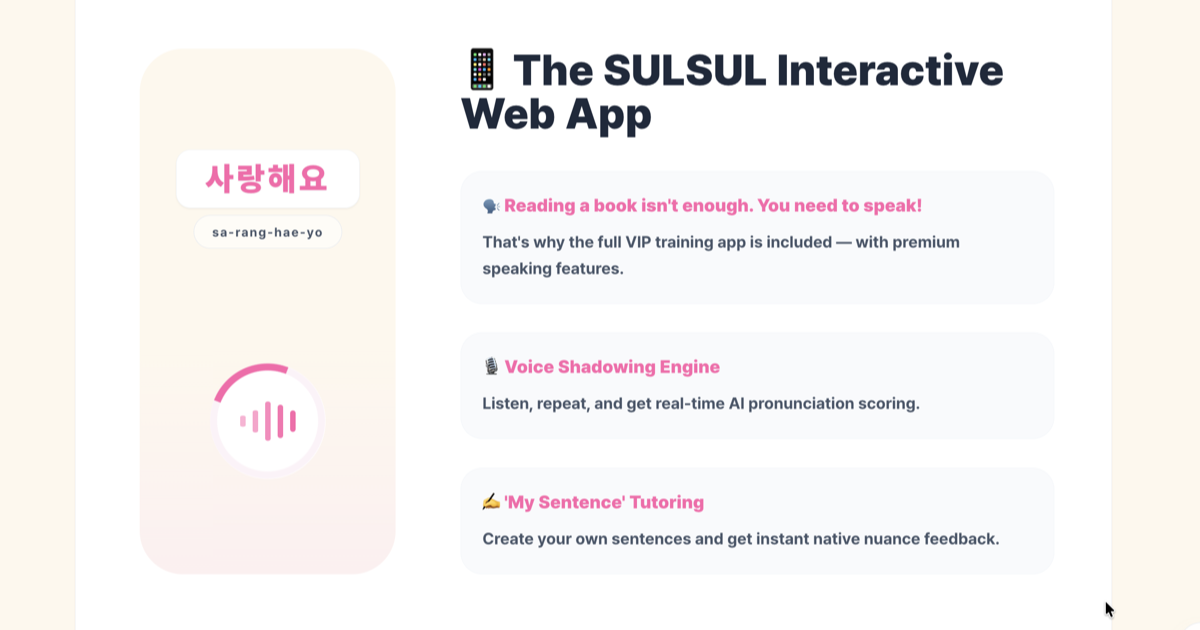
Recognizing 경유 on a page is the easy part. The hard part is saying it through a half-open car window, with a line of cars behind you and an attendant already asking how much. Gyeong needs that soft nasal ending, and hwi-bal-lyu needs its double L. A few rounds out loud in the rental car park is what makes them come out clearly.
SULSUL is a speaking gym built for moments like that: pick a pattern, say it out loud, get an instant fix from the AI pronunciation coach, then run the real situation as a mission. The 100-pattern PDF workbook comes along as a bonus.