Group Reservations in Korean: 단체 예약, 룸 있어요?, and Booking a Table for Ten
A group reservation in Korean is 단체 예약 (danche yeyak) — 단체 means "group" and 예약 means "reservation." The fastest way to ask is 단체 예약 돼요? (danche yeyak dwaeyo?), "Do you take group bookings?" Then give the headcount with native Korean numbers — 열 명이에요 (yeol myeong-ieyo), "We're ten people" — and, if you want your own space, ask 룸 있어요? (rum isseoyo?), "Do you have a private room?" Those three lines get a table for a big group at almost any Korean restaurant.
- 단체 예약 (danche yeyak) — group reservation
- 단체 예약 돼요? (danche yeyak dwaeyo?) — Do you take group bookings?
- 열 명이에요 (yeol myeong-ieyo) — We're ten people
- 룸 있어요? (rum isseoyo?) — Do you have a private room?
- 다 같이 앉을 수 있어요? (da gachi anjeul su isseoyo?) — Can we all sit together?
- 인원이 바뀌었어요 (inwoni bakkwieosseoyo) — Our headcount changed
- 따로 계산해도 돼요? (ttaro gyesanhaedo dwaeyo?) — Can we pay separately?
Booking for two is easy: most places just seat you. Booking for eight, twelve, or twenty is a different call. The restaurant has to push tables together, hold a room, sometimes ask for a deposit, and it will want to know exactly how many of you are coming. The rest of this post walks through that call in the order it actually happens.
Why big groups need their own word
Korean restaurants treat a party of two and a party of twelve as two different kinds of booking. For small tables, staff say 예약 (yeyak). For large ones, you will see and hear 단체 — on signs like 단체 환영 (danche hwanyeong, "groups welcome") and 단체석 (danche-seok, "group seating"), and on booking pages that split into 일반 예약 (regular) and 단체 예약 (group).
Saying 단체 up front saves time. The person on the phone immediately checks whether there is a room or a long table free, instead of looking for a spot for two and then having to start over.
Group bookings are common because of 회식 (hoesik), the company dinner, and end-of-year gatherings called 송년회 (songnyeonhoe). In November and December, popular barbecue and hot-pot places fill their rooms weeks ahead. If your group is traveling in that season, book early.
Practice this out loud with SULSUL — the app says it, you repeat it →
Opening the call
The cleanest opening uses Pattern 02 from the SULSUL textbook, (V)고 싶어요 — "I want to":
You: 안녕하세요, 단체 예약하고 싶어요. — annyeonghaseyo, danche yeyakago sipeoyo. — "Hello, I'd like to make a group reservation." Staff: 네, 언제 오세요? — ne, eonje oseyo? — "Sure, when are you coming?" You: 토요일 저녁 7시에요. — toyoil jeonyeok ilgop sieyo. — "Saturday evening at seven." Staff: 몇 분이세요? — myeot buniseyo? — "How many people?"
That last question is where most groups stumble, so it gets its own section.
Saying the headcount: native numbers past ten
People are counted with native Korean numbers plus 명 (myeong). Small groups are easy — 두 명, 세 명, 네 명 — but group bookings live in the double digits, which is exactly where learners switch to the wrong system by accident. Say 열 명, not 십 명.
| Headcount | Korean | Say it |
|---|---|---|
| 8 people | 여덟 명 | yeodeol myeong |
| 10 people | 열 명 | yeol myeong |
| 12 people | 열두 명 | yeoldu myeong |
| 15 people | 열다섯 명 | yeoldaseot myeong |
| 20 people | 스무 명 | seumu myeong |
| about 10 | 열 명 정도 | yeol myeong jeongdo |
Two small notes. 스물 (twenty) drops its ㄹ before a counter, so it becomes 스무 명. And if you are not sure of the final number yet, add 정도 (jeongdo, "about") — 열 명 정도요 is honest and perfectly normal. Staff will usually reply 확정되면 알려 주세요 (hwakjeongdoemyeon allyeo juseyo), "Let us know once it's confirmed."
Asking for the right seats
Once the number is clear, the next question is where the group sits. This is Pattern 12, (V)ㄹ/을 수 있어요? — "Is it possible to...?" — and Pattern 03, (N) 있어요?:
- 다 같이 앉을 수 있어요? — Can we all sit together?
- 룸 있어요? / 방 있어요? — Do you have a private room?
- 테이블 붙여 주실 수 있어요? — Could you put tables together for us?
- 입식이에요, 좌식이에요? — Is it table seating or floor seating?
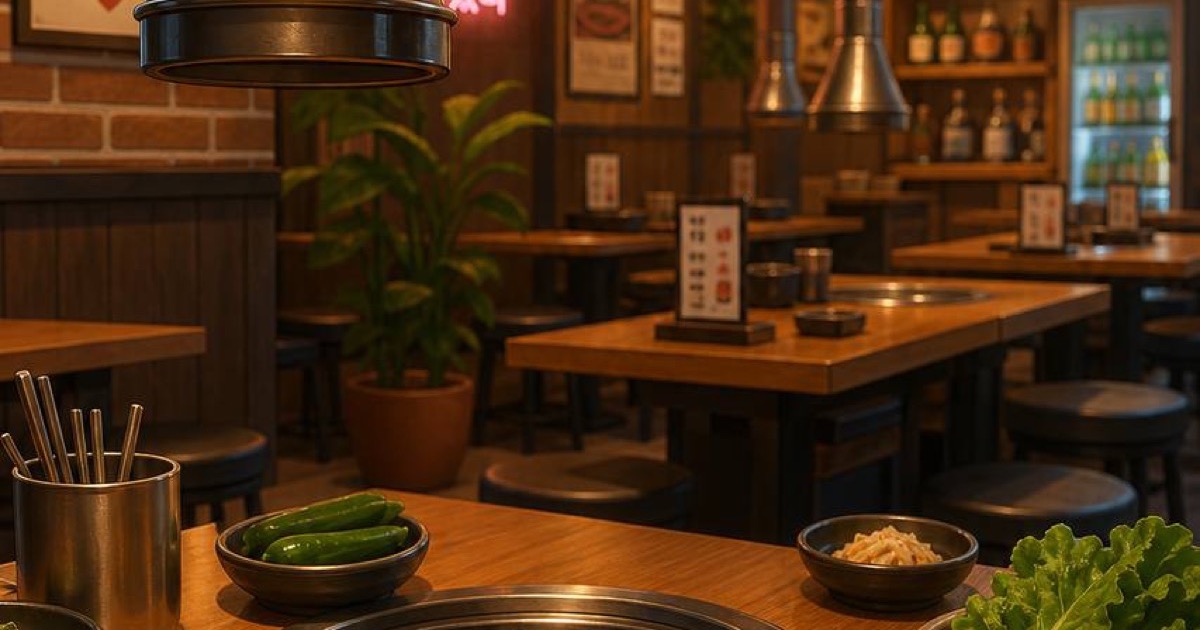
That last one matters more than visitors expect. Many barbecue places and traditional restaurants have 좌식 (jwasik) rooms where everyone sits on cushions on the floor, while 입식 (ipsik) means regular chairs. For a long dinner with older relatives or anyone with bad knees, 입식으로 부탁드려요 (ipsigeuro butakdeuryeoyo), "Chairs, please," is a line worth knowing.
What the restaurant will ask you
Group bookings come with a few extra questions. You do not need to say much back, but you do need to recognize them:
- 성함이랑 연락처 부탁드려요. — Your name and phone number, please.
- 메뉴 미리 정하시겠어요? — Would you like to choose the menu in advance?
- 예약금이 있어요. — There is a deposit.
- 코스로 하시겠어요? — Would you like a set course?
Short answers work fine: 네, 미리 정할게요 ("Yes, we'll decide in advance"), 당일에 시킬게요 (dang-ire sikilgeyo, "We'll order on the day"), or 예약금은 어떻게 보내요? ("How do I send the deposit?"). Many restaurants also take group bookings through Naver Booking, where the same fields — 인원 (headcount), 날짜 (date), 요청사항 (special requests) — appear as a form.
When the plan changes
Big groups almost never arrive exactly as booked. Call ahead; Korean restaurants appreciate it, and a no-show on a group table hurts a small business badly.
- 인원이 바뀌었어요. — Our headcount changed.
- 두 명 늘었어요. / 두 명 줄었어요. — Two more people. / Two fewer people.
- 조금 늦을 것 같아요. — I think we'll be a little late. (Pattern 52, (V)ㄹ/을 것 같아요)
- 예약 취소하고 싶어요. — I'd like to cancel the reservation.
The SULSUL textbook's Pattern 55 has the line every group organizer ends up saying to their friends: 미리 예약해야 할 텐데요 — "We really should book ahead, I'm worried." It is the sound of someone who has stood outside a full restaurant with twelve hungry people.
A full group booking call
You: 안녕하세요, 단체 예약 돼요? Annyeonghaseyo, danche yeyak dwaeyo? — Hello, do you take group bookings?
Staff: 네, 몇 분이세요? Ne, myeot buniseyo? — Yes, how many people?
You: 열두 명이에요. 금요일 7시에 가능해요? Yeoldu myeong-ieyo. Geumyoil ilgop sie ganeunghaeyo? — Twelve people. Is Friday at seven possible?
Staff: 네, 가능해요. 룸으로 해 드릴까요? Ne, ganeunghaeyo. Rumeuro hae deurilkkayo? — Yes. Shall we put you in a room?
You: 네, 좋아요. 입식이에요? Ne, joayo. Ipsigieyo? — Yes, great. Is it chair seating?
Staff: 네, 입식이에요. 성함이랑 연락처 부탁드려요. Ne, ipsigieyo. Seonghamirang yeollakcheo butakdeuryeoyo. — Yes, it is. Your name and number, please.
You: 김민지요. 010-1234-5678이에요. Gim Minjiyo. Gong-il-gong, il-i-sam-sa, o-yuk-chil-pal-ieyo. — Minji Kim. 010-1234-5678.
Notice the phone number switches back to Sino-Korean digits (공, 일, 이, 삼). People get native numbers; phone numbers, dates, and times in minutes get Sino numbers.
Mix-ups that confuse staff
Saying 십 명 instead of 열 명. Staff will understand, but it sounds like reading a math problem. Count people with native numbers.
Asking for a 룸 at a place without one. 룸 is a separate enclosed room. If the answer is 룸은 없어요 ("No rooms"), ask for the next best thing: 안쪽 자리 있어요? (anjjok jari isseoyo?), "Do you have seats toward the back?"
Forgetting about splitting the bill. In Korea one person often pays and everyone settles up later. If your group wants to pay separately, ask at the start, not at the counter: 따로 계산해도 돼요? — Pattern 44, (V)아/어도 돼요?, "Is it okay if...?" Some busy places say no for large tables, and it is much easier to know before you order.
Not saying 단체 at all. "열 명 예약하고 싶어요" works, but leading with 단체 tells staff in one word what kind of table to look for.
Practice the lines out loud
- 단체 예약하고 싶어요. — opening the call.
- 열두 명이에요. — giving the headcount.
- 다 같이 앉을 수 있어요? — asking for seats together.
- 인원이 바뀌었어요. — calling back with changes.
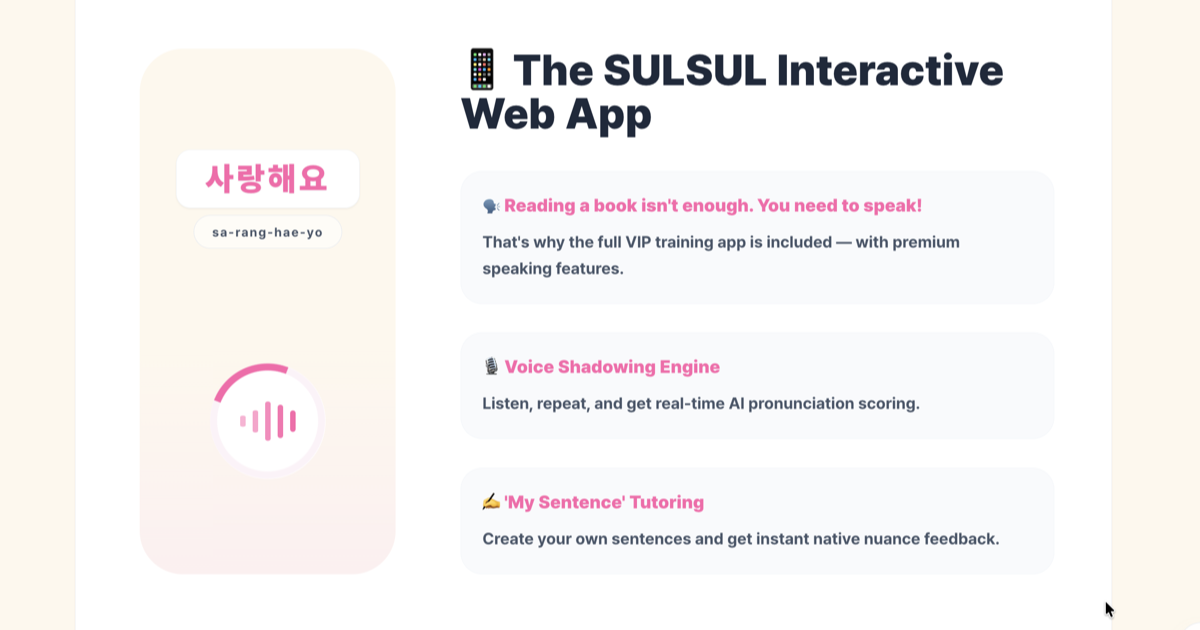
Say each one aloud three times, then swap the number: 여덟 명, 열다섯 명, 스무 명. Once the native numbers come out without a pause, the hardest part of a group booking is already done.
SULSUL is a speaking gym for moments like this: pick a pattern, say it out loud, get an instant fix from the AI pronunciation coach, then run the real situation as a mission. The 100-pattern PDF workbook comes along as a bonus.