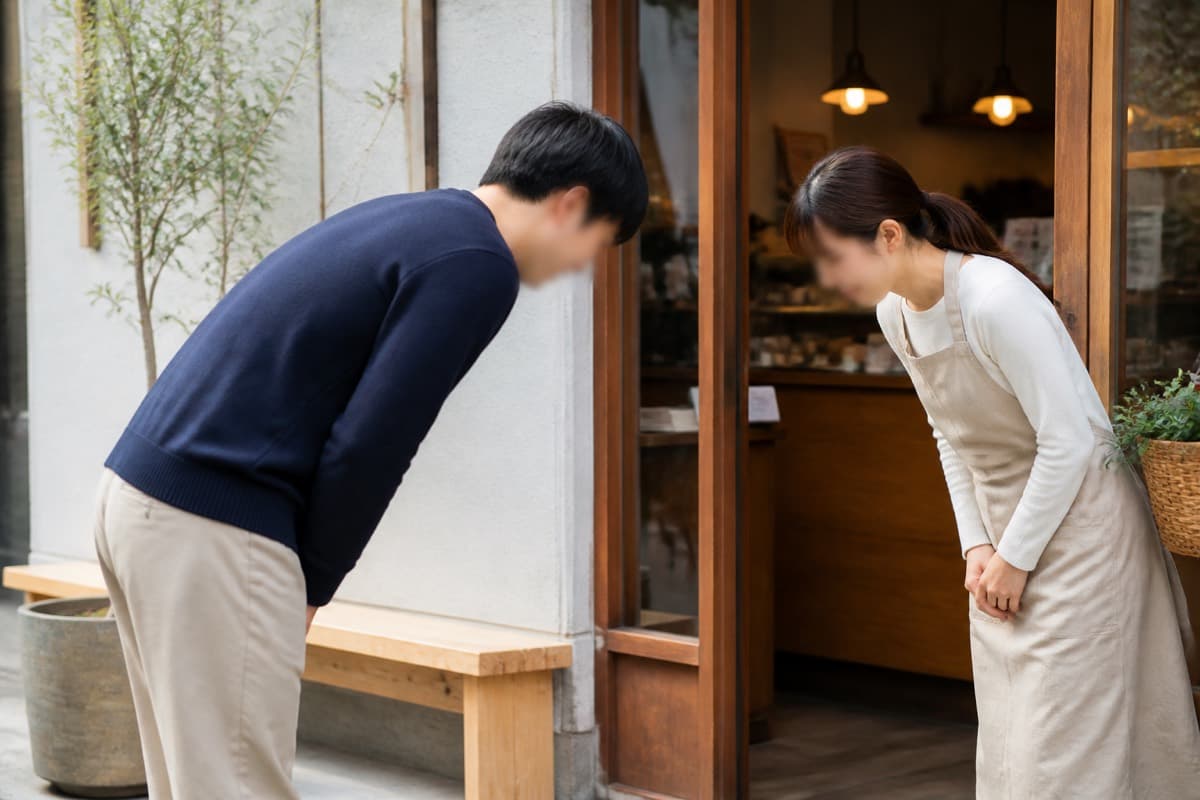
How to Be Polite in Korean: 요, 저, and the Little 시 That Does the Work
Being polite in Korean comes down to three small habits. End your sentences with 요 (yo). Call yourself 저 (jeo) instead of 나 (na). And when you want something, ask with 주세요 (juseyo) — or the softer 주시겠어요? (jusigesseoyo?), "Could you please…?" Do those three things and you will sound respectful to a shop owner, a taxi driver, a friend's mother, or a stranger on the subway. Everything else in Korean politeness is fine-tuning on top of that base.
- Add 요 to the end: 고마워 → 고마워요 (gomawoyo), "Thank you."
- Say 저 for "I": 저는 학생이에요 (jeoneun haksaengieyo), "I'm a student."
- Request with (V)아/어 주세요: 천천히 말해 주세요 (cheoncheonhi malhae juseyo), "Please speak slowly."
- Soften with 주시겠어요?: 사진 좀 찍어 주시겠어요? (sajin jom jjigeo jusigesseoyo?), "Could you take a photo for me?"
- Add -시- when the other person is the subject: 어디 가세요? (eodi gaseyo?), "Where are you going?"
Why 요 is the first thing to learn
Korean marks politeness in the verb ending, not in extra words like "please" or "sir." The same sentence can be casual or polite depending on how it ends, which means a single syllable carries the whole tone.
| Casual | Polite (요) | Meaning |
|---|---|---|
| 괜찮아 | 괜찮아요 (gwaenchanayo) | It's okay |
| 몰라 | 몰라요 (mollayo) | I don't know |
| 맛있어 | 맛있어요 (masisseoyo) | It's delicious |
| 어디야? | 어디예요? (eodiyeyo?) | Where is it? |
| 이거 뭐야? | 이거 뭐예요? (igeo mwoyeyo?) | What is this? |
This 요 style, called 해요체 (haeyoche), is the default polite register of everyday Korea. It is warm without being stiff. Koreans use it with coworkers, older strangers, staff in shops, and new acquaintances their own age. If you only ever learn one register, learn this one — nobody will be offended by it.
The more formal -습니다 (-seumnida) style, as in 감사합니다, shows up in announcements, presentations, and fixed set phrases. You will use a handful of those set phrases constantly, but you do not need to build whole conversations in it. How the levels map onto greetings specifically is laid out in how to greet someone in different Korean politeness levels.
Practice this out loud with SULSUL — the app says it, you repeat it →
저 instead of 나: lowering yourself a step
Korean politeness works in two directions at once: you raise the other person, and you lower yourself. The second half is the easier one for beginners, because it is just a vocabulary swap.
- 나 → 저 — "I"
- 내 → 제 — "my"
- 우리 → 저희 (jeohui) — "we / our," when talking to someone outside your group
So 제 이름은 마야예요 (je ireumeun mayayeyo), "My name is Maya," and 저희 가족이에요 (jeohui gajogieyo), "This is my family." Keep 저희 for groups you belong to, like your family, your travel group, or your company. When in doubt, 저 and 제 are always safe.

Turning a demand into a request: 주세요 and 주시겠어요?
This is where politeness gets practical. In English, "Give me water" sounds rude and "Could I have some water?" sounds fine. Korean handles that difference with (V)아/어 주세요 — "please do it for me" — and its softer cousin 주시겠어요?.
The structure is the verb stem plus 아/어 주세요:
- 말하다 → 말해 주세요 — "Please say it."
- 기다리다 → 기다려 주세요 (gidaryeo juseyo) — "Please wait."
- 추천하다 → 추천해 주세요 (chucheonhae juseyo) — "Please recommend something."
- 포장하다 → 포장해 주세요 (pojanghae juseyo) — "Please pack it to go."
Swap 주세요 for 주시겠어요? and the sentence becomes a question, closer to "Would you mind…?" It is the version to use with someone older, someone busy, or someone you are interrupting:
- 한 번 더 말해 주시겠어요? — han beon deo malhae jusigesseoyo? — "Could you say that one more time?"
- 창문 좀 닫아 주시겠어요? — changmun jom dada jusigesseoyo? — "Could you close the window, please?"
Notice the little 좀 (jom) in that last line. It literally means "a little," but in requests it works like a softener — the closest thing Korean has to a verbal "please." For the noun-only version, 물 주세요 ("Water, please"), see how to say please give me in Korean.
A real exchange, start to finish
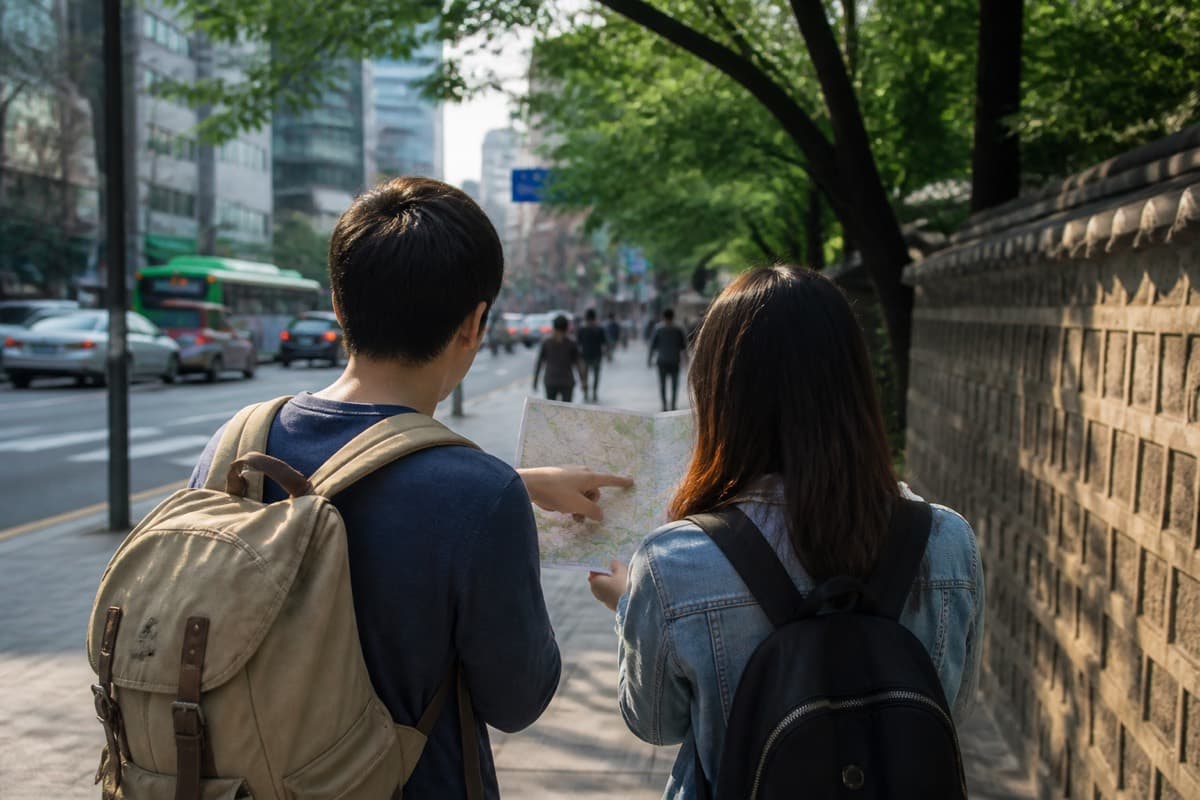
Here is what polite Korean sounds like when you stop a stranger for help near a subway exit.
You: 저기요, 죄송한데요. 혹시 명동역이 어디예요? — jeogiyo, joesonghandeyo. hoksi myeongdongyeogi eodiyeyo? — "Excuse me, sorry. By any chance, where is Myeongdong Station?" Them: 아, 저쪽으로 쭉 가세요. — a, jeojjogeuro jjuk gaseyo. — "Ah, go straight that way." You: 죄송하지만 천천히 말해 주시겠어요? — joesonghajiman cheoncheonhi malhae jusigesseoyo? — "Sorry, but could you say it slowly?" Them: 저쪽으로… 쭉… 가세요. — "That way… straight… go." You: 아, 네! 정말 감사합니다. — a, ne! jeongmal gamsahamnida. — "Oh, yes! Thank you so much."
Three politeness tools are stacked in that first line: 저기요 to get attention, 죄송한데요 as a cushion, and 혹시 (hoksi), "by any chance," which makes the question feel optional. None of them is grammatically necessary. All of them make the person more willing to stop. More on that opening move is in how to politely ask for help in Korean, and if the answer still flies past you, what to say when someone speaks too fast has the backup lines.
The honorific -시-: raising the other person
You will hear -시- constantly before you ever use it on purpose. It slips into a verb when the subject is someone you respect:
- 가요 → 가세요 — "(you) go"
- 있어요 → 있으세요? (isseuseyo?) — "Do (you) have…?"
- 바빠요 → 바쁘세요? (bappeuseyo?) — "Are (you) busy?"
A few common verbs change completely instead: 먹다 becomes 드시다 (deusida), 있다 (to be somewhere) becomes 계시다 (gyesida), and 자다 becomes 주무시다 (jumusida). That is why staff say 맛있게 드세요 when food arrives, and why the goodbye to someone staying behind is 안녕히 계세요.
The rule that trips learners: never put -시- on yourself. 제가 가세요 sounds like you are bowing to your own feet. You go — 제가 갈게요. They go — 가세요.
Polite mistakes beginners make
Dropping 요 after a few minutes. Learners often start polite and slide into casual once the conversation feels friendly. Koreans switch to casual speech only after someone explicitly offers it — usually with 말 편하게 하세요 (mal pyeonhage haseyo), "Speak comfortably."
Using 너 for "you." 너 (neo) is strictly casual. In polite speech Koreans avoid "you" altogether and use a name plus 씨 (ssi), a title like 선생님, or simply leave the subject out. Korean family titles shows how people address each other instead.
Saying 주세요 with nothing before it. 주세요 alone means "give me." Point at nothing and say it, and the listener has to guess. Always put the item or the verb first.
Over-formal everywhere. Speaking only in -습니다 at a café sounds like a news anchor ordering a latte. 요 is the friendly middle — save -습니다 for 감사합니다, 죄송합니다, and formal settings.
Forgetting the cushion words. 죄송한데요, 혹시, and 좀 cost nothing and change how a request lands. A blunt but grammatical sentence can still feel cold.

Practice it until it comes out automatically
Politeness in Korean is not something you can look up mid-sentence. The 요 has to arrive on its own, and 주시겠어요? has to roll out in one breath while a stranger is already turning to walk away.
SULSUL is a speaking gym for exactly that: pick a pattern like (V)아/어 주세요, say it out loud, get an instant fix from the AI pronunciation coach, then run the real situation as a mission. The 100-pattern PDF workbook comes along as a bonus.