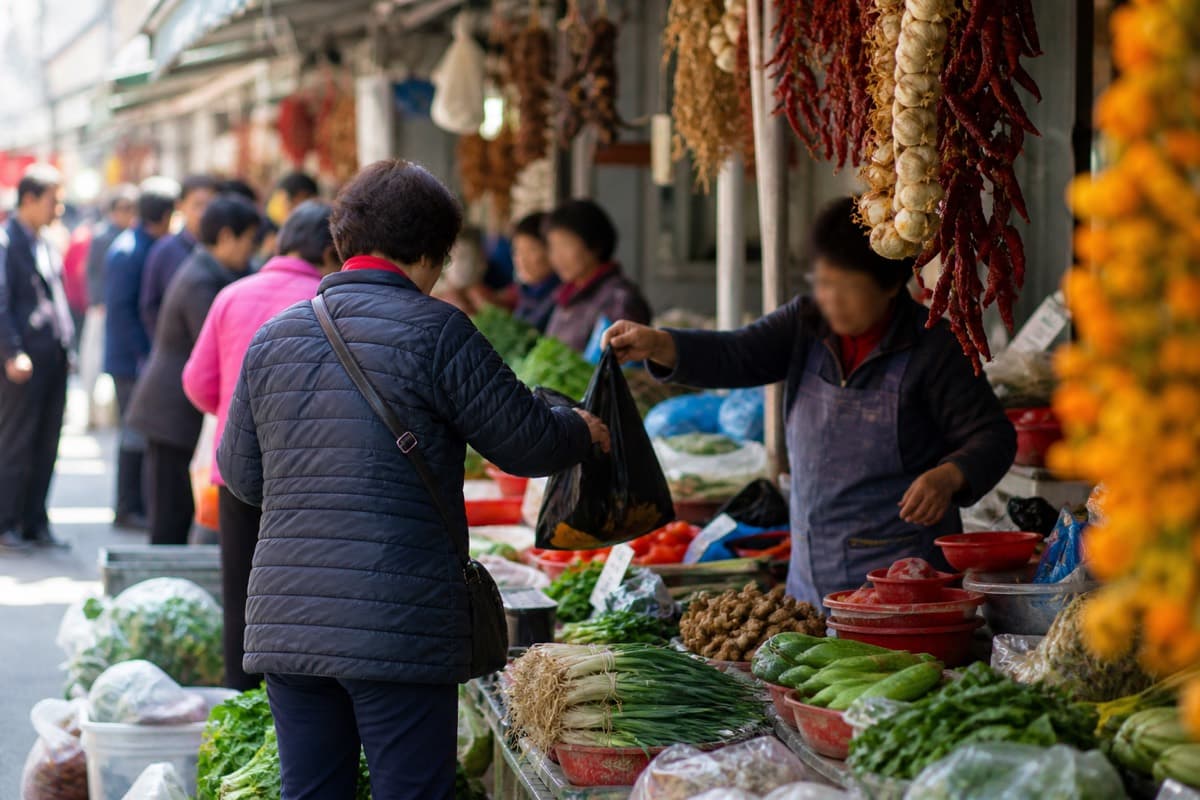
How to Count Korean Money: 천 원, 만 원, and Reading Won Prices Out Loud


To count Korean money, you use Sino-Korean numbers (일, 이, 삼) plus one unit English does not have: 만 (man), ten thousand. Koreans group big numbers by four zeros, not three. So 10,000 won is 만 원 (man won), 50,000 won is 오만 원 (oman won), and 12,500 won is 만 이천오백 원 (man icheonobaek won). Once you stop thinking "twelve thousand" and start thinking "one 만 and two 천," every price tag in Korea becomes readable.
- 1,000 won: 천 원 (cheon won). No 일 in front.
- 10,000 won: 만 원 (man won). Also no 일.
- 50,000 won: 오만 원 (oman won), the biggest bill.
- 100,000 won: 십만 원 (simman won), "ten 만."
- Asking the total: 다 해서 얼마예요? (da haeseo eolmayeyo?), "How much altogether?"
Why 만 changes everything
English stacks money in thousands: thousand, million, billion. Korean stacks it in ten-thousands: 만 (10,000), then 억 (eok, 100,000,000). Everything in between is built by putting a number in front of 만.
| Amount | Korean | Romanization | Think of it as |
|---|---|---|---|
| 1,000 | 천 원 | cheon won | one 천 |
| 5,000 | 오천 원 | ocheon won | five 천 |
| 10,000 | 만 원 | man won | one 만 |
| 20,000 | 이만 원 | iman won | two 만 |
| 100,000 | 십만 원 | simman won | ten 만 |
| 1,000,000 | 백만 원 | baengman won | a hundred 만 |
| 10,000,000 | 천만 원 | cheonman won | a thousand 만 |
The trap is 100,000. An English brain wants "a hundred thousand," and there is no such word in Korean. It is 십만, ten 만. A million is 백만, a hundred 만. That one shift is the entire Korean money counting system; the rest is ordinary Sino-Korean numbers.
Two small rules keep it clean. First, 천 and 만 never take 일 in front: 1,000 is 천, not 일천, and 10,000 is 만, not 일만. Second, the digits themselves are the same ones you use for phone numbers and minutes. If those are still shaky, Korean numbers for paying and counting in Korea lays out which system goes where.
Practice this out loud with SULSUL — the app says it, you repeat it →
Reading a price tag in four seconds
Here is the trick: take any price and put an imaginary comma four digits from the right. Whatever sits left of that comma gets 만. Whatever sits right of it you read with 천, 백, and 십.
- 12,500 → 1 | 2500 → 만 이천오백 원 (man icheonobaek won)
- 35,000 → 3 | 5000 → 삼만 오천 원 (samman ocheon won)
- 48,900 → 4 | 8900 → 사만 팔천구백 원 (saman palcheongubaek won)
- 150,000 → 15 | 0000 → 십오만 원 (sibomman won)
- 2,300,000 → 230 | 0000 → 이백삼십만 원 (ibaeksamsimman won)
Practice that split on every menu board for a day and it stops being math. A coffee at 4,500 is 사천오백 원 (sacheonobaek won). A taxi at 13,200 is 만 삼천이백 원 (man samcheonibaek won). A hotel night at 120,000 is 십이만 원 (sibimman won).
When you hear prices instead of reading them, listen for the 만 first. In 삼만 오천 원, 삼만 is the part that tells you whether you can afford it; 오천 is the detail.
How it sounds: the 원 that glues itself on
Written, 만 원 is two words. Spoken, it is one: ma-nwon. The final consonant of the number slides into 원, and that sliding is the reason learners hear a price and miss it.
| Written | What you hear |
|---|---|
| 천 원 | cheo-nwon |
| 만 원 | ma-nwon |
| 오백 원 | o-bae-gwon |
| 십만 원 | sim-ma-nwon |
| 육천 원 | yuk-cheo-nwon |
십만 is the one that throws people: the ㅂ in 십 softens into an m before 만, so it comes out simman, not sip-man. 백만 does the same thing and becomes baengman. You do not have to produce this perfectly, but knowing it exists means you will recognize the number when a shop owner says it fast.
Bills, coins, and the word 짜리
Korean money comes in four bills and four everyday coins. People name them by value plus 짜리 (jjari), "the one worth."
- 천 원짜리 (cheon won jjari) — the 1,000 bill
- 오천 원짜리 (ocheon won jjari) — the 5,000 bill
- 만 원짜리 (man won jjari) — the 10,000 bill
- 오만 원짜리 (oman won jjari) — the 50,000 bill
- 백 원짜리 / 오백 원짜리 (baek won jjari / obaek won jjari) — the coins you will actually use
Two more words decide most cash moments. 잔돈 (jandon) is small change, the coins and low bills in your pocket. 거스름돈 (geoseureumdon) is the change handed back to you. A cashier who asks 잔돈 있으세요? (jandon isseuseyo?) wants you to hand over something smaller so they do not have to break a big bill.
The lines you say at the register
Most of this rides on one textbook pattern, (N) 있어요? / 없어요?: "Do you have N?" / "I don't have N." Attach it to money words and the register conversation writes itself.
You: 다 해서 얼마예요? — da haeseo eolmayeyo? — "How much altogether?" Cashier: 만 이천 원이에요. — man icheon wonieyo. — "It's 12,000 won." You: 현금으로 할게요. 잔돈 없어요. — hyeongeumeuro halgeyo. jandon eopseoyo. — "I'll pay cash. I don't have small change." Cashier: 네, 거스름돈 팔천 원이요. — ne, geoseureumdon palcheon woniyo. — "Okay, your change is 8,000 won."
And one line from the 밖에 pattern, which means "nothing but" and always pairs with a negative:
- 오만 원짜리밖에 없어요. — oman won jjaribakke eopseoyo. — "I only have a 50,000 bill."
- 지금 천 원밖에 없어요. — jigeum cheon wonbakke eopseoyo. — "I only have 1,000 won right now."
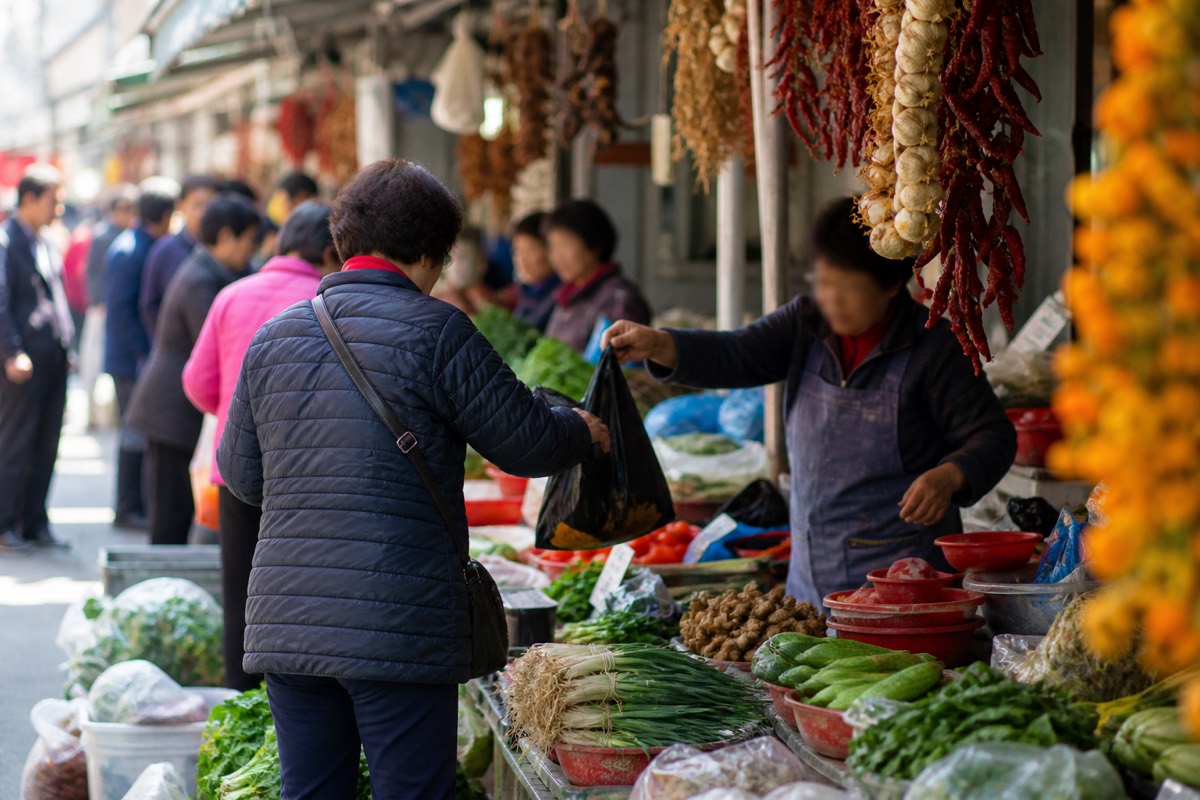
That first one is worth memorizing before your first trip. Small shops and market stalls get fifty-thousand notes all day from tourists fresh off the ATM, and warning them first earns patience. When the total feels high, how to bargain in Korean markets is the next step; when you need cash in the first place, see Korean phrases at an ATM in Korea.
Mistakes that cost you a beat at checkout
Saying 일만 or 일천. It is understood, but it sounds like reading a cheque aloud. Just 만, just 천.
Translating "a hundred thousand" word for word. 백천 is not a number. 100,000 is 십만.
Using native numbers for money. 두 개 for two items is right; 두 천 원 for 2,000 won is not. Money is always 이천 원.
Hearing only the last half. In 만 오천 원, a tired ear catches ocheon and thinks 5,000. Train yourself to catch the 만 first.
Dropping 원 when you count notes back. Between friends, 만 오천 alone is fine. With a cashier, keep the 원 on the end; it marks the number as money and makes you easier to follow.

Say it out loud, not just in your head
만 이천오백 원 is easy to read on this page and hard to catch when it comes at you in two seconds across a noisy counter. The fix is saying prices out loud until the 만 lands without thinking.
SULSUL is a speaking gym for that gap: pick a pattern, say it out loud, get an instant fix from the AI pronunciation coach, then run the real conversation as a mission. The 100-pattern PDF workbook comes along as a bonus.