Korean K-Drama List by Genre: 로코, 사극, 막장, and the Words Koreans Use to Sort Their Shows

When Koreans make a K-drama list, they don't sort it by "romance" or "thriller" in English. They sort it by short Korean genre words: 로코 (roko) for romantic comedy, 사극 (sageuk) for historical dramas, 막장 (makjang) for over-the-top family chaos, 복수극 (boksugeuk) for revenge stories, and 힐링 드라마 (hilling deurama) for the gentle, comforting ones. Learn these five and you can read a Korean streaming menu, ask a Korean friend for a recommendation, and explain what you like in one sentence: 저는 로코를 좋아해요 (jeoneun roko-reul joahaeyo) — "I like rom-coms." Below is each genre word, what it really promises, and the lines that go with it.
- 로코 (roko) — romantic comedy, short for 로맨틱 코미디.
- 사극 (sageuk) — historical drama, usually Joseon-era.
- 막장 드라마 (makjang deurama) — "dead-end" drama: birth secrets, slaps, amnesia.
- 복수극 (boksugeuk) — revenge drama.
- 스릴러 / 범죄물 (seurilleo / beomjoemul) — thriller / crime show.
- 판타지 (pantaji) — fantasy: goblins, time slips, body swaps.
- 힐링 드라마 (hilling deurama) — a "healing" drama, slow and warm.
- 청춘물 / 학원물 (cheongchunmul / hagwonmul) — youth drama / school drama.
How the genre words are built
Most Korean genre words end in one of two pieces, and once you see them, new ones become easy to read.
극 (geuk) means "play" or "drama." Put a theme in front and you have a genre: 복수극 (revenge drama), 사극 (historical drama — 사 from 역사, history), 법정극 (beopjeonggeuk, courtroom drama), 가족극 (gajokgeuk, family drama).
물 (mul) means "thing" or "stuff" in the sense of "this kind of story." 범죄물 is crime stuff, 청춘물 is youth stuff, 의학물 (uihangmul) is medical stuff, 좀비물 (jombimul) is zombie stuff. Fans add 물 to almost anything: a show built around a contract marriage is a 계약결혼물 (gyeyakgyeolhonmul).
The third pattern is the borrowed English word, cut short. Korean loves clipping long loanwords, so 로맨틱 코미디 becomes 로코, and a romance with fantasy elements becomes 로판 (ropan, 로맨스 판타지). If you already know Konglish, you can often guess these.
Practice this out loud with SULSUL — the app says it, you repeat it →
The genres that need a little explaining
Some genre words can't be translated one-to-one, because the genre itself is very Korean.
막장 started as a mining word: the dead-end of a tunnel, the place you cannot go further. A 막장 drama is one where the plot has gone as far as it can go — secret children, a mother-in-law throwing water, a character returning from the dead with a new face. Koreans say it half as criticism, half with love. 완전 막장인데 계속 보게 돼요 (wanjeon makjang-inde gyesok boge dwaeyo) — "It's total makjang, but I keep watching" — is a very honest sentence.
사극 is more than "period drama." It brings its own speech: kings say 과인 (gwain) for "I," servants answer 예, 전하 (ye, jeonha, "Yes, Your Majesty"), and everyone ends sentences with ~하오 or ~느냐. A 퓨전 사극 (pyujeon sageuk) mixes that setting with modern dialogue and humor, so it's easier for learners to follow.
힐링 is the English word "healing," but in Korean it means something closer to "soothing." A 힐링 드라마 has no villain to beat; people in a small town eat well and slowly get better. When someone says 힐링됐어요 (hilling dwaesseoyo) after an episode, they mean "That made me feel better."

Asking for a recommendation
The core line is 드라마 추천해 주세요 (deurama chucheonhae juseyo) — "Please recommend me a drama." Add the genre in front to narrow it down:
- 로코 추천해 주세요. — Recommend me a rom-com.
- 재밌는 사극 있어요? (jaemineun sageuk isseoyo?) — Is there a good historical drama?
- 너무 슬프지 않은 거요. (neomu seulpeuji aneun geoyo) — Something not too sad.
- 짧은 거 있어요? 열두 부작 정도. (jjalbeun geo isseoyo? yeoldu bujak jeongdo) — Anything short? About 12 episodes.
부작 (bujak) is the counter for a drama's total episodes. A 16부작 drama has sixteen episodes in all, which is the classic K-drama length. With friends, drop the 요: 로코 추천해 줘 (roko chucheonhae jwo).
Saying what you like (and what you don't)
Liking a genre is 좋아해요; the more fan-sounding word is 취향 (chwihyang), "taste."
- 사극이 제 취향이에요. (sageugi je chwihyang-ieyo) — Historical dramas are my taste.
- 복수극은 제 취향 아니에요. (boksugeugeun je chwihyang anieyo) — Revenge dramas aren't my thing.
- 저는 로코만 봐요. (jeoneun roko-man bwayo) — I only watch rom-coms.
- 스릴러는 무서워서 못 봐요. (seurilleo-neun museowoseo mot bwayo) — I can't watch thrillers, they're too scary.
"Not my taste" is the polite way to turn down a recommendation. It says nothing bad about the show, only about you, which keeps the conversation friendly.
A conversation about building a K-drama list
Mina: 요즘 뭐 봐요? (yojeum mwo bwayo?) — What are you watching these days? Alex: 아직 없어요. 드라마 추천해 주세요. — Nothing yet. Recommend me a drama. Mina: 어떤 장르 좋아해요? 로코? 스릴러? (eotteon jangneu joahaeyo?) — What genre do you like? Rom-com? Thriller? Alex: 로코요. 근데 너무 막장은 싫어요. — Rom-com. But nothing too makjang. Mina: 그럼 힐링 로코 하나 있어요. 16부작이에요. — Then there's a healing rom-com. Sixteen episodes. Alex: 좋아요! 이번 주말에 정주행할게요. — Great! I'll binge it this weekend.
장르 (jangneu) is simply "genre," and 정주행 (jeongjuhaeng) means watching a series straight through from episode one.
Four mistakes learners make
Saying 로맨스 when you mean 로코. 로맨스 is a romance in general and can be heavy and tearful. If you want the light, funny kind, ask for 로코 specifically.
Using 막장 as a compliment to the actors. 막장 describes the script, not the acting. Saying a drama is 막장 in front of someone who loves it can sound like a dig, so add the softener 재밌는 막장 (jaemineun makjang, "fun makjang").
Copying 사극 speech in real life. 그대, ~하오, and 전하 are lovely to hear and strange to say at a café. Use them for jokes with friends who watch the same show.
Forgetting 부작. Saying 16개 for sixteen episodes sounds like you're counting apples. Total length is 16부작; a single episode is 1화 (il-hwa) or 1회.
From reading the list to saying it
Pick your three favorite shows and describe each in one sentence: genre + 취향. 이건 사극인데 퓨전이라 재밌어요. 이건 힐링 드라마예요. Say them out loud until they come without a pause. For the words that come after you press play, see the K-drama words Koreans use for watching and K-drama romance in Korean.
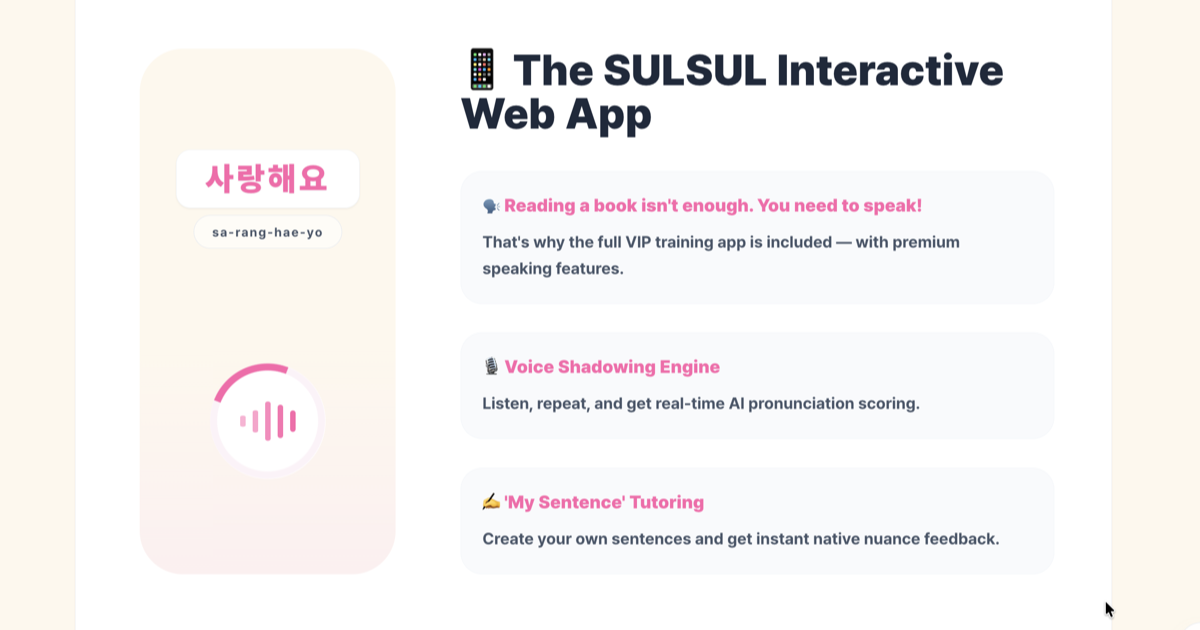
SULSUL is a speaking gym for exactly that step: pick a pattern, say it out loud, get an instant fix from the AI pronunciation coach, then run the real situation as a mission. The 100-pattern PDF workbook comes along as a bonus.
Now say it out loud
SULSUL says the phrase, you repeat it, and it tells you what came out wrong — 100 survival patterns for cafes, taxis and small talk in Seoul.
Start speaking Korean →