Korean Words Meaning in English: The Konglish K-Drama Words That Don't Mean What You Think (파이팅, 서비스, 썸)

Many Korean words you hear in K-dramas are English words — just not with the English meaning. 파이팅 (paiting, from "fighting") means "you can do it!", 서비스 (seobiseu, "service") means "free, on the house," and 썸 (sseom, "some") means the stage before dating when two people like each other but nobody has said it yet. Koreans call this borrowed-and-changed English 콩글리시 (kongeulrisi, Konglish). If you hear an English-sounding word in Korean and the subtitle doesn't match, you are probably hearing one of these.
- 파이팅 / 화이팅 (paiting / hwaiting) — "go for it!", "you've got this"
- 서비스 (seobiseu) — something extra, free of charge
- 썸 (sseom) — the "almost dating" stage; 썸 타다 = to be in that stage
- 스킨십 (seukinsip) — physical affection: holding hands, hugs, kisses
- 핸드폰 (haendeupon) — cell phone
- 노트북 (noteubuk) — laptop
- 원샷 (wonsyat) — "bottoms up," finish the glass in one go
- 아이쇼핑 (aisyoping) — window shopping
- 셀카 (selka) — selfie (from "self camera")
- 오버하다 (obeohada) — to overreact, to be too much
Why English words change meaning in Korean
When a word moves into Korean, it keeps its sound but gets reshaped to fit Korean life. Three things usually happen.
The word gets shortened. "Self camera" became 셀카. "Mental collapse" became 멘붕 (menbung, from 멘탈 붕괴). "Part-time job" went through German Arbeit and became 아르바이트, then just 알바 (alba).
The meaning slides sideways. "Service" in a restaurant became the free extra the owner gives you, because that is good service. "Fighting" in a sports cheer became general encouragement for exams, job interviews, or a hard day.
The word gets a Korean verb attached. English nouns become Korean verbs with 하다 or 타다: 오버하다 (to overdo it), 썸 타다 (to ride a "some"). Once a word takes Korean grammar, it is Korean.
That is why an English speaker can hear a word clearly and still miss the point. The sound is familiar. The job it does is new.
Practice this out loud with SULSUL — the app says it, you repeat it →
The ones you hear in every K-drama
파이팅! — The most famous. A friend says it before your interview, a mother says it at the school gate, a whole office says it with fists raised before a big project. Spelled 파이팅 in official Korean, but you will see 화이팅 everywhere on screen and on signs. Reply with the same word, or with 고마워 (gomawo, thanks).
썸 — A romance word. 우리 썸 타는 중이야 (uri sseom taneun jungiya) means "We're in the talking stage." The person you are in this stage with is your 썸남 (sseomnam, "some man") or 썸녀 (sseomnyeo, "some woman"). Half of every romance drama happens in 썸.
스킨십 — Not skincare. It means touch between people. A character might say 스킨십이 너무 빨라 (seukinsibi neomu ppalla), "The physical stuff is moving too fast." It is also used for warm touch between family or friends, like a parent who hugs a lot.
원샷! — At a company dinner or a celebration, someone raises a glass and shouts this. It means drink it all at once. In English it sounds like "one shot," but nobody is counting shots.
오버하지 마 (obeohaji ma) — "Don't overreact" or "Don't be so dramatic." Very common between siblings and best friends.
Konglish you will need on a trip
These come up the moment you land.
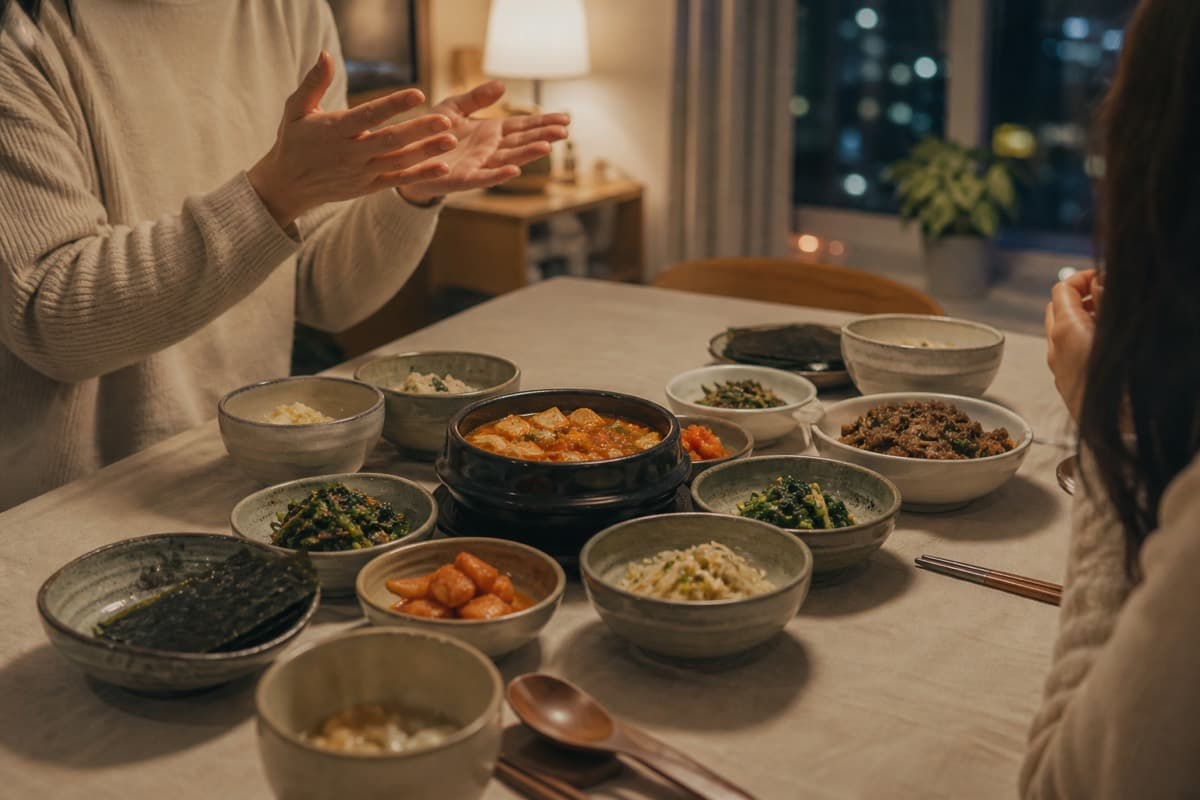
서비스예요 (seobiseu-yeyo) — "This one's on the house." At a fried chicken place or a small restaurant, the owner may put down an extra drink or side dish and say this. The polite answer is 감사합니다! (gamsahamnida). You can even ask with a smile at a market: 서비스 없어요? (seobiseu eopseoyo?), "No little extra?"
핸드폰 — "Hand phone." If you lose your phone, this is the word: 핸드폰을 잃어버렸어요 (haendeuponeul ireobeoryeosseoyo), "I lost my phone." Younger people also say 폰 or 휴대폰.
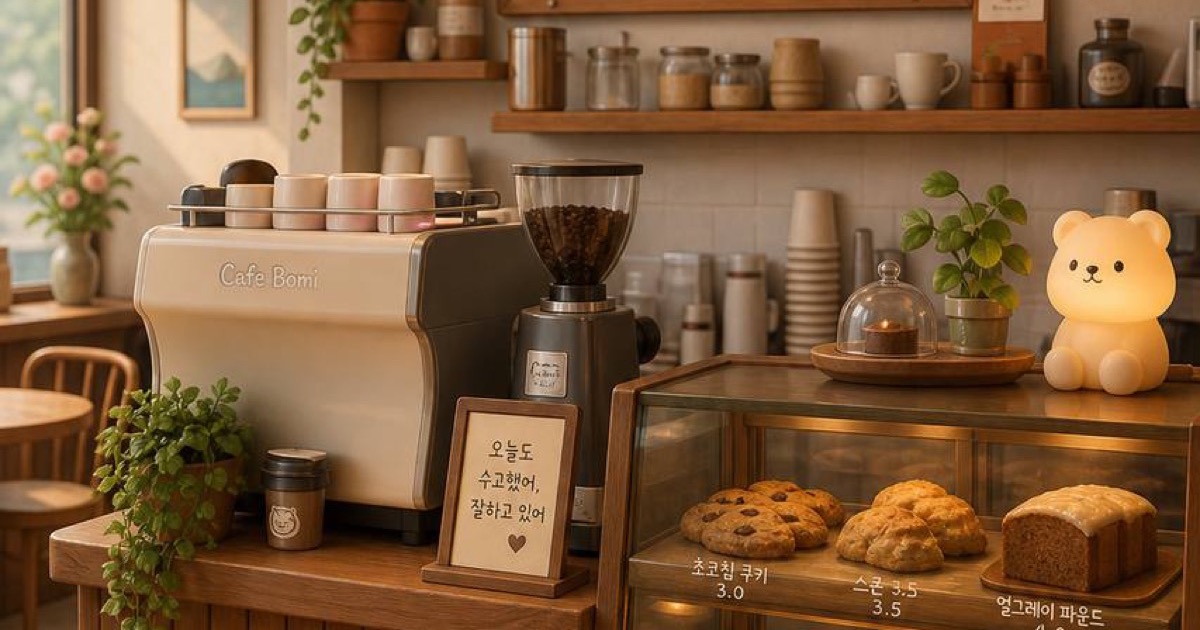
노트북 — A laptop, not a paper notebook. Ask a cafe 노트북 써도 돼요? (noteubuk sseodo dwaeyo?), "Can I use my laptop here?" A paper notebook is 공책 (gongchaek).
콘센트 (konsenteu) — A power outlet. The word came into Korean through Japanese, and English speakers rarely guess it. 콘센트 있어요? — "Is there an outlet?" Say "outlet" and most staff won't follow.
아이쇼핑 — "Eye shopping," window shopping. If a shop clerk asks if you need help, 그냥 아이쇼핑이에요 (geunyang aisyopingieyo) means "Just looking."
더치페이 (deochipei) — "Dutch pay," splitting the bill. 더치페이 할까요? — "Shall we split it?"
A short scene: two friends at a chicken restaurant
Mina: 오늘 면접 어땠어? — oneul myeonjeop eottaesseo? — "How was your interview today?" Jun: 몰라, 멘붕이었어. — molla, menbung-ieosseo. — "I don't know, I totally panicked." Mina: 오버하지 마. 잘했을 거야. 파이팅! — obeohaji ma. jalhaesseul geoya. paiting! — "Don't be dramatic. I'm sure you did well. You've got this!" Owner: 이거 서비스예요. — igeo seobiseu-yeyo. — "This one's on the house." Both: 우와, 감사합니다! — uwa, gamsahamnida! — "Wow, thank you!" Mina: 자, 원샷! — ja, wonsyat! — "Okay, bottoms up!"
Five Konglish words in six lines, and not one of them means what an English dictionary says.
How to say them so Koreans understand
Konglish words follow Korean pronunciation, not English. If you say them in a native English accent, Koreans often won't recognize them. Three rules help:
- Add the extra vowel. Korean doesn't end most syllables with hard consonants the way English does, so words get an 으 (eu) sound: "service" becomes 서-비-스 (seo-bi-seu), three even beats.
- No F, no V. F becomes ㅍ (p) or ㅎ (h): fighting → 파이팅 or 화이팅. V becomes ㅂ (b): service → 서비스.
- Keep it flat. English stresses one syllable. Korean gives each syllable about the same weight. Say 노-트-북, not "NOTE-book."
Mistakes English speakers make
- Using the English meaning. Telling a Korean coworker "I need a notebook" when you mean paper will get you a laptop discussion.
- Saying "fighting" with an English F. It sounds like you are talking about an actual fight. Use the Korean sound: 화이팅.
- Using 스킨십 for a hug from a stranger. It describes close relationships. For strangers, there is no natural use.
- Assuming every English-sounding word is Konglish. 커피, 버스, 택시 mean just what they mean in English. The tricky ones are the ones where the meaning moved.
Say them out loud before you need them
Read each line three times, with even beats on every syllable:
- 화이팅! — short and bright, a fist in the air.
- 이거 서비스예요? — a surprised, happy rise at the end.
- 그냥 아이쇼핑이에요. — relaxed, with a small smile.
- 콘센트 있어요? — clear and polite, at a cafe counter.
Then the next time a drama character says 파이팅 or 썸, try to catch it before the subtitle shows up. Once you can hear these words as Korean, a whole layer of every episode opens up.
SULSUL is a speaking gym for exactly that: pick a pattern, say it out loud, get an instant fix from the AI pronunciation coach, then run the real situation as a mission. The 100-pattern PDF workbook comes along as a bonus.