What Does Jasik Mean in Korean? 자식 as 'My Child' and 이 자식 as 'You Jerk'

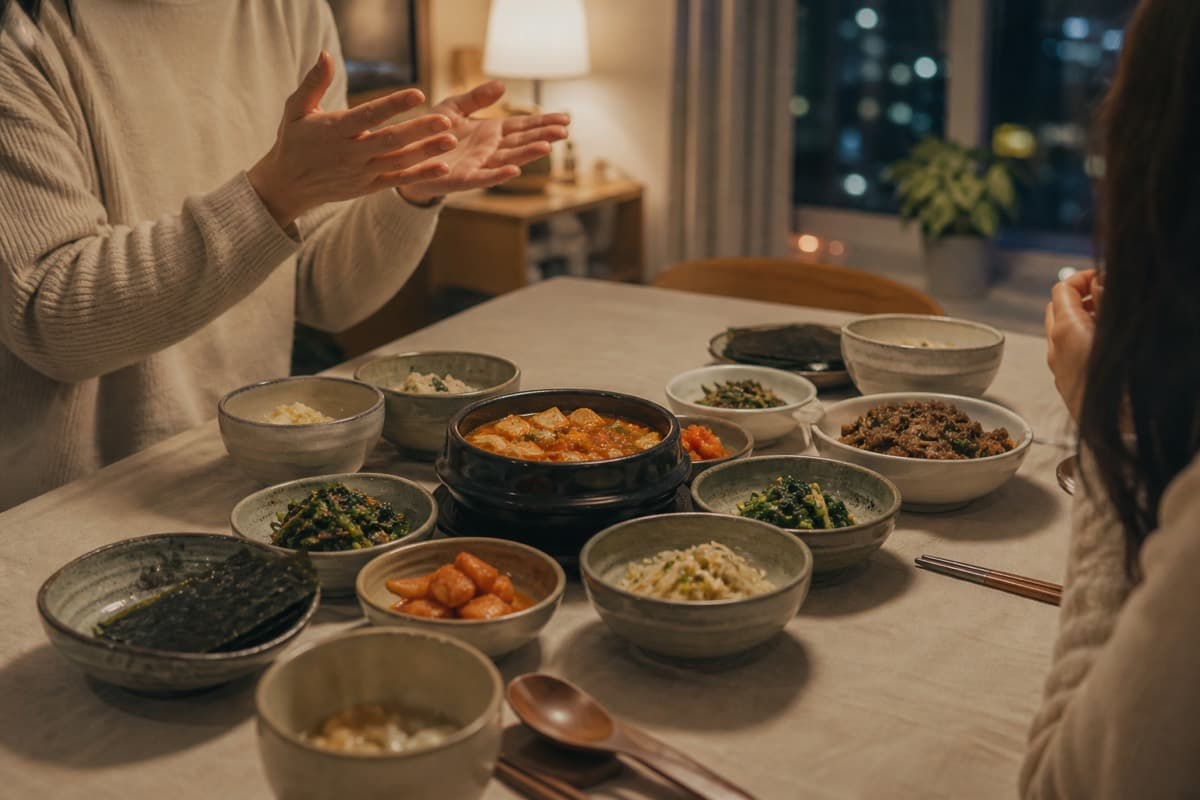
자식 (jasik) means "child" or "offspring" — the sons and daughters of a parent. A mother who says 우리 자식들 (uri jasikdeul) is talking about "my kids." But put 이 ("this") in front of it and shout, and 이 자식! (i jasik!) turns into "you jerk!" That second meaning is the one most K-drama fans hear first, which is why the word is so confusing.
- 자식 — child, offspring — a parent talking about their kids
- 내 자식 / 우리 자식 — my child — warm, protective
- 이 자식 / 저 자식 / 그 자식 — this guy, that jerk — rude
- 이 자식아! — "you jerk!" — shouted straight at someone
- 짜식 (jjasik) — "you rascal" — teasing, between close friends
- 자녀 (janyeo) — children — the polite, formal word
Same word, three moods. Below: where each one comes from, the scenes where you hear it, how to tell them apart by sound, and what to say instead if you want to ask a real person about their kids.
자식 starts as a family word
The original meaning is completely neutral. 자식 comes from Chinese characters for "child" and "breath" or "offspring," and older Koreans use it every day:
| Korean | Romanization | Meaning |
|---|---|---|
| 자식이 몇이에요? | jasigi myeochieyo? | How many kids do you have? |
| 자식 키우기 힘들어요. | jasik kiugi himdeureoyo. | Raising kids is hard. |
| 자식 걱정 | jasik geokjeong | worrying about your kids |
| 자식 자랑 | jasik jarang | bragging about your kids |
You hear these in family dramas constantly. A father at a wedding, a mother on the phone with her sister, two grandmothers comparing grandchildren on a park bench — 자식 is the word they reach for.
There is even a proverb every Korean knows: 자식 이기는 부모 없다 (jasik igineun bumo eopda), "No parent ever wins against their child." A mother says it with a sigh when her son refuses to come home for the holidays and she gives in anyway.
자식 covers both sons and daughters. If you need to be specific, use 아들 (adeul, son) or 딸 (ttal, daughter).
Practice this out loud with SULSUL — the app says it, you repeat it →
How 이 자식 became an insult
Here is the turn. When you point at a grown man with 이 ("this") and call him "child," you are treating him like a misbehaving kid. That is the insult. It is the same move as calling an adult "boy" in English.
- 이 자식 (i jasik) — this guy / you jerk, about someone right here
- 저 자식 (jeo jasik) — that jerk over there
- 그 자식 (geu jasik) — that guy, someone you are talking about
The last one is very common in breakup scenes. A friend comforts the heroine with 그 자식 잊어 (geu jasik ijeo), "Forget that guy." Nobody needs to say his name.
When the insult is shouted straight at someone, it usually picks up 아 at the end: 이 자식아! (i jasiga!). Often the sentence never finishes. 이 자식이... (i jasigi...) trailing off, with a clenched fist, is a classic K-drama beat right before someone grabs a collar.
How strong is it? Clearly rude, but milder than 새끼 (saekki), which you hear bleeped or cut on TV. 이 자식 is the version a scriptwriter can use on prime time.

짜식: the friendly rascal
Now the soft version. Say 자식 fast and harden the first sound and you get 짜식 (jjasik). Between close friends — especially men — it means something like "you rascal" or "you little punk," with a grin.
A: 나 합격했어! — na hapgyeokhaesseo! — "I passed!"
B: 짜식, 해낼 줄 알았어. — jjasik, haenael jul arasseo. — "You rascal, I knew you'd do it."
An older brother or a coach might say 짜식... while ruffling someone's hair. Dad characters in dramas use it with their sons the night before the son leaves for military service. In those scenes it carries a lot of love.
Hearing the difference is mostly about tone:
- Shouted, short, sharp — an insult. 이 자식아!
- Low, with a small laugh or a sigh — affection. 짜식...
- Flat, inside a normal sentence — just "children." 자식이 둘이에요.
A short scene with all three
Here is how one family drama episode could use the word three ways.
Mother, on the phone: 자식이 뭔지... 또 밥도 안 먹고 나갔어.
jasigi mwonji... tto bapdo an meokgo nagasseo.
"Kids, honestly... he left without eating again."
Son's friend, seeing a guy who cheated on his sister: 저 자식 저기 있다.
jeo jasik jeogi itda.
"That jerk is over there."
Father, hearing his son got the job: 짜식, 고생했다.
jjasik, gosaenghaetda.
"You rascal. You worked hard."
Three lines, three completely different feelings, one root word.
What to say to a real person instead
As a learner, keep 이 자식 and 짜식 for your ears, not your mouth. Even between friends, they sound strange from a foreigner who has known someone for a week. They work only inside a long, close relationship.
If you want to ask a Korean person about their kids, 자식 itself is a little too plain for someone you don't know well. Use these:
- 자녀가 있으세요? — janyeoga isseuseyo? — "Do you have children?" Polite and safe.
- 자제분 (jajebun) — an honorific way to say "your children," for someone older. 자제분이 몇 살이에요? — "How old are your children?"
- 아이 or 애 (ai, ae) — kid, child. 애가 몇 살이에요? — casual and friendly.
And if you want the warm, family feeling without any risk, listen for 우리 애 (uri ae, "our kid") and 내 새끼 (nae saekki). That last one sounds alarming after what you just read, but when a grandmother hugs a baby and says 아이고, 내 새끼, it means "oh, my precious baby." Again, tone does all the work.
Mistakes learners make with 자식
- Reading every 자식 as an insult. In a sentence like 자식 둘을 키웠어요, it just means "I raised two children."
- Using 이 자식 as a joke with a new friend. It may land as a real insult. Wait until they use it with you first.
- Calling your own parents' generation "자식." 자식 is what parents call children, not the other way around.
- Missing the sound change. 짜식 and 자식 look similar in romanization but feel different. The tense ㅉ is what makes it playful.
Say it out loud
Practice the tone, not just the word. Say each line three times:
- 자녀가 있으세요? — calm, polite, a small rise at the end.
- 자식 키우기 힘들어요. — a tired parent's sigh.
- 짜식, 해낼 줄 알았어. — low voice, a smile in it.
Then rewatch a fight scene and listen for 이 자식이... before the subtitle appears. Once you can hear which of the three meanings is on screen, you are hearing Korean the way Koreans do.
SULSUL is a speaking gym for that moment: pick a pattern, say it out loud, get an instant fix from the AI pronunciation coach, then run the real situation as a mission. The 100-pattern PDF workbook comes along as a bonus.