Korean Words Meaning in Hindi: The K-Drama Words With Their Desi Match (दीदी, भैया, अरे बाप रे)


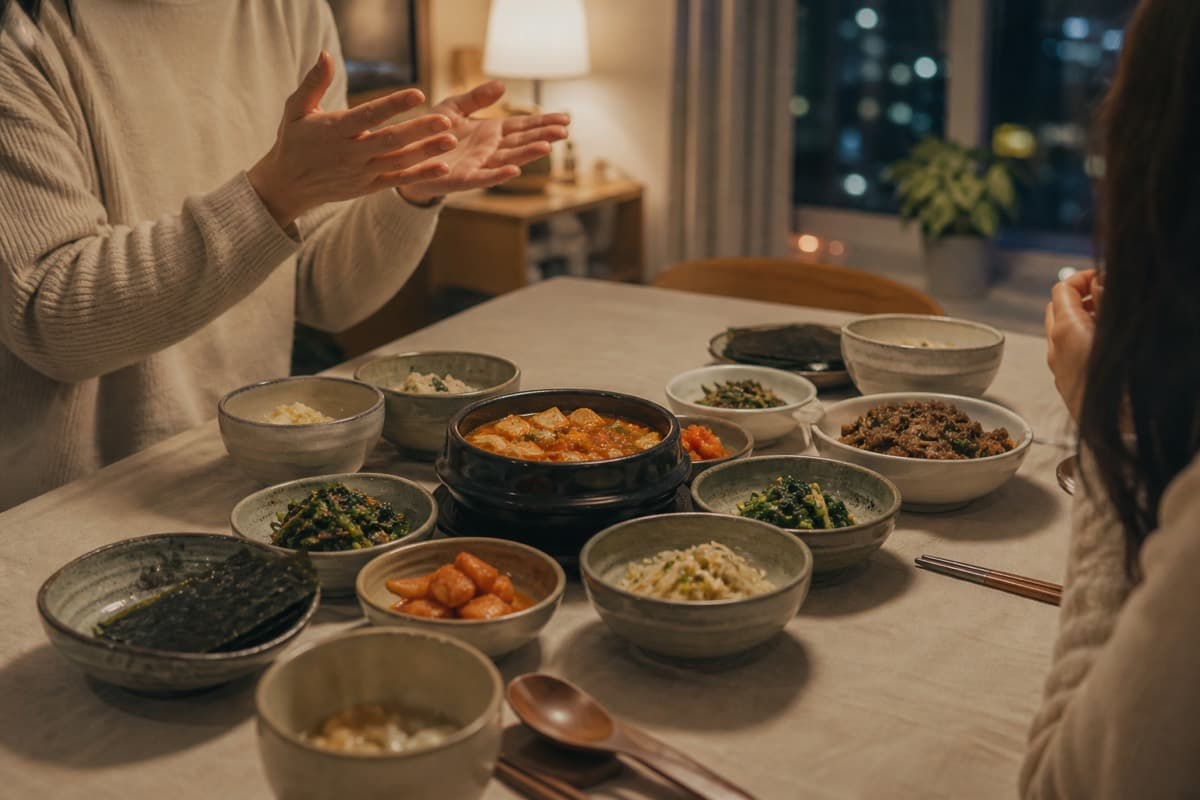
If you watch K-dramas in India, you have probably noticed that Korean feels oddly familiar. That is because many of the words you hear every episode have a near-perfect Hindi match. 언니 (eon-ni) is दीदी. 형 (hyeong) is भैया. 아이고 (a-i-go) is अरे बाप रे or हाय राम. 밥 먹었어? (bap meo-geo-sseo?) is खाना खाया? — and it means "I care about you" in both languages. 괜찮아 (gwaen-chan-a) is कोई बात नहीं or ठीक है.
- 언니 / 누나 (eon-ni / nu-na) — दीदी — "older sister"
- 오빠 / 형 (o-ppa / hyeong) — भैया — "older brother"
- 아이고 (a-i-go) — अरे बाप रे / हाय राम — "oh my, oh no"
- 밥 먹었어? (bap meo-geo-sseo?) — खाना खाया? — "Have you eaten?"
- 괜찮아 (gwaen-chan-a) — कोई बात नहीं / ठीक है — "It's okay"
Below, each word gets its Hindi meaning, its English meaning, and a short scene so you know when Koreans actually say it. At the end are the places where the Hindi match breaks — those are the mistakes Indian fans make most.
Family words: why Korean feels so desi
Hindi does not call an older friend by their name alone. You add दीदी, भैया, आंटी, or अंकल. Korean works exactly the same way, and this is why the subtitles feel so flat — "sister" in English cannot carry what दीदी carries.
The one difference: in Korean, the word depends on who is speaking.
| Korean | Who says it | Hindi | English |
|---|---|---|---|
| 언니 (eon-ni) | a girl, to an older woman | दीदी | older sister |
| 누나 (nu-na) | a boy, to an older woman | दीदी | older sister |
| 오빠 (o-ppa) | a girl, to an older man | भैया | older brother |
| 형 (hyeong) | a boy, to an older man | भैया | older brother |
| 아저씨 (a-jeo-ssi) | anyone, to a middle-aged man | अंकल / भैया | mister |
| 아줌마 (a-jum-ma) | anyone, to a middle-aged woman | आंटी | ma'am, auntie |
So a girl who says 오빠 and a boy who says 형 are both saying भैया — Korean just splits it in two. And like भैया in Delhi, these words are used for people who are not family at all: a senior at college, a friendly shop owner, a neighbour.
There is one twist Indian fans spot right away. In Hindi, a girl calling her boyfriend भैया would be a disaster. In Korean, 오빠 is exactly what a girl calls her boyfriend. Same word for brother and for boyfriend — that is why it sounds so sweet in a romance, and so confusing the first time.
Practice this out loud with SULSUL — the app says it, you repeat it →
Reaction words you already say in Hindi
K-drama characters react out loud, the same way an Indian family does around the dinner table. These are the sounds you hear in nearly every episode:
- 아이고 (a-i-go) — अरे बाप रे / हाय राम — "Oh my!" Grandmothers say it when they sit down, mothers say it when a child falls, everyone says it when the bill arrives.
- 대박 (dae-bak) — कमाल है! / ज़बरदस्त! — "Amazing!" Used for good news, a great stage, or a huge discount.
- 헐 (heol) — हैं?! / क्या?! — "Whoa, what?" The shocked one-syllable reaction, mostly among young people.
- 진짜? (jin-jja?) — सच में? / सचमुच? — "Really?" The most common follow-up in any gossip scene.
- 어떡해 (eo-tteo-ke) — अब क्या करूँ? / हाय, अब क्या होगा? — "What do I do?" Said when something goes wrong.
- 짜증나 (jja-jeung-na) — बहुत irritating है / दिमाग़ ख़राब हो गया — "This is so annoying."
Say 아이고 with a long, falling voice — aaa-i-go — and you sound like a real Korean aunt. Said fast and flat, it sounds like a word you read in a list.
Care words: खाना खाया? in Korean
If you grew up with a mother who asks खाना खाया? before she asks anything else, the Korean version will feel like home.
- 밥 먹었어? (bap meo-geo-sseo?) — खाना खाया? — "Have you eaten?" Not really about food. It means "Are you okay? I was thinking about you."
- 밥 먹었어요? (bap meo-geo-sseo-yo?) — the polite version, for a senior or someone you just met.
- 잘 자 (jal ja) — अच्छे से सोना / शुभ रात्रि — "Sleep well." The last line of every phone call in a romance.
- 조심해 (jo-sim-hae) — ध्यान रखना / संभल के — "Be careful."
- 보고 싶어 (bo-go si-peo) — तुम्हारी याद आ रही है — "I miss you." Literally "I want to see you."
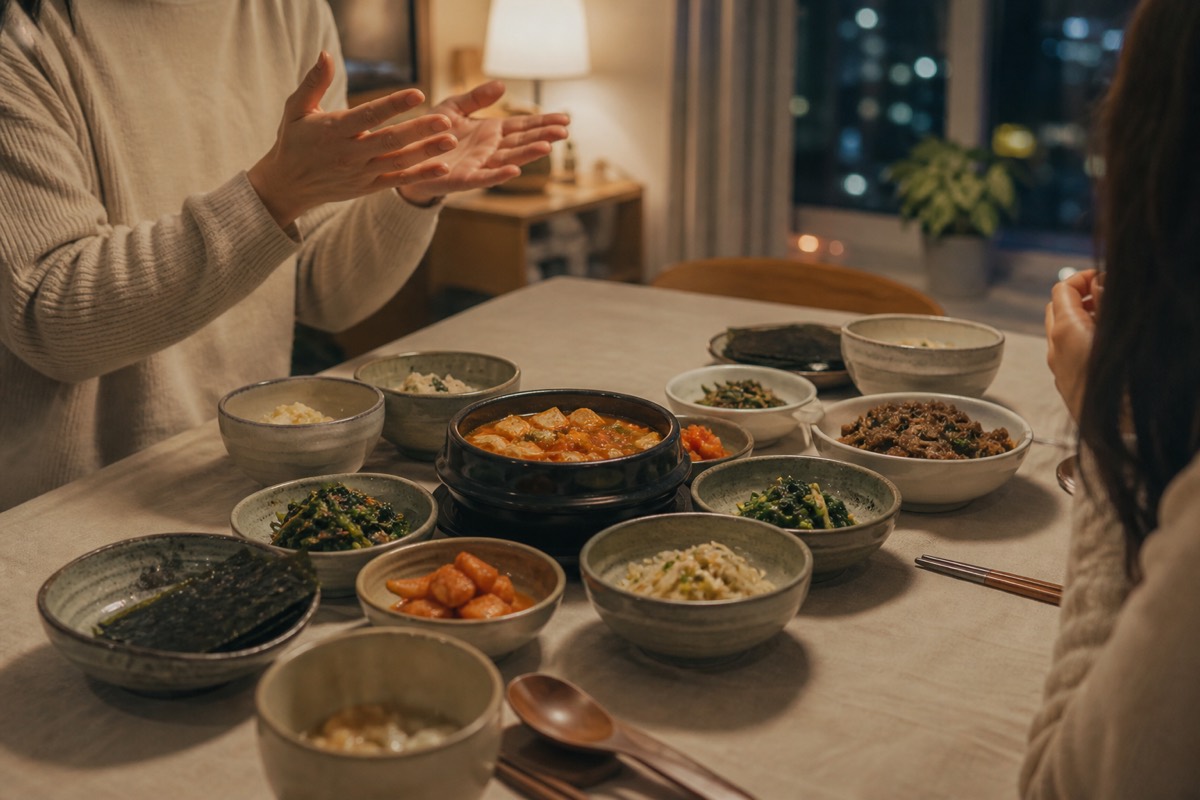
A real exchange between two friends sounds like this:
A: 밥 먹었어? (bap meo-geo-sseo?) — खाना खाया? B: 아직. 너는? (a-jik. neo-neun?) — अभी नहीं। तुमने? A: 나도 아직. 같이 먹자! (na-do a-jik. ga-chi meok-ja!) — मैंने भी नहीं। चलो साथ में खाते हैं!
같이 먹자 — "let's eat together" — is the Korean version of the friend who says चल, कुछ खाते हैं. It is how plans get made.
Love and apology words, with the Hindi feeling
These are the lines that make the background music swell:
- 사랑해 (sa-rang-hae) — मैं तुमसे प्यार करता हूँ / करती हूँ — "I love you."
- 좋아해 (jo-a-hae) — मुझे तुम पसंद हो — "I like you." The confession line, usually before 사랑해.
- 미안해 (mi-an-hae) — माफ़ करना / सॉरी — "I'm sorry," to a friend.
- 죄송합니다 (joe-song-ham-ni-da) — माफ़ कीजिए — "I'm sorry," formal, to elders and strangers.
- 고마워 (go-ma-wo) — थैंक यू / शुक्रिया — "Thanks," to a friend.
- 감사합니다 (gam-sa-ham-ni-da) — धन्यवाद — "Thank you," polite.
Notice the pattern. Hindi has माफ़ करना and माफ़ कीजिए; Korean has 미안해 and 죄송합니다. Both languages change the ending when you speak to someone older. If you already switch between तुम and आप without thinking, you already understand Korean politeness. The casual ending -아/어 is your तुम; the -요 and -니다 endings are your आप.
Cheer words: 화이팅 is not "fighting"
화이팅 (hwa-i-ting) comes from the English word "fighting," but nobody is fighting. It means चलो, तुम कर सकते हो! / ऑल द बेस्ट! — "You've got this!" A mother says it before an exam, friends shout it before a match, idols say it to fans.
Two more you will hear:
- 힘내 (him-nae) — हिम्मत रखो — "Stay strong," for a friend who is sad or tired.
- 수고했어 (su-go-hae-sseo) — बहुत मेहनत की तुमने — "You worked hard." Said at the end of a long day. There is no neat English word for it, but Hindi gets close.
Where the Hindi match breaks
Using 오빠 like भैया with a stranger. In Hindi, any young man selling chai can be भैया. In Korean, a girl calling a stranger 오빠 sounds flirty. For a shopkeeper, use 사장님 (sa-jang-nim, "boss") or 저기요 (jeo-gi-yo, "excuse me").
Calling a woman 아줌마 too casually. आंटी in India is mostly friendly. 아줌마 can sound rude to a woman who does not feel middle-aged. In shops and restaurants, 저기요 or 사장님 is safer.
Forgetting that Korean verbs don't change for boys and girls. In Hindi you choose करता or करती. In Korean, 사랑해 is the same for everyone. One less thing to worry about.
Saying 반말 to elders. Every drama couple speaks casually. If you say 고마워 to your Korean friend's father, it lands like saying तू to your own uncle. Use 감사합니다.
Pronouncing 어 like "o." The 어 in 어떡해 and 먹었어 is closer to the अ in अब, not the "o" in "go." Hindi speakers actually have an advantage here — your अ is already the right sound.
Saying the words, not just reading them
Knowing that 밥 먹었어? is खाना खाया? takes two seconds. Asking it out loud to a real Korean friend, with the right rhythm and without stopping to build the sentence, takes practice. Words stick when your mouth has said them, not when your eyes have read them.
Pick three words from this page — one family word, one reaction, one care word — and say each one five times out loud. Then say the whole mini-dialogue above, playing both A and B. Next time a drama character says 아이고, say it with them.
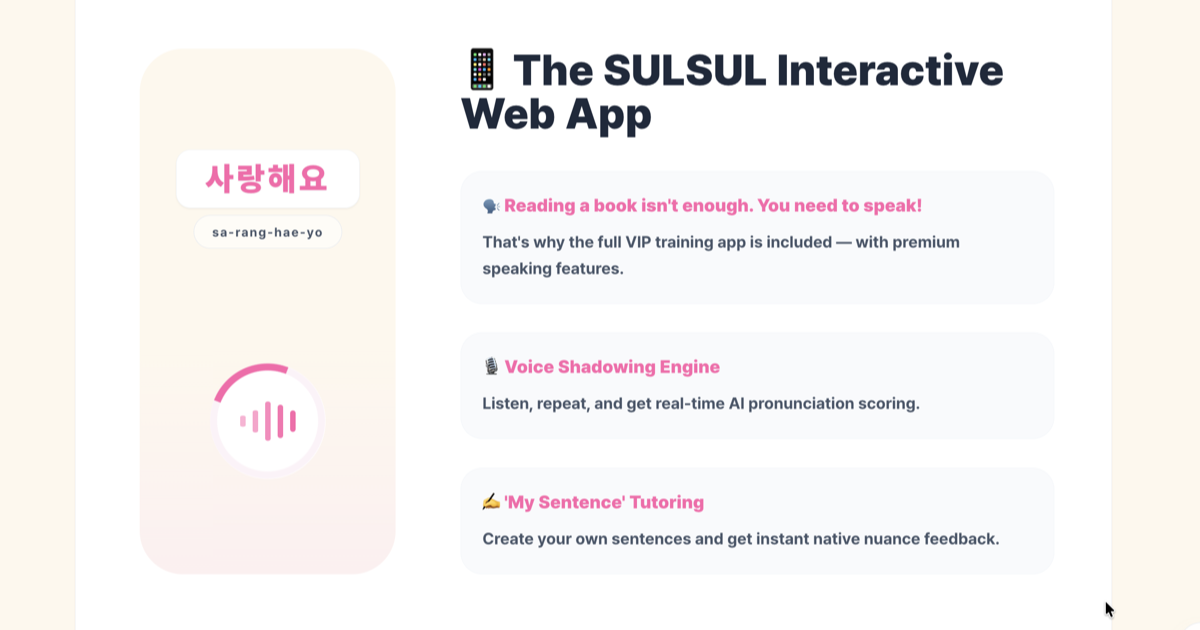
SULSUL is a speaking gym for that moment: pick a pattern, say it out loud, get an instant fix from the AI pronunciation coach, then run the real situation as a mission. The 100-pattern PDF workbook comes along as a bonus.